Chiastolite is a fascinating and visually striking variety of the mineral andalusite, prized both by collectors and lapidaries for its distinctive dark, cross-shaped inclusions. This article explores its mineralogical identity, typical environments of occurrence, practical uses in jewelry and ornamentation, and the cultural and metaphysical associations that have grown up around it. Along the way, attention is given to identification, care, and some of the most interesting scientific details that make chiastolite a subject of ongoing interest.
What chiastolite is: mineralogy and appearance
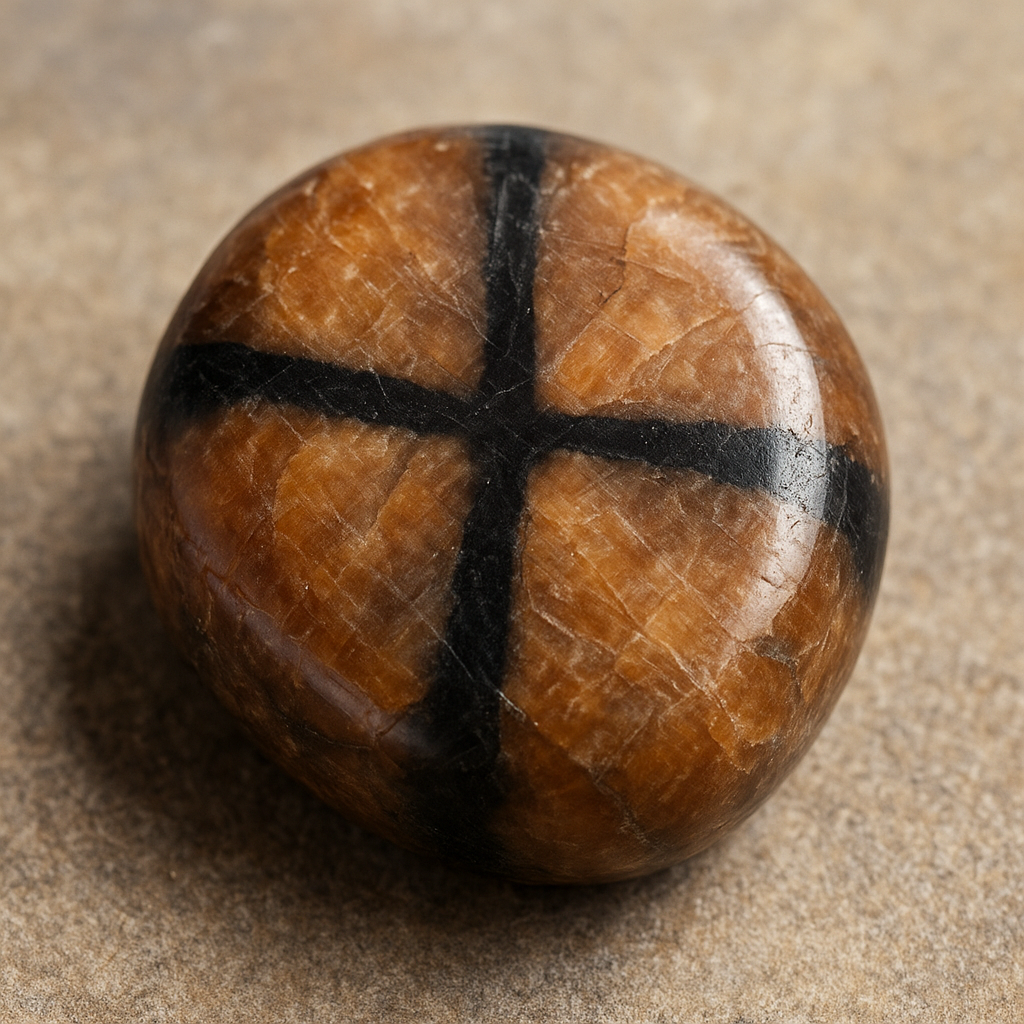
Chiastolite is a variety of andalusite, a mineral in the aluminium silicate group with the chemical formula Al2SiO5. What sets chiastolite apart is the characteristic cross-shaped pattern of dark inclusions—commonly carbonaceous material such as graphite or other organic residues—embedded within a lighter, more translucent host crystal. These inclusions are arranged in a cruciform pattern that is visible on polished surfaces and often stunning when cut into cabochons.
In hand specimen chiastolite typically appears as pale to medium brown, gray, or greenish crystals with the distinctive dark cross when transversely cut and polished. The host andalusite itself has a vitreous to silky luster, relatively good hardness (making it suitable for some types of jewelry), and an orthorhombic crystal system. Andalusite is one of three polymorphs of Al2SiO5, the others being kyanite and sillimanite. The presence of andalusite (including chiastolite) in a rock can give geologists valuable clues about the pressure-temperature conditions during metamorphism, since andalusite is typically stable under relatively low-pressure, moderate-temperature conditions compared with its polymorphs.
Where chiastolite occurs: geological settings and notable localities
Chiastolite forms in metamorphosed aluminous sediments—mudstones, shales, and other clay-rich rocks—that have been subjected to contact metamorphism or low-to-medium grade regional metamorphism. The distinctive cross pattern arises when carbonaceous particles or other organic matter within the original sediment become concentrated along specific growth sectors or inclusion planes during crystal growth, producing the familiar dark cruciform within the andalusite.
Occurrences of chiastolite are scattered worldwide. Classic and well-known localities include regions of Spain, where andalusite was originally described, but chiastolite has also been found in parts of Peru, China, the United States (certain localities in the eastern states and the west), Australia, Russia, Portugal, Italy, and Japan. Many of the best specimens come from veins and pockets within metamorphosed shale units where the original sediments were rich in organic matter. In the field, chiastolite crystals are often identified by their rounded nodular habit and the dark cross visible when broken or polished.
Because chiastolite is associated with specific metamorphic facies and host lithologies, its presence in a rock can assist geologists in mapping the thermal and pressure history of an area. In practical terms, however, most of the chiastolite that enters the gem and specimen market is collected from small-scale quarrying or as float pieces in streams draining metamorphic terranes.
Uses and applications: jewelry, lapidary work, and beyond
Chiastolite’s primary uses are ornamental and educational. The cruciform pattern makes it instantly recognizable and highly sought after by collectors. In the jewelry world, chiastolite is typically cut into cabochons to display the cross—faceted gems rarely show the pattern as effectively. When properly cut and oriented, a chiastolite cabochon can display a sharply defined dark cross against a lighter background, producing a dramatic and symbolic visual effect.
- Lapidary: Skilled lapidaries orient rough pieces to center the cross in a cabochon. Polishing reveals the pattern with depth and contrast, and many pieces are set as pendants, brooches, or statement rings.
- Collecting and display: Museum-quality specimens are often cut into thin sections or polished disks to highlight the cross. Larger nodules with intact crosses are prized by collectors.
- Educational uses: Because chiastolite demonstrates inclusion patterns and metamorphic processes so clearly, it is a useful teaching specimen in geology and mineralogy classes.
Chiastolite has limited industrial uses; andalusite in general can be used in high-temperature ceramics and refractory applications, but chiastolite with its aesthetic value is usually reserved for decorative purposes. The mechanical properties of andalusite—good hardness and moderate toughness—make chiastolite suitable for wearing, but care should be taken to avoid knocks and extreme heat which can cause cracking or surface damage.
Historical and cultural significance
Human fascination with the cross-shaped pattern in chiastolite goes back centuries. In many cultures the cross pattern was seen as a symbol of protection and spiritual significance. In medieval Europe, chiastolite stones were sometimes called “cross stones” and were believed to ward off evil or to serve as talismans during travel and pilgrimage. The natural cross motif tied neatly into Christian symbolism, and chiastolite amulets were occasionally carried or set into jewelry with explicit devotional intent.
Beyond explicit religious uses, chiastolite featured in numerous regional folk beliefs—some groups attributed healing or protective properties to the stone, others used it as a charm against bad luck. While such beliefs are cultural artifacts and not scientifically validated, they contribute to the stone’s mystique and the reasons collectors and enthusiasts prize certain specimens.
Metaphysical associations and contemporary practices
In modern metaphysical and spiritual communities, chiastolite is commonly associated with grounding, protection, and the balancing of energies. Practitioners often describe chiastolite as a stone that helps dispel negativity and foster a calm, centered state of mind. It is sometimes recommended for meditation practices that seek to align personal will with a sense of moral clarity, with the cross motif considered symbolic of intersection—between physical and spiritual, inner and outer.
Common metaphysical uses include:
- Wearing as an amulet for protection.
- Using chiastolite in meditative layouts to aid grounding and focus.
- Placing in living spaces to create a perceived stabilizing or harmonizing influence.
It is important to note that these claims fall within the domain of personal belief rather than empirical science. Many people nonetheless value chiastolite precisely because of the symbolic and psychological meanings they attach to it, and such meanings often add to the stone’s appeal in jewelry and decorative uses.
Identification, buying tips, and caring for chiastolite
For buyers and collectors, distinguishing genuine chiastolite from look-alikes is primarily a matter of observing the cruciform inclusion and verifying the base mineral properties. Tips for identification and purchase include:
- Visual check: The dark cross is usually composed of carbonaceous material or graphite and presents as a four-armed cruciform. It is most conspicuous when the stone is sliced and polished perpendicular to the crystal’s long axis.
- Hardness and durability: Because chiastolite is a variety of andalusite, it is reasonably hard and suitable for many types of jewelry. Hardness testing (performed properly) can confirm expected behavior in scratch tests relative to reference minerals.
- Ask for provenance: Reputable dealers often include locality information and whether the specimen has been treated, stabilized, or dyed. Many collectors prefer natural, untreated material.
- Examine the cut: For jewelry pieces, ensure the lapidary has centered the cross if that is the visual goal. Poor cutting can misalign the cross and reduce aesthetic value.
Care and cleaning are straightforward: mild soap and water with a soft brush or cloth is usually sufficient. Avoid harsh chemicals and prolonged exposure to heat. Ultrasonic cleaners can be risky for any stone with internal inclusions or fissures; consult a professional before using mechanical cleaning methods. Store chiastolite separately from harder gems to prevent scratches.
Interesting scientific details and aesthetic considerations
The mechanism that produces the cruciform pattern in chiastolite remains a compelling example of how mineral growth interacts with the chemistry and structure of the host rock. Organic-rich layers in the original sediment become concentrated along certain growth planes in the developing andalusite crystal. As the crystal grows, those carbon-bearing inclusions are trapped and tend to cluster into four radiating sectors, giving rise to the visually perfect cross in cross-section.
From a petrological perspective, chiastolite can act as a micro-scale recorder of metamorphic history. Analyses of the host andalusite and the inclusions can reveal the nature of the protolith (original rock), the direction of crystal growth, and sometimes the temperatures and pressures during metamorphism. Thin-section studies under polarized light, combined with electron microscopy and chemical analysis, allow scientists to probe the growth history of individual chiastolite crystals.
Aesthetically, chiastolite offers a rare combination of natural symbolism and geometric clarity. The simplicity of the cross motif set within a mineral matrix appeals to jewelry designers, collectors, and artists. The stone’s earthy palette—ranging from pale tan and gray to deep green or brown—provides a subtle, organic backdrop that highlights the dark cross, creating pieces that feel both ancient and contemporary.
Collecting chiastolite: what to look for
Collectors often pursue specimens that display a clean, symmetrical cross on a flat polished face. Important considerations include:
- Symmetry and contrast: The most desirable pieces have a sharply defined cross with strong contrast between the inclusion and host.
- Size and completeness: Larger, intact nodules or well-centered cabochons command higher prices and greater interest.
- Natural versus enhanced: Natural, unenhanced chiastolite is generally preferred. Ask sellers about any heat treatments, dyeing, or stabilization.
- Documentation: Provenance and any analytic reports add value, especially for museum-quality specimens.
Collectors also value specimens that show unusual colors, exceptionally large crosses, or interesting inclusion patterns that break the classic cruciform into more complex designs.
Final remarks on appreciation and study
Chiastolite occupies a unique niche at the intersection of geology, art, and culture. Its striking visual motif makes it instantly recognizable, while its geological story—about crystal growth, organic inclusions, and metamorphic conditions—offers a window into Earth’s dynamic processes. Whether appreciated as a collector’s specimen, worn as a piece of meaningful jewelry, or studied for its mineralogical secrets, chiastolite continues to fascinate people who value both beauty and science.