
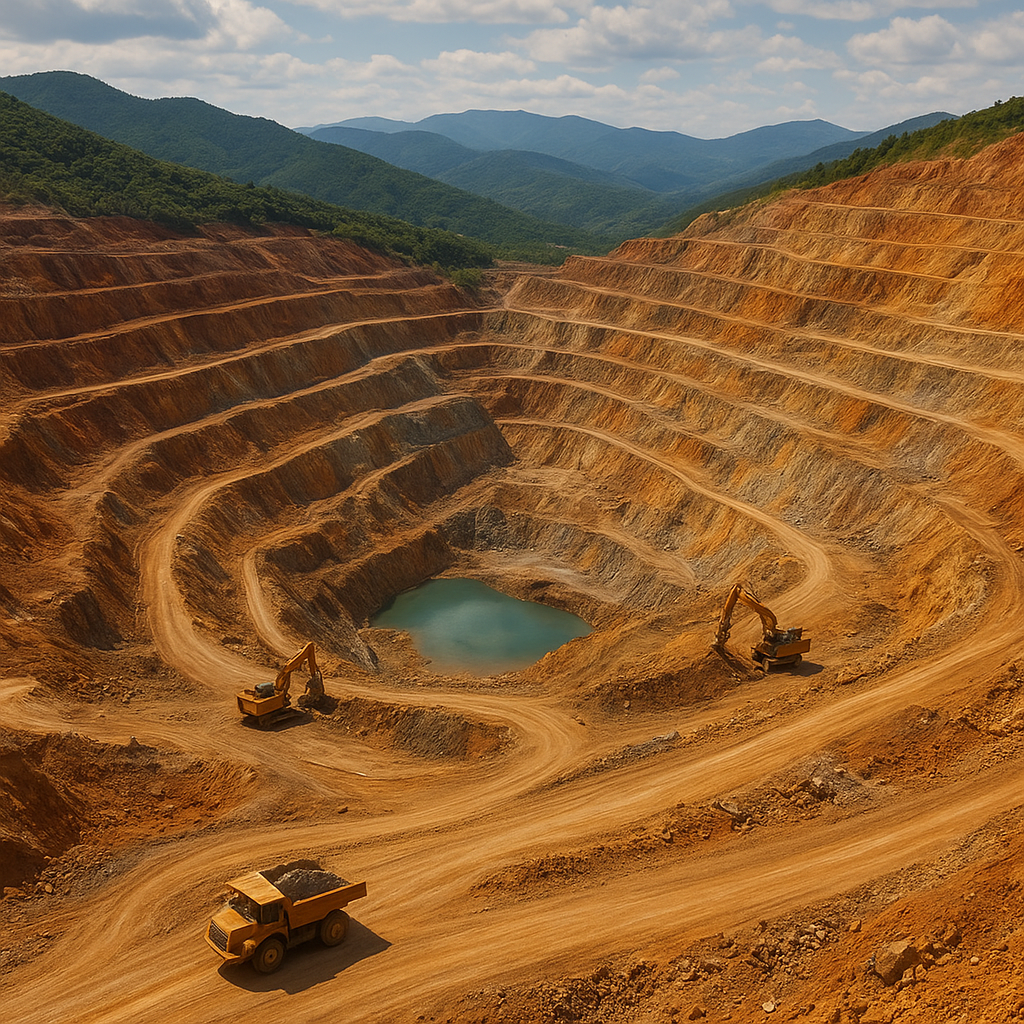
The Chelopech mine, set in the heart of Bulgaria’s mineral-rich mountain belt, is a major underground source of gold and copper that combines deep geological heritage with modern industrial practice. This article explores where the mine is located, what minerals it produces, its broader economic role for the region and the country, and a number of features and stories that make Chelopech notable. The mine’s operation illustrates how a relatively compact deposit can have an outsized impact on local employment, national exports, and technological development in mining methods and environmental management.
Location and Geological Setting
Chelopech lies in central Bulgaria, within a complex metallogenic zone known as the Srednogorie (or Sredna Gora) volcanic arc. The site is situated in the Chelopech municipality, surrounded by rolling hills and forested slopes that are typical of the central Bulgarian highlands. The deposit sits within a sequence of volcanic and intrusive rocks that were active during the region’s long tectono-magmatic history.
Geological character
The deposit is best described as a copper-gold sulfide system hosted in altered volcanic and intrusive units. Mineralization includes copper-bearing sulfides such as chalcopyrite and associated iron sulfides, with gold closely tied to the sulfide phases. Geologists often categorize deposits in this part of Bulgaria as part of a porphyry-epithermal transition or porphyry-related systems, reflecting the role of intrusive magmas and hydrothermal fluids in concentrating metals.
Accessibility and setting
Chelopech’s relative proximity to regional transport networks and urban centers has helped make its development viable. Although the mine is embedded in mountainous terrain, access roads, electricity, and water infrastructure have been developed to support continuous operations. The landscape around the mine has both scenic value and a long history of human interaction with mineral resources, stretching back to pre-modern mining episodes in the broader region.
What is Mined and How It Is Processed
The primary products of the mine are copper and gold, along with smaller quantities of by-product metals that commonly accompany sulfide mineralization. The ore is extracted using underground mining methods and then processed in an on-site mill to produce a copper-gold concentrate.
Minerals and ore characteristics
- Chalcopyrite: the chief copper-bearing mineral, typically hosting the bulk of copper in the ore.
- Pyrite and other iron sulfides: important carriers of gold and contributors to the sulfide-dominated gangue.
- Native and electrum gold may occur in association with sulfides, requiring careful processing to recover both metals efficiently.
- Minor elements and trace metals: depending on the specific ore zone, elements such as silver, selenium, and others may be present as by-products.
Mining methods and processing
The Chelopech operation uses modern underground mining techniques that are designed for relatively high-grade, concentrated sulfide ore. Extraction is typically achieved through mechanized stoping methods that provide good ore recovery while maintaining safety and stability of underground workings. Once extracted, ore is hauled to a processing plant where crushing, grinding, and flotation produce a copper-gold concentrate. This concentrate is the commodity shipped to smelters or refining partners for final metal recovery.
Processing efficiency and metallurgical optimization are central to the mine’s economics: improving recovery rates for gold and copper directly increases the value of each tonne of ore mined. Over time, plant upgrades and metallurgical testing have been used to enhance recoveries, reduce operating costs, and lower environmental footprint through improved tailings and water handling.
Economic Significance
Chelopech is a notable contributor to both the local and national economy. Even though it occupies a modest physical footprint compared to giant global mines, its relatively high-grade ores and continuous operation make it economically important.
Employment and local development
At the local level, the mine provides a significant number of direct jobs in underground mining, processing, maintenance, geology, and administration. In addition to direct employment, there are ripple effects through service contracts, local suppliers, transport, and construction. The presence of the mine has encouraged development of vocational skills and technical expertise in the community, fostering a workforce that is experienced in modern mining practices.
Regional and national fiscal impact
- Revenue streams: The mine contributes to national fiscal revenues through taxes, royalties, and fees that support public budgets.
- Foreign exchange and exports: Copper-gold concentrate and refined metal sales generate foreign currency inflows, improving trade balances and strengthening Bulgaria’s position as a mineral exporter.
- Investment and infrastructure: Capital investments in the mine’s facilities, access roads, and utilities help spur broader economic activity and can catalyze additional private-sector investment in the region.
Strategic mineral supply
While Bulgaria is not a major global supplier of gold or copper on par with the largest producers, operations such as Chelopech help diversify supply sources and sustain local metal-processing industries. The mine’s concentrates feed downstream smelting and refining operations, supporting a regional metals value chain and contributing to industrial resilience.
Environmental Management and Community Relations
Contemporary mining operations must balance production with environmental stewardship and social responsibility. Chelopech, like other modern mines, places importance on minimizing ecological impact, caring for water and soil resources, and maintaining constructive relationships with nearby communities.
Waste, water, and tailings
Handling of tailings and process water is a central environmental challenge. The mine implements engineered tailings storage and water treatment systems designed to reduce the risk of contamination, improve water recycling rates, and limit discharges. Continuous monitoring and periodic independent audits are part of standard environmental practice, ensuring compliance with national regulations and international expectations.
Rehabilitation and biodiversity
Progressive reclamation of disturbed land — including reforestation, soil stabilization, and habitat restoration — is carried out in phases. Operators often coordinate with local authorities and environmental organizations to identify restoration priorities and measure success. Over time, rehabilitated areas can support native plant species and contribute to local biodiversity recovery.
Community programs
Mining companies typically invest in community programs that include education and vocational training, infrastructure improvements such as roads and public facilities, and sponsorship of cultural and sporting events. These programs aim to build trust, sustain the local economy beyond the life of the mine, and ensure that benefits accrue to residents.
Operational History and Ownership
Chelopech has evolved from early mineral exploitation to a modern industrial operation. While mineral extraction in the wider region may have roots stretching back centuries, the modern large-scale underground mine has been developed and operated under structured commercial ownership and engineering programs. The site has attracted international investment and incorporates technologies and management systems common to contemporary mining firms.
Technological evolution
Over the decades, Chelopech has seen successive investments in mechanization, safety systems, and processing plant upgrades. Automation in material handling, improved ventilation and monitoring underground, and metallurgical enhancements have all contributed to safer and more efficient production. Research partnerships and continual geological work ensure that the operation can adapt to changing ore characteristics and market conditions.
Interesting Facts and Unique Aspects
Beyond its clear economic role, Chelopech holds a number of interesting features that reflect the intersection of geology, history, and modern industry.
- High-grade zones: Portions of the deposit are relatively high grade compared to many porphyry-related systems, meaning that each tonne of ore contains a noteworthy metal content that supports underground mining economics.
- Complex mineralogy: The interplay of copper sulfides and gold-bearing phases creates metallurgical challenges and opportunities; optimizing recovery requires careful ore sorting and flotation strategies.
- Local heritage: The Srednogorie region has a long tradition of mineral exploration and small-scale extraction. Modern operations coexist with a cultural landscape shaped by centuries of human interaction with mineral resources.
- Adaptive management: The mine’s management has placed emphasis on adapting to new environmental standards, updating infrastructure, and engaging in corporate social responsibility initiatives to support sustainable outcomes.
Research and education linkages
Chelopech is often a subject of academic and technical research because it illustrates a productive mineralization style within Bulgaria’s geological context. Universities and research institutes may collaborate with the mine on geology, geochemistry, and metallurgical projects, fostering local capacity building and improving industry practice.
Challenges and Future Prospects
Like any long-lived mine, Chelopech faces challenges that shape its operational future: maintaining economic margins in the face of metal price volatility, managing declining ore grades as near-surface zones are depleted, and meeting rising environmental and social expectations.
Exploration and resource extension
Continued exploration in surrounding areas and underground resource delineation are essential to extending the mine life. Geologists use modern tools — geophysics, 3D modeling, and targeted drilling — to identify extensions and new zones that may support future production. Successful exploration can transform a finite project into a longer-term regional enterprise.
Market and sustainability drivers
Global demand for copper and gold will continue to influence Chelopech’s economic performance. Copper remains critical for electrification and renewable-energy technologies, while gold retains value as a monetary and investment asset. At the same time, sustainability expectations are driving investments in lower-carbon operations, improved waste management, and stronger community engagement.
Why Chelopech Matters
Chelopech exemplifies how a single mine can be more than a site of extraction: it is a center of employment, a partner in regional development, a node in global metal supply chains, and a focus for applied geoscientific research. For Bulgaria, operations like Chelopech contribute to industrial diversity and create tangible economic benefits. For the international mining community, the mine offers lessons in integrating modern technical practice with environmental and social stewardship.
When one considers the layers of geology beneath the slopes, the engineering in the shafts and drifts, and the human communities that live and work around the site, the Chelopech operation offers a compact but powerful example of how natural resources can be responsibly and productively developed. The continuing challenge is to balance ongoing production with commitments to environment, community welfare, and long-term regional prosperity — goals that will shape the mine’s story for years to come.

