
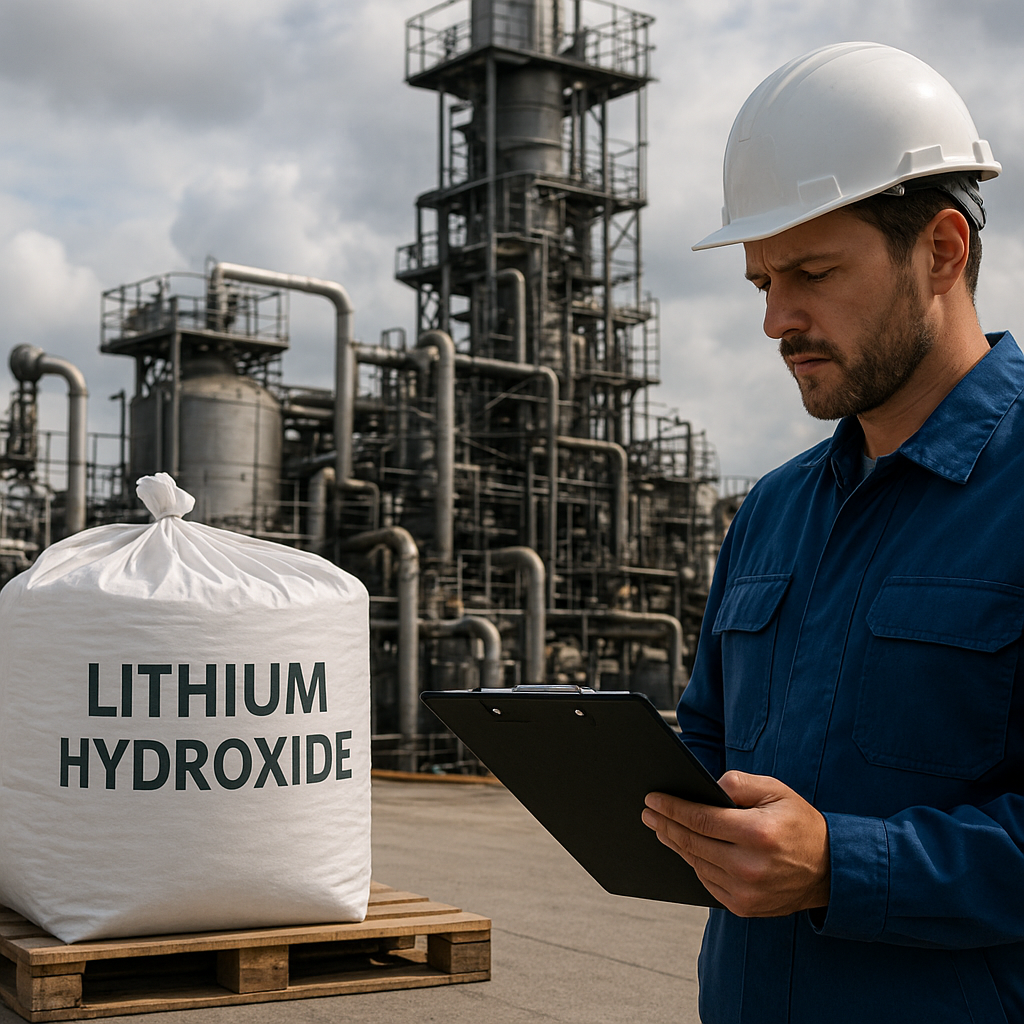
The rapid electrification of transport and the expanding grid-scale energy storage market have placed enormous pressure on the chemical supply chain that supports lithium-ion batteries. Meeting this demand requires not just greater mining output but also significant increases in the capacity to produce high-purity lithium hydroxide for modern cathode chemistries. This article examines the multifaceted challenges involved in scaling up production of lithium hydroxide, covering technical hurdles, feedstock and logistics constraints, environmental and social considerations, and strategies the industry can pursue to increase supply while protecting communities and the environment.
Market drivers and feedstock realities
Demand for batteries using nickel-rich cathodes has pushed preference toward lithium hydroxide over lithium carbonate in many applications, increasing the urgency of expanding hydroxide production. The chemistry of high-nickel layered oxides and next-generation cathodes favors hydroxide because it simplifies precursor synthesis and can yield more stable cathode materials during high-temperature processing. At the same time, global demand is concentrated by a few major downstream manufacturers, so supply disruptions can ripple quickly across automotive and energy storage markets.
Primary feedstocks for hydroxide production include hard-rock minerals like spodumene and various lithium-rich brines. Converting these raw materials into battery-grade hydroxide follows different paths: hard-rock ore typically undergoes thermal activation (roasting), acid leaching and subsequent hydrometallurgical steps, whereas brine operations use evaporation, precipitation and conversion chemistries. Scaling each route presents unique constraints tied to resource geography, capital intensity, water and reagent consumption, and processing complexity.
Technical challenges in scaling production
Processing complexity and purity requirements
Producing battery-grade hydroxide demands tight control of impurity levels (notably iron, magnesium, calcium and certain transition metals). Achieving and consistently maintaining these specifications at scale is non-trivial. Larger plants experience different hydrodynamics, heat transfer and mass transfer behavior than pilot facilities, which can lead to variability in impurity rejection, crystallization behavior and product morphology. These differences can affect downstream cathode synthesis and ultimately battery performance.
Unit operations that become limiting at scale
- Roasting and leaching: Efficiently thermally activating >1 million tonnes/year of spodumene concentrate demands massive rotary kilns or reactors with high energy use and complex material handling.
- Neutralization and precipitation: Lime or other neutralization steps produce large volumes of gypsum and other solids that require storage and disposal capacity.
- Evaporation and crystallization: Scaling crystallizers and classifiers while maintaining crystal size distribution and phase purity is challenging. Fouling, scaling and heat integration must be addressed.
- Ion exchange and solvent extraction: These separation technologies face throughput, lifetime and regeneration issues when scaled, including resin degradation and solvent losses.
As throughput increases, so do the probabilities of operational upsets that can produce off-spec material; therefore, redundancy and process control sophistication must be scaled in tandem with capacity.
Feedstock supply chain and geographic constraints
Scaling production is not only a matter of building processing plants; it requires reliable access to ore and brine resources, and dependable logistics to move concentrates, reagents and products. Many significant lithium deposits are located in remote regions with limited infrastructure. Transporting bulky intermediate products like spodumene concentrate to coastal refineries or local converters introduces additional costs, potential bottlenecks and carbon footprint concerns.
Supply concentration — both geographic and corporate — increases systemic risk. For example, a handful of mines and processors control a large share of mined concentrate output. If a mine faces stoppage due to weather, labor action or regulatory changes, converters that lack diversified feedstock sources may face abrupt feed interruptions. Establishing diversified procurement strategies and building geographically distributed processing capacity are necessary but capital-intensive solutions.
Environmental, social and regulatory hurdles
Water and waste management
Large-scale hydrometallurgical operations consume significant volumes of water and produce wastewater streams with elevated salinity, sulfate and process contaminants. Communities near projects often view water use as a zero-sum issue, especially in arid regions where many brine resources are located. Managing wastewater and ensuring sustainable water balance is therefore both a technical and a social imperative.
Neutralization and precipitation steps generate solid wastes such as gypsum and tailings that require long-term storage solutions. Increasing regulatory scrutiny over tailings stability, seepage and long-term liability has pushed developers to design more robust containment systems — which increase capital expenditure and project timelines.
Permitting, local consent and carbon intensity
Lengthy permitting processes, environmental impact assessments and the need for community consent can delay expansions for years. Local communities and indigenous groups often require meaningful engagement and benefit sharing. Permit conditions may include restrictions on water withdrawal, limits on emissions and requirements for biodiversity offsets, all of which affect project economics.
Carbon emissions associated with thermal roasting, reagent production (e.g., lime, sulfuric acid) and grid electricity use are increasingly scrutinized by investors and customers. Demonstrating a lower carbon footprint for hydroxide production can be a market differentiator but may necessitate switching to low-carbon electricity, electrifying heat sources, or adopting alternative chemistries — each adding complexity to scale-up plans.
Economic and financing challenges
Building large-scale hydroxide plants requires significant capital investment, often running into hundreds of millions of dollars for integrated operations. Uncertainty about long-term lithium prices and volatility in electric vehicle demand can make it difficult to secure financing on favourable terms. Offtake agreements with battery makers and automakers can reduce risk, but these contracts are complex and competitive.
Operational costs are tied to reagent consumption (notably sulfuric acid and lime), energy prices, and availability of skilled labor. Scaling quickly without optimizing reagent recovery and energy integration can leave new plants with higher-than-expected operating expenditures, undermining their competitiveness.
Workforce, safety and operational excellence
Operating large chemical plants for lithium conversion requires specialized skills in hydrometallurgy, process control, metallurgy and environmental engineering. Scaling capacity necessitates simultaneous scaling of skilled labor, training programs and safety culture. Handling corrosive reagents and managing high-temperature processes introduces occupational and environmental safety risks; rigorous management systems and continuous improvement are essential to avoid incidents that can halt production or create reputational damage.
Innovation pathways and mitigation strategies
To overcome these diverse challenges, companies and governments are pursuing a range of technical, strategic and policy approaches.
- Process intensification and modularization: Developing modular, repeatable processing units that can be rapidly deployed reduces project lead times and spreads technical risk. Process intensification — combining unit operations or using continuous processing — can improve footprint and energy efficiency.
- Reagent recovery and circularity: Recovering sulfuric acid, recycling process water and valorizing by-products (e.g., gypsum markets) reduce net reagent demand and waste. Emphasizing recycling of lithium from spent batteries shortens the supply chain and can supply a growing fraction of hydroxide feedstock.
- Direct lithium extraction and alternative chemistries: Emerging direct extraction technologies for brines promise higher lithium recovery with lower land footprint and faster production ramp-up. Alternative routes to produce hydroxide that reduce roasting steps or use electrochemical conversion could lower energy intensity.
- Vertical integration: Some producers are integrating upstream mining with downstream conversion to control feedstock quality and reduce logistics costs. Long-term offtake agreements with battery manufacturers help secure financing and align product specifications.
- Decarbonization measures: Switching to renewable electricity, electrifying heat processes where possible, and improving thermal efficiency reduce lifecycle emissions and help meet corporate decarbonization targets demanded by customers and investors.
- Data-driven process control: Advanced analytics, digital twins and predictive maintenance improve uptime, reduce variability and accelerate troubleshooting when scaling operations.
R&D priorities and collaborative approaches
Academic, industrial and governmental collaboration can accelerate innovations needed for scale-up. Priority R&D areas include: improved hydrometallurgical selectivity for impurity removal; new crystallization and separation technologies that scale reliably; lifecycle analyses that guide investments toward lower-carbon pathways; and demonstration projects for direct lithium extraction and recycling. Public-private partnerships can derisk early-stage deployment and create standards for product quality and environmental performance.
Ultimately, expanding global capacity for lithium hydroxide is a system-level challenge that combines geology, chemistry, engineering, community engagement and finance. Solving it will require not only capital and technical innovation but also a focus on sustainability, resilient supply chains and increased emphasis on recycling and resource efficiency. Without coordinated action across the value chain, the pace of scaling may fall short of the pace of demand growth for electrified transport and grid storage, making strategic planning and cooperative problem-solving essential to secure the materials foundation of the energy transition.
