Chalcocite is a striking and economically important copper-bearing mineral that has played a major role in the extraction of copper for more than a century. With the chemical formula Cu2S, chalcocite appears as dense, metallic-gray to black masses and is frequently encountered in enriched zones of copper deposits. This article explores its physical and chemical characteristics, typical geological settings and notable localities, methods used to extract and refine copper from chalcocite, its contemporary and emerging applications, and broader environmental and economic implications.
What chalcocite is: composition, properties and identification
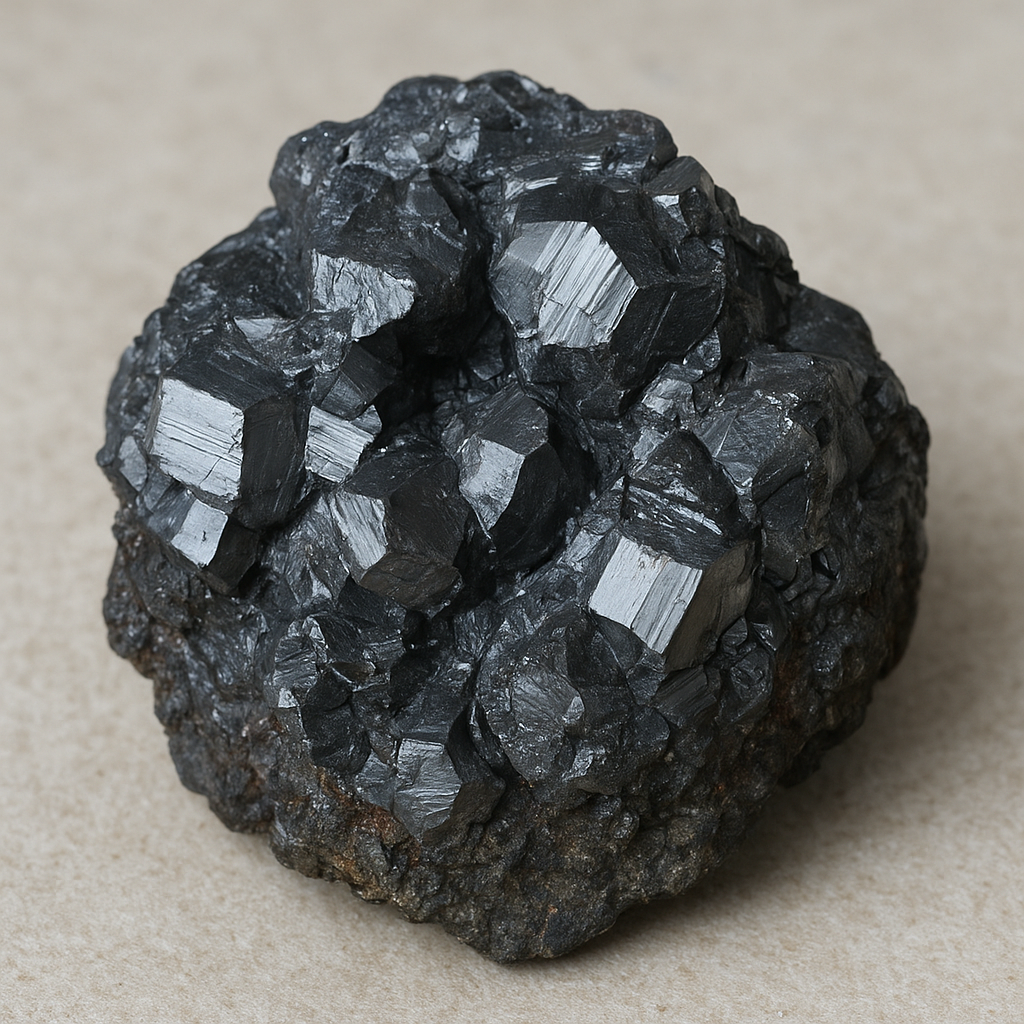
Chalcocite is a copper sulfide mineral with the formula Cu2S. As a member of the copper sulfide family, it has a high copper-to-sulfur ratio and is often one of the richest copper ores by weight. Typical specimens are opaque with a metallic luster and a color ranging from lead-gray to nearly black. Chalcocite most commonly occurs in dense, massive forms rather than well-formed crystals, though tabular or prismatic crystals are sometimes reported from exceptional localities.
Physical and diagnostic properties
- Color and luster: metallic gray to black, often with a bright metallic sheen.
- Hardness: relatively soft, typically around 2.5–3.5 on the Mohs scale, which makes it easily scratched by a knife.
- Specific gravity: high for non-metallic-looking minerals, generally in the range of 5.5–5.8 due to its high copper content.
- Habit: commonly massive, compact aggregates; when crystalline, forms fine-grained tabular crystals.
- Streak: blackish-gray streak when rubbed on a streak plate.
Chalcocite is often associated with other copper minerals such as covellite, bornite, chalcopyrite and secondary minerals like malachite and azurite in oxidation zones. Its physical properties, especially specific gravity and softness, help distinguish it from other dark sulfides and oxides. In polished sections under reflected light microscopy, chalcocite displays characteristic reflectance and internal structure helpful for identification in ore microscopy.
Geological settings and global occurrences
Chalcocite is particularly significant as a component of supergene-enriched copper deposits. In many porphyry copper and related systems, primary sulfides such as chalcopyrite undergo chemical weathering and oxidation near the surface. Copper is mobilized in oxidizing fluids and then re-precipitated below the oxidation front as secondary sulfides, often forming an enriched zone dominated by supergene minerals like chalcocite. This enrichment can produce very high-grade, economically attractive ore bodies.
Common deposit types hosting chalcocite
- Porphyry copper deposits — chalcocite is commonly concentrated in the supergene enrichment blanket above or adjacent to porphyry systems.
- Hydrothermal vein and replacement deposits — primary deposition of copper sulfides can include chalcocite under reduced conditions.
- Sediment-hosted stratiform copper deposits — in some basinal settings, chalcocite may form via diagenetic and hydrothermal processes.
- Gossan and secondary enrichment zones — weathered covers and leached caps often lead to secondary concentration of chalcocite below the oxidized horizon.
Notable occurrences are distributed across major copper-producing regions. Large-scale operations and classic localities include ore districts in Chile, Peru, the southwestern United States (for example historical districts in Montana and Utah), Mexico, parts of Australia, and Canada. These countries host both large porphyry systems and other deposit types where ore grade has been significantly improved by supergene processes. Chalcocite can also occur in smaller, high-grade pockets that have historically been mined selectively because of their high copper content.
Mining, beneficiation and metallurgical processing
Because chalcocite is one of the richer copper minerals by mass, zones where it is abundant are prime targets for mining. The combination of relatively high copper content and often friable or soft texture can make chalcocite-bearing ore relatively amenable to conventional mining and processing techniques, but each deposit requires tailored approaches depending on gangue minerals and mineralogy.
Beneficiation and concentration
- Crushing and grinding: typical first steps to reduce ore size and liberate chalcocite grains from gangue.
- Flotation: for sulfide-dominated ores, froth flotation remains the dominant method to produce a copper-rich concentrate. Chalcocite responds well to flotation reagents that depress gangue and enhance sulfide recovery.
- Gravity separation: when coarse, dense chalcocite particles occur, gravity methods can sometimes be applied as a pre-concentration step.
Because chalcocite is soft and dense, it can be recovered effectively into concentrates with relatively high copper percentages, improving transport and smelting economics. Once a concentrate is produced, several metallurgical paths can lead to metallic copper.
Smelting, hydrometallurgy and refining
- Smelting: traditional pyrometallurgical routes involve smelting the concentrate to produce a copper matte followed by converting and fire refining to produce blister copper, which is then refined further.
- Electrolytic refining: industrial copper refining frequently uses electrolysis to produce high-purity copper cathodes. Electrorefining is central to modern copper production from sulfide concentrates derived from chalcocite.
- Hydrometallurgical options: for some low-grade or complex ores, hydrometallurgy — including leaching, solvent extraction and electrowinning (SX/EW) — can be an alternative to smelting. While SX/EW is most common for oxide copper ores, innovations have extended hydrometallurgical techniques to certain sulfide-rich contexts under appropriate conditions.
Choice of processing depends on the mineral assemblage, size of the operation, environmental regulations and energy economics. In many modern mining districts, a mix of flotation, smelting and refining remains the backbone of chalcocite-derived copper production.
Uses, technological applications and research directions
The primary and time-tested use of chalcocite is its role as an abundant natural source of elemental copper. Beyond bulk metal production, however, chalcocite (Cu2S) has attracted scientific attention for a variety of technological applications thanks to its electronic properties and chemical behavior.
Traditional industrial uses
- Copper metal production: chalcocite-rich ores provide feedstock for wires, pipes, electrical components and countless other copper-based products.
- Alloys and manufacturing: copper recovered from chalcocite is a precursor for brass, bronze and other copper alloys.
Emerging and research applications
Recent research explores the potential of copper sulfide materials, including Cu2S, in new energy and electronic technologies:
- Photovoltaics: copper sulfide compounds have been tested as absorber layers or components in thin-film solar cells, often in conjunction with other chalcogenides.
- Battery and energy storage: nanoscale copper sulfide materials are being evaluated as electrode components in lithium, sodium and other battery chemistries due to favorable capacity and conductive properties.
- Thermoelectrics and sensors: the electronic transport characteristics of copper sulfide phases make them of interest for sensor design and thermoelectric research.
These areas remain primarily in the research or early application stages. If some of these technologies mature, materials based on chalcocite chemistry could contribute to specialized high-value markets in addition to traditional copper supply chains.
Environmental, economic and societal aspects
Mining and processing of chalcocite-bearing ores have environmental consequences and economic implications that communities and companies must manage. The environmental challenges are typical for sulfide mining, though the specifics depend on local mineralogy and processing choices.
Environmental concerns
- Acid generation and leaching: oxidation of sulfide minerals can generate acidic waters and mobilize metals. This process, commonly known as acid mine drainage (AMD), can have long-term impacts on water quality if not controlled.
- Secondary mineral formation: chalcocite oxidizes to other copper minerals such as covellite and can ultimately form carbonates like malachite in oxidized zones; these reactions influence metal mobility and remediation approaches.
- Energy and emissions: smelting and refining are energy-intensive and carry greenhouse gas and particulate emission considerations. Hydrometallurgical routes have different footprints but are not impact-free.
Mitigation and sustainability strategies
Modern mining operations apply a variety of strategies to reduce environmental footprint and improve sustainability:
- Water treatment and closure planning to address acid generation and contaminated drainage.
- Process improvements, such as cleaner smelting technologies, emission controls and energy efficiency upgrades.
- Mine waste management and tailings rehabilitation to stabilize reactive materials and recover additional metals where feasible.
- Recycling and circular economy considerations: recycled copper reduces demand for newly mined ore and lowers overall environmental impacts of copper supply chains.
Economic benefits from chalcocite-rich deposits can be substantial for mining regions because high-grade chalcocite zones often reduce unit costs of copper production and can extend mine life. Yet social license to operate, equitable benefit sharing and environmental stewardship remain central to viable long-term development.
Interesting scientific and historical notes
Historically, chalcocite and other copper minerals were among the earliest sources of metal for human societies, enabling the Bronze Age and facilitating developments in tools, ornamentation and infrastructure. While native copper and oxides were used in antiquity, sulfide ores including chalcocite became critically important with the emergence of metallurgical techniques capable of processing them efficiently.
Crystallography and conductivity
Chalcocite is notable for its relatively high metallic conductivity compared with many other sulfides. This quality is one reason it has attracted interest in electronic and materials research. Its structure and bonding, which accommodate a high copper content, influence both physical properties and reactivity. Laboratory studies often investigate how nanoscale forms of Cu2S behave differently from macroscopic mineral masses, opening possibilities for tailored materials.
Indicators in ore exploration
Geologists value chalcocite as an indicator mineral in exploration because its presence commonly signals supergene enrichment and upward migration of copper-bearing solutions. Recognizing chalcocite together with other mineralogical patterns can help explorers delineate high-grade zones that might otherwise be overlooked by geochemical sampling alone.
Terminology note
The name chalcocite stems from Greek roots meaning copper and sparsely references its sulfur content; this naming reflects long-standing classification traditions in mineralogy. In practical terms, the formula Cu2S succinctly conveys its identity as a copper-dominant sulfide.
From its role as an efficient carrier of copper in enriched ore bodies to its potential presence in future electronic and energy technologies, chalcocite remains both a practical economic mineral and a subject of scientific curiosity. Understanding its geological behavior, processing pathways and environmental interactions continues to matter for miners, metallurgists, environmental scientists and materials researchers alike.