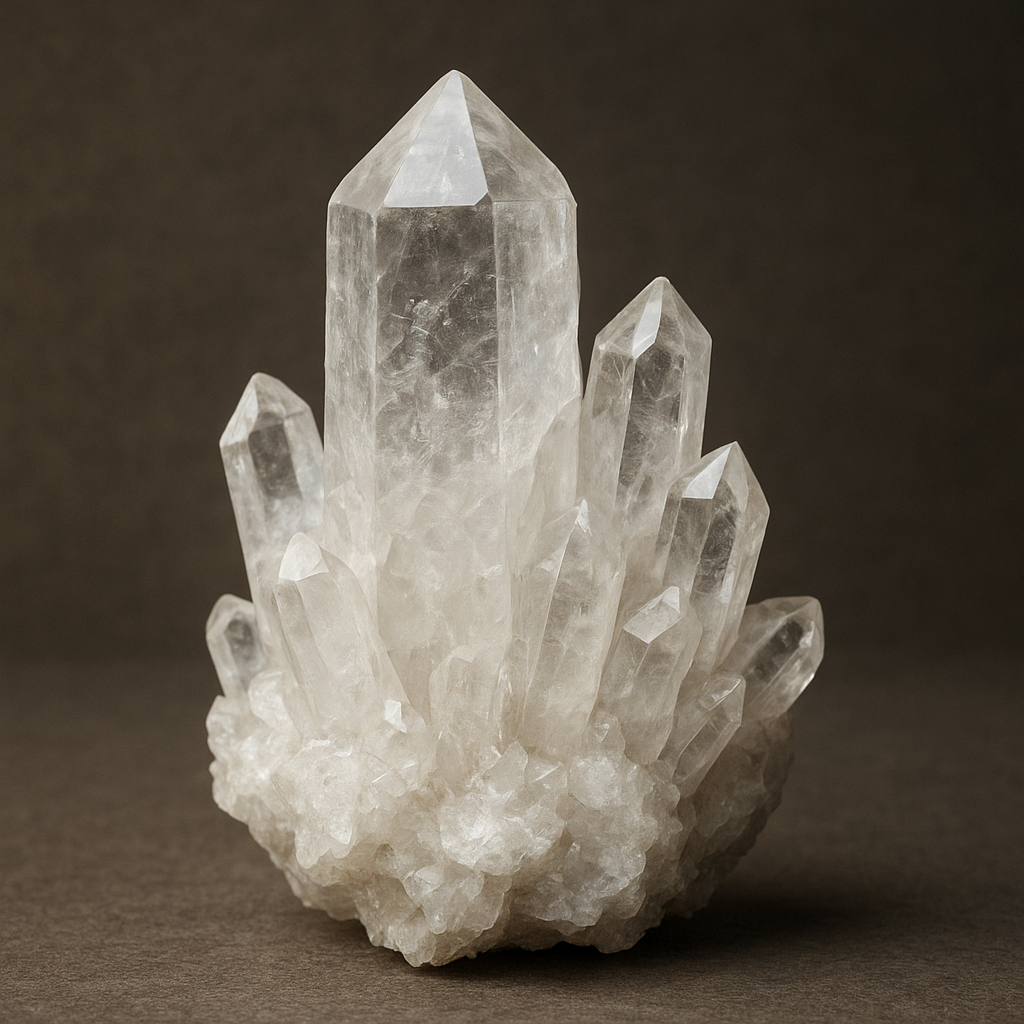
Chalcanthite is a striking, deep blue sulfate mineral that has attracted attention from mineralogists, collectors, and industry for centuries. Known for its brilliant crystalline appearance and remarkable solubility in water, this mineral offers an instructive example of how chemistry, geology, and human use intersect. This article examines its identity, physical and chemical properties, natural occurrence, practical applications, associated risks, and some lesser-known facts that make chalcanthite an intriguing subject for both specialists and the curious public.
Mineral identity and physical properties
Chalcanthite is the natural form of hydrated copper sulfate, with the chemical formula CuSO4·5H2O. It crystallizes in the triclinic system and typically forms well-defined prismatic or tabular crystals that display a vivid blue coloration due to the presence of copper(II) ions. Its color ranges from sky blue to deep azure, depending on crystal size, impurities, and hydration state. In hand specimen it may appear as crystalline crusts, stalactitic masses, or efflorescent coatings on rocks and mine walls.
Key physical properties:
- Crystal system: triclinic
- Color: bright blue to deep blue
- Luster: vitreous to silky
- Hardness: 2.5–3 on the Mohs scale
- Specific gravity: ~2.28–2.36 (varies with hydration and impurities)
- Solubility: highly soluble in water
- Transparency: transparent to translucent
The water-soluble nature of chalcanthite is one of its most distinctive and practically important traits. When exposed to moisture or liquid water, it readily dissolves to produce a blue copper sulfate solution. That property has profound implications for both natural processes and human handling.
Occurrence and geological formation
Chalcanthite is commonly a secondary mineral, forming in oxidized zones of copper deposits where sulfate-bearing solutions interact with copper-bearing minerals and host rocks. The mineral can develop:
- In mine workings and tunnels where oxidation of sulfide ores produces acidic, sulfate-rich waters
- As evaporation products in arid climates where groundwater rich in copper and sulfate concentrates near the surface
- On the walls of caves or abandoned mines as efflorescences
Typical environments include old copper mines, particularly in arid or semi-arid regions where evaporation rates are high, enabling the precipitation of colorful sulfate salts. Classic localities include mines in the southwestern United States, parts of Chile, Romania, and other historic copper mining areas in Europe. In many locales, chalcanthite forms alongside other secondary copper minerals such as azurite, malachite, brochantite, and various sulfate phases like gypsum.
Chalcanthite can form rapidly in environments where copper-rich solutions are exposed to air and evaporation occurs. For example, mine adits with dripping water can develop crusts of chalcanthite within months to years. Because of its solubility, it is often ephemeral in climates where precipitation regularly dissolves and redeposits it, producing a dynamic mineral distribution along fracture surfaces and tunnel walls.
Uses and applications
Throughout history and into modern times, the copper sulfate composition of chalcanthite has been exploited in several roles. Although natural chalcanthite is not typically the primary commercial source of copper sulfate (most industrial supplies are synthesized chemically), it has nonetheless been used and studied for these purposes:
Agricultural and horticultural uses
Copper sulfate is used as a fungicide, algicide, and molluscicide in agriculture and water treatment. In a few cases, small-scale usage of natural chalcanthite has occurred historically to supply copper sulfate for vineyard and orchard treatments against fungal diseases. However, due to variability, contamination risks, and the mineral’s solubility and toxicity, industrially produced copper sulfate from controlled chemical processes is preferred today.
Industrial and chemical applications
When pure copper sulfate solution is required—for electroplating, as a root killer in sanitation systems, or for certain laboratory reagents—synthetic copper sulfate pentahydrate is typically manufactured. Nonetheless, chalcanthite serves as a convenient natural example of the hydrated salt for educational demonstrations and small-scale experimental work. In chemistry teaching, both natural chalcanthite and synthetic crystals illustrate crystallization, hydration, and the behavior of transition metal salts.
Mineral specimens and lapidary uses
Due to its brilliant color and crystal habit, chalcanthite is sought after by mineral collectors. However, collector specimens must be handled and stored carefully because of the mineral’s solubility and sensitivity to humidity. In some cases, small specimens are stabilized by sealing with protective coatings or preserving them in controlled display cases. Chalcanthite is not widely used in jewelry because of its softness and instability.
Handling, safety, and toxicity
The presence of copper makes chalcanthite toxic if ingested. Copper sulfate is an irritant to skin and mucous membranes and can be hazardous to aquatic life. Key safety considerations include:
- Avoid ingestion: copper salts can cause gastrointestinal distress, vomiting, and more serious poisoning in higher doses.
- Keep away from children and pets: the attractive blue color may lead to accidental ingestion.
- Wear gloves when handling: prolonged skin contact should be avoided, and wash hands after handling specimens.
- Store in dry conditions: exposure to moisture will dissolve the mineral and create concentrated copper sulfate solutions that are corrosive.
- Disposal: solutions containing copper sulfate should not be poured into waterways; follow local hazardous waste guidance.
Because chalcanthite dissolves so easily, even small amounts can release copper ions into environments or lab waste, with ecological consequences. In mining environments, the formation and movement of chalcanthite and related sulfates can mobilize copper and other metals, contributing to acid mine drainage and contamination if not managed appropriately.
Collectors’ advice and preservation techniques
For mineral enthusiasts, chalcanthite poses both opportunity and challenge. Its vivid crystals are highly desirable, yet their fragility complicates preservation. Practical tips include:
- Collect specimens carefully from dry localities to avoid immediately dissolving crystals during transport.
- Store in airtight display cases with desiccants to reduce humidity and prevent efflorescence or recrystallization.
- Avoid cleaning with water—use dry, soft brushes to remove dust.
- If long-term stability is required, some collectors opt to create display casts or use stabilized replicas made from synthetic crystals embedded in resin, while labeling such specimens transparently.
Because of legal and environmental concerns, collectors should respect local regulations prohibiting or restricting mineral removal from protected sites, caves, or active mine workings.
Synthetic chalcanthite and crystal growth experiments
While natural chalcanthite occurs in the environment, it is also straightforward to produce synthetically by dissolving copper sulfate in water and allowing the solution to evaporate slowly. This has made chalcanthite a popular subject for crystal growth demonstrations in classrooms and home projects. Several educational uses include demonstrating:
- Crystallization and habit formation
- Effects of impurities on crystal color and shape
- Hydration and dehydration processes: heating causes loss of water molecules and changes in crystal structure
- Solubility and recrystallization cycles
Because experiments with copper sulfate involve toxic substances, they should only be performed by trained individuals or under supervision, using appropriate personal protective equipment and disposal methods. The resulting synthetic crystals, while visually similar to natural chalcanthite, are often purer and can be larger, making them more suitable for display—but synthetic specimens should be clearly labeled as such.
Environmental and industrial implications
The mobility of copper in the presence of sulfates and water is a major environmental concern in mining districts. When sulfide minerals oxidize, they can produce sulfuric acid and release dissolved copper. Under conditions of evaporation, sulfate salts such as chalcanthite may precipitate, temporarily trapping copper. Changes in moisture or pH can later redissolve these salts, causing pulses of contaminant release:
- In arid mine tailings, chalcanthite formation may sequester copper until rains dissolve it again
- In abandoned mines, repeated wetting and drying cycles lead to episodic metal release
- Remediation strategies must account for soluble minerals like chalcanthite to prevent unintended mobilization
Understanding the behavior of chalcanthite helps environmental engineers predict and manage the transport of copper and sulfate in mine-impacted settings. Treatments such as lime neutralization, capping to limit evaporation, and phytoremediation are among tools used to mitigate the environmental effects associated with soluble metal sulfates.
Historical and cultural notes
In earlier times, blue copper salts were valued for multiple purposes, and chalcanthite was sometimes used opportunistically as a source of copper sulfate. Copper sulfate also has a long history as a pigment (in limited contexts), an algaecide, and a folk remedy—although many such uses were unsafe or ineffective. The compelling blue crystals of chalcanthite have appeared in mineral collections and illustrations since the 18th and 19th centuries, and specimens from famous mine locales occasionally fetch attention at auctions and museum exhibits.
Because its chemistry is straightforward, chalcanthite has been part of educational curricula that link mineralogy to inorganic chemistry—demonstrating how a simple hydrated salt can display complex behavior influenced by geology and environment.
Interesting scientific and practical observations
- Color intensity: The deep blue color often intensifies in pure, well-formed crystals, while impurities or partial dehydration can desaturate the hue.
- Reversibility: Heating chalcanthite drives off crystal water, producing a pale anhydrous form that can revert to the hydrated blue form upon exposure to moisture—an instructive example of reversible hydration.
- Transient nature: In humid climates, chalcanthite is rarely preserved in situ for long; it often dissolves and leaves secondary stains or redeposited films.
- Indicator mineral: The presence of chalcanthite in mine workings can indicate active oxidation of copper sulfides and ongoing mobility of copper in mine waters.
- Educational value: As an accessible example of a transition-metal hydrate, chalcanthite provides a vivid visual aide in teaching coordination chemistry and crystal growth.
Further reading and resources
For readers who wish to explore chalcanthite in greater detail, recommended resources include mineralogical handbooks, peer-reviewed studies on sulfate mineralogy in mining environments, and guides for ethical mineral collecting. Institutional collections and natural history museums often display notable chalcanthite specimens and can provide context on localities, formation conditions, and conservation challenges. Remember that hands-on interaction with this mineral should always be undertaken with respect for its toxicology and solubility.