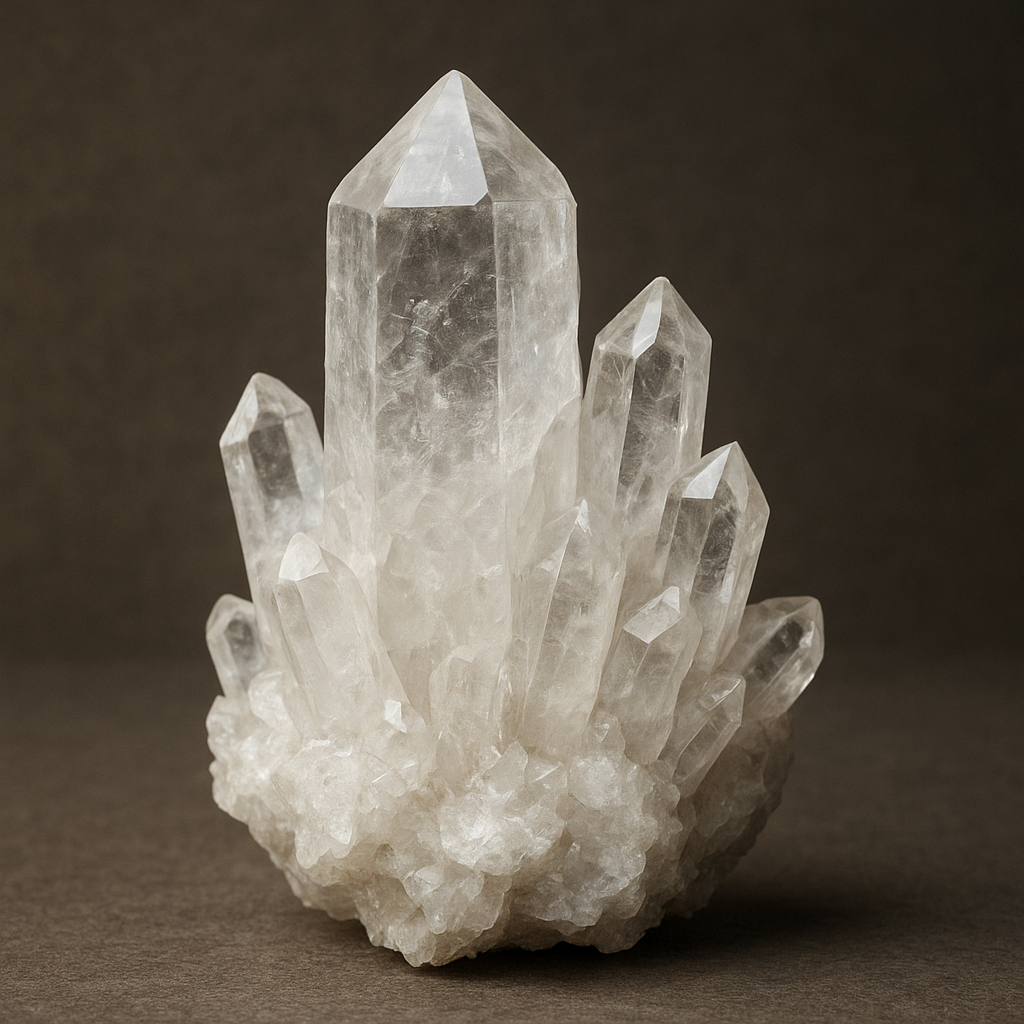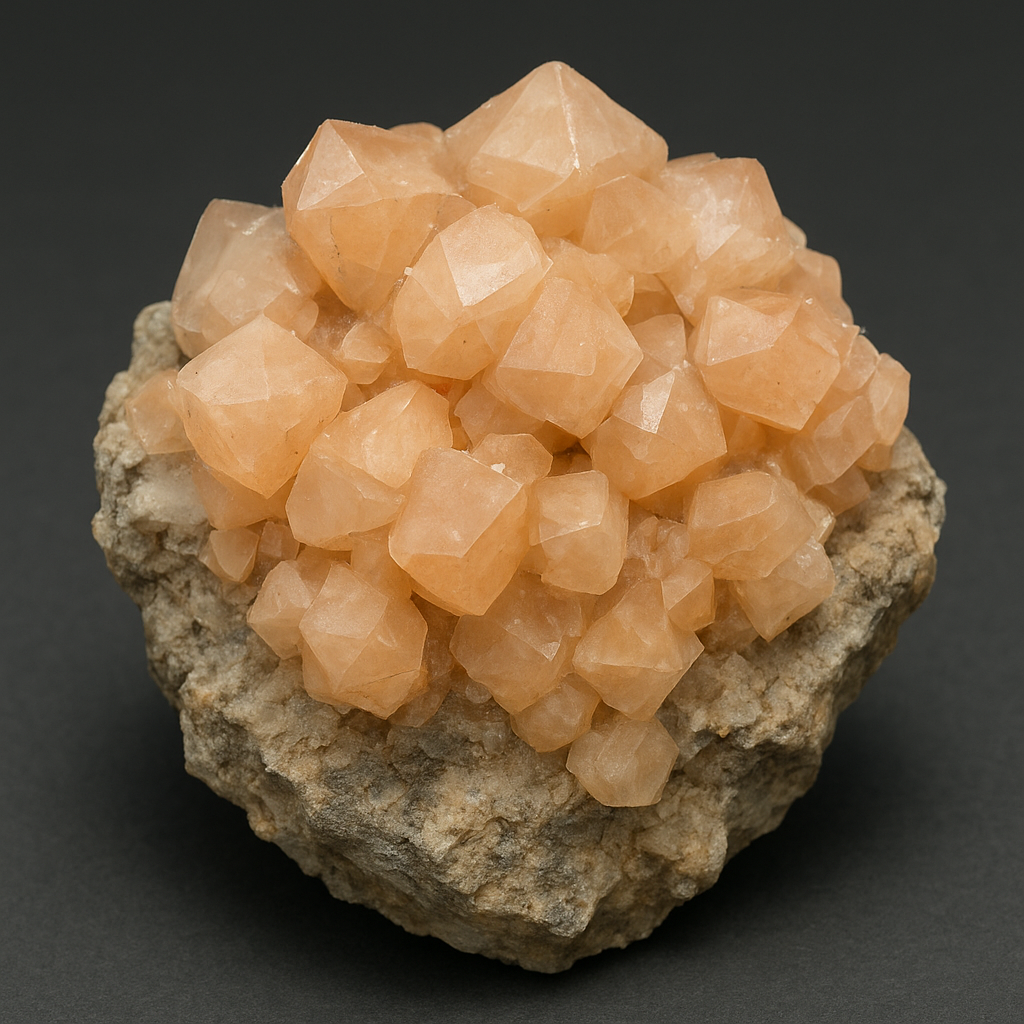
Chabazite is a member of the large family of natural and synthetic zeolite minerals characterized by a compact, cage-like framework and exceptional ability to selectively host ions and molecules. This article explores where chabazite is found in nature, how it is made and modified in the laboratory, and the broad range of uses that derive from its distinctive microporous architecture. Along the way, I will highlight technological applications and scientific topics linked to chabazite that many readers find intriguing.
Occurrence and mineralogy
Chabazite occurs naturally as a crystalline aluminosilicate mineral that commonly forms in vesicles and cavities of basaltic and other volcanic rocks. In these geologic settings, hydrothermal fluids rich in silica and aluminum percolate through cooling lava, precipitating zeolites in open spaces. Natural chabazite often appears together with other zeolites such as stilbite, heulandite, and analcime, and with secondary minerals like calcite and chlorite.
There are several recognized species or compositional varieties of the mineral—typically referred to as chabazite-Ca, chabazite-K, chabazite-Na and chabazite-Mg—depending on the dominant extra-framework cation. These cations occupy sites inside the cages of the framework and compensate the negative charge of the aluminosilicate lattice. The specimens often form well-defined rhombohedral or pseudo-cubic crystals, and their attractive habits make them popular among mineral collectors.
Natural occurrences are broadly distributed. Notable localities include:
- Basaltic regions and old lava flows where zeolites commonly line cavities and amygdales.
- Hydrothermally altered volcanic tuffs and pyroclastic deposits.
- Metamorphosed carbonate rocks and some sedimentary environments where zeolitization has taken place.
Collectors often find fine chabazite specimens in localities such as the Faroe Islands, Iceland, parts of the western United States, India, and various places in Europe, though the mineral is by no means limited to these regions. The exact distribution depends on historical volcanism and subsequent hydrothermal activity.
Structure, chemistry and physical properties
At the heart of chabazite’s behavior is its three-dimensional aluminosilicate framework, built from corner-sharing SiO4 and AlO4 tetrahedra. The substitution of Al for Si creates negative charges that are balanced by the presence of exchangeable cations and water molecules in the cavities. The distinct topology assigned to chabazite is known by the framework type code CHA, and this topology is shared by both natural chabazite and many synthetic materials.
Some key structural features include:
- Compact, cage-like voids interconnected through small windows (often 8-membered rings), which lead to strong size-exclusion properties.
- Multiple accessible cation sites inside the cages, enabling facile ion-exchange and stabilization of various metal cations.
- Hydrated species: natural chabazite typically contains water molecules in its pores that can be removed and re-adsorbed reversibly under conditions of dehydration and rehydration.
These structural attributes give chabazite high selectivity for molecules and ions of limited size and make it thermally and mechanically robust compared to many other microporous materials. The ability to adjust composition—through cation exchange or controlled dealumination—allows tuning of acidity, pore electrostatics, and catalytic behavior.
Synthesis and modification
Beyond the natural mineral, chabazite is widely produced synthetically. Synthetic analogues include aluminosilicate versions (often referred to by framework codes like CHA or trade names such as SSZ-13), and molecular sieves or silicoaluminophosphates with the same cage topology (e.g., SAPO-34 is a CHA-type SAPO material). Synthetic routes are diverse, but several general approaches dominate:
- Hydrothermal synthesis—a solution-based crystallization under elevated temperature and autogenous pressure, typically with organic structure-directing agents (OSDAs) or seeds.
- OSDA-free and seed-assisted methods that reduce costs and environmental footprint by avoiding organic templates.
- Fluoride-mediated syntheses that can yield highly crystalline, low-defect materials.
After synthesis, chabazite-type materials are commonly modified using:
- Ion exchange to introduce catalytically active or adsorption-relevant cations (e.g., Cu2+, Fe2+/3+, Na+, K+).
- Dealumination or partial desilication to change the Si/Al ratio and thereby tune acidity and hydrothermal stability.
- Surface functionalization or creation of hierarchical porosity to enhance diffusion rates and accessibility for larger molecules.
One particularly important modification is the incorporation of transition metal cations such as copper into the framework cavities to generate active catalysts. The Cu-exchanged CHA materials combine the small-pore selectivity of the CHA topology with the redox chemistry of Cu, making them central to several industrial catalytic processes.
Applications and technologies
Chabazite and CHA-type materials are employed across a range of technologies due to their combined properties of selective molecular sieving, adsorption, ion-exchange capacity, and tunable acidity. Key application areas include:
Selective catalytic reduction (SCR) of NOx
One of the most prominent industrial uses of CHA-type zeolites is as the support for copper-based SCR catalysts—commonly called Cu-CHA. These catalysts are especially effective for reducing nitrogen oxides (NOx) in diesel exhaust and other combustion emissions. The small-pore structure provides a unique environment that stabilizes active Cu sites and promotes selective conversion of NOx to N2 under practical temperature and humidity ranges. Hydrothermal stability, resistance to poisoning, and high activity have made Cu-CHA a leading material in mobile and stationary emission control systems.
Gas separation and capture
Chabazite’s cage-like pores and charged environment make it selective for adsorbing certain gases over others. Applications include:
- CO2 capture and separation from flue gas or natural gas streams—CHA-type zeolites show promising CO2/N2 and CO2/CH4 selectivity under various pressures.
- Removal of water and polar contaminants from gas streams because of the preferential adsorption of polar molecules in the charged cavities.
The high selectivity and potential for cyclic adsorption–desorption make chabazite variants attractive for pressure-swing and temperature-swing adsorption processes. Work is ongoing to optimize performance under realistic flue-gas contaminants and regeneration conditions.
Acid catalysis and petrochemistry
When properly acidified (for example, by controlling the Si/Al ratio and counter-ions), CHA-type materials can catalyze acid-driven reactions. Although small-pore zeolites impose size constraints, they are valuable in processes where shape selectivity is advantageous—such as selective conversions in fine chemicals or tailored hydrocarbon transformations. SAPO-34 (a CHA-type SAPO) has been particularly successful in the methanol-to-olefins (MTO) process, showcasing the potency of CHA topology in organic catalysis.
Ion exchange, water treatment and radioactive waste management
Natural and synthetic chabazite can exchange cations efficiently, making them useful in:
- Water softening and removal of ammonium from wastewater via exchange with metal cations.
- Selective capture of radioactive cations (e.g., cesium, strontium) in nuclear waste remediation schemes—engineered zeolites are part of strategies to immobilize and separate radioactive species.
Because chabazite-type frameworks can be tailored to prefer certain ionic radii and charges, they are valuable candidates in selective separation tasks critical to environmental engineering.
Practical considerations: stability, regeneration and life cycle
While chabazite is durable in many respects, practical deployment of CHA-type materials requires attention to several factors:
- Hydrothermal stability: prolonged exposure to steam at high temperatures can alter crystallinity and reduce capacity. Optimization of Si/Al ratio and appropriate cation choice improves resilience.
- Regeneration: adsorbents and catalysts must tolerate repeated thermal and chemical regeneration cycles without severe loss of activity or framework collapse.
- Poisoning: sulfur-containing compounds, phosphorous species, and some organics can deactivate catalytic sites. Pre-treatment or protective coatings may be used in contaminated streams.
Life-cycle aspects also influence material choice: synthesis routes that minimize organic templates or allow recycling of templates reduce environmental impact, and efforts to produce chabazite from industrial by-products or geopolymers are under investigation.
Analytical methods and identification
Characterizing chabazite and its synthetic analogues involves several complementary techniques:
- X-ray diffraction (XRD) to determine crystallographic framework and assess phase purity.
- Electron microscopy (SEM/TEM) to examine crystal morphology and nanoscale features.
- Gas adsorption measurements (e.g., N2 physisorption, CO2 adsorption) to determine pore volumes and surface areas.
- Solid-state NMR and infrared spectroscopy to probe framework composition, acidity and adsorbed species.
- Temperature-programmed desorption and redox titrations to evaluate catalytic behavior and active site density.
Together, these methods enable the rational design and optimization of chabazite-based materials for targeted uses.
Research directions and interesting connections
A number of active research themes center on CHA-type materials:
- Design of hydrothermally robust catalysts for emission control that maintain activity in the presence of sulfur, phosphorus, and water.
- Development of template-free synthesis or green templating strategies to produce CHA materials at scale with fewer environmental burdens.
- Creation of hierarchical structures that combine microporosity with meso- or macroporosity to overcome diffusion limitations for larger molecules.
- Computational screening and machine-learning-guided discovery to predict cation locations, adsorption selectivities, and catalytic reaction pathways within CHA cages.
Researchers also enjoy the historical and conceptual richness of chabazite: its small-pore topology provides a model system for studying confined catalysis and host–guest interactions, bridging mineralogy, materials chemistry and industrial engineering. The success of Cu-CHA catalysts in real-world emission control systems is a vivid example of how discoveries in zeolite chemistry translate to tangible environmental benefits.
Environmental, economic and societal relevance
The broad utility of chabazite-type materials touches multiple societal challenges. By enabling more efficient removal of CO2 and NOx, improving gas separation and purification, and offering routes for contaminant immobilization, these zeolites contribute to cleaner air and safer disposal of hazardous substances. Economically, the manufacture and deployment of zeolite-based technologies support sectors ranging from petrochemicals and automotive emissions controls to water treatment and nuclear waste management.
At the same time, scaling these materials requires careful consideration of raw materials, energy inputs for synthesis and regeneration, and strategies for recycling or safe disposal after service life—topics that inspire interdisciplinary collaboration among chemists, engineers and policy experts.
Practical tips for those working with chabazite
If you are a scientist, engineer, or hobbyist engaging with chabazite or CHA-type materials, consider the following practical points:
- Match the Si/Al ratio and extra-framework cation to the intended application—higher Si/Al generally improves hydrothermal stability while lower ratios increase cation exchange capacity.
- Test performance under realistic process conditions including impurities, humidity and thermal cycling rather than relying solely on idealized lab conditions.
- Explore seed-assisted and OSDA-free syntheses to reduce cost and environmental footprint when scaling up production.
- Use multi-technique characterization to correlate structural features with functional performance; small differences in cation location or framework defects can strongly affect behavior.
These considerations help translate chabazite’s intrinsic properties into durable, effective technologies.
Further reading and resources
For those who want to go deeper, literature on zeolite crystallography, zeolite synthesis protocols, and industrial case studies of SCR catalysts and CO2 adsorption systems provide rich technical detail. Key topics to search include zeolite framework type CHA, SSZ-13 and SAPO-34 syntheses, Cu-CHA SCR catalysis, and adsorption separation modeling. Academic reviews and specialized handbooks on zeolites offer comprehensive coverage of synthesis methods, structure–property relationships and applied technologies.