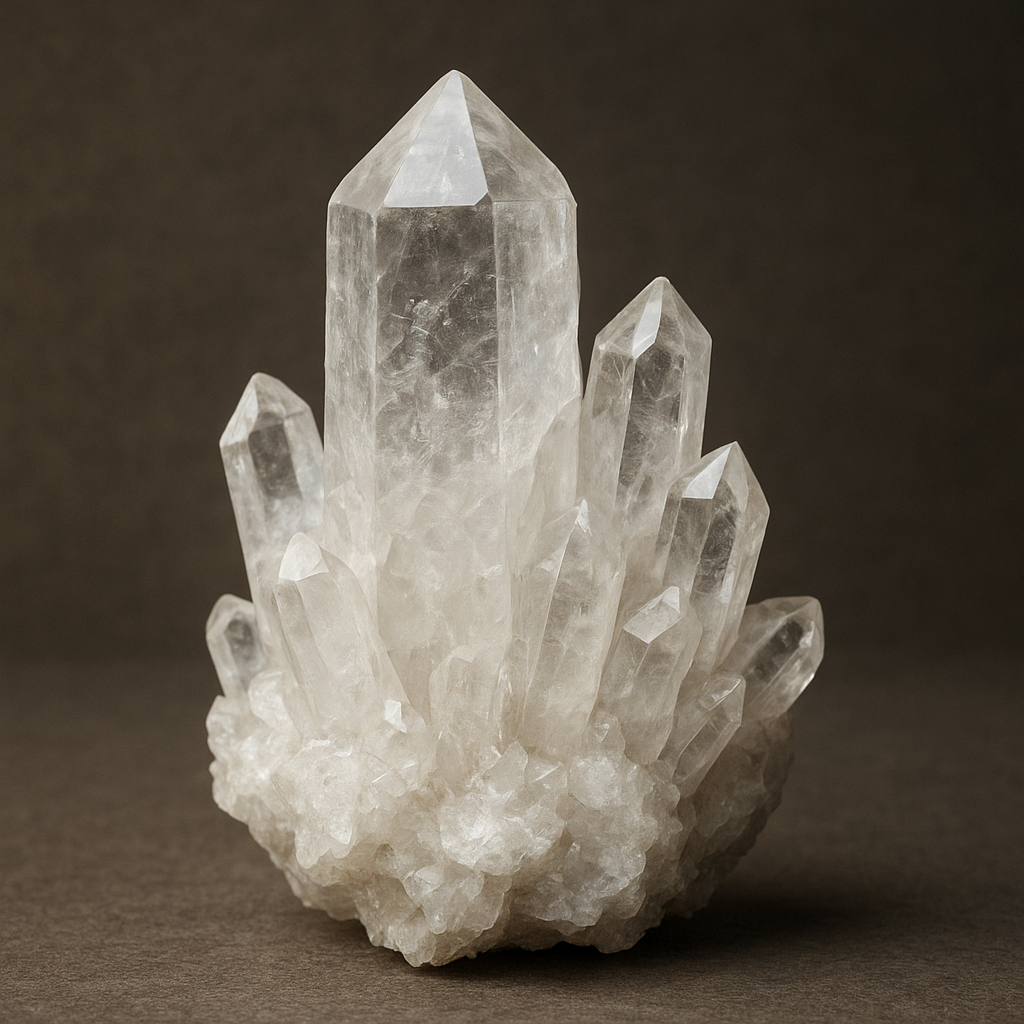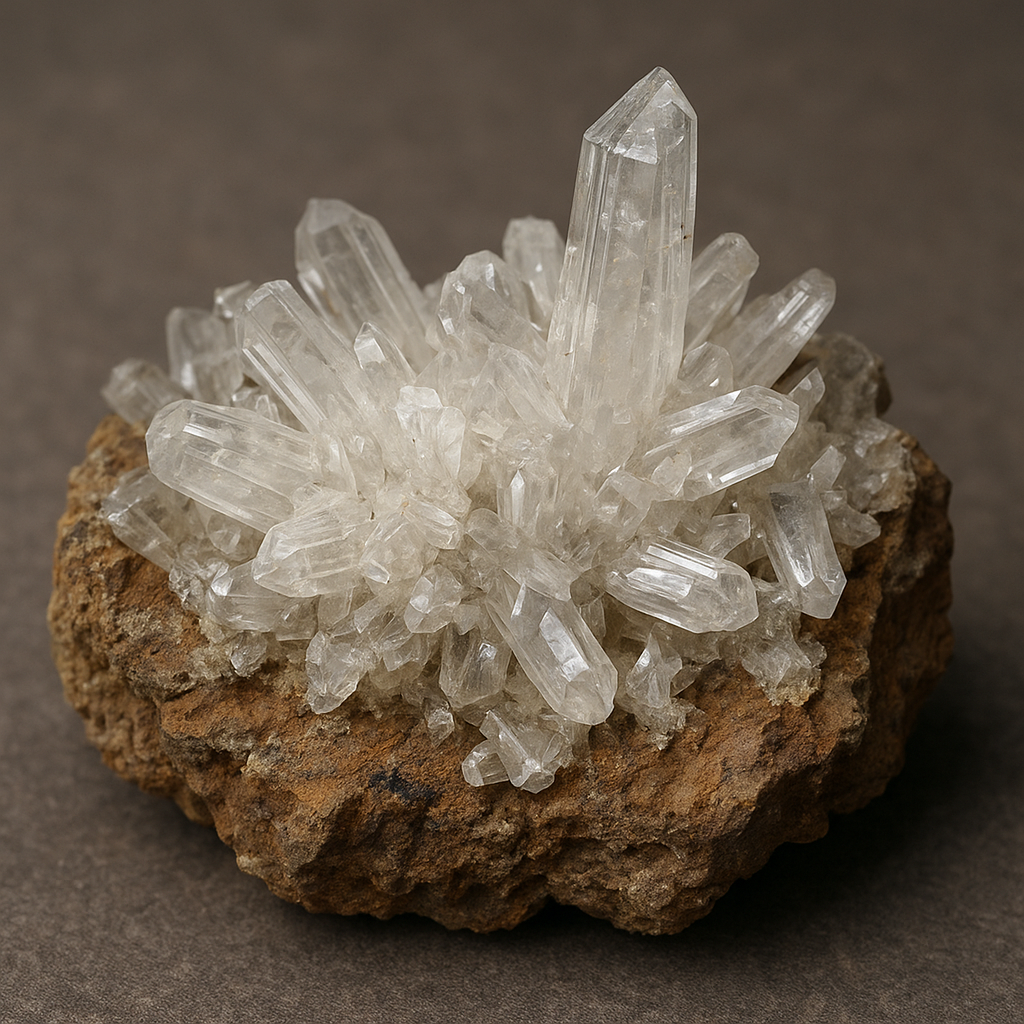
Cerussite is a captivating and historically significant mineral that combines scientific interest with aesthetic appeal. Composed of lead carbonate, it frequently forms brilliant, gem-like crystals with an almost unparalleled luster. Because of its close association with lead ores and its distinctive physical properties, cerussite occupies an important place in mineralogy, the history of pigments, and the world of mineral collecting. This article explores where cerussite is found, how it forms, its notable properties, historical and modern uses, and the environmental and safety issues that accompany any mineral rich in lead.
Occurrence and Geological Formation
Cerussite (chemical formula PbCO3) is a secondary mineral typically produced in the oxidation zones of lead-bearing deposits. It forms when primary lead minerals, most commonly galena (lead sulfide), are exposed to weathering and oxidizing fluids near the Earth’s surface. These fluids, often containing dissolved carbonate from groundwater or host rocks, react with soluble lead species to precipitate lead carbonate. The result can be delicate, lustrous crystals or more massive, fine-grained aggregates.
The mineral crystallizes in the orthorhombic system and is known for its remarkable variety of habits: short to elongated prismatic crystals, tabular forms, reticulated groups, and even twinned or spear-like morphologies. One of the striking phenomena associated with cerussite is pseudomorphism, where cerussite replaces other lead minerals retaining the original external shape. Pseudomorphs after galena and after anglesite are commonly reported and are prized by collectors because they reveal the complex paragenesis of oxidized lead deposits.
Cerussite occurs worldwide but is best known from a number of famous localities. Among the most celebrated sources are:
- Tsumeb, Namibia — legendary for superb, often complex and lustrous cerussite crystals that are colorful and sharp.
- Mibladen and Touissit, Morocco — prolific sources of attractive cerussite specimens that have supplied the collector market for decades.
- Broken Hill, Australia — a historic lead-zinc district yielding large and twinned crystals.
- Schneeberg and Rammelsberg, Germany — classic European mining districts with well-documented cerussite occurrences.
- Bisbee, Arizona, USA — an important North American locality noted for aesthetic mineral combinations.
These and other oxidized lead deposits in Europe, Africa, Australia, and the Americas often yield cerussite alongside other secondary minerals such as anglesite (lead sulfate), hemimorphite, smithsonite, and assorted iron oxides.
The conditions favoring cerussite formation are typically relatively low temperatures and near-surface, oxidizing environments. Carbonate ions necessary for PbCO3 precipitation may come from limestone host rocks, atmospheric CO2 dissolved in water, or carbonate-bearing alteration zones. As oxidation progresses, sulfur from sulfide minerals is removed (often as sulfate), iron and other metals may be mobilized and re-precipitated, and lead becomes available in oxidized forms that can combine with carbonate to form cerussite. Because these environments are dynamic, cerussite crystals can be delicate, with complex growth histories and zoning that record changes in fluid composition and redox conditions over time.
Physical and Optical Properties
Cerussite is remarkable for several physical and optical characteristics that distinguish it from many other minerals. Its high specific gravity, pronounced crystal luster, and extreme refractive indices make it visually striking and — in suitable specimens — gem-like in appearance.
Key properties include:
- Crystal system: Orthorhombic, often showing well-developed prismatic or tabular forms and frequent twinning.
- Hardness: Relatively low on the Mohs scale, approximately 3.0 to 3.5, which means it is soft compared to most gemstones and can be scratched easily.
- Density: High for a non-metallic mineral, typically about 6.5 to 6.6 g/cm3, reflecting the presence of heavy lead atoms in the structure.
- Luster: Often adamantine to subadamantine, providing a brilliant, diamond-like sheen on fresh crystal faces.
- Optical properties: Very high refractive indices (often near 2.9) and strong birefringence; these factors contribute to exceptional brilliance in well-formed, clean crystals.
- Cleavage: Perfect in some directions, making crystals brittle and susceptible to breakage along cleavage planes.
The color of cerussite ranges from colorless and white to shades of gray, brown, or pale green depending on trace impurities or surface coatings. Transparent to translucent material with well-formed faces can be exceptionally sparkling and occasionally is cut as collector gems. However, its softness, brittleness, and perfect cleavage make it impractical for most jewelry uses, especially items that would be exposed to abrasion or impact.
Uses, Historical Context, and Cultural Significance
Cerussite’s role in human history is most prominently linked to the production of white lead pigments. For centuries, lead carbonates — historically referred to as “white lead” or “ceruse” — were valued for their opaque, stable, and workable white pigment. Painters from the Renaissance through the 19th century prized white lead for its coverage and drying properties, and it was a staple of oil painting techniques.
The historical use of lead-based white pigment had profound cultural consequences. Great works by old masters often derived part of their tonal palette from lead-based whites, influencing painting techniques, restoration practices, and conservation science. However, as the toxic nature of lead compounds became clear, the manufacture and use of lead white were increasingly restricted and eventually largely replaced by safer alternatives (such as titanium dioxide) in the 20th century.
Beyond the pigment trade, cerussite historically served as a minor ore of lead. In many oxidized lead deposits, it was an indicator mineral signaling the presence of economic lead resources. Mining operations that recovered lead for use in alloys, batteries, and construction materials often encountered cerussite among the oxidized minerals in the upper parts of deposits.
In modern times the principal significance of cerussite is largely mineralogical and educational. Its spectacular crystals are highly sought by collectors and museums. Gem cutters occasionally facet exceptionally clear and well-formed cerussite crystals for collectors, producing small display gems with extraordinary brilliance. Because the mineral is soft and brittle, such gems are regarded as novelty or collector items rather than daily-wear jewelry.
Collecting, Care, and Safety Considerations
Collectors prize fine cerussite specimens for their aesthetic qualities and the scientific story they tell about ore deposit evolution. When acquiring or caring for cerussite, a few practical and safety considerations are important.
- Handling: Due to its perfect cleavage and brittleness, cerussite should be handled gently. Many specimens benefit from protective packaging and a secure display mount to prevent stress and breakage.
- Cleaning: Avoid harsh mechanical cleaning or ultrasonic baths that can fracture delicate crystals. Soft brushes and gentle air-blowing or light rinses are typical conservation approaches; however, cleaning methods should respect the mineral’s fragility.
- Toxicity: Cerussite is rich in lead, a heavy metal with significant toxicity to humans and wildlife. While intact, stable specimens pose limited risk, precautionary measures are sensible: wash hands after handling, avoid touching your face, keep specimens away from children and pets, and store them in sealed cases if possible.
- Display and storage: Stable environmental conditions reduce the chance of mechanical damage. Avoid exposing delicate crystals to abrupt temperature or humidity shifts. For long-term storage, inert padding and individualized containers help prevent accidental abrasion.
Museums and professional collectors often follow established conservation protocols when preparing cerussite for exhibition. These protocols emphasize both the aesthetic preservation of specimens and minimization of any lead exposure to staff or the public. Institutions also routinely document provenance and associated mining history, linking specimens to the broader narrative of mining heritage.
Environmental and Health-Related Topics
Because cerussite is a lead-bearing mineral, it intersects with broader environmental and public health issues connected to lead contamination. Lead released from mining, smelting, or degraded pigments has contaminated soils, water, and old building materials in many regions, producing long-term health risks including neurological effects, especially in children.
Remediation of contaminated sites often involves identifying and managing lead-bearing minerals and secondary phases like cerussite. Understanding mineral stability, mobility, and weathering behavior helps environmental scientists predict how lead moves through soils and groundwater systems and informs remediation strategies. Importantly, cerussite can both immobilize and release lead depending on pH, redox conditions, and the presence of complexing agents, so its presence must be interpreted carefully in environmental assessments.
On the cultural heritage side, conservation scientists working on historical paintings and artifacts must navigate the tension between preserving lead-based materials and minimizing health risks to restorers. Analytical techniques that identify cerussite and related lead compounds in paint layers are essential for making informed conservation decisions.
Interesting Mineralogical Phenomena and Research Directions
Cerussite continues to intrigue researchers and collectors alike because of several remarkable phenomena:
- Twinning and morphological diversity: Cerussite often displays complex twinning that creates star-like or spear-shaped aggregates; these forms challenge crystallographers and delight collectors for their symmetry and aesthetic appeal.
- Optical extremes: With unusually high refractive indices for a carbonate, cerussite provides case studies in the interaction of crystal chemistry and optical behavior; it is sometimes used in teaching to illustrate high-index minerals.
- Pseudomorphism and paragenesis: Cerussite’s occurrence as pseudomorphs after galena reveals stepwise alteration sequences in ore bodies; detailed study of such specimens yields insights into fluid chemistry and timing of mineralization events.
- Conservation science: Research into lead carbonate transformations under varying environmental conditions informs both site remediation and strategies for conserving painted surfaces that contain lead-based pigments.
Recent mineralogical studies focus on the micro-scale mapping of compositional zones in cerussite using electron microscopy and spectroscopy, clarifying how trace elements and minor phases record fluid composition and redox history. Such work not only enhances academic understanding but also assists practical applications like mining exploration and environmental geochemistry.
Practical Advice for Enthusiasts and Professionals
If you are a collector, student, or professional interested in cerussite, here are practical pointers:
- Seek specimens from reputable dealers or museums with clear locality data and provenance — the story behind a specimen often adds to its scientific and aesthetic value.
- Learn basic mineral identification techniques: crystal habit, density, hardness, and luster combined with simple optical observations help distinguish cerussite from look-alike minerals.
- Respect safety guidelines: handle specimens carefully, avoid ingestion or inhalation of dust, and use gloves if you will be handling specimens frequently.
- Engage with the mineralogical community: publications, mineral clubs, and museum exhibits are excellent resources for learning about notable localities, recent finds, and conservation approaches.
Cerussite represents a fascinating intersection of beauty, science, history, and caution. From the microstructures that record ancient fluids to the brilliant crystals that grace cabinets and galleries, this lead carbonate mineral invites both admiration and respect. Whether you approach it from the perspective of a collector, a geologist, a conservator, or an environmental scientist, cerussite offers a rich subject for observation and study.