
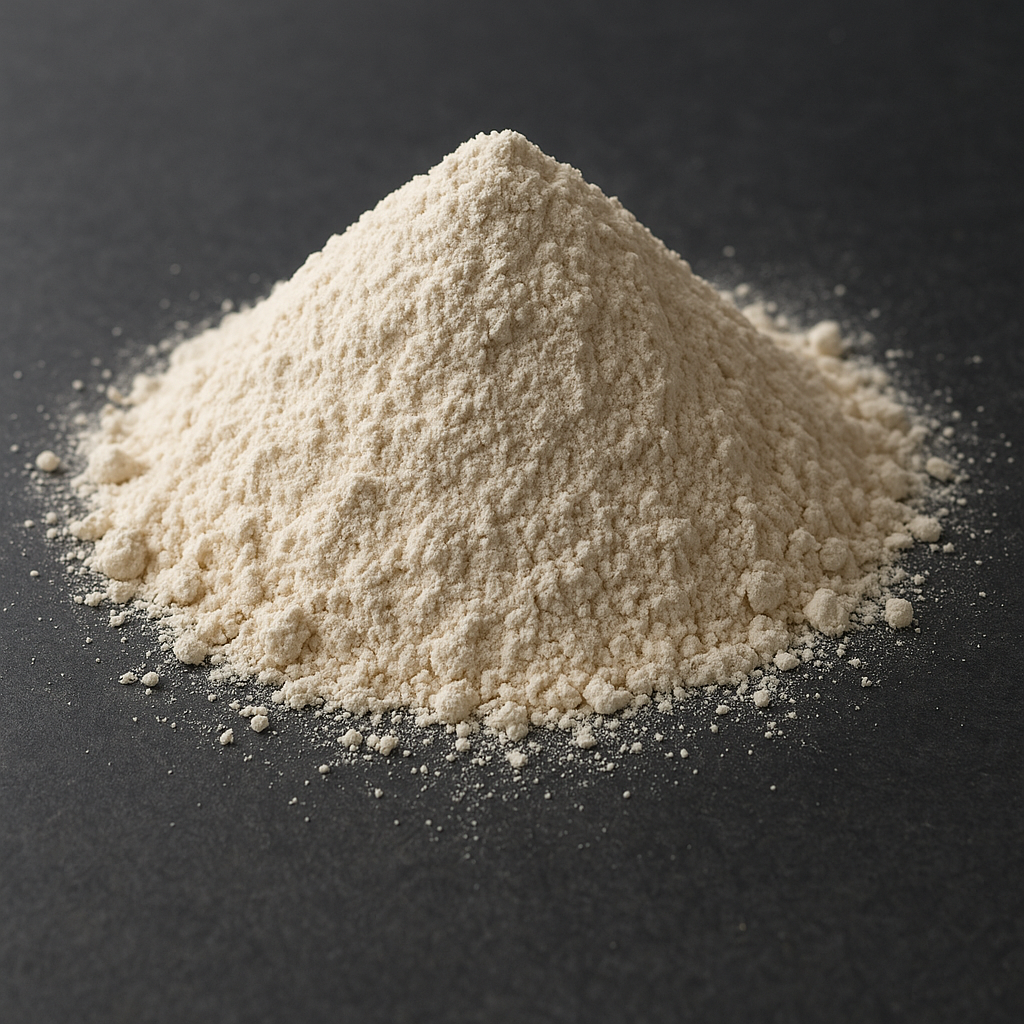
Cerium oxide is a versatile inorganic compound whose combination of unique electronic structure and surface chemistry has made it central to technologies ranging from automotive catalysts to precision glass polishing. This article explores where cerium oxide is found in nature and industry, how its distinctive properties arise from atomic-level features, and why researchers and manufacturers continue to seek new applications. Along the way, practical aspects of production, environmental and health considerations, and emerging trends in nanomaterials and catalysis are highlighted.
Natural occurrence and industrial sources
Cerium itself is one of the most abundant elements among the rare earths, commonly present in a variety of minerals rather than as a free element. Commercial production of cerium oxide typically begins with mining and processing of rare earth ores such as bastnäsite, monazite and euxenite, which contain significant concentrations of cerium together with other lanthanides.
- Major deposit regions include parts of China, the United States, Brazil, Australia, India and several countries in Southeast Asia. China dominates refinery capacity and global supply chains for rare earth oxides.
- After mining, separation processes such as solvent extraction and ion exchange isolate cerium from neighboring lanthanides. The separated cerium is then oxidized and calcined to produce the stable oxide form widely used in industry.
- Recycling streams — for example from spent automotive catalysts and polishing slurries — are becoming increasingly important as demand for rare earth elements grows and supply chains are reconsidered for resilience.
Crystal structure, electronic behavior and key properties
The remarkable functionality of cerium oxide comes from its fluorite-type crystal lattice and the ability of cerium atoms to switch between oxidation states. This redox flexibility underpins many of the oxide’s technological uses.
Ceramic lattice and defect chemistry
In its most common stoichiometry, cerium oxide exists as cerium(IV) oxide, CeO2, often called ceria. The fluorite structure provides a stable, three-dimensional framework in which oxygen ions can be removed and reinserted while preserving the lattice. When some Ce4+ ions are reduced to Ce3+, the material compensates by forming oxygen vacancies, which are empty lattice sites that increase ionic mobility and surface reactivity.
Redox behavior and oxygen storage
One defining characteristic is a reversible Ce4+/Ce3+ redox pair that grants ceria a high oxygen storage capacity (OSC). This makes it uniquely effective at supplying or absorbing oxygen during catalytic cycles, stabilizing precious metal catalysts, and maintaining reaction stoichiometry in exhaust treatment systems. The interplay of surface defects, oxygen mobility, and electronic states at Ce ions supports fast oxygen exchange under a range of temperatures.
Nanostructuring effects
When prepared as nanoparticles or thin films, ceria displays enhanced surface area and a higher density of active sites. Particle size, morphology and dopants (for example zirconium, gadolinium or samarium) can tune both the redox potential and thermal stability. Nanostructured ceria offers superior catalytic performance and is central to emerging applications in energy and biomedical fields.
Established industrial applications
Cerium oxide’s combination of chemical stability, redox flexibility and mechanical properties has led to a broad suite of commercial uses. The following sections describe the most impactful and well-established applications.
Automotive exhaust control
Perhaps the highest-volume use of ceria is in automotive catalysis. Ceria-based oxides, often alloyed with zirconium, are integral components of three-way catalysts (TWC), diesel oxidation catalysts (DOC), and particulate filters. Their catalyst support role helps buffer oxygen levels, enabling efficient conversion of carbon monoxide, hydrocarbons and nitrogen oxides. Additionally, ceria contributes to the thermal stability of the catalytic washcoat and helps regenerate soot-laden filters.
Polishing and optical finishing
Cerium oxide powders are the standard for precision polishing of glass, silicon wafers and gemstones. The chemical-mechanical interaction between ceria particles and silica surfaces produces exceptionally smooth optical finishes. The activity in such slurries depends on particle size, surface chemistry and pH. In the optics industry, ceria-based slurries are prized for producing defect-free surfaces at micron and sub-micron scales — a process often simply called polishing.
Solid oxide fuel cells and oxygen sensors
Ceria and doped ceria electrolytes are used in solid oxide fuel cells (SOFCs), where their oxygen ion conductivity contributes to lower operating temperatures and improved durability. In sensor technology, ceria’s oxygen exchange properties are exploited to create robust sensing elements for detecting oxygen partial pressure in combustion environments or exhaust streams.
Catalysis beyond automotive
Beyond vehicle emissions control, ceria supports a wide array of redox and oxidation catalysts in chemical manufacturing — including oxidation of volatile organic compounds (VOCs), water-gas shift reactions, and selective catalytic reduction variants. Pairing ceria with noble metals (Pt, Pd, Rh) enhances activity and longevity because ceria can store and release oxygen to maintain active metal surfaces.
Emerging science and novel applications
Researchers continue to discover new roles for cerium oxide, particularly in nanoscale formulations that exploit catalytic and surface interactions in unconventional settings.
Biomedical and antioxidant uses
Nanoceria has attracted attention for its reported ability to scavenge reactive oxygen species (ROS) in biological systems. Because cerium alternates between oxidation states, it can mimic natural antioxidant enzymes in some contexts, leading to exploration of therapeutic applications for inflammatory diseases, neuroprotection and tissue engineering. However, biological interactions are complex: benefits seen in cell and animal studies coexist with concerns about particle persistence, biodistribution and context-dependent toxicity.
Energy and environmental remediation
Ceria-based materials are being investigated for solar fuel generation, photocatalytic water splitting and CO2 reduction. The material’s capacity to facilitate oxygen atom transfer and stabilize reactive intermediates makes it a promising component in composite photocatalysts. In environmental cleanup, ceria catalysts can support decomposition of pollutants and conversion of toxic compounds at lower temperatures than conventional catalysts.
Electronics and phosphors
Historically, cerium-doped phosphors have been crucial in lighting and display technologies. Cerium ions incorporated into various host lattices produce desirable luminescent properties. Meanwhile, conductive and dielectric forms of ceria find niche roles in microelectronics and protective coatings.
Production processes and material design
Manufacturers tailor ceria for its intended application through controlled synthesis and post-treatment. Choices in process strongly influence particle size, surface chemistry, defect concentration and phase stability.
- Precipitation and hydrothermal routes produce powders with controllable morphology and crystallinity.
- Synthesis by flame spray pyrolysis and sol-gel methods yield high-purity nanopowders useful in catalysis and polishing.
- High-temperature calcination and mechanical milling adjust surface area and reactivity; doping with other rare earths or transition metals changes oxygen vacancy formation energies and thermal stability.
Characterization and metrics of performance
Understanding ceria’s function requires a suite of analytical tools. X-ray diffraction (XRD) defines crystalline phases; transmission electron microscopy (TEM) and scanning electron microscopy (SEM) reveal particle size and morphology. X-ray photoelectron spectroscopy (XPS) and electron energy loss spectroscopy (EELS) probe oxidation states and electronic structure, while Raman spectroscopy can detect defect-related vibrational modes. Performance metrics in catalysis include oxygen storage capacity (OSC), turnover frequency (TOF), and long-term thermal stability under cycling conditions.
Environmental, health and safety considerations
Despite its many benefits, cerium oxide raises environmental and occupational concerns that depend strongly on particle form, size and exposure pathway. Bulk ceria is relatively inert and widely used in industrial contexts with established handling practices, but engineered nanoparticles can behave differently.
- Emissions: Use of ceria-containing additives in fuels or as part of wear debris may increase nanoparticle emissions; environmental fate and potential ecotoxicity are active areas of study.
- Toxicology: In vitro and in vivo studies show a range of biological effects, from antioxidant protection to pro-inflammatory responses. Surface coatings, dose and aggregation state critically influence outcomes.
- Regulation and workplace safety: Industries handling ceria powders implement dust control, respiratory protection and exposure monitoring. Recycling and end-of-life management of ceria-containing wastes are gaining attention as production scales up.
Challenges, controversies and future directions
Several technical and societal challenges shape the future trajectory of ceria technologies. Supply chain concentration for rare earth extraction has prompted interest in recycling and alternative materials. Nanomaterial safety and lifecycle impacts drive tighter scrutiny and the need for standardized testing. On the technical front, researchers aim to improve thermal durability, reduce reliance on precious metals by enhancing ceria’s intrinsic activity, and design composite materials that leverage synergistic effects.
Materials innovation
Key research directions include tailored doping strategies to stabilize oxygen vacancies at high temperatures, hierarchical nanostructures that balance surface area with sintering resistance, and hybrid catalysts that combine ceria with perovskites or other oxide families to expand functionality.
Policy and sustainability
Scaling up uses of ceria—especially in emerging nanotechnology applications—will require robust environmental assessment and responsible sourcing. Strategies such as urban mining of spent catalytic converters, solvent extraction improvements to reduce environmental impact, and international cooperation on rare earth supply resilience are important elements of a sustainable approach.
Notable curiosities and practical tips
Some less-obvious but interesting facts and practical notes about cerium oxide:
- “Optical grade” ceria powders used for glass finishing often command premium pricing because their particle size distribution and surface chemistry are tightly controlled for defect-free polishing.
- Small additions of zirconium to ceria dramatically improve thermal stability and oxygen transport at elevated temperatures — a reason why ceria-zirconia mixed oxides are ubiquitous in automotive catalysts.
- Although ceria is often associated with modern high-tech applications, its use in glass polishing and as a polishing agent dates back many decades, demonstrating a rare continuity from craft to high technology.
- In laboratory studies, the reversible color change between pale yellow (Ce4+-dominant) and darker shades (increasing Ce3+ concentration) can serve as a visual clue to redox state changes.
Through a combination of unique defect chemistry, configurable nanoscale behavior and broad industrial relevance, cerium oxide continues to be a material of central importance in catalysis, energy, optics and emerging biomedical research. Its story illustrates how an element that is relatively abundant in the crust can become indispensable once its atomic-scale properties are harnessed and engineered for practical use.