
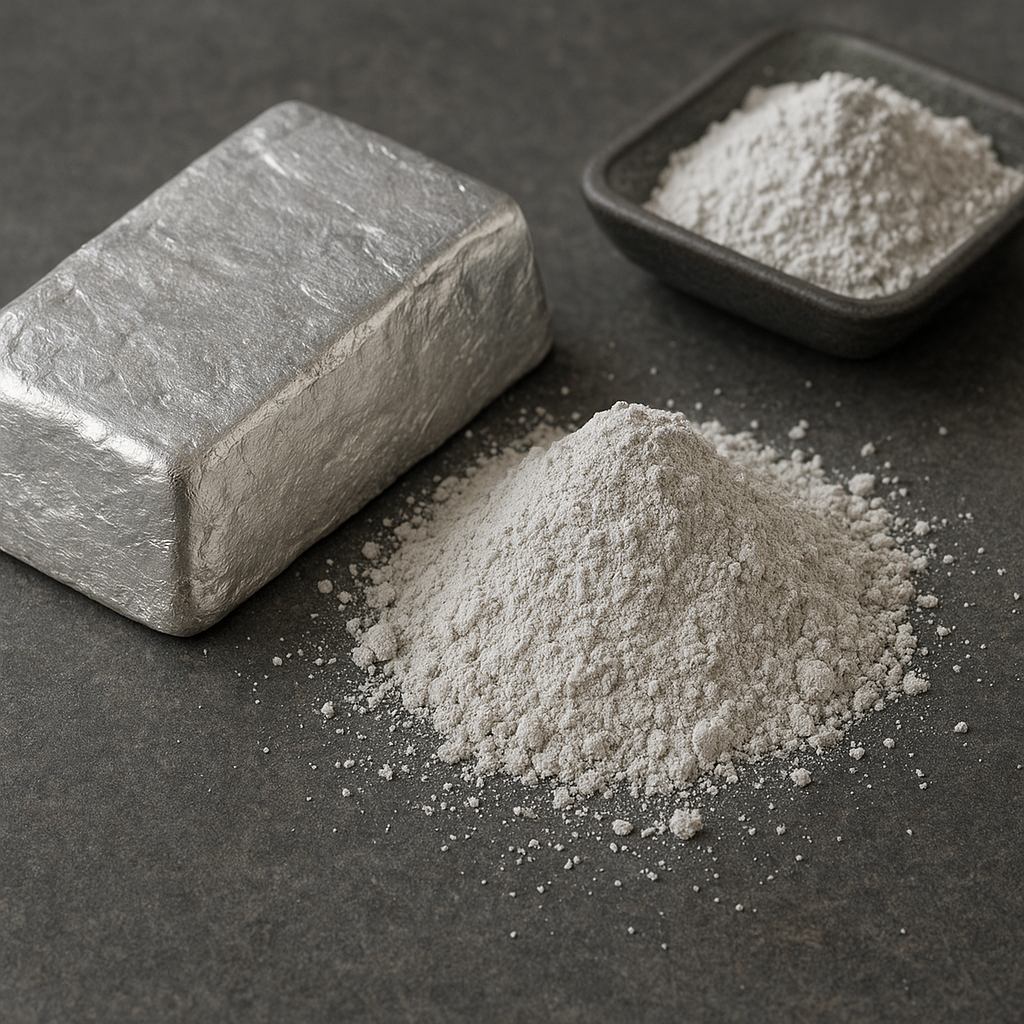
Cerium is a fascinating element that bridges classical inorganic chemistry, modern materials science and pressing global economic issues. Often classified among the “rare-earths,” cerium is in fact relatively abundant in the Earth’s crust, yet its unique chemical behavior — most notably the stability of both +3 and +4 oxidation states — gives it outsized technological importance. This article explores where cerium is found, how it is extracted and processed, the many industrial and scientific uses it supports, and some intriguing developments and controversies around its advanced applications.
Occurrence and Extraction
Cerium is a member of the lanthanide series and is the most abundant of the so-called rare-earth elements. In natural settings it rarely appears as a free element; instead it is incorporated into a variety of minerals. The most commercially important sources are the phosphate mineral monazite and the carbonate-fluoride mineral bastnäsite, which together supply the bulk of mined cerium worldwide. Other occurrences include the mineral xenotime and weathered rare-earth-bearing placers and carbonatites.
Geological distribution
- Monazite often occurs in heavy-mineral sands alongside zircon and ilmenite; it can contain significant concentrations of thorium and uranium, which complicates processing.
- Bastnäsite deposits are found in potash-rich carbonatite complexes; large reserves exist in China, the United States (especially the Mountain Pass deposit in California), Brazil and Kazakhstan.
- Cerium concentration is higher in alkaline igneous rocks and hydrothermal deposits; globally it is distributed more widely than many base metals, making it geologically common despite the “rare-earth” label.
Mining and separation
Extraction begins with traditional mining and mineral concentration. The real technical challenge is the separation of lanthanides, whose chemical properties are similar. Historically this was done by fractional crystallization, but modern industry relies on solvent extraction and ion-exchange techniques to separate cerium from neighboring rare-earths such as lanthanum, praseodymium and neodymium. A particular complication with cerium is its variable oxidation states: while most lanthanides are stably trivalent, cerium can be oxidized to the +4 state and precipitated as cerium(IV) oxide, which is exploited in some separation schemes.
China dominates global production of rare-earth oxides, including cerium oxide, due to its large deposits and developed processing industry. This geographic concentration has led to geopolitical concerns and initiatives in other countries to diversify supply chains, develop domestic refining capacity and expand recycling.
Chemistry and Key Properties
Cerium’s atomic number is 58, and its electronic structure gives it a single 4f electron in the trivalent state. Two features make cerium chemically notable: its ability to adopt both +3 and +4 oxidation states under accessible conditions, and the physicochemical behavior of cerium dioxide (often referred to as ceria). CeO2 has a fluorite crystal structure and an exceptional capacity to create and heal oxygen vacancies, enabling rapid oxygen exchange with the environment.
- Redox flexibility: The Ce(IV)/Ce(III) couple is central to many catalytic and redox applications.
- Oxygen storage and transport: Ceria can absorb oxygen when oxidized and release it when reduced, making it a dynamic oxygen buffer under changing atmospheres.
- High stability as an oxide: CeO2 is refractory and chemically robust at elevated temperatures.
At the nanoscale, cerium oxide particles acquire additional functionality: they develop high surface areas and enhanced redox cycling that make them attractive for catalytic, biomedical and environmental uses. However, nanoscale materials also raise questions about toxicity, environmental fate and safe handling.
Major Applications
Cerium’s materials properties underpin a wide spectrum of applications, from everyday products to advanced energy technologies. Below are the primary commercial and scientific uses.
Automotive and catalysts
One of ceria’s most important roles is in automotive emission control. In three-way catalytic converters for gasoline engines, ceria functions as an oxygen buffer: when the exhaust composition alternates between oxidizing and reducing conditions, ceria stores excess oxygen by forming CeO2 and releases it as Ce2O3 when oxygen is scarce, helping the precious metal catalysts (platinum, palladium, rhodium) maintain high conversion efficiency for CO, NOx and hydrocarbons. Ceria-based materials are also deployed in diesel oxidation catalysts and in formulations for particulate filters.
Glass and polishing
Cerium oxide is the standard polishing agent for precision glass and optical surfaces. Its chemical-mechanical polishing action gives excellent surface quality for lenses, mirrors and smartphone screens. Cerium compounds are also used in glass manufacturing to control color: small amounts of cerium can counteract the greenish tint caused by iron impurities and act as a UV absorber to protect optical components.
Metallurgy and mischmetal
Cerium is a component of mischmetal, a mixture of light rare-earth elements used historically in lighter flints (ferrocerium) and in specialty alloys. Cerium improves castability and heat resistance in certain aluminum and magnesium alloys and can replace more harmful elements like lead in some free-cutting steels. In the metallurgical industry, minor additions of cerium change grain structure and influence corrosion behavior.
Phosphors, lighting and electronics
Cerium-doped phosphors are central to the white light produced by many LEDs. Yttrium aluminum garnet doped with cerium (YAG:Ce) converts blue LED emission into broad yellow-orange light that, combined with residual blue, yields white light. Cerium dopants are also used in scintillators and luminescent materials for displays and radiation detection.
Organic chemistry and industrial reagents
Ceric ammonium nitrate (CAN) and other cerium salts are used as one-electron oxidants in synthetic organic chemistry. CAN is valued for selective oxidations, deprotection reactions and as a mediator in radical chemistry. The utility of Ce(IV) reagents highlights the broader significance of cerium’s redox chemistry beyond materials science.
Energy and environmental technologies
Ceria-based materials are being explored in several energy-related applications: as oxygen-conducting layers and catalyst supports in solid oxide fuel cells (often doped with gadolinium to enhance ionic conductivity), as components in water-splitting cycles for solar thermochemical hydrogen production, and as catalysts for removing volatile organic compounds. In environmental remediation, cerium oxide supports help disperse active metal nanoparticles and resist sintering at high temperatures.
Nanoceria and Biomedical Research
At the nanoscale, cerium oxide displays enzyme-mimetic properties: it can scavenge reactive oxygen species by cycling between Ce(III) and Ce(IV) states, acting in some contexts as a catalytic antioxidant. These properties have drawn interest for potential therapeutic uses — for example, reducing oxidative stress in neural or retinal tissues, protecting against radiation damage, or serving as a neuroprotective agent in models of stroke or degenerative disease.
Research on nanoparticles of cerium oxide (“nanoceria”) is highly active but mixed: promising biological effects in controlled experiments contrast with concerns about long-term toxicity, biodistribution and environmental impacts. The surface chemistry, size, coating and aggregation state of nanoceria dramatically influence biological interactions, so translational applications require careful safety evaluation and robust clinical data that are not yet available.
Economic and Geopolitical Considerations
Despite being relatively abundant, the production of cerium and other rare-earth elements is concentrated geographically and industrially. China has dominated the extraction, separation and refining capacity for decades, which led to supply vulnerabilities in the global market and efforts by other countries to develop alternative sources, process technologies and strategic stockpiles. The presence of radioactive contaminants (thorium and uranium) in monazite requires careful regulatory and waste-management practices, further complicating new mining efforts.
Recycling represents both an economic opportunity and a technical challenge. Cerium is recoverable from used polishing slurries, catalytic converter washcoats and end-of-life electronics, but efficient collection, separation and purification technologies are necessary to make recycling viable at scale. Policy incentives, extended producer responsibility schemes and investment in separation technologies may increase secondary supply in the coming years.
Environmental, Health and Safety Issues
Cerium metal and common compounds have moderate toxicity compared to many heavy metals, but inhalation of fine powders and nanoparticles can pose respiratory risks. The environmental behavior of cerium, particularly in nanoparticle form, is complex: cerium can persist in soils and sediments, interact with organic matter and metals, and potentially influence microbial communities. Occupational exposure controls, proper waste handling and lifecycle assessments are essential components of responsible cerium use.
- Mining impacts: land disturbance, tailings management and radionuclide disposal are key concerns.
- Processing emissions: solvent extraction and chemical processing must be managed to avoid local contamination.
- Nanomaterial risks: surface coatings, aggregation and dissolution rates determine biological interactions and should guide product design.
Interesting Scientific Frontiers
Several active research areas promise to expand cerium’s role in future technologies:
- Solar fuel production: Ceria redox cycles for thermochemical splitting of water and CO2 are investigated for sustainable hydrogen and syngas production. Ceria’s ability to release oxygen at high temperature and re-oxidize at lower temperatures enables cyclical redox processes coupled to concentrated solar power.
- Advanced catalysis: Tailoring ceria nanostructures, creating strong metal-support interactions and engineering oxygen vacancy patterns can dramatically change activity and selectivity in important reactions (e.g., methane activation, NOx reduction).
- Ionic conductors: Doped ceria is an important component in advanced fuel cell and sensor technologies due to enhanced oxygen-ion transport.
- Biomedical devices: Surface-functionalized nanoceria for targeted antioxidant therapy, imaging contrast agents or theranostic platforms are under study but require deep safety validation.
History and Cultural Notes
Cerium was discovered in 1803 by Swedish chemists Jöns Jakob Berzelius and Wilhelm Hisinger and independently by German chemist Martin Heinrich Klaproth. The element is named after the dwarf planet Ceres, which itself had been discovered just a few years earlier. The early history of rare-earth chemistry involved laborious separations and characterization; cerium’s ability to form a stable +4 oxide made it stand out among its neighbors and easier to isolate in certain forms.
Over time cerium moved from laboratory curiosity to industrial staple, driven by innovations in glassmaking, metallurgy and, later, catalysis and electronics. The 20th and 21st centuries brought ever more sophisticated uses and a recognition that the element’s future is tied to global supply chains, environmental stewardship and continuing materials research.
Practical Notes for Researchers and Industry
Working with cerium compounds typically involves standard inorganic handling procedures, with attention to dust control and inhalation hazards. Cerium oxides are chemically stable, but finely divided powders should be managed as potential inhalation hazards. When designing ceria-based materials, researchers must consider doping strategies (e.g., Gd, Zr), surface treatments, and sintering behavior to tune oxygen vacancy concentration and transport properties.
- Analytical: X-ray diffraction, X-ray photoelectron spectroscopy (XPS) and electron microscopy are commonly used to probe oxidation state, surface chemistry and nanostructure.
- Processing: Sol-gel, hydrothermal and precipitation routes enable synthesis of tailored ceria morphologies (nanorods, nanocubes, porous networks).
- Scale-up: thermal stability, agglomeration and surface area loss on calcination are practical scale-up concerns.
Concluding Perspectives
Cerium occupies a special place among the elements: relatively common in the crust, yet chemically distinctive and technologically indispensable in many modern applications. Its redox flexibility, particularly embodied in ceria’s oxygen-storage behavior, fuels uses that range from catalytic converters to experimental solar fuel systems. At the same time, supply-chain realities, environmental impacts and health concerns — especially related to nanoscale materials — require careful management. Ongoing research into catalysis, energy conversion and biomedical interfaces promises to reveal new roles for cerium, while recycling and diversification of supply will shape its industrial future.