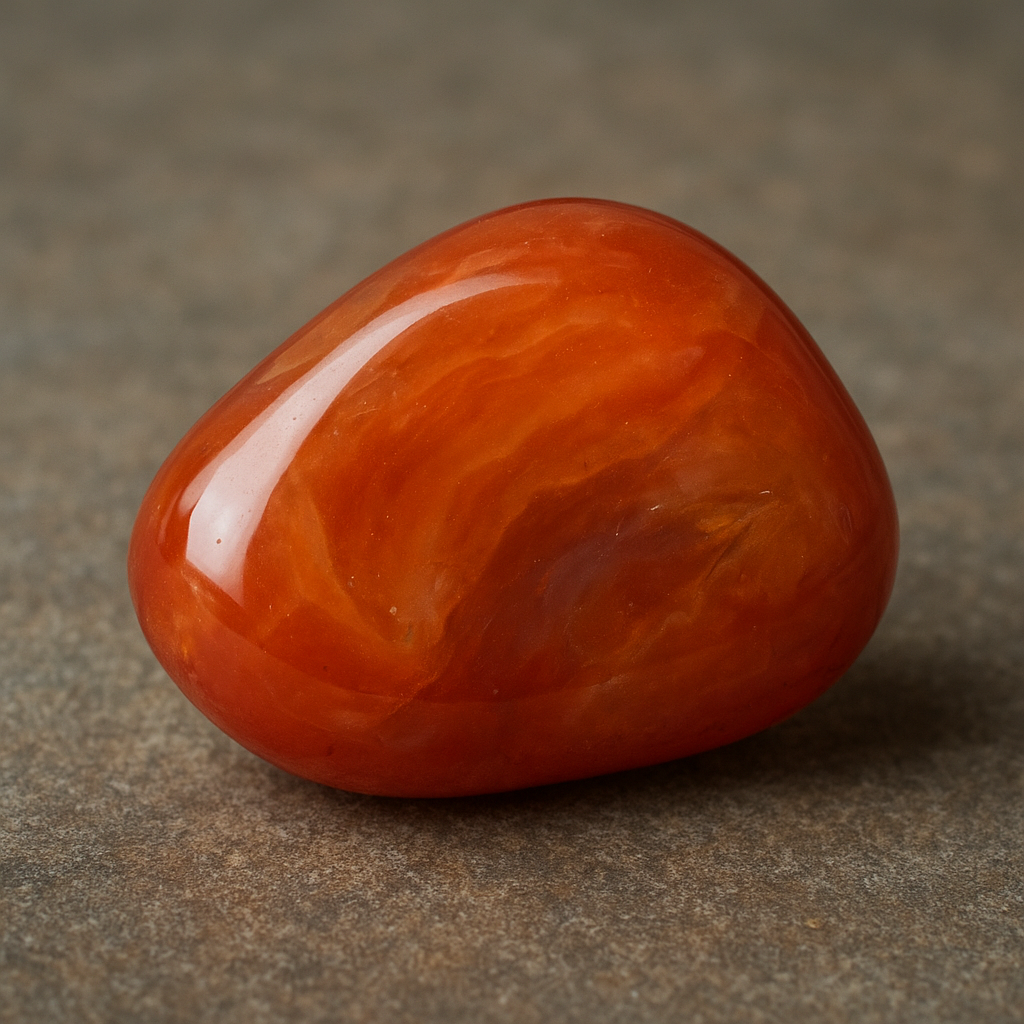
Carnelian is a warm, translucent variety of cryptocrystalline quartz that has been prized for millennia for its vivid orange to deep red hues. As a form of chalcedony colored by traces of iron, carnelian occupies a distinctive place between geology, art, and culture. This article explores the stone’s geological origins, global occurrences, historical uses, modern applications, methods of identification, and other intriguing facets that make carnelian both a collector’s favorite and a material rich in human story. Expect discussions of mining regions, lapidary techniques, imitations, and practical care, along with anecdotes and lesser-known facts that illuminate why this gemstone continues to fascinate.
Geology and Formation
Carnelian belongs to the microcrystalline quartz family, specifically to the group of stones known as chalcedony. At the atomic level, it is composed largely of silica (SiO2) arranged in microscopic fibrous crystals. The characteristic orange to reddish color results primarily from trace amounts of iron oxides distributed through the silica matrix. These iron inclusions may occur as fine particles of hematite or goethite that give the stone its warm tones and, when present in subtle variations, can create attractive banding or cloud-like patterns.
Formation Environments
Chalcedony, including carnelian, most commonly forms through the deposition of silica-rich fluids in cavities and fractures of volcanic or sedimentary rocks. Over geological time, circulating hydrothermal waters or silica-rich solutions from weathering processes precipitate microcrystalline quartz in voids left by gas bubbles, fossil decay, or structural openings. A slow deposition under stable chemical conditions allows fine fibrous crystals to interlock, creating the translucent to semi-translucent material gem cutters love.
Natural Versus Treated Color
Many pieces of carnelian show natural color bands or a uniform tone produced by natural iron distribution. However, the market also features heated and treated specimens. Heat treatment can intensify orange-red hues by altering iron compounds, and in some cases, light-colored chalcedony is artificially dyed to mimic richer carnelian shades. Understanding the difference between natural and treated material is important for collectors and jewelers when assessing value.
Historical and Cultural Significance
Carnelian has deep roots in human culture. For thousands of years it has been fashioned into beads, amulets, seals, and ornamental objects. The stone’s durability, pleasing color, and ability to take a high polish made it especially useful for signet rings and intaglios. Across civilizations, carnelian was often associated with protection, vitality, and social status.
Ancient Egypt and the Near East
In ancient Egypt, carnelian was a favored gemstone. It appeared in funerary jewelry, scarabs, and the famous pectorals of pharaohs. Egyptians often used carnelian alongside lapis lazuli and turquoise in elaborate inlays. The stone was associated with the life-giving power of the sun and was used in protective amulets. Egyptian artisans sometimes placed carnelian beads in tombs to accompany the dead and provide protections in the afterlife.
South Asia and the Indus Valley
In regions of present-day India and Pakistan, carnelian beads have been found in archaeological sites dating back to the Bronze Age, particularly in the Indus Valley Civilization. Sophisticated bead-making techniques—such as heat treatment, drilling, and polishing—show that ancient craftsmen achieved remarkable control over the material. Carnelian beads were traded widely across ancient trade networks, demonstrating the stone’s early role in commerce and cultural exchange.
Classical Antiquity to the Middle Ages
The Romans and Greeks used carnelian for rings and seals because its hardness and ability to take detailed carvings made it ideal for sealing wax. In medieval Europe, carnelian continued to be used for signet rings and religious artifacts. In Islamic cultures, carnelian engraved rings sometimes bore Qur’anic inscriptions and were believed to confer blessings and protection.
Mining Locations and Varieties
Carnelian occurs in many parts of the world. While it is not tied to a single famous mine the way some gemstones are, a few regions stand out for the quality and consistency of their material.
- India: Historically and presently a major source, especially for bead-grade material. Gujarat and Maharashtra have produced rich orange-red carnelian.
- Brazil: Produces chalcedony varieties including carnelian; Brazil supplies both jewelry and lapidary markets.
- Uruguay: Known for fine chalcedony and agate deposits, sometimes yielding attractive carnelian specimens.
- United States: Carnelian can be found in Oregon, Washington, and other states where agates and chalcedony are present.
- Madagascar: Supplies colorful stones across the chalcedony spectrum and is increasingly important in global markets.
- Germany and Sardinia: Historic European sources, with some archaeological significance.
Varieties of carnelian differ by translucency, hue, and patterning. Some show banding known as sard or sardonyx when combined with white chalcedony layers, creating stacked layers of color prized for cameos and intaglios. The terms carnelian and sard are sometimes used interchangeably, though sard typically denotes a darker, browner red while carnelian implies brighter orange-red tones.
Uses and Applications
While carnelian’s most visible role is in jewelry, its uses extend into art, industry, and cultural practices.
Jewelry and Decorative Arts
Carnelian is commonly cut as cabochons, beads, and occasionally faceted stones. Its warm palette pairs well with both gold and silver, making it versatile for rings, necklaces, bracelets, and earrings. Historically, carnelian was carved into cameos and signets because it held fine detail and resisted wear. Today’s designers use carnelian for statement pieces and as accent stones in mixed-material jewelry.
Intaglios and Seals
Because carnelian resists abrasion and takes an excellent polish, it was ideal for sealing wax impressions. Carved seals made from carnelian survive in museum collections, revealing intricate iconography and scripts. Even in modern times, collectors and reenactors value authentic-style carnelian intaglios for historical authenticity.
Lapidary and Craft Uses
Artists and lapidaries appreciate carnelian for inlay work, mosaics, and ornamental carving. The stone’s translucency allows for interesting light interactions when backlit or set in openwork designs. Carnelian is also commonly used in bead strings and rosaries, appreciated for its tactile warmth and color stability under normal wear.
Metaphysical and Folk Uses
In contemporary metaphysical circles carnelian is associated with energy, courage, and creativity. People use it in meditation, talismans, and chakra work. Although metaphysical claims are not scientific, they add to the stone’s cultural resonance and influence buying patterns in the wellness market.
Identification, Treatments, and Imitations
Understanding how to identify carnelian and recognize treatments or imitations is key for buyers and collectors.
Physical Properties
- Hardness: Carnelian rates about 6.5–7 on the Mohs hardness scale, making it durable for most jewelry.
- Luster: Waxy to vitreous when polished.
- Transparency: Ranges from translucent to opaque; high-quality carnelian is often translucent.
- Specific gravity: Around 2.58–2.64, typical for chalcedony.
Common Treatments
Heat is the most widespread treatment because it can deepen and stabilize the stone’s red-orange tones. Careful heating can transform pale or brownish material into more desirable hues by altering iron oxide chemistry. Dyeing is also used, particularly for lower-grade chalcedony that lacks desirable color. When purchasing high-value pieces, ask for disclosure from dealers about any treatment history.
Imitations and Simulants
A variety of materials can mimic carnelian, including glass, plastic, and dyed agates. Glass imitations may show bubbles or a different refractive behavior under magnification. Dyed materials can sometimes reveal color concentration near drill holes or surface fractures. Imitations may be attractive but usually command lower prices. Advanced testing—such as spectroscopy or specific gravity measurement—can distinguish natural carnelian from imitations or synthetic substitutes.
Care, Cutting, and Setting
Carnelian requires relatively straightforward care but benefits from attention to avoid damage and preserve its polish and color.
- Cleaning: Use warm soapy water and a soft brush; avoid steam cleaners if the stone is known to be dyed or stabilized.
- Storage: Store separately from harder stones like diamonds to prevent scratches; wrap in soft cloth or place in padded compartments.
- Setting: Carnelian is well suited to bezel and prong settings; bezel settings offer extra protection for edges.
- Exposure: Avoid prolonged exposure to harsh chemicals and excessive heat if the stone may be treated or dyed.
When cutting carnelian, lapidaries often prefer cabochon cuts to show color and translucency. Polishes that accentuate the stone’s lustrous surface enhance its visual appeal. For banded pieces such as sardonyx, lapidaries may orient the bands to maximize contrast and produce striking cameos or slices.
Market, Valuation, and Collecting
The value of carnelian depends on color intensity, translucency, size, and whether it has been treated. High-quality, richly colored, and evenly translucent stones command premiums, particularly when set in antique-style or artisan jewelry. Rarely, museum-grade carved intaglios or historically significant pieces reach notable prices at auction due to craftsmanship and provenance.
Buying Tips
- Request treatment disclosure: Ask whether the carnelian has been heated or dyed.
- Inspect the color: Look for even coloration and desirable translucency.
- Check craftsmanship: For beads and carvings, evaluate the quality of drilling and polish.
- Seek provenance for antiques: Provenance and archaeological context can add both monetary and scholarly value.
Interesting Facts and Modern Trends
Carnelian carries several curiosities and modern cultural trends worth noting.
- Ancient Trade Routes: Carnelian beads found far from their geological sources illustrate ancient trade networks linking South Asia, the Near East, and beyond.
- Color Symbolism: The stone’s warm tones have symbolized vitality, courage, and the sun across cultures.
- Resurgence in Design: Contemporary jewelry designers often pair carnelian with minimalist metals and geometric forms, bringing the stone into modern fashion contexts.
- Ethical Sourcing: As with many gemstones, buyers are increasingly interested in ethically sourced material; small-scale miners in Madagascar and India are becoming more visible in transparent supply chains.
- Scientific Study: Carnelian’s microstructure and iron chemistry interest mineralogists investigating how trace elements influence color in chalcedony.
Another intriguing angle is carnelian’s role in cultural continuity. Beads made of the same material link Bronze Age artisans to contemporary designers, forming a tangible thread through human creative expression. The stone’s endurance—both physically and symbolically—helps explain its persistent appeal.
Practical Uses Outside Jewelry
Though primarily known in ornamentation, carnelian has practical roles in education, craft, and small-scale applications. In geology and gemology teaching, thin slices and polished sections of carnelian help demonstrate microcrystalline structure and the effects of mineral impurities. In crafts, small carnelian cabochons and beads appear in mosaics, decorative boxes, and even in modern home décor where warm tones are desired. Collectors of minerals appreciate carnelian for its balance of accessibility, beauty, and historical resonance.
Case Studies
One notable case involves archaeological bead workshops in Gujarat, where archaeologists identified heat-treatment pits and drill fragments that reveal the technological sophistication of bead-makers thousands of years ago. Another involves conservation efforts where conservators must decide on cleaning protocols for ancient carnelian in museum collections—balancing removal of accreted deposits with preservation of patina and historical evidence.
Across contexts, carnelian remains a stone that bridges practical use and symbolic meaning, offering both a tactile pleasure and a window into human history and geology. Whether admired as a polished gem in contemporary jewelry, studied in geological labs, or contemplated as a cultural relic, carnelian continues to be a subject of fascination and utility for diverse audiences.