
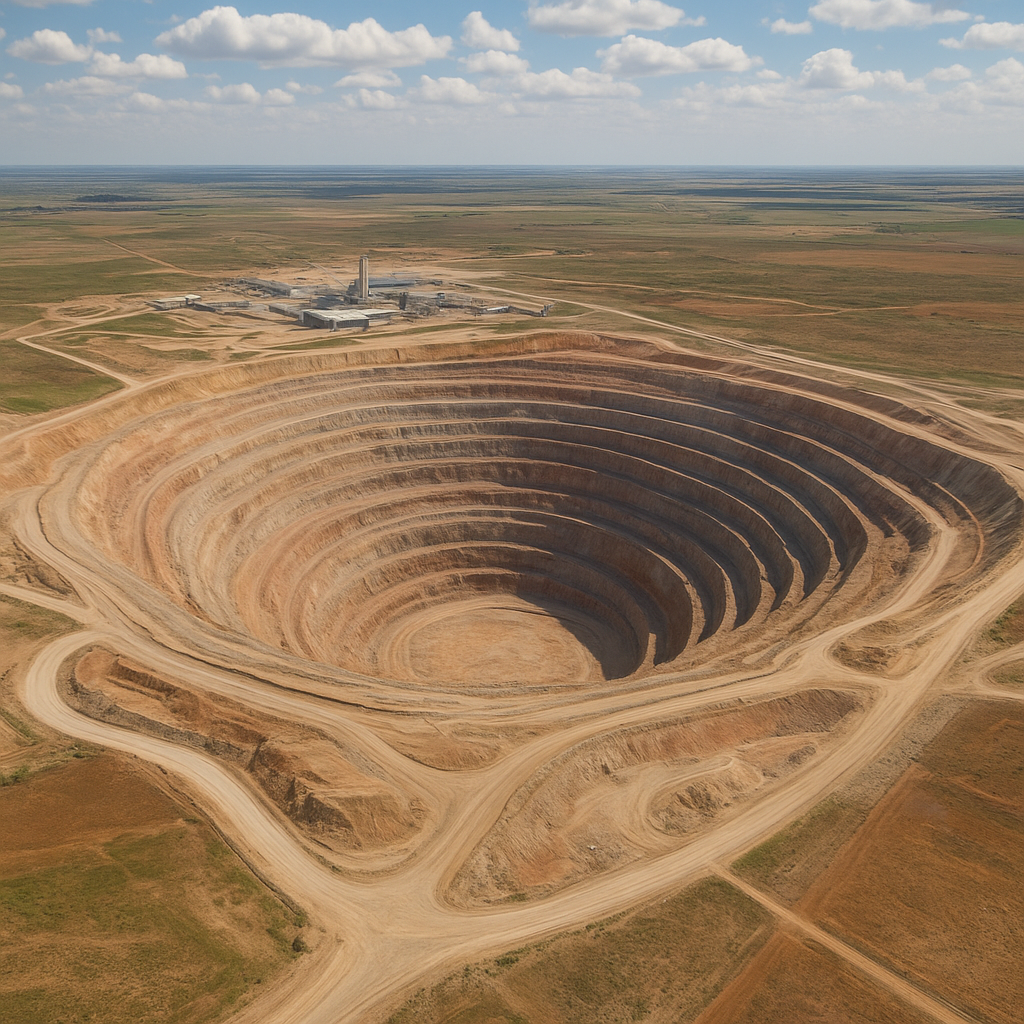
The Carlsbad Potash District in the United States is one of North America’s notable mineral provinces, centered in southeastern Carlsbad, New Mexico. Renowned for its subsurface evaporite layers that host commercially valuable potassium salts, the district has shaped regional development, supported agricultural supply chains, and contributed to the broader history of mineral extraction in the American West. This article explores where the district is located, what is extracted there, its economic importance, and several interesting aspects that set the region apart.
Location and Geological Setting
The Carlsbad Potash District lies primarily in Eddy County and parts of surrounding counties in southeastern New Mexico, within the extensive Permian Basin that spans southeastern New Mexico and West Texas. The district is geographically anchored by the city of Carlsbad, with mining operations and processing plants scattered across the surrounding landscape. The geology that makes the district valuable is a succession of ancient marine and restricted-basin deposits dating to the Permian period, where repeated cycles of evaporation concentrated dissolved salts into thick beds of evaporite minerals.
Evaporite Sequences and Mineralization
Deep below the surface lie layers of halite (rock salt) interbedded with beds rich in potassium-bearing minerals. The principal potash minerals found in the district include sylvite (potassium chloride, KCl), carnallite (KMgCl3·6H2O), and less commonly, minerals such as langbeinite and kainite. These deposits formed when ancient inland seas underwent progressive evaporation, causing salts to precipitate in a characteristic order: carbonates and sulfates first, followed by halite and finally the more concentrated potassium salts. The thickness and lateral continuity of these beds have made industrial extraction feasible.
Stratigraphy and Structural Controls
The potash-bearing horizons occur within Permian evaporite formations that vary in depth from a few hundred to more than a thousand meters below surface depending on location. Faults, folding, and changes in depositional environment influence the thickness and quality of potash beds, and these structural features are critical to exploration and mine planning. Geophysical surveys, drilling, and core sampling are used extensively to map the geometry of the evaporites before any commercial development.
What Is Extracted and How
The dominant product extracted from the Carlsbad district is potash, broadly referring to potassium-bearing salts used mainly as fertilizer. The most common commercial product is muriate of potash (MOP, essentially KCl), but processing can yield a variety of potash-derived products tailored to agricultural and industrial needs.
Mining Methods
- Underground room-and-pillar mining: In more accessible, competent potash beds, traditional underground mining methods are used. Large rooms are excavated while leaving pillars of ore to support the roof. The mined material is brought to the surface for processing.
- Solution mining: Where beds are deeper or less suitable for conventional mining, solution mining can be applied. Water is injected to dissolve soluble salts, and the brine is pumped to the surface for evaporation and recovery of potash.
- Surface processing and beneficiation: After extraction, raw potash undergoes crushing, screening, flotation, and drying to remove impurities (such as salt and clay) and to produce marketable grades.
Products and Derivatives
Primary products include:
- Muriate of potash (KCl) — the staple potassium fertilizer used globally.
- Sulfate and specialty blends — produced where additional beneficiation or chemical processing is applied to meet the needs of salt-sensitive crops.
- Byproducts — depending on processing, traces of magnesium or other elements may be recovered or managed in waste streams.
Economic Significance
The extraction and processing of potash in the Carlsbad District carry several layers of economic impact, from local employment to national agricultural security. Potash is a fundamental nutrient for crop productivity; potassium is essential for plant water regulation, disease resistance, and yield quality. Domestic sources of potash, such as those in Carlsbad, contribute to the resilience of the United States’ agricultural supply chain.
Local and Regional Impact
Mining operations in and around Carlsbad have historically been important employers, providing high-wage industrial jobs in an otherwise rural economy. The presence of potash operations has supported local service industries, housing, logistics, and infrastructure investments. Tax revenues and royalty payments from mineral operations provide funding for county services, schools, and community development projects. The multiplier effects—local procurement of goods, contractor services, and employee spending—are significant for communities near active mines.
National and Global Dimensions
Although large global potash supplies originate from major producers in Canada, Russia, Belarus, and other nations, domestic production in the United States reduces reliance on imports, buffers against supply disruptions, and supports national food security. Potash prices are influenced by global agricultural demand, currency fluctuations, and geopolitical factors; having operational mines within the U.S. contributes to market diversity and strategic independence.
Industry and Technology
Investment in modern mining techniques and processing technologies has helped maintain competitiveness. Automation, improved geological modeling, and enhanced beneficiation methods reduce costs and improve recovery rates. The industry’s evolution in the Carlsbad District mirrors global trends toward safer, more efficient, and environmentally aware mineral production.
Environmental Considerations and Community Issues
Mining in evaporite sequences carries environmental and social considerations that require careful management. Water management, brine disposal, surface disturbance, and ground stability are the most commonly encountered challenges in potash mining.
Water and Brine Management
Solution mining and evaporation processes produce concentrated brines that must be handled to prevent contamination of shallow aquifers and surface waters. Operators use engineered ponds, lined impoundments, and controlled disposal strategies to manage these fluids. Regulatory oversight ensures monitoring of groundwater and surface water quality to protect local water resources.
Subsidence and Ground Control
Room-and-pillar mining can alter subsurface stress regimes and has the potential to cause ground movement or subsidence at the surface if not properly designed. Modern mine planning emphasizes leaving adequate pillar supports, backfilling strategies, and continuous monitoring to mitigate ground failure risks.
Community and Cultural Dimensions
Mine development must balance economic benefits with community concerns such as noise, truck traffic, and land use changes. Stakeholder engagement, local hiring initiatives, and investment in community projects are common approaches to maintaining social license to operate. Additionally, the proximity of mineral operations to natural and cultural attractions—most famously the Carlsbad Caverns National Park—means that tourism and mining coexist in ways that require careful planning and mutual respect.
Interesting Facts and Lesser-Known Details
The Carlsbad Potash District combines geological intrigue with human ingenuity. Below are several points that illuminate why the area is notable beyond its role as a source of potash.
- Historical layers: Potash mining in the region developed alongside the broader extraction economy of the Permian Basin, where oil, gas, and minerals together shaped settlement patterns and infrastructure.
- Mineral diversity: While potash is the primary commodity, the evaporite sequence hosts a mix of salts and minerals that tell a long geological story of changing climates and basins in the Permian.
- Technological adaptation: Operators in the district have applied both traditional underground mining and modern solution methods, reflecting adaptability to varying ore geometries and depths.
- Agricultural link: The potash produced in Carlsbad contributes directly to fertilizer supplies that underpin crop production across the region and the nation, linking a remote underground resource to everyday food systems.
- Economic resilience: During periods of commodity price volatility, the local economy has felt the ups and downs of global markets, making diversification and community planning critical.
- Environmental monitoring: Advances in environmental engineering have made modern potash operations far more managed than early 20th-century endeavors, with continuous monitoring of groundwater and air emissions.
Connections to Broader Mineral Economies
The Carlsbad district sits within the larger context of the global potash marketplace. Major global supplies have historically been concentrated in large deposits such as those in Saskatchewan and Belarus, but U.S. deposits—while smaller—play a strategic role by providing an alternative supply source. Additionally, the technical knowledge developed in Carlsbad contributes to best practices in evaporite mining worldwide.
Outlook and Continuing Relevance
Demand for potassium fertilizers is tied to global population trends, dietary shifts, and agricultural intensity. As growers pursue higher yields and more efficient nutrient management, consistent supplies of potash remain essential. The Carlsbad Potash District, with its established infrastructure and experienced workforce, is positioned to remain relevant so long as market conditions and environmental regulations are met.
Local operators and regulators continue to balance resource development with stewardship. Advances in ore recovery, reduced water usage, and improved brine treatment technologies are among the developments that can sustain production while addressing environmental concerns. The ongoing challenge is to leverage technical innovation and responsible management to maintain the benefits of potash extraction for communities and the wider agricultural economy.

