
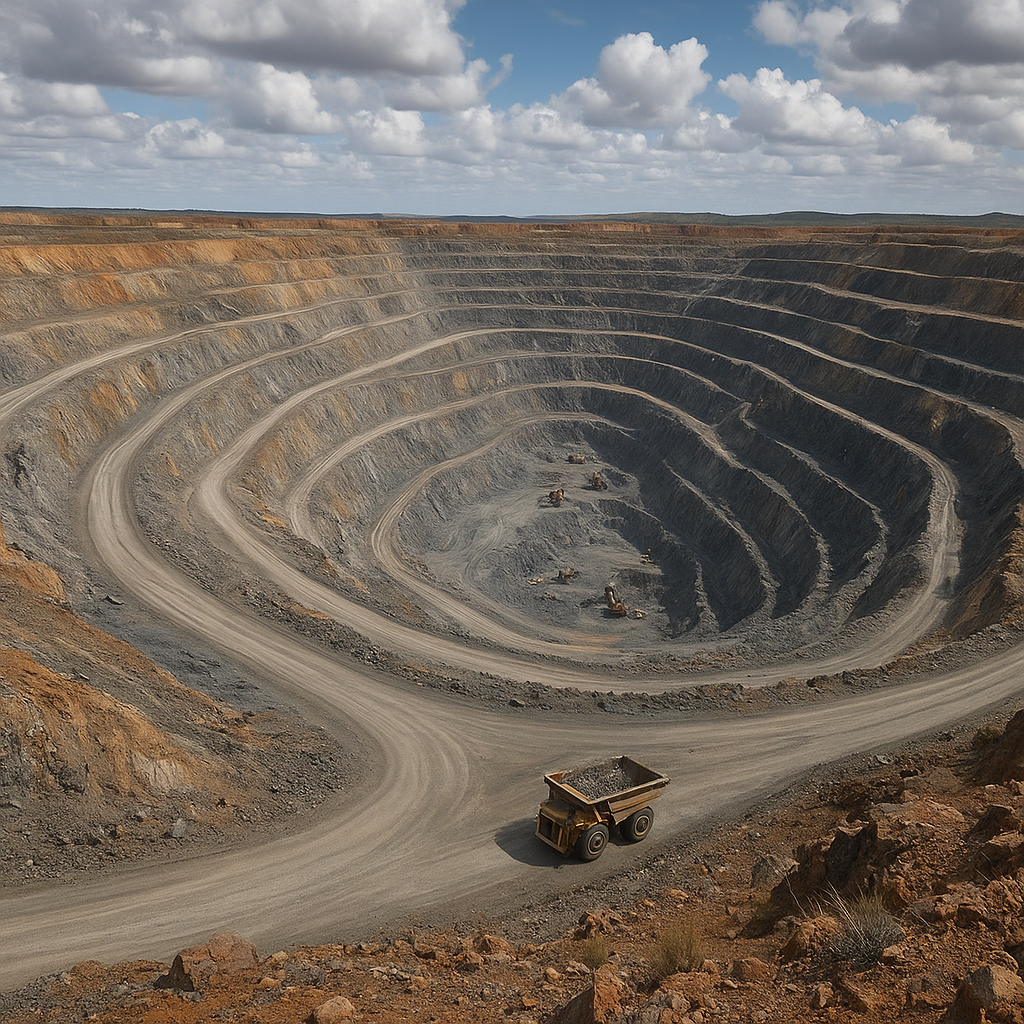
The Cannington mine is one of Australia’s best-known mineral operations, notable for its high-grade silver and associated lead and zinc resources. Located in the mineral-rich northwest of Queensland, the operation has been an important source of primary metals for domestic industry and international markets. This article explores where the mine sits in the Australian landscape, what is extracted from its orebody, how the operation is run, and why Cannington matters economically and socially. It also highlights a number of interesting aspects of the mine that illustrate the wider role of modern base-metals mining in Australia.
Location and Geological Setting
Cannington is situated in north-west Queensland, within a region famed for a concentration of base metal deposits. The mine lies in the Mount Isa geological province, one of Australia’s most prolific mineral belts, and benefits from the region’s well-understood structural framework and long history of exploration and mining. Its relative remoteness from major metropolitan centres is balanced by proximity to other industrial and mining infrastructure in the Mount Isa–Cloncurry district, a cluster that supports both operational logistics and a skilled mining workforce.
Geology and Deposit Type
Geologically, the Cannington deposit is classified among the suite of stratiform to replacement-style occurrences that host significant concentrations of silver, lead and zinc. The mineralisation occurs in discrete lenses and tabular bodies, where fluids rich in metals replaced host rocks, creating compact and high-grade ore zones. These geological characteristics are what make the site particularly valuable: the metal distribution is concentrated rather than dispersed, which improves the economics of mining and processing.
The orebody contains a mixture of sulphide minerals, with galena (lead sulphide) and sphalerite (zinc sulphide) commonly carrying associated silver either as native silver or as silver-bearing sulfosalts. Because silver frequently occurs at high grades relative to the lead and zinc, Cannington has often been described primarily as a silver mine, with important by-products of lead and zinc concentrates.
Mining Methods and On-site Processing
The mine combines modern extraction techniques with a processing plant designed to maximize recovery of multiple valuable metals. Extraction at Cannington has historically employed underground mining methods tailored to the geometry of the ore lenses. The operation focuses on recovering high-grade ore while maintaining safety and cost efficiency. On-site processing uses standard metallurgical routes for base-metal-silver deposits: crushing, grinding, and differential flotation to produce separate concentrates for lead and zinc, with silver reporting predominantly to the lead concentrate.
Concentrate Production and Logistics
Once the ore is milled and the valuable minerals are concentrated, the resulting concentrates are dewatered, dried and packaged for transport. From Cannington, concentrates are moved to export ports or to domestic smelters depending on contractual arrangements and market conditions. Shipping logistics typically leverage regional rail and road connections to move product efficiently despite the remoteness of the operation. The export of concentrates places Cannington into global commodity supply chains, contributing to Australia’s role as a major metals supplier.
Support Infrastructure and Workforce
A modern mining operation is more than the pit and the mill: it includes power systems, water management, accommodation camps, maintenance workshops, and an integrated supply chain. The local workforce is a blend of permanent employees and fly-in fly-out personnel, supported by contractors who provide specialised services. Investment in training and local engagement ensures that the operation can attract and retain skilled personnel despite its remote location. The presence of the mine also supports regional service providers, from equipment suppliers to hospitality services, multiplying the economic footprint of the project.
Economic Importance and Market Role
The Cannington mine has a notable economic footprint at several scales: local, regional, and national. At the regional level, it provides direct employment and stimulates secondary business activity. At the national level, the mine contributes to export earnings through sales of exports of silver, lead and zinc concentrates. The combination of silver with base metals means that Cannington’s revenues can be diversified across precious and industrial metal markets, which can help stabilise earnings when one market softens.
Revenue Streams and Commodity Mix
- Primary revenue is driven by silver sales; silver often commands a premium per unit weight compared to base metals, so even relatively modest silver grades can have outsized economic importance.
- Secondary revenues come from lead and zinc concentrates; both metals are vital for industrial applications—lead for batteries and radiation shielding, zinc for galvanising and alloys.
- By-products and recovery rates play a critical role in project economics; optimising metallurgical recovery and concentrate quality is an ongoing technical and commercial focus.
The mine’s operation feeds into commodity markets that are influenced by a wide range of factors: technology demand cycles, infrastructure investment, automotive and alloy markets for zinc, and investment/speculative demand for silver. Because Cannington produces multiple products, it helps diversify exposure to any single market swing.
Supply Chain and Downstream Impact
Beyond the mine gate, Cannington’s concentrates enter smelters and refineries that produce refined metals used across many industries. The value chain extends from regional trucking and port services to international commodity traders and refiners, generating employment and economic activity across a broad geography. For local communities, contracts with service providers and joint-community initiatives often translate into business opportunities, apprenticeships, and local procurement policies that accentuate the mine’s economic role.
Environmental Management and Community Relations
Modern mining operations in Australia operate under rigorous regulatory frameworks. Environmental approvals, water and waste management plans, and rehabilitation commitments are part of standard practice. Cannington employs comprehensive environmental management measures to control dust, manage water, and safely store and monitor tailings—concentrated waste materials resulting from the milling process. Effective tailings management is central to both operational safety and environmental stewardship.
Monitoring, Rehabilitation and Indigenous Engagement
- Environmental monitoring programmes track surface and groundwater quality, biodiversity impacts, and air emissions, with regular reporting to regulators and stakeholders.
- Rehabilitation plans outline progressive restoration of disturbed areas, aiming to return land to stable and sustainable post-mining use.
- Community engagement includes ongoing dialogue with local and Indigenous groups to ensure that operations respect cultural heritage and provide tangible benefits, such as employment pathways and community investment.
These elements reflect a contemporary approach to mining where social license and environmental performance are integral to a project’s long-term viability. Mines like Cannington place emphasis on both operational excellence and the minimisation of impacts, seeking to build constructive relationships with nearby communities and Traditional Owners.
Operational Challenges and Technological Responses
Operating in a remote environment presents logistical and technical challenges: supply chain continuity, workforce retention, and the management of water and energy resources are ongoing priorities. To address these, Cannington and similar mines embrace technological innovation. Automation, remote monitoring, and advanced geometallurgical techniques are used to increase safety and productivity while managing costs.
Innovation in Exploration and Mine Planning
Advanced geophysical and geochemical methods improve the ability to target extensions of known ore lenses and discover new zones of mineralisation. Geometallurgy links geological knowledge with metallurgical performance, enabling more accurate mine planning and improved recoveries. On the processing side, continuous improvement in flotation chemistry and circuit design enhances metal recovery and concentrate quality, which in turn supports stronger commercial outcomes.
Interesting Facts and Broader Context
Cannington is widely recognised for its high silver grades and compact, valuable ore. A few notable points help illustrate why the mine attracts attention:
- Cannington has been among the more prominent silver-producing operations in Australia and has supplied substantial amounts of silver to global markets since coming into production.
- The deposit’s combination of precious and base metals makes it a strategic asset: silver provides a strong price-per-unit value while lead and zinc underpin steady industrial demand.
- The operation exemplifies the transformation of a remote mineral discovery into a modern, integrated mining complex that supports both local economies and global metal supply chains.
- Investment in technology and environmental controls at the site reflects broader industry trends: safer underground operations, improved water stewardship, and better tailings design and monitoring.
- Ownership and corporate structure have evolved over time; the operation has been part of larger corporate portfolios and continues to attract capital and technical investment because of its resource quality.
The long-term outlook for mines of this type depends on several interacting factors: the discovery of additional resources in the mine’s vicinity, ongoing improvements in recovery and processing, commodity price cycles, and the ability to maintain a sustainable operating base that responds to environmental and social expectations. Considering these dimensions, Cannington remains a relevant example of how precious and base-metal mining continues to shape regional economies and contribute to global supply.
Final Observations on Significance
While specific production figures and operational details change over time, a few consistent themes explain Cannington’s significance. The mine’s geological endowment—dense, high-grade mineralisation of silver, lead and zinc—creates robust economic value. The integration of extraction, processing and logistics links the site into national and international markets, making it a meaningful node in commodity supply chains. Local and regional economies benefit through employment, contracting opportunities, and infrastructure development, while the company’s environmental and community programs reflect the modern expectations placed on extractive industries.
As technology evolves and commodity demand shifts, operations like Cannington will continue to adapt—seeking efficiencies in production, improvements in environmental performance, and stronger partnerships with local communities. The mine’s story illustrates the enduring importance of resource projects in Australia’s economy and the complex balance between extracting value and managing social and environmental responsibilities. The history, geology and continued operation of Cannington together form a compelling chapter in the wider narrative of mining in Queensland and Australia.

