
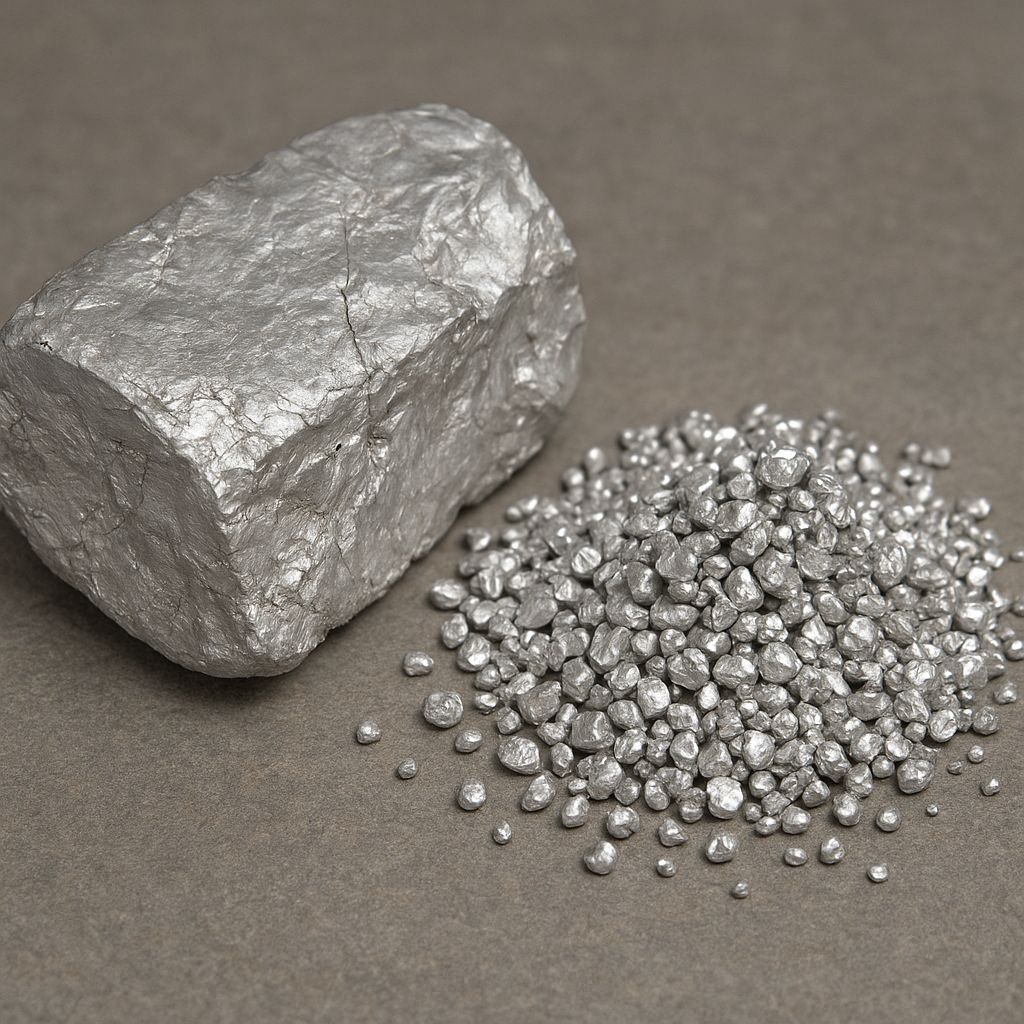
Cadmium is a soft, bluish-white metal known for its unique combination of chemical and physical properties and for the outsized role it has played in industry and environmental health debates. Although naturally present in the Earth’s crust at low concentrations, cadmium becomes problematic when concentrated through mining, smelting, or industrial use. This article explores where cadmium occurs, how it is used, the health and environmental challenges it poses, and some interesting technological and historical facets of this element.
Natural occurrence and geological sources
Cadmium rarely occurs as a free metal in nature. Instead, it is typically found in association with zinc-bearing minerals, frequently substituting for zinc in the crystal lattices of common ores. The most important cadmium-bearing mineral is greenockite (CdS), but cadmium is more commonly recovered as a by-product of smelting and processing of zinc, lead, and copper ores. Coal and phosphate rock also contain trace cadmium, which can be mobilized during combustion or fertilizer production.
Typical geological and anthropogenic sources include:
- Zinc ores such as sphalerite (ZnS), where cadmium substitutes for zinc atoms.
- Lead and copper ores processed at large mineral smelters.
- Phosphate rock, used to manufacture fertilizers; cadmium present in the rock can concentrate in fertilizers and then enter agricultural soils.
- Coal and some oil shales; combustion releases cadmium to the atmosphere with fly ash.
- Industrial discharges, landfill leachates, and waste incineration residues.
Chemical and physical properties
Cadmium is a transition metal with several notable properties that have driven its historical industrial use. It is soft and malleable, with a relatively low melting point for a metal, and has good corrosion resistance in many environments. Chemically, cadmium forms divalent ions (Cd2+) in solution, and it binds strongly to sulfur-containing ligands. The element forms a variety of compounds—oxides, sulfides, and selenides—several of which have been exploited for their optical or color properties.
Key properties that influence environmental behavior and applications:
- High mobility of the Cd2+ ion in aqueous environments under certain pH and redox conditions.
- Strong affinity for sulfur and thiol groups, leading to accumulation in sulfur-rich tissues and proteins.
- Resistance to corrosion that made cadmium attractive for protective coatings through electroplating.
Industrial and technological applications
Cadmium’s combination of properties has led to several important uses, though many have been reduced or phased out because of health and regulatory concerns. The most historically and technologically significant applications include:
Batteries
The nickel-cadmium (Ni–Cd) rechargeable battery was one of the first practical rechargeable chemistries for portable power. Ni–Cd batteries offered reliable cycling, wide temperature operation, and good discharge characteristics. Their use has declined in many applications because of environmental concerns and the availability of alternative chemistries such as nickel-metal hydride (NiMH) and lithium-ion. However, Ni–Cd cells remain in some specialized industrial and aerospace niches.
Pigments and plastics
Cadmium sulfide and cadmium selenide produce bright pigment colors—yellows, oranges, and deep reds—that were prized by artists and manufacturers. Cadmium pigments were used in paints, ceramics, and plastics because of their excellent lightfastness and opacity. Historically important pigments include cadmium yellow and cadmium red. Use in consumer paints has been curtailed in many regions, yet they are still used in certain industrial applications where performance is critical.
Electroplating and corrosion protection
Because cadmium provides good resistance to corrosion and performs well under galvanic conditions, it was widely used as a plating metal to protect steel and other metals from rust and galvanic attack—especially in aerospace, military, and critical fastener applications. Safer alternatives and stricter environmental rules have reduced its prevalence.
Semiconductors and photovoltaics
Cadmium compounds play a role in electronics and renewable energy. Cadmium telluride (CdTe) and cadmium sulfide (CdS) are important semiconductor materials. Thin-film CdTe solar cells are a commercially viable photovoltaic technology; they offer high manufacturing throughput and good performance in diffuse light conditions. Producers often emphasize closed-loop recycling to recover cadmium from decommissioned modules, minimizing environmental release.
Nuclear control and specialty alloys
Cadmium has a high neutron absorption cross-section, so it has been used in nuclear reactors for control rods and shielding. Additionally, cadmium-containing alloys have been used in low-melting-point solders and bearing materials, though modern engineering often favors cadmium-free alternatives where possible.
Environmental behavior and human exposure pathways
Cadmium released to air, water, or soil can travel considerable distances in fine particulate form or dissolve into aqueous media as Cd2+. In aquatic systems, cadmium can sorb to sediments, be taken up by plankton and fish, or remain dissolved depending on chemistry. In soils, factors such as pH, organic matter content, and competing ions determine cadmium mobility and bioavailability.
Major routes of human exposure include:
- Occupational inhalation in mining, smelting, battery manufacturing, and electroplating industries.
- Dietary intake from contaminated crops (notably rice in some contamination events), shellfish, and organ meats.
- Ingestion or inhalation of contaminated dust in proximity to industrial sites or waste dumps.
- Consumer products historically containing cadmium—older batteries, coatings, and pigments—though regulations have eliminated many of these sources.
Health effects and toxicology
Cadmium is infamous for its toxicity and long biological half-life. Once inside the body, cadmium tends to bind to metallothionein and accumulates primarily in the kidneys and liver. Chronic low-level exposure is associated with renal dysfunction, bone demineralization and fractures, and an increased risk of certain cancers. The classic and tragic example of cadmium poisoning at the community scale is the Itai-itai disease outbreak in Japan, where mining-contaminated water and rice led to severe bone pain, fragility, and kidney failure in local populations.
Important biomedical points:
- Cadmium is a known human carcinogen (IARC Group 1) for certain cancers, notably lung cancer from inhalational exposure.
- Renal tubular damage is one of the most sensitive indicators of chronic exposure; monitoring of urinary biomarkers is commonly used in occupational surveillance.
- Cumulative body burden matters: cadmium accumulates over decades, so even low-level chronic exposure can eventually lead to adverse outcomes.
- Fetuses and young children are particularly vulnerable because of developing organ systems and nutritional interactions—iron or calcium deficiencies can increase cadmium uptake from the gut.
Regulation, monitoring, and public health responses
Regulatory frameworks around the world aim to limit cadmium emissions and human exposure. Controls include emission limits for smelters and waste incinerators, restrictions on cadmium use in consumer electronics and toys, and quality standards for food and drinking water. Drinking water standards are typically in the low microgram-per-liter range, and soil cleanup levels for agricultural land are set to minimize crop uptake.
Monitoring strategies include ambient air sampling near industrial sites, biomonitoring of blood and urine in exposed workers, and surveillance of foodstuffs for cadmium content. Many jurisdictions have implemented bans or strict limits on cadmium in jewelry, children’s toys, and electronic components (for example, through directives that restrict hazardous substances in electrical equipment).
Remediation, recycling, and alternatives
Given cadmium’s persistence and toxicity, remediation of contaminated sites and reduction of primary use have been priorities. Approaches include:
- Phytoremediation—using plants that hyperaccumulate cadmium (for example, certain Brassicaceae species) to extract metal from soils over multiple growing seasons. This method is low-cost and sustainable for some contexts but can be slow and requires safe disposal of contaminated biomass.
- Soil amendments such as phosphate fertilizers, lime, or biochar to immobilize cadmium and reduce plant uptake.
- Physical removal and soil washing for heavily contaminated hotspots.
- Electrokinetic remediation in fine-grained soils to move cadmium toward collection points.
- Recycling of cadmium-containing products—particularly CdTe solar modules and Ni–Cd batteries—captures material for reuse and reduces primary mining demand.
Technological substitution has been a major strategy to reduce cadmium use. In batteries, lithium-ion and NiMH chemistries have displaced Ni–Cd in many markets. For plating and pigments, cadmium-free alternatives are increasingly accepted, though in some critical aerospace and defense uses, cadmium coatings remain for their unique performance unless qualified substitutes are proven.
Interesting historical and scientific notes
Cadmium was discovered in the early 19th century as an impurity in zinc ores and named after the Latinized name of the mineral cadmia. Its bright pigments became popular in the 19th and 20th centuries among painters because they offered hues not achievable with many other inorganic pigments. Artists prized cadmium reds and yellows for their permanence and opacity; however, rising awareness of cadmium’s toxicity has influenced both regulation and the professional practices of artists and manufacturers.
Scientifically, cadmium has contributed to our understanding of metal biology. Its interaction with metallothioneins—small, cysteine-rich proteins—provided insights into how organisms sequester and detoxify heavy metals. Cadmium’s role as a potent inhibitor of certain enzymes, and its ability to displace essential metals such as zinc and calcium in biological systems, continue to be subjects of toxicological research.
Contemporary debates and future directions
Balancing cadmium’s technological utility against its environmental and health costs remains a live policy and industrial challenge. The success of CdTe solar technology in providing low-cost renewable energy, coupled with effective module recycling, argues for a pragmatic lifecycle approach rather than outright bans. Simultaneously, continued reduction of cadmium in consumer products, improved emission controls, and remediation of legacy contamination are essential to protect public health.
Emerging research focuses on:
- Better understanding of low-dose and long-term effects on human health, including interactions with nutrition and genetics.
- Enhanced phytoremediation and bioengineering of plants to improve uptake rates and biomass handling.
- Closed-loop industrial processes and improved recycling technologies to reduce primary cadmium demand and prevent environmental release.
- Development of non-toxic alternatives that match cadmium’s desirable performance characteristics in specialty applications.
Cadmium’s story is one of trade-offs: a metal with useful industrial properties that also presents clear and persistent environmental and health hazards. Managing cadmium responsibly requires a combination of technological innovation, rigorous regulation, and thoughtful remediation strategies to limit exposure while harnessing beneficial applications where appropriate.