
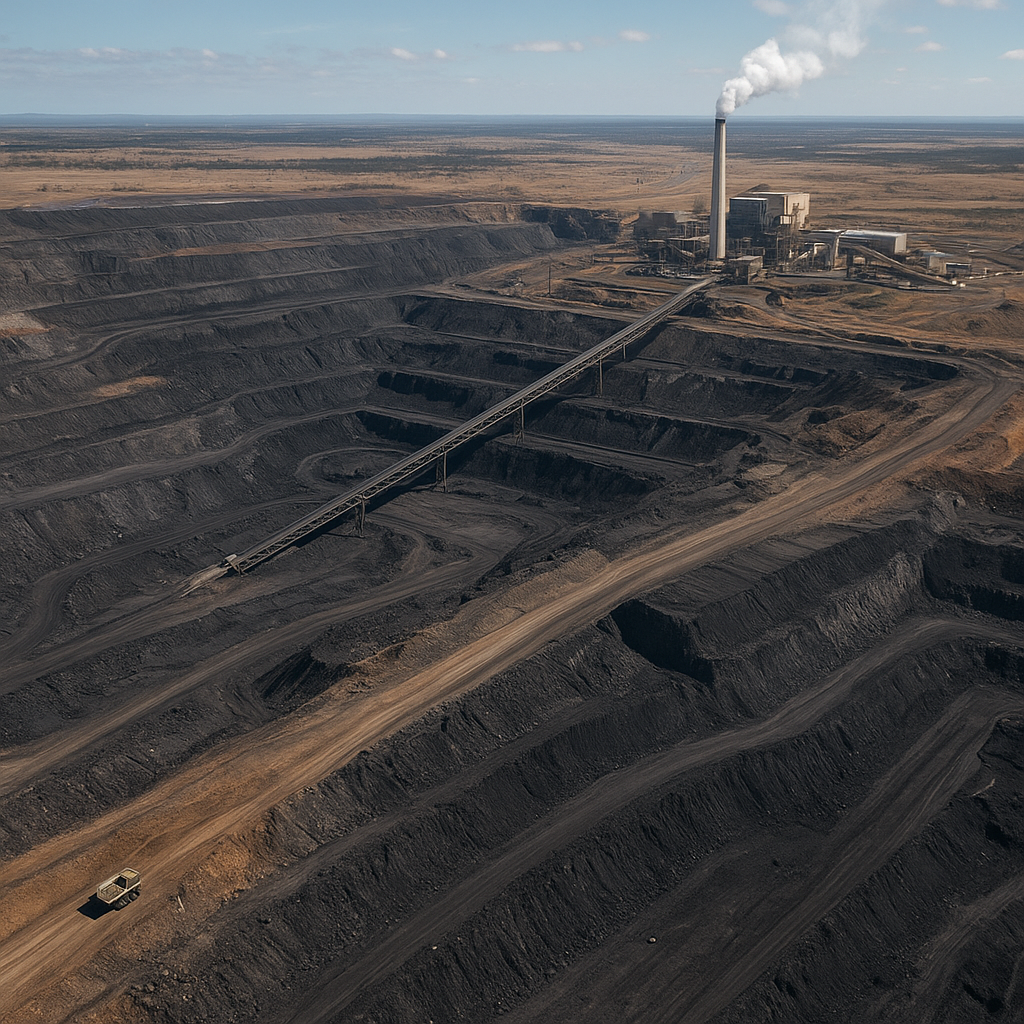
The Byerwen Mine is a significant open-cut coal operation situated in central Queensland’s Bowen Basin. As part of one of the world’s most important coal provinces, the mine contributes to Australia’s profile as a major global supplier of coal. This article explores the mine’s location and geology, the nature of its production and operations, its broader economic and social importance, and several interesting aspects that make Byerwen noteworthy within the Australian mining landscape.
Location and geological setting
Byerwen Mine lies in the heart of central Queensland, within the expansive Bowen Basin, a region known for thick, laterally extensive Permian coal measures. The mine is located in proximity to established mining towns and service centres, enabling supply-chain integration with regional rail and port infrastructure. The geology in the area is characterized by multiple coal seams of varying thickness, quality and depth, formed during the Permian period. These seams contain material that is typically processed into products suitable for electricity generation and, in some cases, pulverised coal injection or other industrial uses where appropriate.
Geology and coal characteristics
- The coal-bearing strata are largely Permian in age, deposited in fluvial and deltaic environments that created multiple seam packages.
- Typical product qualities include relatively low ash and variable volatile matter; coal from the mine is blended and processed to meet different customer specifications.
- Seam variability requires careful mine planning and selective extraction to maintain product consistency and maximise recovery.
Mining operations and product handling
Byerwen operates as an open-cut, truck-and-shovel mine using conventional earthmoving fleets. Extraction is followed by on-site processing in a coal handling and preparation plant (CHPP) where raw run-of-mine material is crushed, screened and washed as required to produce marketable products. The mine’s product suite is tailored to demand and can include primarily thermal coal for power generation as well as coals that may be suitable for specific industrial applications depending on washability and quality parameters.
Production profile and logistics
- The operation is designed for large-scale annual production, with throughput targets intended to supply both domestic and overseas markets.
- Processed coal is stockpiled and blended to achieve consistent specifications before being loaded onto rail wagons.
- Rail connections link the mine to Queensland’s export terminals — transit routes commonly use the regional freight rail network to ports such as those around Mackay and the Whitsunday coastline, including facilities at bulk coal terminals.
Processing and quality control
Quality assurance is a central part of Byerwen’s operations. The CHPP separates coal from impurities and tailings through washing and density-based separation. On-site laboratories and automated monitoring systems measure parameters such as moisture, ash content, calorific value and sulfur levels. These metrics determine the final product blends destined for particular markets, ensuring compliance with customer contracts and port acceptance standards.
Economic significance
The mine plays a multifaceted economic role at local, state and national levels. On a direct level, it generates employment across a range of skilled and semi-skilled roles — equipment operators, engineers, geologists, maintenance teams, and administration staff. Indirectly, it supports a broad supply chain including contractors, transport providers, maintenance suppliers and service industries in nearby towns. The operation also contributes to public finances through royalties and taxes and stimulates regional development through capital investments in roads, power and other infrastructure.
Jobs and regional development
Byerwen supports hundreds of direct positions and many more indirect roles across the supply chain. The mine’s demand for services and goods sustains local businesses, from accommodation and hospitality to equipment maintenance and spare parts suppliers. Regional training and skills development initiatives often accompany mine development, creating a pipeline of local talent and building community capacity.
Exports, revenue and supply chains
- Coal exported from the mine contributes to Australia’s overall export earnings, supporting balance-of-trade metrics and national income.
- Integration with export terminals and shipping lines connects Byerwen with markets in Asia and beyond, where coal is used for energy generation and industrial processes.
- Investment in rail and port logistics to service the mine has knock-on benefits for other regional producers, strengthening the capacity and resilience of the broader resource corridor.
Environmental management and community engagement
Modern mining operations are regulated and expected to implement robust environmental management programs. Byerwen employs a suite of mitigation and rehabilitation measures designed to minimise environmental footprint and manage risks associated with dust, water, biodiversity and waste. Engagement with local communities, including Traditional Owners, forms an essential part of the project lifecycle, from environmental approvals to ongoing operations and land rehabilitation.
Water management and rehabilitation
Water is a critical resource in mining. The operation has systems for capturing and recycling process water, controlling runoff, and monitoring groundwater to mitigate impacts. Progressive rehabilitation is generally carried out, with disturbed land re-contoured, topsoiled and revegetated according to regulatory and stakeholder expectations. These activities aim to restore ecosystem function and prepare land for future uses post-mining. The emphasis on rehabilitation helps align mining operations with long-term environmental stewardship objectives.
Emissions, energy use and mitigation
Coal mining produces greenhouse gases and releases methane from seams during extraction. Operators typically adopt measures to reduce energy consumption, optimise haulage and processing efficiency, and capture or flaring methane where economically and technically feasible. Reporting frameworks and regulatory oversight guide emissions accounting and target-setting, while operational improvements continually seek to reduce the carbon intensity of production.
Community partnerships and Indigenous engagement
- Mining companies commonly engage with local councils, businesses and community groups to address shared priorities such as training, health, and infrastructure.
- Negotiations and agreements with Traditional Owners are integral where native title and cultural heritage protections apply. These agreements can include cultural heritage management plans, employment and training commitments, and recognition of Traditional Owner interests.
Infrastructure and logistics
Effective logistics are central to Byerwen’s commercial viability. The mine depends on established freight corridors and export hubs to move large volumes of coal to international markets. Rail capacity, port availability and shipping schedules all influence operational planning and product pricing. Investment in haul roads, load-out facilities and conveyor systems at the mine ensures efficient transfer from pit to rail.
Rail and port connections
Connections into the regional rail network allow Byerwen to access major coal terminals at the Queensland coastline. These links are crucial for maintaining export volumes and for cost-effective delivery to customers. Coordination with rail operators and terminal managers is an ongoing logistical task, balancing mine production rates with available export slots and shipping windows.
Interesting aspects and broader context
Several features make the Byerwen Mine notable beyond its production statistics. Its location within the vast Bowen Basin places it among a cluster of mines that together form a backbone of Australia’s coal export capacity. The operational techniques — from precision geological modelling to advanced processing — demonstrate how modern mining integrates engineering, environmental science and logistics. The mine’s role in regional economies, and in the supply chains of energy and heavy industries globally, makes it a significant node in the network of resource production and trade.
Technology and innovation
- Automation and digital systems are increasingly used to improve fleet utilisation, reduce downtime and enhance safety.
- Geotechnical monitoring and mine-planning software enable more accurate extraction of higher-value coal and more efficient land use.
- Real-time quality monitoring at washplants and load-out points ensures consistent product delivery and reduces penalties from off-spec consignments.
Regional impacts and cultural connections
Mining operations such as Byerwen interact with regional social fabrics. Beyond jobs, the mine supports community projects, local sponsorships and infrastructure upgrades. Attention to cultural heritage ensures that historically significant sites are respected and protected through consultation and agreed management plans. These interactions shape the social licence to operate and influence how resources are developed responsibly.
Market dynamics and future outlook
The long-term prospects for coal mines depend on global energy trends, pricing, and policy environments. Demand for thermal coal correlates with power generation patterns in importing countries, while metallurgical coal demand ties to steel production. Mines in the Bowen Basin, including Byerwen, operate in a competitive global market where logistics, product quality and operating costs determine profitability. As energy markets evolve, producers may adapt product mixes, pursue efficiency gains or invest in carbon-mitigation technologies.
Final remarks
The Byerwen Mine exemplifies many characteristics of contemporary large-scale coal mining: careful geological planning, integrated processing and logistics, and a balance between economic benefits and environmental responsibilities. Its presence within the Bowen Basin reinforces the region’s role in meeting fuel and industrial raw material needs worldwide. While the industry faces changing market and regulatory pressures, mines such as Byerwen continue to play a significant role in regional development, export earnings and the global coal supply chain.

