
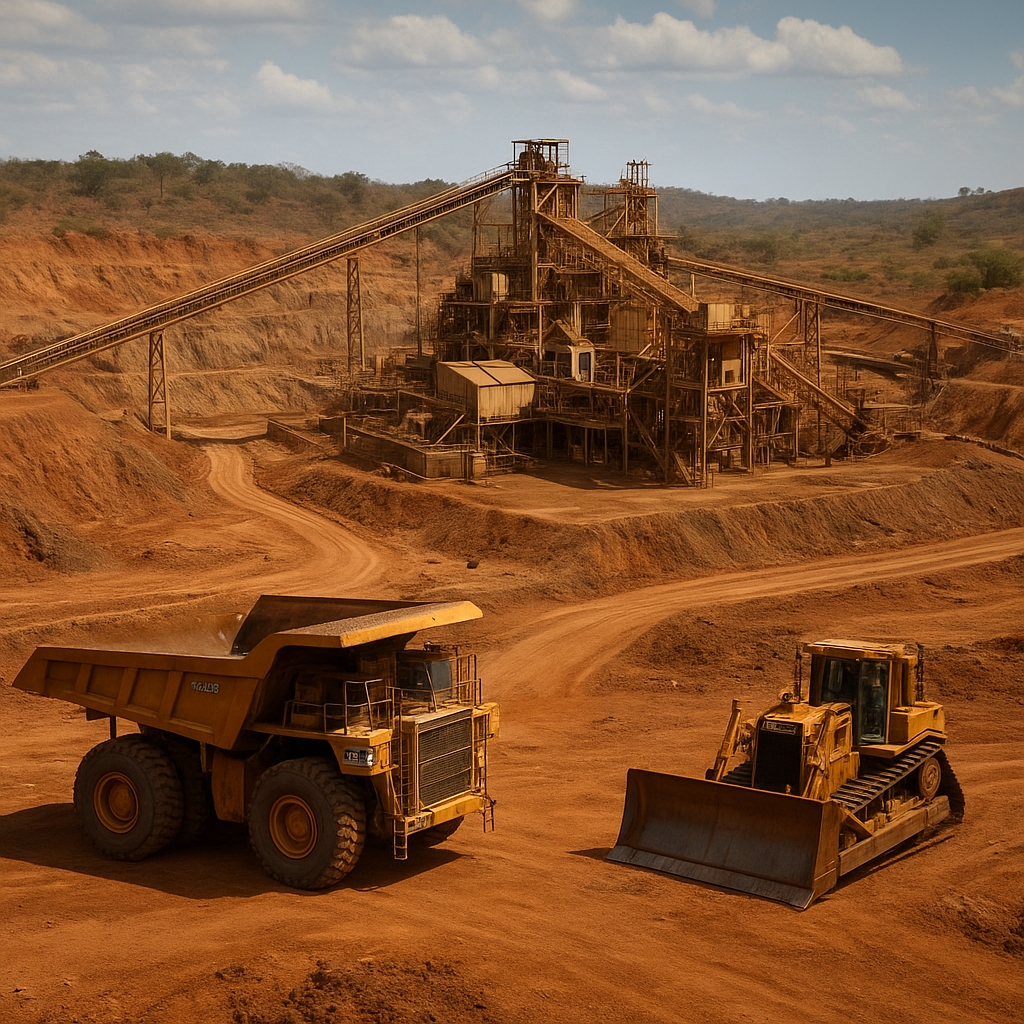
The Buzwagi Mine is a significant industrial gold operation located in northwestern Tanzania. Nestled within the famed Lake Victoria goldfields, the site represents both a major source of gold and a focal point for discussions about the role of large-scale mining in regional development. This article explores where Buzwagi sits geographically and geologically, what is extracted and how, its economic importance for local and national stakeholders, and a selection of noteworthy aspects that make the mine especially interesting.
Location and historical context
Buzwagi is situated in the Kahama District of the Shinyanga Region in northwestern Tanzania, an area with a long history of gold exploration and production. The mine forms part of a string of industrial projects across the Lake Victoria greenstone belt, which has attracted international mining companies for decades due to its rich mineral endowment. Proximity to other major operations, infrastructure corridors and regional service centres has helped Buzwagi develop into a commercially viable project.
Development and ownership background
Initial development of the deposit was driven by international investment and modern exploration techniques. The mine was brought into production through investment by companies with historical links to Barrick and its African affiliates. Operational control and corporate structure have evolved over time, reflecting broader shifts in the global mining industry and the regulatory environment in Tanzania.
Geographic and logistic setting
Buzwagi’s location in the Kahama area places it within relatively easy reach of regional transport networks that connect to the port cities on Lake Victoria and to inland road systems. This accessibility reduces some logistical challenges associated with remote mining operations. The local climate, hydrology and soils are also important: they influence mine planning, water management and rehabilitation strategies, and are considered in environmental permitting.
Geology and mining operations
The Buzwagi deposit occurs within greenstone-hosted stratigraphy typical of the Lake Victoria goldfields. Mineralization generally consists of discrete, structurally controlled zones where gold occurs in association with sulfide minerals and quartz-carbonate veins. The deposit was amenable to conventional open-pit mining methods, which allowed the operator to exploit near-surface mineralization economically.
Extraction and processing methods
- Open-pit mining: Large-scale drill-and-blast, loading and haulage operations were used to remove overburden and ore. Bench mining and phased pit design allowed for sequential extraction of ore blocks.
- Comminution and leaching: Extracted ore is typically crushed and milled to liberate gold-bearing minerals. Carbon-in-leach (CIL) or similar cyanide-based processes are commonly used in the region to recover gold to activated carbon.
- Tailings management: Tailings from the processing plant are stored in engineered tailings storage facilities, with attention to water recovery and long-term stability.
Operations at Buzwagi combined metallurgical processing with continuous exploration programs aimed at identifying extensions of existing orebodies and discovering satellite deposits within trucking distance of the central plant. Geochemical sampling, drilling campaigns and geophysical surveys are parts of this ongoing work.
Economic significance
The presence of a modern industrial mine like Buzwagi has several layers of economic impact at local, regional and national scales. Gold is one of Tanzania’s leading export commodities, and production from mines such as Buzwagi contributes to foreign exchange earnings and government revenues through taxation, royalties and other fiscal mechanisms.
Local employment and supply chains
- Employment: The mine has created direct jobs for hundreds of workers across mining, processing, maintenance and support roles. Additionally, indirect employment is generated through contracting, catering, transport and local services.
- Local procurement: Mining projects commonly develop procurement strategies to source goods and services locally where possible, stimulating business opportunities in nearby towns and encouraging the growth of local supply chains.
- Skills and training: On-site vocational training and apprenticeship programs help develop a skilled workforce, with transferable skills applicable beyond the mine itself.
Government revenue and macroeconomic effects
Gold exports from operations in the Lake Victoria belt are significant contributors to Tanzania’s balance of trade. Fiscal income derived from mining comes in the form of corporate taxes, royalties, and other statutory payments. These revenues are intended to support national development priorities, infrastructure projects and public services. Furthermore, the presence of mineral investment can catalyse broader investor confidence in the country’s resource sector.
Social and community aspects
Large mines interact closely with surrounding communities in multiple ways. While they provide employment and infrastructure improvements, they can also change traditional livelihoods and local land use patterns. Responsible operators typically invest in community development initiatives—such as education, health facilities, water-supply projects and agricultural support—often negotiated through community development agreements.
Community relations and local development
- Community projects: Investment in schools, clinics and roads can be part of a mine’s social license to operate, supporting both well-being and economic activity in the host district.
- Compensation and resettlement: Where mining requires land, companies follow frameworks for compensation, resettlement and livelihood restoration. These processes can be complex and require careful, transparent engagement.
- Artisanal mining interaction: The Lake Victoria region has a large artisanal and small-scale mining (ASM) presence. Coexistence with industrial mines presents both opportunities (market for services, employment) and challenges (safety, resource conflicts).
Environmental management and challenges
Mining activity inevitably affects local environments, so robust environmental management systems are essential. Key areas of focus around Buzwagi include water management, cyanide and chemical handling, biodiversity conservation and progressive rehabilitation of mined areas.
Water and tailings
Water is a critical resource for both the local population and mining operations. Operators implement water recycling, sediment control and monitoring programs to limit impacts on rivers, wetlands and groundwater. Tailings storage facilities require careful design, monitoring and eventual closure planning to prevent contamination and assure long-term stability.
Biodiversity and land rehabilitation
Progressive rehabilitation—recontouring, soil replacement and revegetation—helps restore landscapes and reduce the footprint of mining over time. Biodiversity assessments guide mitigation measures for sensitive habitats. Effective closure planning aims to leave the mine area in a safe and stable condition that supports post-mining land uses.
Regulatory environment and governance
Tanzania has a complex regulatory framework governing mineral rights, environmental protection and fiscal terms for mining. Operators must secure exploration and mining licences, environmental permits and community agreements. Over recent years, regulatory changes at the national level have influenced contractual relations between companies and the state and have prompted renegotiation and restructuring in some cases.
Compliance and best practices
- Permitting: Environmental and social impact assessments are required prior to major development, with ongoing compliance monitoring.
- Transparency: Many companies participate in global initiatives promoting revenue transparency and responsible sourcing to strengthen governance and community trust.
- Local content: Policies encouraging local hiring and procurement aim to maximise the developmental benefits of mining for host communities.
Interesting aspects and lesser-known details
Beyond its role as a source of gold, Buzwagi presents a number of intriguing facets that illustrate modern mining’s broader dynamics.
Technological integration
Contemporary mines in the Lake Victoria belt, including Buzwagi, employ advanced exploration techniques—such as 3D geological modeling, geochemical fingerprinting and remote sensing—to refine targeting and improve recovery. Automation in processing and improvements in metallurgical circuits help optimise gold recovery rates.
Supply chain ripple effects
The economic activity generated by a mine extends into often-unexpected sectors. Local entrepreneurs establish transport, hospitality and equipment-servicing businesses. In some cases, the presence of a major operation helps catalyse investment in regional health and education facilities through negotiated social investments.
Interactions with artisanal miners
The co-occurrence of artisanal miners and large-scale operations creates a complex landscape of interaction. Where managed constructively, formalisation programs can help artisanal miners access better practices, safer conditions and legitimate markets. Conversely, unmanaged ASM activity can generate safety risks and environmental degradation, requiring collaborative approaches to conflict resolution and resource governance.
Future prospects and exploration potential
Areas like the Lake Victoria goldfields retain ongoing exploration potential. For the Buzwagi area, continued drilling and evaluation could identify extensions to known orebodies or discover new targets within truckable distance of existing processing infrastructure. Exploration success, commodity prices and fiscal policy will shape the long-term prospects for production and investment.
In strategic terms, the future of operations at sites such as Buzwagi will likely be influenced by several key factors: global gold market dynamics, advances in mining and processing technology, regulatory and fiscal certainty in Tanzania, and the ability of companies and communities to maintain constructive relationships that balance economic benefits with environmental stewardship.

