
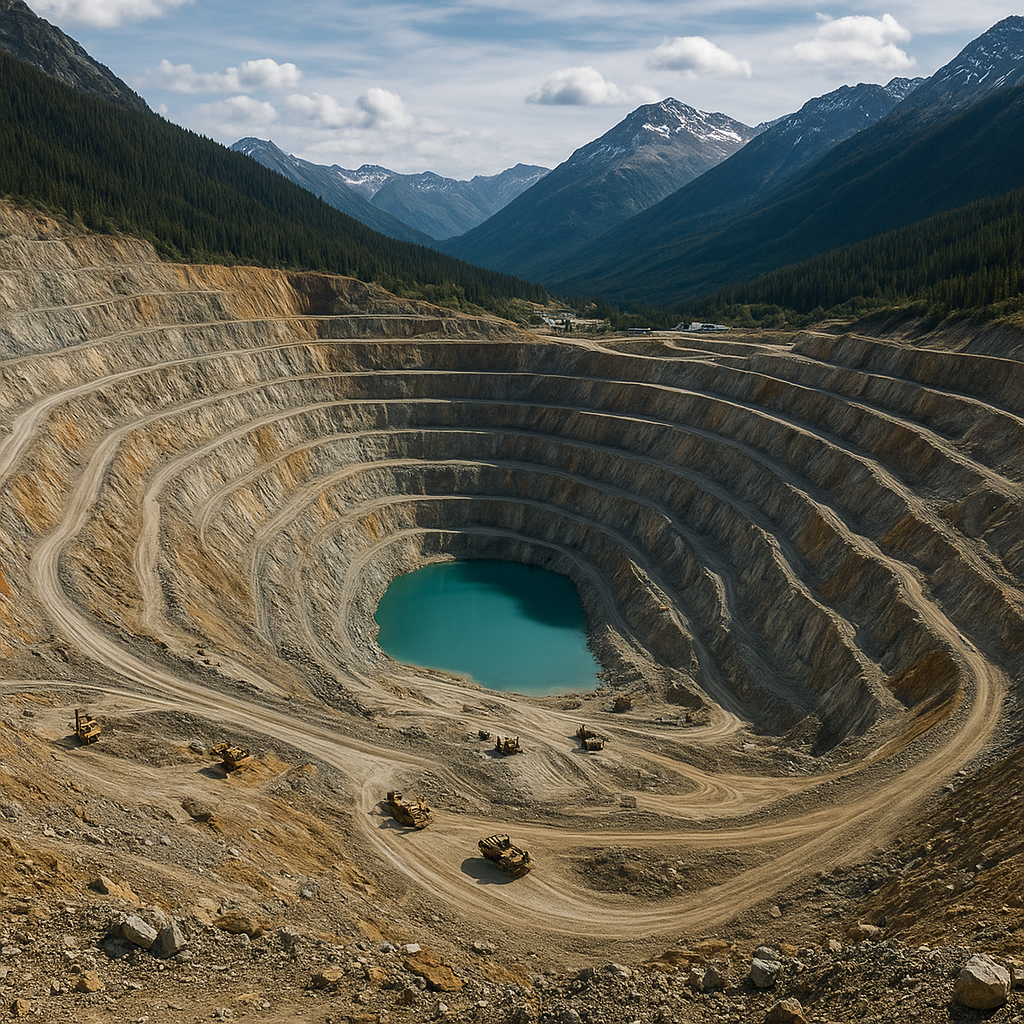
The Brucejack Mine is one of the most talked-about modern gold projects in northwestern Canada. Located in the heart of the mineral-rich Golden Triangle of British Columbia, the operation is recognised for its exceptionally high-grade mineralization and innovative underground design. This article explores where Brucejack is located, what is extracted there, its broader economic significance and a number of interesting technical, social and geological aspects that make the mine noteworthy.
Location, access and geological setting
Brucejack sits in a remote, mountainous part of northwestern British Columbia, within an area commonly referred to as the Golden Triangle — a corridor of prolific mineral deposits that includes other renowned projects. The mine is accessible by a combination of paved and unpaved roads and is reached via regional hubs such as Stewart and Terrace, followed by local access roads and on-site infrastructure. The remote nature of the site shapes much of the logistics, workforce arrangements and environmental planning for the operation.
Geologically, Brucejack exploits a series of steeply dipping vein systems hosted in complex volcanic and sedimentary sequences. The gold mineralization occurs in quartz-sulphide veins and related structures that concentrate metal into discrete, high-grade shoots. These shoots are typical of orogenic and epithermal-style deposits where narrow zones can carry very high concentrations of gold (and often silver), contrasting sharply with the lower grades typical of many large open-pit operations. Because the ore bodies at Brucejack are concentrated and relatively localized, the project was developed as an underground mine rather than a sprawling surface pit.
The deposit was explored extensively before development, with resource and reserve estimates consistently indicating multi-million-ounce potential in the broader property. While exact numbers have changed over time with further drilling and economic studies, the consensus among technical reports and public disclosures is that Brucejack contains significant gold resources and reserves that justify a long-life underground mine.
What is mined and how it is processed
Mineral production at Brucejack focuses predominantly on precious metals, with gold as the primary commodity and silver as a valuable by-product. The ore mined from underground workings typically displays high grades, often measured in grams per tonne rather than the fractions of a gram that characterize lower-grade operations. This high-grade nature makes each tonne of ore especially valuable and influences the choice of mining and processing methods.
The mining method used is suited to narrow, high-grade veins: selective underground techniques that prioritise safe extraction and selective ore handling. Mined material is transported to an on-site processing plant where it undergoes conventional comminution, followed by a combination of gravity recovery and concentrative flotation or leaching processes. Gravity circuits are particularly useful for capturing coarse gold that commonly occurs in vein-type deposits, while flotation and subsequent chemical treatment recover finer gold and associated silver.
Tailings management and water treatment are important aspects of the process flow. The company operating Brucejack has implemented measures to treat effluent, handle tailings securely and minimise the surface footprint through compact plant layout and closure planning. Many modern mines are designed with progressive rehabilitation in mind, and Brucejack includes engineered plans for waste management and eventual closure that reflect both regulatory requirements and community expectations.
Economic importance and regional impacts
The economic impact of a mine like Brucejack operates on several levels. Directly, the project provides employment for engineers, geologists, miners, plant operators and a wide range of support staff. Because of the remote location, the operation often depends on a fly-in fly-out workforce and a well-equipped on-site camp which in turn creates demand for local services and supply chains. The mine also creates indirect employment through purchasing of goods, contracting services for construction and ongoing operations, and stimulating secondary businesses in regional hubs.
Beyond jobs, resource projects contribute to public finances through royalties, taxes and other fees. These revenues support provincial and federal programs and are an important argument often used in favour of responsible mineral development. In addition, some projects establish benefit agreements with nearby Indigenous communities to ensure local economic participation, training opportunities and involvement in environmental monitoring and management.
Brucejack’s role in regional development is also visible in infrastructure improvements. Construction of access roads, enhancements to local utilities, and investments in transportation and communications can provide broader benefits that outlast the mine itself. At the same time, the short-term spike in local economic activity must be managed carefully to avoid problems such as inflationary pressures on housing and services when projects ramp up or wind down.
Social, Indigenous and community relationships
Any modern mining project in Canada must engage with Indigenous communities, and Brucejack is no exception. The mine is located within the traditional territories of regional First Nations, including groups with long-standing ties to the land and its resources. Engagement, consultation and benefit sharing have been central elements in the project’s social licence to operate. Agreements may include employment and procurement commitments, participation in environmental monitoring, and financial benefits tied to project milestones and production.
Social impacts also include community development initiatives, training programs to build local capacity, and support for education and health projects. While these initiatives contribute positively, they require long-term focus to ensure benefits are sustained and that the community’s expectations are aligned with the lifecycle of the mine. Responsible companies invest in workforce development to enhance the employability of local people during operations and beyond closure.
Environmental considerations and technical challenges
Environmental management is a significant and often scrutinised component of mining projects. For Brucejack, important issues include water quality protection, tailings storage, biodiversity conservation, and mitigation of the physical footprint in alpine and forested landscapes. The operation implements engineered solutions for containment and treatment of water and tailings, and continuous monitoring programmes aim to detect and address potential impacts early.
Technical challenges at remote, high-elevation sites include harsh weather, seasonal access limitations and geotechnical risks associated with steep terrain. These factors increase the complexity of construction and ongoing maintenance of surface facilities, roads and underground portals. Safety and emergency response planning are therefore robust components of daily operations, with crews trained to operate in extreme conditions and contingency plans prepared for a range of scenarios.
One particular technical challenge that garners attention is the management of high-grade, narrow vein ore which requires precise engineering and mining sequencing to minimise dilution and maximise recovery. Advances in geotechnical modelling, underground drilling and real-time ore tracking have helped modern mines extract these valuable ores more efficiently than in the past.
Interesting facts and notable features
- Brucejack is widely recognised for its exceptionally high-grade gold mineralization compared with many larger, lower-grade operations, making it economically attractive despite its remote location.
- The mine is part of the Golden Triangle, an area with a long exploration history and multiple world-class deposits, including both past-producing and currently operating mines.
- Because the deposit is steeply dipping and relatively narrow, the operation emphasises selective underground methods that preserve high-quality ore and control dilution.
- Brucejack’s development required specialised engineering to address local conditions such as steep topography, heavy winter snowfall and sensitive ecological zones.
- The project has invested in community and Indigenous partnerships to ensure local benefit sharing and collaboration on environmental stewardship.
Future outlook and broader significance
The future of a mine like Brucejack depends on multiple factors: the continuity of high-grade production, ongoing exploration success on adjacent claims, the global price of gold, and the evolving regulatory and social environment. Continued exploration has the potential to expand resources and extend mine life if new mineralized zones are discovered or existing zones are better defined.
From a broader perspective, projects such as Brucejack illustrate how modern mining increasingly balances technical innovation, environmental management and social responsibility. The ability to produce significant quantities of precious metals from a compact underground operation demonstrates the technological progress in mining engineering and metallurgy. The revenues and employment generated by such mines also contribute tangibly to regional economies and national mineral output.
As the global economy continues to value secure supplies of precious metals for investment and industrial uses, well-managed, responsibly operated projects in jurisdictions like Canada will remain an important part of the international mining landscape. Brucejack’s combination of geology, technical design and community engagement makes it an instructive example of contemporary underground gold mining in a challenging and mineral-endowed environment.

