Bronzite is a fascinating and often overlooked mineral whose warm, metallic sheen has attracted collectors, lapidaries, and geologists alike. As a member of the pyroxene group, it occupies an important place in the study of igneous and metamorphic processes while also serving practical roles in jewelry and ornamental stone markets. This article explores bronzite from multiple angles: its nature and chemistry, where it is found, how it is used, and several intriguing aspects that connect mineralogy, art, and science.
What bronzite is: mineralogy and defining features
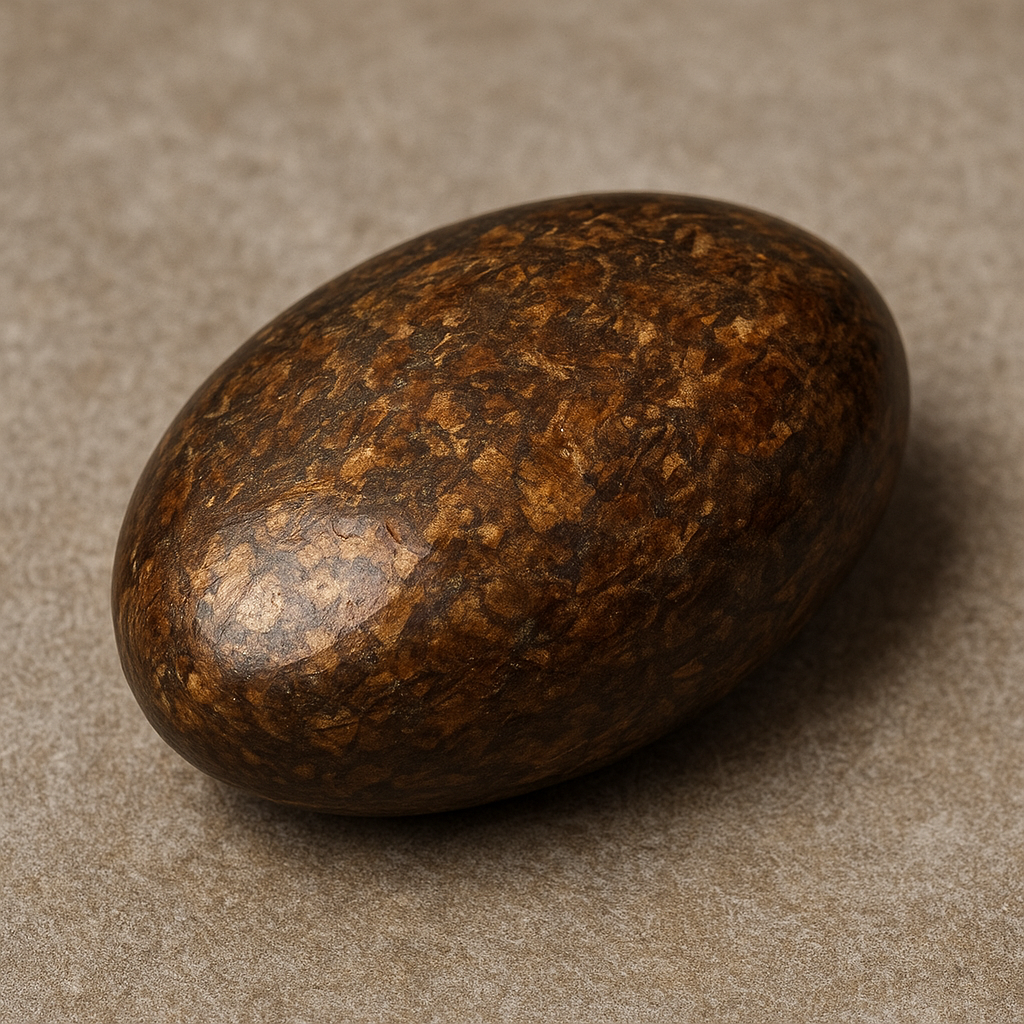
Bronzite belongs to the orthopyroxene subfamily, a group of chain silicates that share a common crystal framework but vary in chemical composition. Its general chemical formula can be described as (Mg,Fe)SiO3, where magnesium and iron substitute for one another in the crystal lattice. The presence of iron at moderate levels gives bronzite its characteristic brown to greenish-brown color and a distinctive luster that resembles polished metal.
Some of the key diagnostic features include:
- Color range from olive-brown to dark brown, sometimes with greenish hues.
- Distinctive metallic or bronze-like sheen known as schiller, produced by tiny inclusions or structural features that reflect light.
- Two prominent cleavages meeting at angles near 87° and 93°, typical of pyroxenes; these cleavage directions are important for identification and cutting.
- Relative hardness in the Mohs range around 5.5–6.5, making it durable enough for many ornamental uses but softer than quartz.
- Specific gravity usually between about 3.2 and 3.6, depending on iron content.
Because bronzite is an iron-bearing orthopyroxene, it forms a compositional continuum with other pyroxenes such as enstatite and ferrosilite. Historically, names like hypersthene were used to describe related materials with pronounced schiller, but modern classification places emphasis on precise composition and crystal structure.
Where bronzite occurs: geological settings and notable localities
Bronzite is commonly associated with peridotite and other ultramafic rocks derived from the mantle, as well as with mafic intrusions such as norites and gabbros. It can form during the crystallization of magnesium- and iron-rich magmas or during metamorphism of ultramafic protoliths. Some common geological environments include:
- Upper-mantle fragments and xenoliths brought to the surface by volcanic activity, where orthopyroxenes crystallize under high-temperature conditions.
- Layered mafic intrusions, where evolving magmas concentrate pyroxenes and olivine in cumulate layers.
- Metamorphosed ultramafic terrains and serpentinites, where partial alteration leaves behind resistant pyroxenes.
Bronzite can be found on virtually every continent. Well-known occurrences include mountain belts and ultramafic complexes in parts of Europe, Scandinavia, Russia, North and South America, Africa, India, and Australia. Collectors often seek polished specimens from classic localities where the schiller and color are especially attractive. Because it forms in mantle-related rocks, bronzite may also appear in association with economic minerals in some peridotite-hosted deposits.
Uses and applications: from jewelry to geological tools
Although bronzite has no major industrial applications like quartz or feldspar, it occupies several niche roles that make it valuable:
Gem and ornamental uses
Bronzite is used as a decorative stone in cabochons, beads, and small sculptures. Its metallic sheen and warm tones make it appealing for artisanal jewelry and inlay work. Lapidaries value bronzite for its relative stability and attractive surface when polished, although careful cutting is required to respect cleavage planes. As a gemstone, it is considered semi-precious and is often marketed under its common name rather than a trade designation.
Lapidary and artistic applications
Because bronzite polishes to a smooth, reflective surface, it is popular among craft jewelers and artists who emphasize natural stone textures. In beads, cabochons, and ornamental carvings, bronzite’s chatoyancy or schiller can create dynamic visual effects. Lapidaries must consider the mineral’s cleavage and possible internal veins when planning cuts to maximize durability and appearance; proper orientation can highlight the schiller while reducing the risk of fracture.
Scientific and petrological importance
For geologists, bronzite is much more than a pretty rock. It serves as an indicator mineral that records the conditions under which a rock formed. The composition of orthopyroxene, including the relative proportions of magnesium and iron, helps petrologists infer:
- Temperature and pressure conditions of crystallization.
- Oxygen fugacity and redox history of the rock.
- Magmatic differentiation processes and mantle metasomatism.
Detailed chemical and structural analyses of bronzite (electron microprobe, X-ray diffraction, and optical microscopy) contribute to broader reconstructions of tectonic and magmatic histories.
Identification, care, and handling
Recognizing bronzite in hand specimens and choosing appropriate care practices are important for both collectors and users in jewelry. Useful identification tips include:
- Observe the metallic or bronze-like sheen on polished surfaces; the luster is often the quickest field clue.
- Check for pyroxene-style cleavages; the two cleavages at near-right angles are diagnostic.
- Test hardness—bronze-like sheen plus moderate hardness is consistent with bronzite rather than harder or softer lookalikes.
- Use a loupe to look for fine lamellae or inclusions that cause the schiller effect.
Care guidelines:
- Avoid harsh knocks and dropping, as cleavage can cause splitting along crystal planes.
- Clean bronzite with mild soap and warm water, using a soft brush to remove dirt; avoid ultrasonic cleaners if the specimen has fractures or was stabilized with adhesives.
- Store bronzite jewelry separately in padded compartments to prevent abrasion against harder gems.
Identification challenges and similar materials
Bronzite can be confused with other brownish or metallic-sheened minerals. Distinguishing features include cleavage angle, specific luster, and context of occurrence. Minerals often compared to bronzite include certain varieties of amphibole, other pyroxenes, and artificially polished rocks. In gem markets, carefully checking optical and physical properties prevents misidentification and helps establish accurate values.
Metaphysical and cultural associations
In alternative and historical contexts, bronzite is attributed with grounding and protective qualities. Practitioners often use it as a talisman for focus, courage, and stress relief. While such uses have no scientific basis, they contribute to bronzite’s appeal in crafts, spiritual markets, and personal collections. Terms and beliefs vary widely between cultures, but the stone’s warm color and metallic sheen commonly symbolize strength and resilience.
Interesting facts and lesser-known aspects
- The name bronzite arises from its bronze-like sheen rather than metal content; the effect is optical rather than metallic composition.
- Bronzite is part of a broader continuum of orthopyroxenes that are central to our understanding of the Earth’s mantle and magmatic differentiation.
- Collectors prize specimens that display exceptionally uniform schiller or unusual color zoning, often cutting them into polished pieces that emphasize the play of light.
- Because it forms in mantle-related rocks, bronzite occurrences can be clues for exploration geologists studying deep crustal and mantle processes.
Field collecting and ethical considerations
When sourcing bronzite specimens, ethical considerations are increasingly important. Responsible collecting involves obtaining specimens through permitted means, avoiding fragile ecosystems, and complying with local and national regulations. For buyers and collectors, provenance and transparent sourcing practices increase the scientific and commercial value of a specimen. Artists and jewelers who market bronzite products may also emphasize sustainable and fair-trade practices to appeal to conscientious consumers.
Technical examinations and modern research
Contemporary studies use a suite of analytical methods to study bronzite, often in multi-disciplinary projects that bring together mineralogists, geochemists, and petrologists. Methods include electron microprobe analysis to determine precise chemical composition, X-ray diffraction to assess crystal structure, and spectroscopic techniques to study optical properties. These analyses can reveal subtle zoning patterns, exsolution lamellae, and trace-element signatures that record a rock’s history from formation to alteration. Such research contributes to our understanding of mantle heterogeneity, magma genesis, and tectonic evolution.
Practical tips for buyers and collectors
If you are considering acquiring bronzite—whether as a specimen or as jewelry—keep these practical tips in mind:
- Ask about origin; specimens with documented localities are more valuable scientifically and commercially.
- Inspect cuts and polishes to ensure the schiller is natural and not the result of surface treatments.
- For jewelry, choose settings that protect against sharp blows and avoid exposing the piece to chemicals that could affect any fracture-filling treatments.
- For serious collectors, request analytical data if available, such as thin-section images or compositional reports from reputable labs.
Concluding perspective
Bronzite occupies a unique niche where aesthetic appeal meets geological significance. Its warm, metallic sheen makes it desirable for decorative work, while its presence in ultramafic and mafic rocks provides important clues about deep Earth processes. Whether admired as a polished cabochon, studied in a lab, or displayed in a mineral cabinet, bronzite offers a rich story that connects the surface world to the dynamic interior of our planet. For those drawn to natural materials that combine visual interest with scientific value, bronzite is a mineral worth exploring further.