
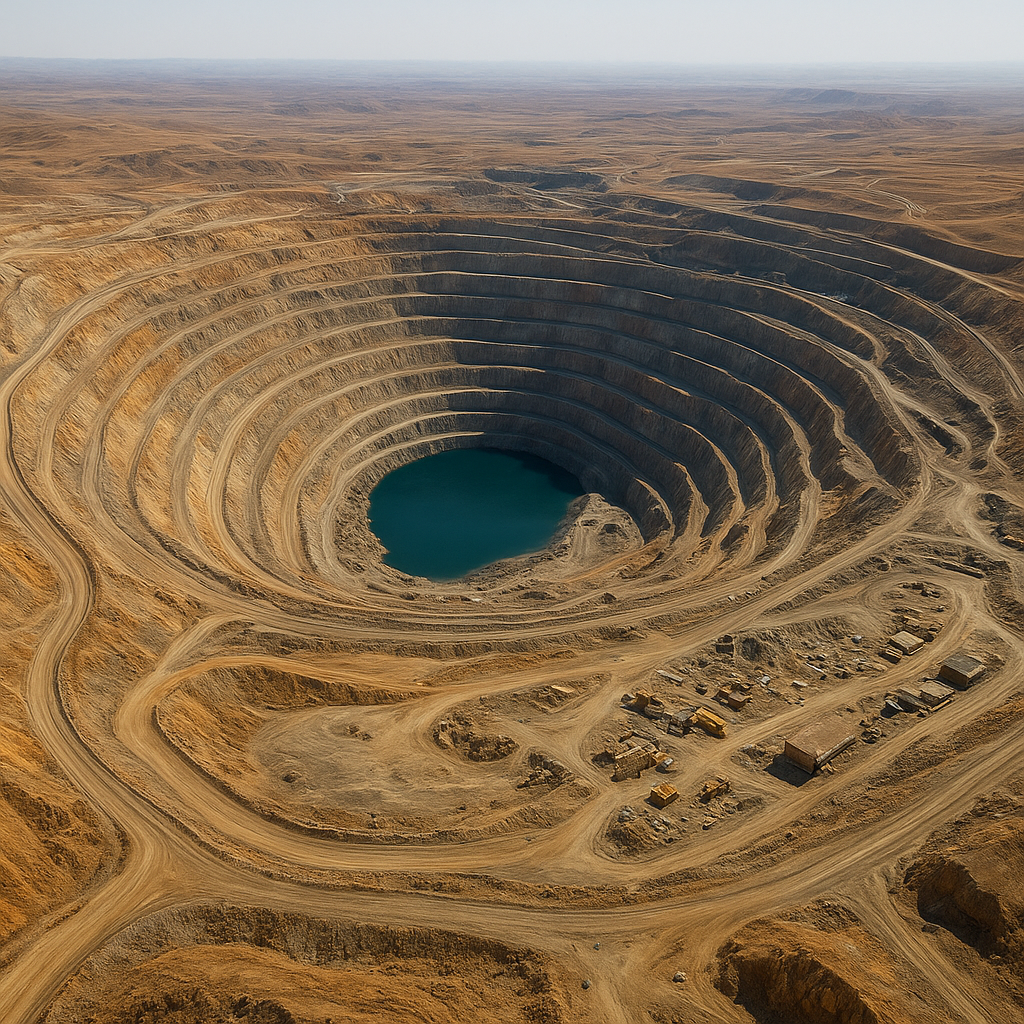
The Bozshakol mine is one of the most significant modern mining projects in Central Asia, located in the heart of northern Asia. It represents a major development in the mineral industry of Kazakhstan, focused primarily on the extraction and processing of copper. This article explores the mine’s location and geology, the operational and technical aspects of how ore is brought to market, the broader economic impact of the project, and a collection of interesting and lesser-known facts that illustrate why Bozshakol matters to the region and to global metal markets.
Location and geological setting
Bozshakol lies in the northern part of the country, situated within a region known for its mineral wealth and long history of mining activity. The deposit is set in a landscape of steppe and rolling hills that can face harsh winters and wide seasonal temperature ranges. The deposit itself is a classic example of a large-scale porphyry-style mineralization: disseminated sulfide mineralization hosted in intrusive rocks and associated with hydrothermal alteration zones typical of major copper systems. The geology makes the site suitable for large-scale surface mining rather than underground operations.
The deposit’s size and continuity are what make it economically attractive. The ore body contains significant amounts of copper along with smaller quantities of precious metal by-products such as gold and silver, which are recovered as part of the processing stream. Because the mineralization occurs as sulfide minerals distributed through large volumes of rock, mining is carried out using bulk methods that can exploit economies of scale. Exploration prior to development delineated a resource that justified a multi-year capital program and construction of integrated facilities to convert mined ore into a marketable product.
Mining operations and processing technology
At the operational core of Bozshakol is an open-pit mining operation combined with a concentrator complex. Open-pit mining allows the removal of large volumes of overburden and ore using trucks, shovels, drill-and-blast methods, and high-capacity fleet equipment. The mined ore is delivered to the processing plant, where it is crushed, milled, and treated by flotation to produce a copper concentrate suitable for smelting or for sale to third-party smelters.
Processing at Bozshakol follows established flowsheet principles for porphyry copper—primary crushing, semi-autogenous grinding (SAG), ball milling, and multi-stage flotation circuits to separate copper-bearing sulfide minerals from the gangue. Concentrate is thickened and filtered, then stored and dispatched. The plant is designed with significant throughput capacity to process large tonnages daily, reflecting the deposit’s bulk-tonnage character.
Equipment, tailings and water management
The mine and processing plant rely on a range of heavy-duty equipment: large haul trucks, hydraulic shovels, drills, and ancillary support machinery. The concentrator includes rotating mills, flotation cells, thickeners, and filtration units, all integrated into a continuous operation. Tailings from flotation require carefully engineered storage facilities. Tailings management is a major technical and environmental focus, involving controlled deposition, monitoring, and progressive reclamation to mitigate potential impacts.
Water management is crucial in the region’s semi-arid climate. The operation incorporates systems for water recycling and conservation, aiming to maximize reuse of process water and minimize fresh-water intake. Such measures are essential both for operational efficiency and to meet environmental and regulatory expectations in the host region.
Economic significance and regional impact
The development and operation of Bozshakol have considerable economic implications at multiple scales. For the national economy of Kazakhstan, the mine represents an important source of export earnings, foreign exchange, and industrial diversification beyond hydrocarbons. The project attracts investment into mining infrastructure, logistics, and related services, strengthening the country’s role as a regional minerals supplier.
At the local and regional levels, the mine has delivered employment opportunities, supplier contracts, and infrastructure investment. Construction and ongoing operations require skilled and unskilled labor, which stimulates local labor markets and creates demand for housing, transport, and services. Local contractors and suppliers often gain new business from large-scale maintenance programs, road upgrades, power connections, and supply-chain activities. The presence of the mine can catalyze improvements in regional social and physical infrastructure.
The project is developed and managed by KAZ Minerals, a company that has invested substantial capital in bringing the site from exploration through to production. The scale of investment has supported the construction of an integrated operation capable of delivering steady concentrate shipments to overseas markets. Export of concentrate connects the operation to global copper supply chains—concentrate buyers typically include smelters in regional hubs that process the material into refined metal for manufacturing industries worldwide.
Because copper is central to electrification, construction, and many industrial processes, the ongoing production from Bozshakol contributes to global metal availability. In periods of strong demand (for example, linked to renewable energy and electrification trends), additional production capacity such as Bozshakol can play a stabilizing role in regional supply.
Historical development and milestones
The Bozshakol project moved through a succession of stages typical of large mining ventures: exploration, resource definition, feasibility studies, permitting, financing, construction and commissioning. Exploration programs defined the deposit geometry and grade distribution, enabling engineering teams to design an economically viable pit and processing circuit. Feasibility studies quantified capital and operating costs, projected life-of-mine production profiles, and evaluated routes for concentrate sales and logistics.
Construction of the mine and concentrator required a sustained program of civil, mechanical, and electrical works. Establishing reliable access roads, power supply, and water arrangements were parallel priorities. Once commissioning started, ramp-up periods focused on optimizing throughput, recovery, and concentrate quality. Over the first years of operation, operational teams refined parameters to improve performance, manage costs, and extend the run life of key plant components.
Environmental management and community relations
Large-scale mining projects attract scrutiny on environmental grounds, and Bozshakol is no exception. Environmental programs typically include baseline studies, continuous monitoring of air, water, and biodiversity, and the development of mitigation measures. Tailings storage facilities are designed and monitored to international standards, with engineering controls for stability and seepage prevention. Progressive reclamation—returning disturbed lands to a stable condition as mining advances—is an important programmatic element.
Community engagement plays a complementary role. The operation usually maintains communication with local authorities and communities, facilitating employment training programs, community investment initiatives, and often targeted social projects in health, education, and infrastructure. These efforts are intended both to improve local conditions and to build the social license needed for long-term operations.
Interesting facts and technical highlights
- Scale and design: Bozshakol’s layout exemplifies modern bulk-mining design, aimed at achieving economies of scale in both extraction and mineral processing.
- By-product recovery: In addition to copper, the processing stream typically recovers small but economically meaningful amounts of gold and silver, which increase project returns.
- Concentrate markets: Concentrate produced at the plant is shipped to international smelters. Global smelting and refining capacity determines logistics and commercial arrangements.
- Logistics: The mine’s output moves overland to railheads and onward to ports. Efficient logistics chains are essential to deliver concentrate affordably to buyers.
- Technology adoption: Modern processing plants incorporate automation, remote monitoring, and process control tools to improve recovery and maintain stable operations under variable ore conditions.
- Local supply chains: The operation supports a network of local suppliers for maintenance, catering, transport, and construction, stimulating regional business activity.
- Workforce training: To operate complex mills and maintain heavy equipment, the project invests in training and skill development for the local workforce, creating longer-term career pathways.
- Energy considerations: Large-scale milling and flotation consume substantial energy. Managing energy use and securing reliable power are central to operational planning.
- Environmental safeguards: Water recycling, dust control, and tailings management are implemented to meet regulatory standards and reduce environmental footprint.
- Strategic importance: The mine strengthens Kazakhstan’s position in the global metals market while diversifying regional industry beyond hydrocarbon dependence.
Challenges and future potential
Operating a major mine in a continental climate and remote setting brings perennial challenges: logistics and transport costs, seasonal weather impacts, sourcing and retaining skilled personnel, and continuing social and environmental expectations. Market volatility for copper prices also affects revenue and operational plans. Despite these challenges, the underlying resource characteristics—large, well-defined ore bodies amenable to open-pit methods—provide a platform for stable long-term production.
Future potential can take several forms: increasing recovery through plant optimization, extending mine life by discovering and integrating nearby resources, and adding value through downstream processing or enhanced by-product recovery. Investment in digital tools and automation can also improve safety and productivity. From a broader perspective, as global demand for copper evolves—driven by infrastructure expansion, electrification, and green technologies—projects like Bozshakol will remain strategically relevant.
Commercial and geopolitical context
Bozshakol operates within a complex commercial and geopolitical environment. Copper is a globally traded commodity; prices are set on global markets and influenced by demand from large consumers such as China, Europe, and North America. Mines in Central Asia must link their production efficiently into international supply chains, working with traders, smelters, and shipping companies to reach end-users. At a geopolitical level, Kazakhstan’s mining policies, tax environment, and bilateral trade relationships shape project economics and investor confidence.
Projects of this scale typically involve dialogues with national and regional governments to align tax, environmental, and employment frameworks. Maintaining stable regulatory relationships is important for the long-term investment horizon that mining demands.
How Bozshakol fits into the global copper story
Globally, copper is central to modern economies: electrical wiring, motors, renewable energy systems, and many industrial uses depend on reliable copper supplies. Mines that can deliver substantial, reliable concentrate volumes help to underpin these supply chains. The Bozshakol operation, by providing a consistent production stream from a large porphyry deposit, contributes to the diversity of supply sources outside the world’s largest copper-producing countries.
Mining companies and host countries often consider not only short-term production figures but also the role such projects play in fostering industrial capability, technological transfer, and regional economic resilience. Bozshakol, with its integrated mine-to-concentrate model, serves as an example of how modern mining developments combine geological opportunity with engineering, investment, and social engagement to produce commodities that power the global economy.

