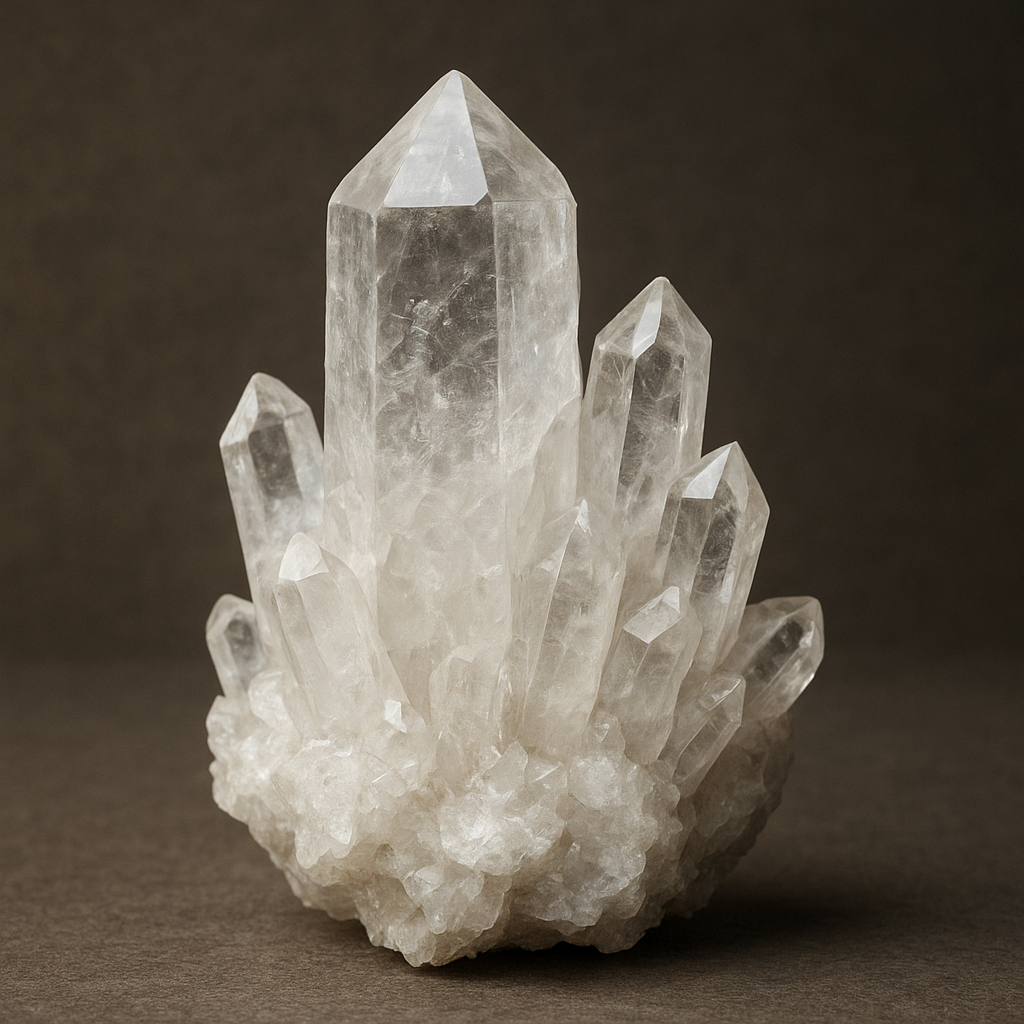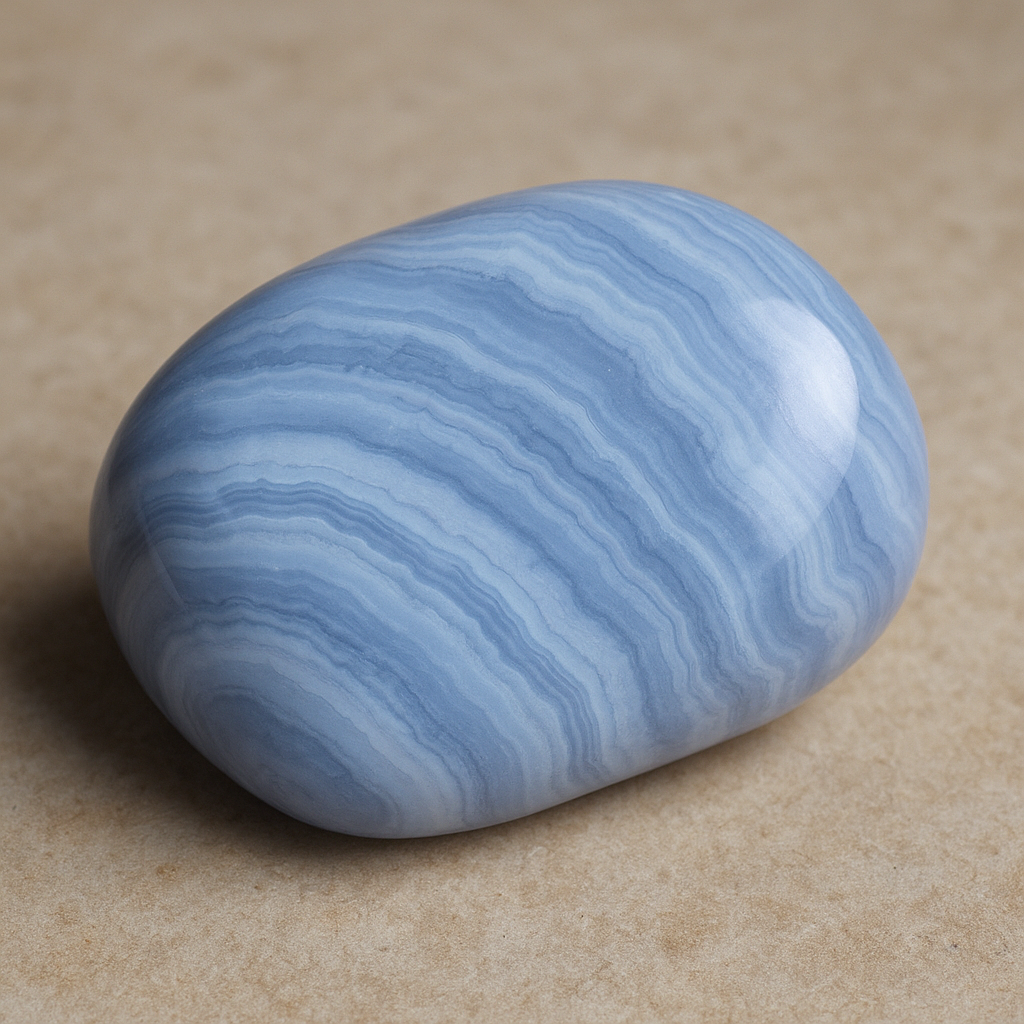
Blue Lace Agate is a gentle, banded variety of chalcedony prized for its soft blue hues and intricate, lacy patterns. Its appearance evokes cloud-streaked skies and delicate textiles, which has made it a favorite among lapidaries, jewelers, collectors and those interested in metaphysical practices. This article explores the stone’s geological origins, where it is found, how it is used, how to identify and care for it, and a range of cultural and practical details that make this mineral both beautiful and interesting.
Geology and Formation
Blue Lace Agate is a form of chalcedony, a microcrystalline variety of quartz. Like other agates, it forms in cavities of volcanic rock where silica-rich fluids slowly deposit layers of extremely fine quartz crystals. Over long periods of time these deposits build up into the concentric bands and filigree-like textures that define agate varieties.
The characteristic pastel blues and whites of Blue Lace Agate arise from trace mineral impurities and the particular conditions under which the silica gel solidified. Very slow precipitation and subtle variations in chemistry cause the stone’s thin, alternating layers. These layers often produce the distinctive banding and lace-like patterns that give the stone its common name. Internal microstructures scatter light in particular ways, resulting in a soft, almost translucent appearance in thinner slices and cabochons.
Where It Occurs
Blue Lace Agate is not as widely distributed as some other agates; certain regions are better known for producing the high-quality material collectors seek. The most famous and commercially significant occurrences are concentrated in southern Africa, but notable material has also come from other continents.
- Main historic and modern source: Namibia — Many of the best-known specimens on the market originate from Namibian deposits. The stone from this country often displays unusually fine banding and a soft, pleasing color palette.
- Other notable sources: Brazil and India — These countries supply a broad range of agate material, including blue varieties and material that can be cut into attractive cabochons and beads.
- Secondary sources: parts of South Africa and Mexico — These locations occasionally yield blue-banded agates or stones marketed as Blue Lace Agate-like material.
Because Blue Lace Agate is valorized for its particular hue and pattern, provenance matters to collectors. Stones labeled as coming from Namibia often command the most attention; however, attractive pieces from Brazil and India are widely used in jewelry and décor. Careful buyers and collectors are advised to ask about origin when provenance is important to them.
Appearance, Varieties, and Lapidary Uses
Blue Lace Agate ranges from nearly white with faint blue veining to medium sky-blue with pronounced banding. Patterns vary from broad concentric rings to very fine, lace-like filigree. In some pieces, dendritic inclusions or tiny mineral specks create additional visual interest. The stone is often worked into cabochons, beads, worry stones, and carved ornamental objects.
Common forms and cuts
- Cabochons — Rounded, polished tops that showcase bands and translucency.
- Beads — Spherical or tubular beads highlight repeated patterning for necklaces and bracelets.
- Carvings and figurines — Small sculptures and worry stones take advantage of the calming aesthetic.
- Slices and slabs — Thin slices can be backlit to reveal layering and translucence.
The stone’s moderate hardness and stability make it a popular choice in the workshop. It is durable enough for everyday jewelry, though it does not rival harder gemstones (like sapphires or diamonds) for scratch resistance. Lapidaries value material with even banding and soothing color transitions, which polish to a smooth, glassy finish.
Identification and Similar Stones
Distinguishing Blue Lace Agate from superficially similar materials requires attention to texture, pattern, and basic gemological properties. It is a microcrystalline quartz (chalcedony), with a hardness around 6.5–7 on the Mohs scale and a glassy to waxy luster when polished. Typical features used to identify it include fine parallel banding, soft translucency, and a layered internal look under bright light.
Common stones that can be confused with or compared to Blue Lace Agate include larimar, chrysocolla, turquoise, and dyed agate. Larimar (a blue pectolite) has a different crystal structure and often shows cloud-like, broader patterns with a different type of chatoyancy. Chrysocolla tends to be more green-blue and softer, while turquoise has an opaque, more blocky appearance. Dyed agate can mimic deep blue tones, but under magnification and certain lighting, artificial color often appears unevenly absorbed or concentrated in fractures.
- Tests and cues: hardness testing, observation of natural banding, and looking for dye residues or unnatural color saturation.
- Professional verification: gemological labs can perform spectroscopy and other analyses to confirm identity and detect treatments.
Uses: Jewelry, Ornamentation, and Design
Blue Lace Agate finds broad use in the jewelry market and in decorative arts. Its calming aesthetic and affordability make it a popular alternative to more expensive blue gemstones. Common uses include:
- Jewelry: pendants, earrings, rings (often set in silver or base metals), and multi-strand bead necklaces.
- Lapidary pieces: polished cabochons for collectors and artisans.
- Interior accents: small inlay panels, drawer knobs, and decorative tiles in artisan projects.
- Artisanal carvings: worry stones, palm stones, and small figurines.
Designers often pair the stone with warm metals for contrast, or with oxidized silver to emphasize its cool tones. In contemporary jewelry, Blue Lace Agate is frequently used in minimalist settings that allow the stone’s natural banding to be the focal point.
Metaphysical, Cultural, and Historical Contexts
Although agate has been used for millennia in many cultures, the particular metaphysical associations surrounding Blue Lace Agate are mostly modern. In contemporary crystal-healing communities the stone is popular for its perceived calming and communicative properties.
- Throat chakra: Many practitioners associate Blue Lace Agate with the throat chakra, using it to encourage clear speech and honest expression.
- Communication: it is often described as a stone that helps reduce anxiety around speaking, promoting patience and articulation.
- Calming and stress relief: its soft hues are thought to soothe nervous energy and encourage serenity in tense situations.
It is important to note that these uses are symbolic and spiritual rather than scientifically proven therapies. Nevertheless, Blue Lace Agate continues to enjoy popularity among those who practice meditation, energy work, or simply value the stone as a physical reminder to speak calmly and thoughtfully.
Care, Treatments, and Practical Handling
Blue Lace Agate is relatively stable but should be treated with basic gemstone care to preserve its appearance:
- Avoid prolonged exposure to direct sunlight, which can gradually fade subtle colors in some agates.
- Use mild soap and warm water for cleaning; soft brushes help remove grime from crevices.
- Avoid harsh chemicals, acids and prolonged soaking; ultrasonic cleaning may be safe for many pieces, but caution is advised for stones with fractures or stabilizing treatments.
- Store separately from harder gemstones to prevent scratches; wrap in soft cloth or place in padded compartments.
Treatments are uncommon for true Blue Lace Agate, but some agate material may be dyed to enhance or intensify the blue. Good-quality natural material with even, delicate banding will command higher prices than enhanced or heavily treated stones. When buying, ask the seller about treatments and whether tests have been performed.
Market, Value, and Collecting Tips
The market value of Blue Lace Agate is influenced by color quality, pattern definition, translucency, size, and provenance. Typical pricing is modest compared to precious gemstones, but exceptional pieces—especially from well-known localities like Namibia—can be more valuable.
- High-value characteristics: even, well-defined banding, pleasing pastel blue tones, translucency in thinner sections, and minimal visible fractures.
- Lower-value traits: dull color, uneven dyeing, heavy opacity without pattern, or extensive cracking.
- Collecting advice: inspect stones under different lighting conditions, ask about origin, and consider purchasing from reputable dealers who offer return policies or certificates of authenticity when provenance or treatments matter.
Because dyed agates exist, look for unnatural color concentration along fractures or in drill holes on beads as a clue. Professional gem testing can confirm authenticity and detect enhancements when necessary.
Interesting Facts and Cultural Notes
Blue Lace Agate carries a strong aesthetic appeal that has made it a recurring presence in artisan markets and among metaphysical communities. A few intriguing points:
- The stone’s name comes from the delicate, lace-like patterns of banding that resemble fine fabric or embroidery.
- While agate itself has deep historical roots in seals, amulets, and intaglios across ancient civilizations, the soft pastel blue varieties that modern markets call Blue Lace Agate became especially fashionable in the late 20th and early 21st centuries.
- Its soothing appearance contributes to its popularity in wellness spaces, where it is used as a tactile focus during breathing exercises and mindfulness practices.
Collectors prize specimens that display exceptionally fine and even banding; lapidaries prize material that can be sliced and cut to maximize translucency and pattern continuity.
Practical Advice for Buyers and Enthusiasts
If you are considering Blue Lace Agate for jewelry, collection, or practice, a few practical tips will help you choose well:
- View pieces in natural daylight where possible to judge true color and translucency.
- Request information about treatments and origin; provenance can affect both value and desirability.
- For wearable pieces, prefer settings that protect the stone’s edges; consider protective bezel settings over exposed prongs for daily-worn rings.
- When buying beads or small carvings, inspect for consistent color and dye signs; uneven saturation is a giveaway for artificially enhanced pieces.
Whether you are drawn to Blue Lace Agate for its visual charm, its metaphysical associations, or its practical uses in craft and design, understanding the stone’s geology, sources, and care needs will help you make informed decisions and appreciate this gentle, banded gemstone to the fullest.