
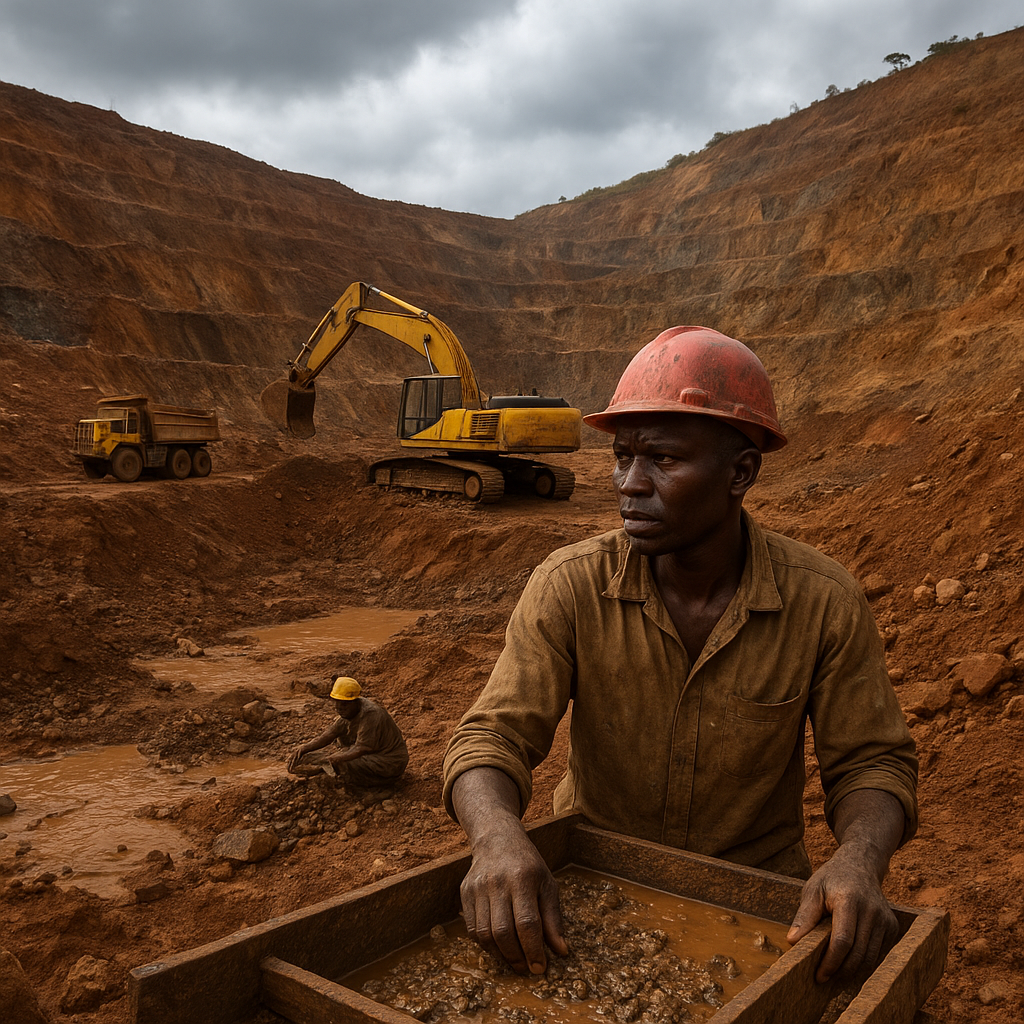
The Bisie mine in eastern Democratic Republic of Congo is one of the most talked-about mineral sites in Central Africa. Located in a remote, high-potential tin belt, Bisie has attracted attention from multinational companies, artisanal mining communities, and international regulators because of its rich ore bodies and its role in global supply chains. This article explores where Bisie is situated, what is extracted there, its economic importance locally and globally, and several noteworthy aspects of its geology, history, and social impact.
Location and Geological Setting
The Bisie deposit sits in the highlands of South Kivu province, in the eastern part of the Democratic Republic of the Congo (DRC). More precisely, it lies near the territory of Mwenga, a region characterized by rugged terrain, seasonal roads, and scattered villages. Bisie forms part of a broader tin-rich geological province that stretches through parts of eastern Congo and into neighboring countries.
Geologically, the deposit is dominated by cassiterite-bearing veins and pegmatites hosted in metamorphic rocks. The primary ore mineral is cassiterite, a tin oxide (SnO2), which concentrates into high-grade pockets. These veins are typically associated with late-stage hydrothermal activity and granitic intrusions. The ore shoots at Bisie can be remarkably rich, producing high tin grades compared to many alluvial or low-grade vein deposits elsewhere.
Regional Access and Logistics
- Access to Bisie is challenging: roads are often unpaved and become difficult during the rainy season.
- Nearest urban centers are several hours away, which increases costs for transport and supplies.
- The remoteness has historically encouraged reliance on artisanal mining and informal trade networks, with tin being transported by small vehicles and motorcycles to regional trading hubs.
What Is Extracted at Bisie
The primary commodity mined at Bisie is tin, nearly always in the form of cassiterite. Tin is a metal with wide industrial uses, most notably in solder for electronics, plating, and various alloys. At Bisie, mining occurs in two main forms:
- Underground hard-rock mining targeting cassiterite-bearing veins.
- Limited alluvial or colluvial extraction in nearby secondary deposits where weathering has concentrated ore.
Ore from Bisie is typically hand-sorted by miners to concentrate cassiterite prior to sale. The concentrated material is then transported to trading centers where it is sold to exporters, sometimes passing through multiple intermediaries before reaching international markets. Laboratory assays from different campaigns have shown that Bisie cassiterite can command relatively high concentrate grades, making it attractive despite transport challenges.
Associated Minerals
Although tin is the dominant commodity, Bisie and the broader tin belt may host other minerals in smaller quantities, including tantalum (in some pegmatitic systems), and trace amounts of other accessory minerals. However, Bisie’s global reputation is predominantly tied to tin production.
Historical Development and Ownership
Bisie’s story reflects the complexity of mineral resource development in eastern Congo. Small-scale artisanal activity in the area goes back decades, with local miners exploiting rich pockets of cassiterite. Over time, as word of the deposit’s richness spread, larger investments and more structured operations were attempted.
Companies and local elites have intermittently asserted control over mining sites like Bisie. These attempts at formalization and commercialization have sometimes improved infrastructure and production efficiency, but equally they have been contested by artisanal communities and local authorities. The legal and administrative environment in the DRC—with competing claims, evolving mining codes, and varying provincial enforcement—has contributed to frequent changes in who controls operations on the ground.
Artisanal Mining vs. Industrial Approaches
- Artisanal miners at Bisie often operate informally, using hand tools, small-scale explosives, and manual processing for concentrating ore.
- Industrial approaches aim to mechanize extraction, introduce safety and environmental controls, and formalize labor and sales channels.
- The tension between these models is a recurring theme: while industrialization may increase yields and reduce environmental impacts in principle, it can also displace livelihoods and strain local governance if not managed inclusively.
Economic Importance Locally and Nationally
At a local level, Bisie provides direct employment and income for hundreds to thousands of people through mining, processing, transport, and trading. For many households in Mwenga and nearby communities, revenue from tin sales finances food, health care, and education. The mine has created local markets, stimulated small businesses, and indirectly supported service industries like lodging and transport.
For the Democratic Republic of the Congo as a whole, Bisie contributes to export earnings in the mineral sector, which is one of the DRC’s most important economic pillars. While copper and cobalt dominate national export value, tin from sites like Bisie remains strategically relevant, especially given tin’s role in electronics manufacturing. When global tin prices are high, production from Bisie can yield meaningful foreign exchange inflows.
Supply Chain and Global Markets
The tin produced at Bisie flows into international markets through a chain of collectors, middlemen, exporters, and refiners. Key elements of this chain include:
- Local buyers who purchase ore concentrates from miners.
- Regional traders who aggregate material and arrange transport to export points.
- Export companies that process export documentation and ship concentrates to smelters or refineries abroad.
- International manufacturers that ultimately use refined tin in products such as electronic solders and plated components.
Changes in global tin demand, prices, and sourcing policies (including corporate due diligence and conflict-mineral regulations) directly influence the economics of Bisie operations. For example, if buyers demand provenance documentation, this may raise costs or shift trade to more formal channels, affecting local profitability.
Social and Environmental Issues
Mining at Bisie, as in many artisanal settings, raises a range of social and environmental concerns. Some of the most pressing challenges include:
- Safety: Underground artisanal workings are often unstable and lack adequate ventilation, raising the risk of collapses and respiratory hazards.
- Child labor: Artisanal mines can attract families and children, leading to child labor concerns that NGOs and regulators try to address.
- Environmental degradation: Deforestation, soil erosion, and sedimentation of waterways can accompany both alluvial and hard-rock mining if not properly managed.
- Community conflicts: Competition for access, ownership disputes, and rent-seeking by armed groups or political actors sometimes inflame tensions.
International initiatives and civil society organizations have worked to mitigate these problems through formalization programs, traceability schemes, and community development projects. However, progress is uneven and heavily dependent on political will, market incentives, and security conditions on the ground.
Regulatory and Certification Efforts
Over the past decade, several mechanisms have been applied to minerals from eastern Congo to improve transparency and reduce the trade in conflict minerals. These include chain-of-custody programs, third-party audits, and national export controls. In the case of tin from Bisie, stakeholders have explored traceability systems intended to certify that material is sourced responsibly and is not funding armed conflict.
Interesting Aspects and Lesser-Known Facts
Bisie offers several interesting angles beyond its immediate economic role:
- High-grade pockets: Unlike many hard-rock deposits that are low-grade and bulk-tonnage, Bisie is known for localized, very high-grade cassiterite pockets, making it disproportionately attractive to small-scale miners who can profitably extract rich shoots by hand.
- Informal laboratories: Due to limited access to formal assaying, improvisation is common: miners and traders sometimes use makeshift weighing and washing techniques to estimate concentrate quality before sale.
- Market sensitivity: Because of its relatively high grades, production from Bisie can respond quickly to changes in tin prices—surges in price often trigger a rush of artisanal activity, while price drops can cause rapid shutdowns.
- Technological innovation: Some NGOs and pilot projects have introduced simple technologies—improved sluice boxes, manual ore-crushing equipment, and basic safety gear—to boost yields and reduce hazards. These grassroots innovations can have outsized impact in artisanal contexts.
- Geopolitical interest: Tin may not command the headlines like cobalt or coltan, but it is strategically important for electronics manufacturing globally. As a result, mines like Bisie attract attention from buyers seeking secure sources of supply.
Security, Governance, and Community Dynamics
Security dynamics in South Kivu influence mining activities. Periodic outbreaks of violence or the presence of armed groups can disrupt operations, displace miners, and interrupt trade routes. Conversely, when security improves due to government presence or community agreements, mining activity often expands rapidly.
Governance at Bisie involves an interplay of local customary authorities, provincial officials, and national mining institutions. Formalizing artisanal mining—through permits, cooperatives, and legal frameworks—remains a priority for those seeking to ensure more predictable revenues for the state and safer working conditions. However, formalization is not a panacea: without transparent institutions and incentives, it can simply create additional paperwork while failing to change on-the-ground realities.
Community Benefits and Tensions
Mining revenue has the potential to finance local development—roads, clinics, and schools—if channeled effectively. Efforts to introduce benefit-sharing schemes or local development funds have been proposed in various contexts to capture a portion of mining profits for community projects. At the same time, unequal distribution of mining rents can produce tensions, fueling grievances and undermining trust between communities and authorities.
Environmental Management and Rehabilitation
Sustainable mining at Bisie would require attention to several environmental management practices:
- Controlled tailings and sediment management to prevent waterway contamination.
- Progressive land rehabilitation to restore vegetation and prevent severe erosion.
- Proper waste disposal and limited use of hazardous chemicals—tin processing at Bisie does not typically require mercury (unlike artisanal gold), but good practice still demands careful handling of any processing residues.
- Education and training for miners on safer methods and environmental stewardship.
While some projects have piloted rehabilitation and improved practices in Congolese artisanal mines, scaling these efforts at Bisie’s scale is challenging and resource-intensive.
Global Importance and Future Prospects
From a global perspective, supplies of tin from deposits like Bisie contribute to the resilience of electronics and manufacturing supply chains. As demand for reliable, responsibly sourced tin grows, Bisie’s role may evolve depending on several factors:
- Regulatory pressure and corporate due diligence that favor traceable, responsibly sourced minerals.
- Investment in infrastructure and formal mining operations that could increase production predictability.
- Community and environmental safeguards that determine long-term social license to operate.
- Global tin price trends that influence the economic feasibility of both artisanal and larger-scale extraction.
If well-managed, Bisie could help demonstrate how high-grade artisanal deposits can be integrated into responsible supply chains. If mismanaged, it risks perpetuating cycles of environmental degradation, insecurity, and lost development opportunities. The balance will depend on coordinated action by local communities, government, buyers, and civil society.
Concluding Observations
Bisie is emblematic of many resource-rich locales in the DRC: geologically promising, economically significant for local livelihoods, and intertwined with complex social, governance, and environmental challenges. Its high-grade cassiterite reserves make it an important source of tin, while its location in South Kivu near Mwenga underscores the logistical constraints that shape artisanal practice. International attention—driven by concerns about conflict funding and a desire for ethically sourced minerals—creates both opportunities and pressures for the miners and communities that depend on the site.
Ultimately, Bisie’s future will be determined by how well stakeholders can combine practical, on-the-ground improvements—safer mining techniques, improved logistics, and fairer trading practices—with policy measures that reward transparency and sustainable development. The mine’s story is still unfolding, and its outcome will carry implications for local communities, the DRC’s mining sector, and the global supply chains that rely on tin.

