Beryl is a fascinating mineral that sits at the crossroads of geology, gemology and industry. Belonging to the cyclosilicate family, it can appear in a rainbow of colors and sizes, from delicate pale stones to large, gem-quality crystals coveted by collectors and jewelers. This article examines the mineral’s chemistry and structure, the places where it forms and is mined, its many uses — both ornamental and practical — and several intriguing facts and anecdotes that illustrate why beryl remains important to science, commerce and culture.
Chemistry, Structure and Varieties
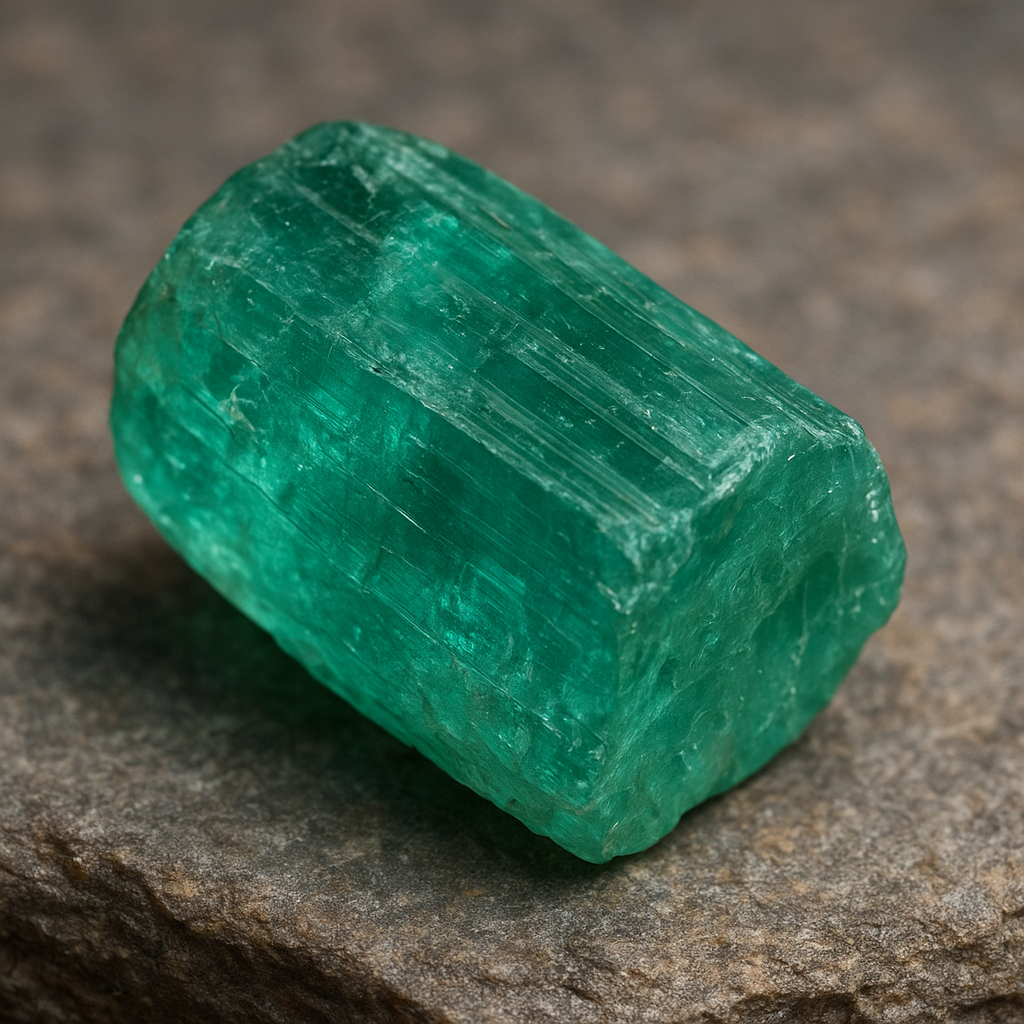
Beryl’s chemical formula is Be3Al2Si6O18, a composition that places it among the ring silicates (cyclosilicates). The crystal system is hexagonal, often forming long, prismatic crystal habits with well-defined vertical striations. Typical physical properties include a Mohs hardness of about 7.5–8, a relatively low specific gravity (approximately 2.6–2.8), and generally poor to indistinct basal cleavage. These properties make many beryl varieties both durable and suitable for faceting as gemstones.
Color and the role of trace elements
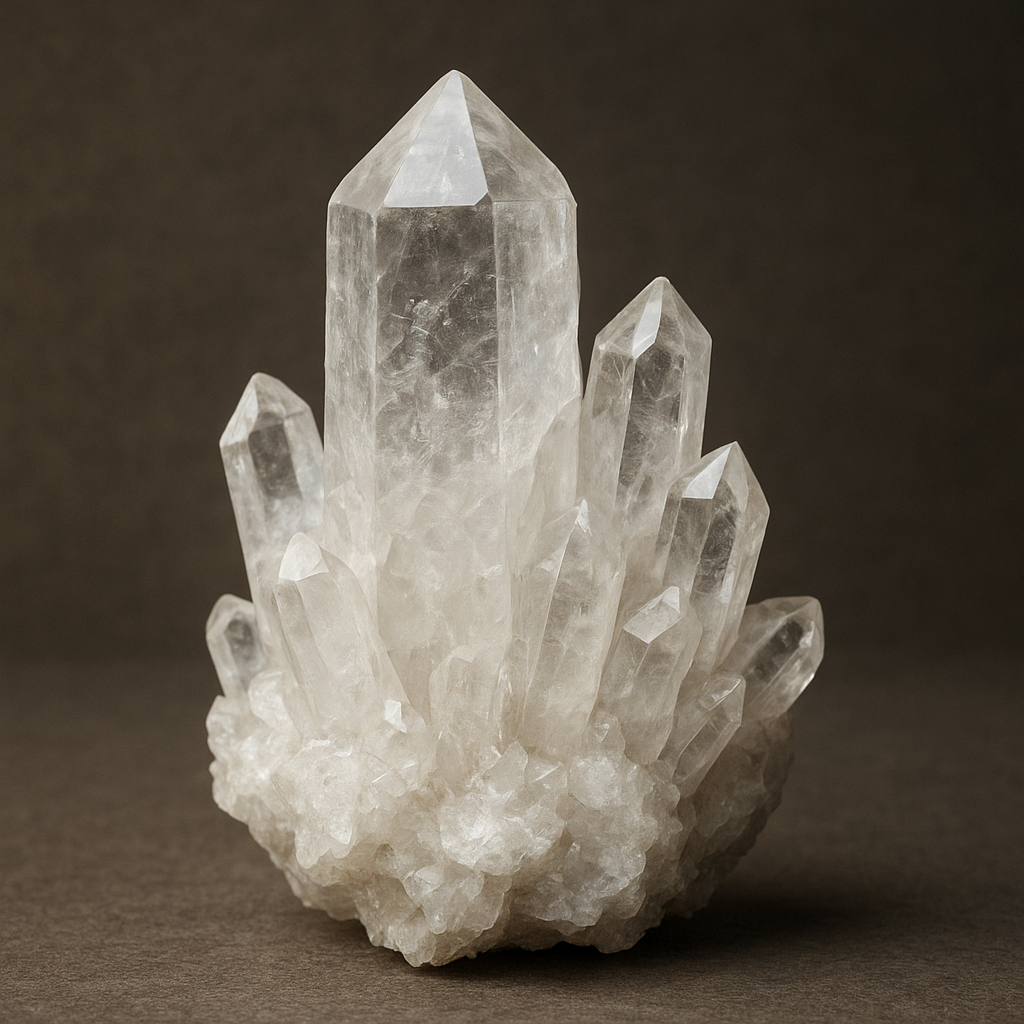
Pure beryl is colorless and is known as goshenite. Coloration arises when trace elements substitute into the crystal lattice. Key examples:
- Emerald: Green to bluish-green color caused mainly by chromium (Cr) and/or vanadium (V).
- Aquamarine: Blue to blue-green color primarily from iron (Fe) in different oxidation states; it can range from pale to intense sea-blue.
- Morganite: Pink to peach tones produced by manganese (Mn).
- Heliodor (also spelled heliodor): Yellow to golden hues usually due to iron.
- Colorless beryl: Goshenite, often used for industrial or collector specimens and occasionally in jewelry.
Other phenomena may include pleochroism (different colors when viewed from different crystallographic directions), zoning (banding of color), and rare optical effects like asterism or cat’s-eye, depending on inclusions and internal structures.
Formation environments
Most gem-quality beryl grows in coarse-grained granitic pegmatites, where slow cooling and volatile-rich fluids allow large crystals to develop. Beryl also forms in mica schists and hydrothermal veins, and occasionally as a product of metasomatism in aluminous rocks. Associated minerals commonly include quartz, feldspar, muscovite, lepidolite, tourmaline, topaz and spodumene.
Where Beryl Occurs: Major Deposits and Mining Regions
Beryl is distributed worldwide. Certain regions are historically and commercially significant either for gem-quality material or for large beryl crystals suitable as ore for beryllium extraction. Here are notable localities and what they are known for.
South America
- Colombia — Famous for some of the world’s finest emeralds (Muzo, Chivor, Coscuez). Colombian emeralds are prized for their intense green color and unique inclusions, often called jardin (garden).
- Brazil — A major source of many beryl varieties: aquamarine (Minas Gerais), morganite, heliodor and large collector crystals. Brazil supplies both high-quality gems and large crystal specimens used in museums and collections.
Africa
- Zambia and Zimbabwe — Significant emerald producers with stones that often show a deep, rich green. Zambia’s Kagem mine is a large modern producer.
- Madagascar — Source of aquamarine, morganite and other varieties, with pegmatites producing attractive gem material in recent decades.
- Namibia, Mozambique and Tanzania — Known for heliodor and aquamarine, plus other gem occurrences.
Asia and Eurasia
- Pakistan and Afghanistan — Provide fine aquamarine, emerald and morganite from high-altitude pegmatites and hydrothermal veins; material from these countries has been important in the market for decades.
- Russia — Historically important for emeralds (Ural Mountains), though production is limited today compared with Colombia or Zambia.
North America
- United States — States like Colorado, North Carolina and California have produced beryl varieties, including aquamarine and emerald, though most U.S. material is modest in quantity. The High Line (Mount Antero) in Colorado is celebrated for aquamarine crystals.
Large crystal finds — such as enormous aquamarine crystals from Brazil — have captured public imagination. The “Dom Pedro” aquamarine, for example, is a famously large, faceted aquamarine weighing thousands of carats and showcasing the potential size that pegmatitic beryl can achieve.
Uses: Gemstones, Industry and Scientific Applications
Beryl spans a spectrum of uses: from high-end jewelry to the source of a critical metal, beryllium, with broad technological applications. The dual nature of beryl as both gem and ore makes it unique among minerals.
Gemological and decorative uses
Gem-quality beryl varieties — especially emerald and aquamarine — are prized in jewelry. Key factors that drive value are color intensity, clarity, cut, carat weight and origin. Treatments are common: emeralds are frequently oiled or resin-filled to improve apparent clarity; aquamarine and morganite are often heated to improve or stabilize color. Cutting considerations include the relatively high hardness (good for daily wear) and the desire to maximize color while minimizing visibility of inclusions.
- Emeralds: Often cut in step-cuts (emerald cuts) to protect the stone and display color.
- Aquamarine: Frequently faceted into brilliant cuts to enhance brilliance and remove yellowish tones through cutting and heat treatment.
- Morganite and heliodor: Popular in contemporary jewelry for their pastel colors and affordability relative to emerald.
Industrial and technological applications
Beryl is the primary ore of beryllium, a metal with exceptional properties: low density, high stiffness, high thermal conductivity, good electrical insulation when formed as an oxide (BeO), and ability to moderate and reflect neutrons in nuclear applications. Extracted beryllium and its alloys are indispensable in:
- Aerospace: high-performance structures, satellite components and precision instruments where weight and stiffness are critical.
- Electronics: connectors, springs, and components using beryllium-copper alloys for conductivity and durability.
- Medical and scientific equipment: windows for X-ray and synchrotron instruments where transparency to X-rays is required.
- Nuclear industry: as reflectors or moderators in certain reactor designs, and in neutron sources.
Because natural beryl is a relatively low-concentration source of beryllium, industrial extraction is typically focused on areas with concentrated beryl-bearing pegmatites or where extraction can be economical. Secondary sources include bertrandite and certain engineered recycling processes.
Mining, Processing and Environmental & Health Considerations
Mining beryl for gemstones versus mining beryl as an ore of beryllium involves different scales, techniques and environmental footprints. Gem mining often occurs in small- to medium-scale operations with a focus on selective extraction and sorting. Beryl as an ore tends to be processed on a larger scale, involving crushing, flotation or other beneficiation steps to concentrate beryllium minerals prior to chemical extraction.
Processing to produce beryllium
Ore concentrates are processed chemically (for example, converting beryl to soluble forms, then extracting beryllium salts and reducing them to metal) in specialized facilities. These processes can be complex and require stringent controls to limit occupational exposure and environmental release of beryllium-containing dust.
Health and safety
A critical aspect of beryl as an ore is the toxicity of free beryllium and its compounds. Inhalation of beryllium dust or fumes can cause chronic beryllium disease (berylliosis), a serious lung condition and sensitization in susceptible individuals. Controls in mining and processing include dust suppression, ventilation, respiratory protection, and medical surveillance. Jewelry and gem-quality beryl pose negligible risk to owners when set and worn normally, but polishing, cutting and industrial processing require appropriate safety measures.
Environmental impacts
Large-scale mining can disrupt landscapes, affect water quality and produce tailings that require careful management. Responsible mining practices, environmental assessments, and remediation are increasingly required by law and by market pressures, particularly for operations tied to international supply chains for high-tech industries and luxury gems.
Identification, Treatments and Synthetics
Gemologists use a combination of visual inspection, microscopy and instrumental analysis to identify beryl varieties and detect treatments or synthetic counterparts. Inclusions are diagnostic: emeralds commonly contain three-phase inclusions, fingerprint-like features, and mineral inclusions that can indicate origin.
Treatments
- Emeralds: Oiling and resin impregnation to improve clarity; disclosure is standard practice.
- Aquamarine and morganite: Heat treatment to remove unwanted hues (for example, yellow to yield pure blue aquamarine).
Synthetic and simulated materials
Synthetic emeralds can be produced by flux-growth or hydrothermal methods; they are used in research, as affordable alternatives for jewelry and in some industrial applications where gem-quality properties are required. Simulants (non-beryl materials that mimic the appearance of beryl varieties) exist as well, and gemological tests such as refractive index, specific gravity and inclusion patterns help distinguish natural, treated and synthetic stones.
Cutting, Care and Market Considerations
Optimal cutting of beryl seeks to balance weight retention with color display and durability. Emeralds are often cut into long, rectangular step cuts to reduce stress and highlight color, while aquamarines frequently receive brilliant or mixed cuts to enhance sparkle. Morganite’s pastel hues respond well to fashion cuts and modern settings.
Care recommendations:
- Avoid heat shocks and harsh chemicals; clean with warm soapy water and a soft brush.
- Emeralds with significant oil or resin fills should be protected from steam cleaning or ultrasonic cleaners, which can remove treatment media.
- Store gemstones separately to prevent scratching from harder materials; although beryl is relatively hard, it can still be scratched by harder substances (e.g., diamond).
Market factors that determine value include color (intensity and purity), clarity (fewer inclusions usually increase value), cut quality, carat weight and provenance. Certain origins — such as Colombian emeralds — often command premiums due to reputation for color and historical significance.
Historical, Cultural and Scientific Notes
Beryl has a long history in human culture. Ancient civilizations prized emeralds — Cleopatra famously favored Egyptian emeralds — and aquamarine was associated with sailors and the sea, believed to calm waves and guarantee safe passage. The modern names of varieties often reflect patrons or perceptions: morganite honors financier J.P. Morgan, while heliodor derives from Greek roots meaning “gift of the sun.”
Scientifically, beryl crystals provide windows into pegmatitic and hydrothermal processes. Their large crystal sizes make them valuable to researchers studying growth zoning, fluid inclusions, and the behavior of trace elements during mineral formation. Large museum specimens and spectacular gem-quality crystals continue to be central to public interest in mineralogy.
Interesting Facts and Notable Examples
– The “Dom Pedro” aquamarine is among the most famous giant faceted aquamarines, weighing many thousands of carats and demonstrating how pegmatites can produce enormous, gem-quality beryl.
– Some emeralds show the trapiche structure — a rare, star-like pattern caused by radial growth and sectoral zoning — seen in a few localities such as Colombia and India.
– Beryl crystals have been found large enough to create display specimens weighing hundreds to thousands of kilograms in exceptional pegmatites, underscoring how favorable growth environments can yield dramatic mineral specimens.
Across geology, gemology and industry, beryl occupies a unique niche. As a family of gem materials it offers a spectrum of beauty; as an ore it supplies a metal that enabled advances in modern technology; and as a geological product it teaches us about the deep, slow processes that form some of Earth’s most impressive mineral treasures. Whether admired in a museum, set in a ring, or used invisibly inside precision instruments, beryl continues to capture interest for reasons both practical and poetic.