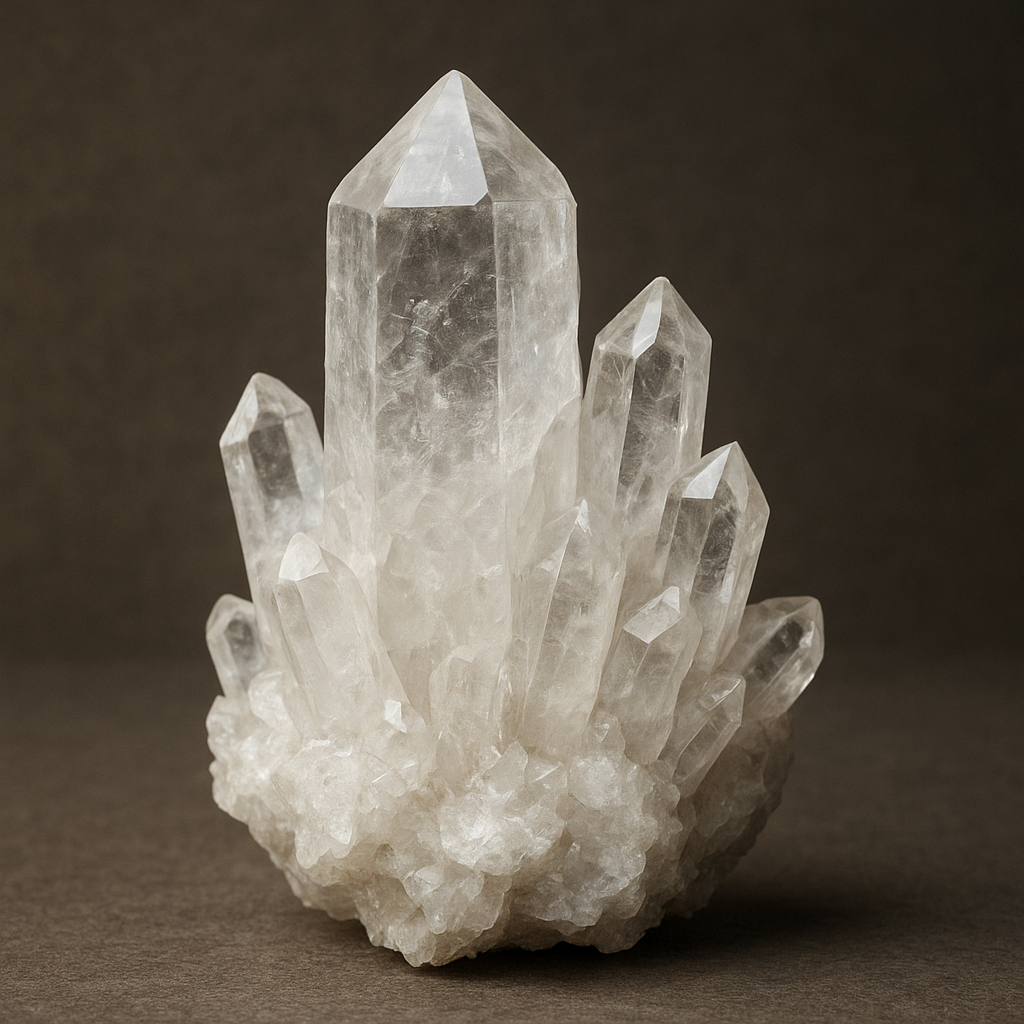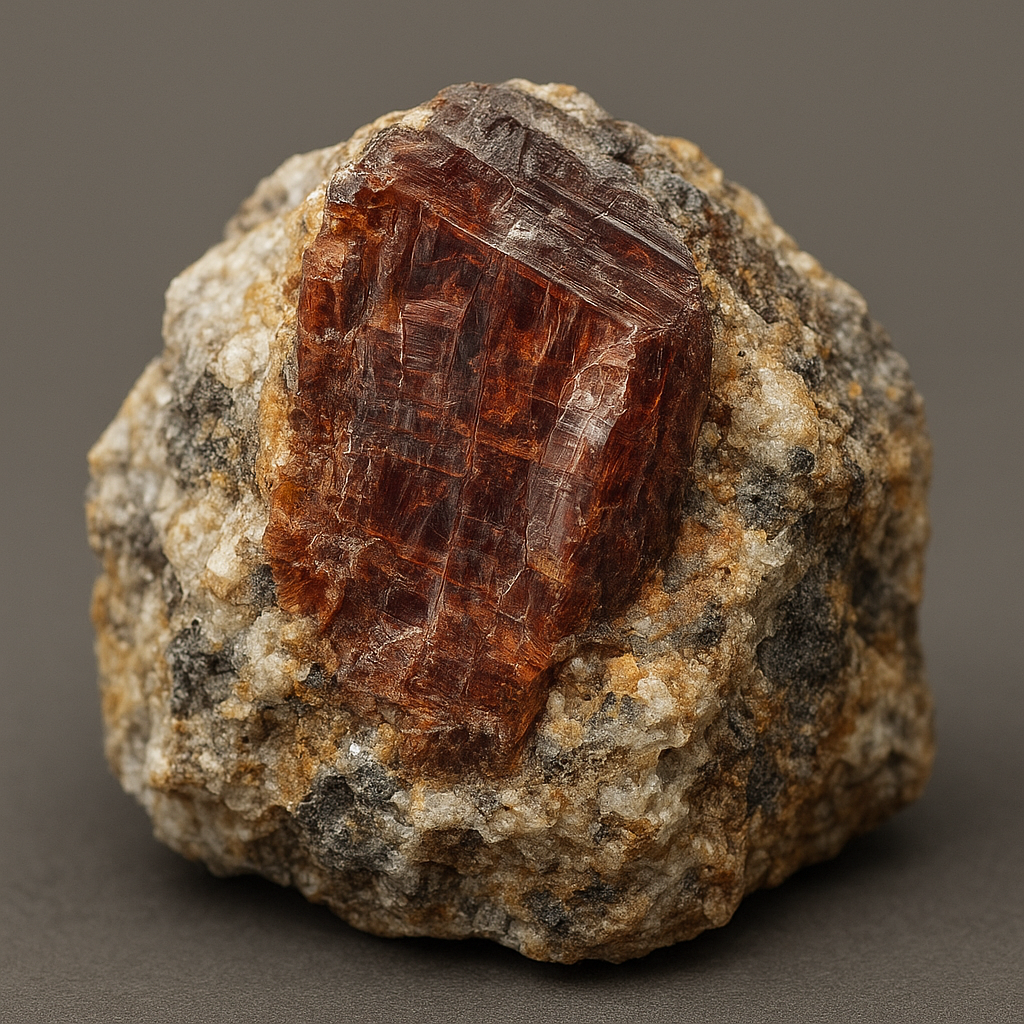
Bastnäsite is a group of rare-earth-bearing carbonate-fluoride minerals that play a central role in the modern supply of rare-earth elements. Named after the Bastnäs district in Sweden where it was first identified, bastnäsite is a primary source of economically important elements such as cerium, lanthanum and neodymium. This article explores where bastnäsite occurs, how it is mined and processed, the many technologies that depend on it, and a range of geological, environmental and strategic factors that make this mineral particularly interesting today.
Occurrence and geological settings
Bastnäsite most commonly forms in hydrothermal veins and in association with carbonatite intrusions and alkaline igneous complexes. These geological settings concentrate rare-earth elements (REEs) through magmatic and hydrothermal processes, producing mineral assemblages that can include bastnäsite, monazite, xenotime and a variety of silicates and oxides. Bastnäsite is often found with gangue minerals such as barite, fluorite, calcite and various iron oxides.
Important occurrences of bastnäsite and bastnäsite-rich ore bodies are distributed across several continents. Historically significant and well-studied deposits include:
- Mountain Pass (California, USA) — a classic bastnäsite-dominated deposit and once the world’s primary source of mined REEs.
- Bayan Obo (Inner Mongolia, China) — the world’s largest REE district, containing a mixture of minerals including bastnäsite and monazite.
- Localities in Europe such as the Bastnäs area in Sweden, where the mineral was first described and many early REE discoveries were made.
- Various carbonatite-related deposits in Africa, South America and Australia where bastnäsite or closely related REE minerals can be found.
Geologically, bastnäsite tends to crystallise in hexagonal systems and may form coarse or fine-grained masses, earthy aggregates or well-formed tabular crystals. Its presence in carbonatites is particularly important because carbonatites are among the most REE-enriched igneous rocks on Earth; when they weather and hydrothermally alter, they can generate high-grade bastnäsite concentrations suitable for mining.
Chemistry and mineralogy
The bastnäsite group can be described by the general formula (REE)(CO3)F, where REE commonly includes cerium, lanthanum, and neodymium, among others. There are end-members such as bastnäsite-(Ce), bastnäsite-(La) and bastnäsite-(Y) that differ mainly by the dominant rare-earth cation. The mineral’s combination of carbonate and fluoride anions gives it specific physical and chemical behavior that influences both extraction and processing.
Some important mineralogical characteristics:
- Crystal system: hexagonal (often prismatic crystals or earthy masses)
- Typical colors: yellow-brown, reddish-brown to tan (depending on iron and REE content)
- Luster: vitreous to resinous or waxy
- Associated minerals: monazite, xenotime, allanite, bastnäsite alteration products and various gangue minerals
Bastnäsite may alter to other REE-bearing secondary minerals and oxides during weathering or processing. It typically contains relatively low concentrations of naturally occurring radionuclides such as thorium and uranium compared with monazite, which is one reason bastnäsite ores have been preferred in some operations from an environmental and waste-management perspective.
Mining and beneficiation
Extraction of bastnäsite ores normally involves conventional open-pit or underground mining methods determined by the geometry and depth of the deposit. Beneficiation practices focus on concentrating the REE-bearing mineral while rejecting gangue minerals. Typical beneficiation flows include:
- Crushing and grinding to liberate bastnäsite grains
- Flotation to separate carbonate-fluoride minerals from silicates and oxides
- Magnetic and gravity separation in certain deposits where physical properties allow
Once a concentrate is produced, further chemical processing converts the minerals into marketable rare-earth compounds. This often involves steps such as:
- Calcination or roasting to remove carbonate groups
- Acid or alkaline leaching to dissolve REE components
- Solved extraction and ion-exchange techniques to separate individual REEs
- Precipitation and conversion to rare-earth oxides (REOs), metals or salts used by downstream industries
Separation chemistry is complex and resource-intensive because many REEs occur together and have similar chemical behaviors. State-of-the-art solvent extraction circuitry can involve dozens of stages to produce high-purity individual elements like neodymium and praseodymium used in high-performance magnets.
Applications and industrial importance
Bastnäsite’s value derives from the REEs it supplies. These elements have unique electronic, magnetic and optical properties that underpin many modern technologies. Major applications include:
- Permanent magnets — Neodymium and praseodymium, often derived from bastnäsite concentrates, are essential to the high-strength NdFeB magnets used in electric motors, wind turbines and hard disk drives.
- Catalysts — Cerium and lanthanum are used in automotive catalytic converters and in petroleum refining catalysts.
- Glass and polishing — Cerium oxide is widely used as a polishing compound for glass and precision optics and as a glass additive that imparts desirable properties.
- Phosphors and lighting — Some REEs derived from bastnäsite feed into phosphors used in LEDs and display technologies.
- Alloys and metallurgy — Lanthanum and cerium are used in metal alloys and specialized steels.
The strategic importance of bastnäsite-derived REEs extends into defense, telecommunications and clean-energy sectors. The transition to electric vehicles, greater adoption of wind power and the miniaturization of electronic devices have all increased demand for high-purity REEs.
Environmental and health considerations
Mining and processing bastnäsite-containing ore bring environmental challenges that require careful management. Although bastnäsite often contains lower radioactive contaminants than some other REE minerals, processing can still generate:
- Acidic or alkaline effluents from chemical leaching
- Solid residues and tailings that must be managed to prevent heavy metal and rare-earth leaching
- Dust and airborne particulate hazards during crushing and grinding
Modern operations emphasize waste-water treatment, tailings stabilization, dust control and monitoring of radioactivity and heavy metals. Community engagement and regulatory oversight are essential to ensure mining does not produce long-term environmental harm. Additionally, recycling of REE-containing products and development of greener processing chemistries are active research areas aimed at reducing the environmental footprint of REE supply chains.
Economic and geopolitical context
The global supply of bastnäsite-based REEs has historically been shaped by the concentration of mining and processing capacity. Over recent decades, certain countries, notably China, have come to dominate the midstream and downstream stages of the REE industry, from processing concentrates to producing high-purity oxides and metals. This concentration has raised concerns about supply security in other economies and driven initiatives to diversify supply through exploration, restarted mines, and recycling.
Prices for REEs can be volatile due to market imbalances, geopolitical events, and changes in technology demand. Investment in new bastnäsite projects requires careful assessment of ore grades, metallurgy, environmental permitting, and downstream processing capability. Because separation chemistry is complex and capital-intensive, having domestic or allied processing capacity is often as strategically important as having raw mineral resources.
Technological challenges and research directions
Several technical challenges continue to attract scientific and engineering attention:
- Improving the efficiency and environmental profile of beneficiation and solvent extraction processes to reduce chemical use and waste.
- Advancing hydrometallurgical and direct leaching techniques that minimize energy consumption.
- Developing robust methods to separate closely related REEs at scale with lower cost and fewer hazardous reagents.
- Enhancing recycling technologies for end-of-life products containing significant REE quantities, such as magnets and electronic devices.
- Exploring substitution or material-efficiency strategies in product designs to reduce reliance on the most constrained REEs.
Academic and industrial research also focuses on understanding the precise mineralogical associations in bastnäsite ores so that processing flowsheets can be optimized. In-situ leaching and microbial-assisted extraction are among novel approaches under investigation for selective recovery.
Historical and cultural notes
The name bastnäsite comes from the Bastnäs mining area in Bergslagen, Sweden, where the mineral was identified and studied in the 19th century. Early research on bastnäsite and related minerals contributed to the discovery and characterization of several rare-earth elements, including cerium. The historical arc from small European mineral localities to large, globally significant mining complexes illustrates how a relatively obscure mineral group became central to modern industry.
Interesting aspects that often surprise people:
- Bastnäsite’s connection to powerful modern magnets: a mineral once found in modest Swedish mines now provides elements that enable electric vehicles and wind turbines.
- Despite the term “rare-earth,” many REEs are relatively abundant in the Earth’s crust; their rarity is economic and mineralogical—high-grade, concentrated deposits are uncommon and geographically limited.
- The interplay of geology, chemistry and geopolitics around bastnäsite makes it a compelling study in how a specific mineral can influence global technology and policy.
Practical considerations for new projects
For companies and policymakers considering development of bastnäsite resources, several practical points are important:
- Comprehensive ore characterization (mineralogy, grain size, gangue) early in the project guides beneficiation choices and predicts environmental challenges.
- Integrated planning for downstream processing is critical because simply producing a concentrate is rarely sufficient—refining and separation capacity must be available or developed.
- Stakeholder engagement and transparent environmental management plans reduce social risk and expedite permitting.
- Understanding market demand for specific REEs (for example, the premium for high-purity neodymium) helps in targeting metallurgical routes and investment.
Final remarks on bastnäsite’s role
Bastnäsite remains a cornerstone of the rare-earth supply base because of its favorable chemistry for extracting light REEs and, in some deposits, significant concentrations of commercially valuable elements. The mineral’s story bridges fundamental geology, advanced metallurgical engineering and pressing contemporary concerns about sustainable technology supply chains. As global demand for REE-enabled technologies grows, bastnäsite deposits and the networks that bring their elements to market will continue to attract scientific, industrial and political attention.