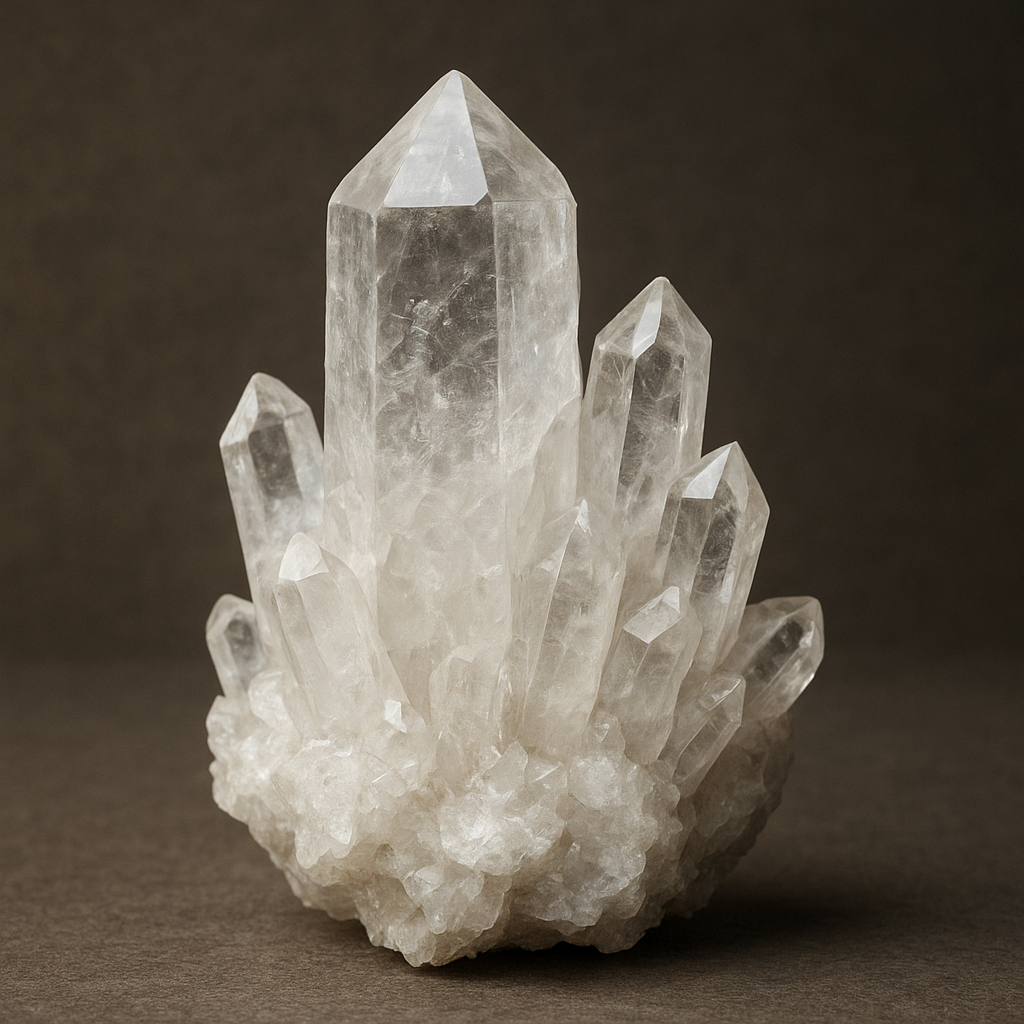
Anthophyllite is a relatively uncommon member of the amphibole group of minerals that has attracted attention for both its geological significance and its controversial role as one of the naturally occurring forms of asbestos. In this article you will find an overview of what anthophyllite is, how and where it forms, the ways humans have used it and encountered it, the health and regulatory concerns tied to its fibrous habits, and some practical notes on identification, monitoring, and remediation. Along the way I will highlight a few technical and historical points that many readers find surprising: its intimate relation to talc deposits, its occurrence in diverse metamorphic terranes, and why it is both scientifically interesting and socially important.
What anthophyllite is: mineralogy and basic properties
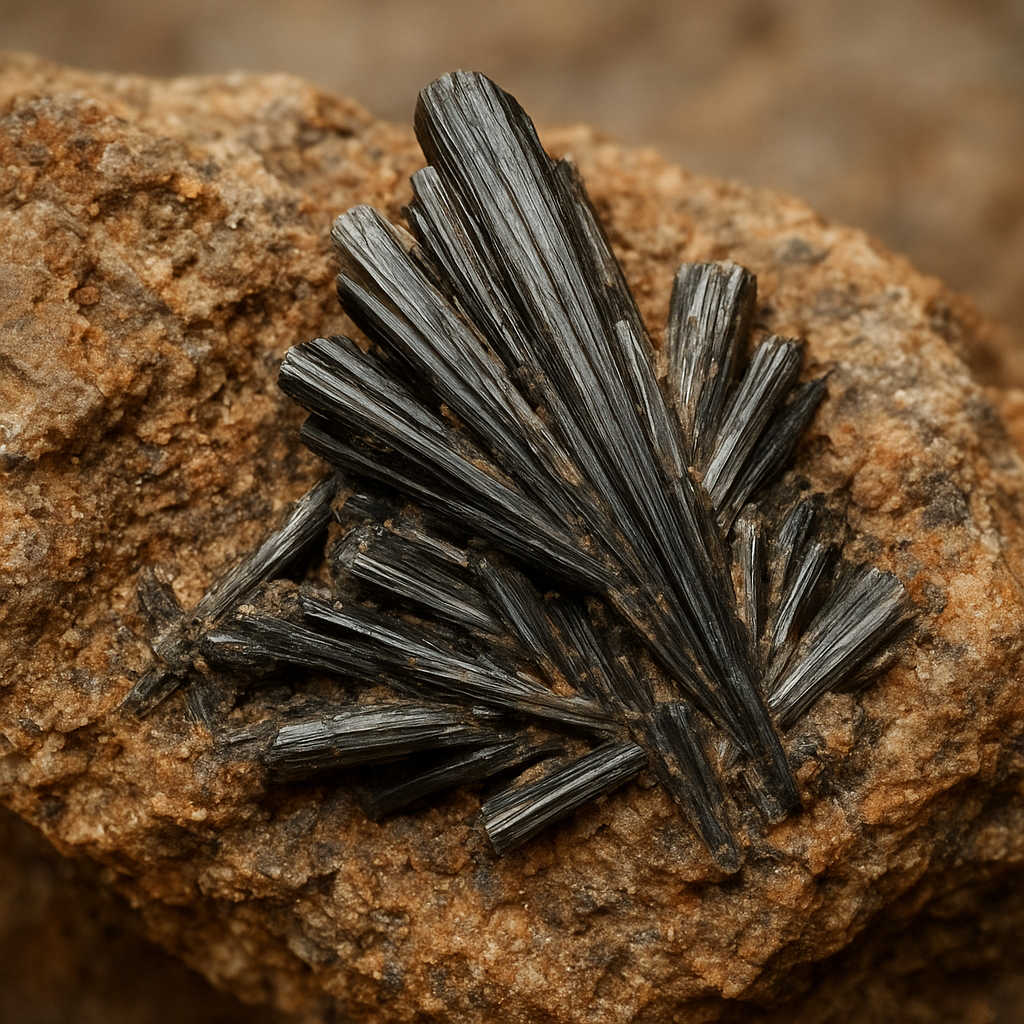
Anthophyllite belongs to the amphibole family, a class of chain silicates defined by complex double chains of silica tetrahedra. Its generalized chemical formula is often written as (Mg,Fe)7Si8O22(OH)2, reflecting variable iron and magnesium content. Unlike the more familiar serpentine asbestos (chrysotile), anthophyllite is an amphibole and crystallizes with a different internal structure and physical habit. Crystals tend to form elongated prisms or slender splinterlike fibers and commonly grow in radiating clusters or fibrous masses that can resemble miniature flowers or carpets. This habit is the origin of its name, derived from Greek words meaning “flower leaf.”
Key physical and optical properties:
- Crystal system: typically orthorhombic, which influences cleavage and external morphology.
- Color: typically gray, greenish, brown or white in altered material; fresh crystals may have a silky or glassy luster.
- Hardness: roughly 5 to 6 on the Mohs scale, similar to many other amphiboles.
- Specific gravity: generally in the range of about 2.7–3.1, higher where iron content increases.
- Cleavage: two cleavages at angles characteristic of amphiboles, producing elongated fragments that can split into fine fibers.
Because anthophyllite can present both as coarse crystals and as very fine, respirable fibers, it occupies a unique place at the intersection of mineralogy and public health.
Geological occurrence and formation environments
Anthophyllite is not ubiquitous, but where it does occur it is associated with specific metamorphic and metasomatic processes. Its formation generally requires magnesium-rich precursors and moderate- to high-grade metamorphism or alteration conditions that enable amphibole stability.
Typical geological settings
- Talc and serpentinite-hosted deposits — Anthophyllite commonly appears in metamorphosed ultramafic rocks and in talc bodies formed by alteration of magnesium-rich lithologies. It can be a product of progressive metamorphism of talc deposits and is frequently intergrown with or adjacent to talc.
- Regional metamorphism — In schists and amphibolites derived from mafic to ultramafic protoliths, anthophyllite may appear where pressure-temperature paths favor amphibole stability over other magnesium silicates.
- Contact metamorphism and skarn zones — Local metasomatic reactions between silica-bearing fluids and magnesium-rich rocks can produce anthophyllite in veins or replacement zones.
Distribution is controlled by the availability of magnesium and silica, the presence of fluids, and the specific metamorphic trajectory. Although it is less common than tremolite-actinolite or chrysotile in many settings, it has been documented in a range of terranes worldwide.
Where anthophyllite has been found
- Scandinavian and Arctic metamorphic belts (notably reported occurrences in parts of Finland and Norway).
- Several localities in North America, including occurrences within talc and ultramafic terrains in parts of the United States and Canada.
- Japan and parts of continental Europe, often in association with talc-bearing metamorphic rocks.
- Other global metamorphic provinces where Mg-rich rocks underwent suitable alteration.
Because anthophyllite can form as an accessory phase in talc deposits, it sometimes appears as an unintended contaminant in industrial talc, which has been an important source of human exposure in certain contexts.
Historical and industrial uses
Anthophyllite has been used historically as one of several minerals marketed as “asbestos,” but it was never as widely exploited commercially as chrysotile (serpentine), amosite or crocidolite. Even so, its fibrous aggregates placed it among materials used for heat insulation, friction products, and other industrial applications where thermal stability and resistance to heat were prized.
- Insulation and thermal products — In some locales anthophyllite-bearing rock was milled and incorporated into insulation boards, cement-asbestos products, and composite materials.
- Friction materials and gaskets — Like other asbestos minerals, anthophyllite fibers were sometimes added to brake linings, clutch facings, gaskets and packing materials because of their strength and thermal resistance.
- Talc contamination — A modern concern has been the presence of anthophyllite fibers intermixed with talc mined for cosmetics, ceramics, and industrial uses; this co-occurrence can lead to inadvertent exposure when talc is milled or processed.
Today, the intentional commercial use of anthophyllite has declined drastically due to health concerns and regulatory changes; however, legacy uses and naturally occurring exposures remain important.
Health risks and epidemiology
The fibrous form of anthophyllite behaves as an asbestos mineral in terms of respiratory hazards. When inhaled, sufficiently long and thin fibers can penetrate deep into the lung tissue and pleural lining, provoking chronic inflammation, fibrosis, and increasing the risk of malignant disease. Epidemiological and toxicological studies on different asbestos types indicate varying potencies, but all regulated amphibole and serpentine asbestos types are associated with serious diseases.
- Asbestosis — chronic interstitial pulmonary fibrosis that can progress after prolonged exposure to high fiber concentrations.
- Lung cancer — increased risk in exposed populations, often with synergistic effects among smokers.
- Mesothelioma — a malignant tumor of the pleura or peritoneum strongly linked to asbestos exposure; amphibole fibers are particularly implicated in many mesothelioma case series.
Because anthophyllite is less common as a commercial asbestos than chrysotile in many countries, case numbers linked uniquely to anthophyllite are smaller, but the disease mechanisms and protective measures are similar. For this reason, many public health authorities treat anthophyllite exposures with the same level of concern as those involving other asbestos types.
Regulation, public policy, and modern status
Regulatory responses to asbestos, including anthophyllite, vary by country but trend toward strict controls or bans. Many nations prohibit the sale and use of asbestos-containing materials or require rigorous abatement procedures. The rationale is the long latency of asbestos-related diseases — often decades — and the difficulty of mitigating exposures once products are in service.
- Many Western countries and international bodies classify anthophyllite as a hazardous asbestos type and include it under general asbestos prohibitions or controlled substances lists.
- In jurisdictions where asbestos is not fully banned, stringent workplace exposure limits, mandatory monitoring, labeling, and licensed abatement are common regulatory tools.
- Because natural anthophyllite can contaminate industrial minerals like talc, regulators also focus on source control, testing of mined materials, and public notification where contamination is detected.
Regulatory frameworks continue to evolve as new data on exposures and risks emerge and as policy debates weigh economic, public health, and legal considerations.
Identification and analytical techniques
Distinguishing anthophyllite from other amphiboles and from non-fibrous mineral fragments is crucial for both geological studies and health risk assessment. Several analytical approaches are commonly used:
- Polarized light microscopy (PLM) — useful for initial identification of asbestiform fibers in bulk samples, allowing observation of optical properties and cleavage; however, PLM may not reliably differentiate all amphibole species.
- Scanning electron microscopy (SEM) with energy-dispersive X-ray spectroscopy (EDS) — provides high-resolution imaging of fiber morphology and elemental composition, helpful in distinguishing anthophyllite’s Mg-Fe signature.
- Transmission electron microscopy (TEM) and selected area electron diffraction (SAED) — gold-standard for characterizing very fine fibers, measuring dimensions, and confirming crystalline structure and phase.
- X-ray diffraction (XRD) — valuable for bulk mineralogical characterization where fiber concentrations are sufficient.
- Infrared spectroscopy and Raman spectroscopy — can assist in mineral identification and in detecting structural OH groups typical of amphiboles.
Because routine environmental counting methods (e.g., phase contrast microscopy) cannot distinguish amphibole species reliably, regulatory confirmation often requires electron microscopy coupled with chemical analysis.
Remediation, safe handling, and exposure prevention
When anthophyllite-bearing materials are discovered in buildings, mines, or talc processing facilities, a hierarchy of controls is applied to manage risk. The first principle is to minimize fiber liberation.
- Containment and encapsulation — where removal is unnecessary or risky, encapsulating the material with approved sealants can prevent fiber release.
- Removal by licensed professionals — abatement contractors use wet methods, HEPA-filtered negative pressure enclosures, and strict decontamination protocols to remove asbestos-containing materials safely.
- Personal protective equipment (PPE) and engineering controls — in occupational settings, respirators, local exhaust ventilation, and dust suppression are standard precautions.
- Waste management — disposal follows regulations for hazardous materials, often requiring double-bagging, labeled transport, and disposal at licensed facilities.
For natural occurrences such as outcrops and soils with anthophyllite fibers, public education and land-use controls (warning signs, restricted access, dust suppression) are effective measures to limit accidental exposure.
Scientific and societal intersections: research, controversies, and modern relevance
Anthophyllite sits at a crossroads of geology, occupational medicine, industrial history, and regulatory science. Several ongoing themes make it interesting beyond its basic mineralogy:
- Talc contamination debates — the co-occurrence of anthophyllite in talc deposits has fed legal and scientific disputes over consumer exposures from talc-based cosmetics and powders. Identifying trace amphibole fibers in talc requires meticulous testing and raises questions about acceptable detection limits and health significance.
- Fiber toxicity research — studies of amphibole versus serpentine asbestos examine how fiber chemistry, biopersistence, shape, and surface properties influence pathogenicity, informing risk assessments and remediation priorities.
- Natural background exposures — recognizing that some populations live near anthophyllite-bearing bedrock, researchers are investigating environmental exposures from naturally occurring asbestos (NOA) and effective community-level interventions.
- Historical industrial transitions — the decline of asbestos use, substitution with synthetic fibers (e.g., aramid, fiberglass), and lessons about industrial oversight and worker protections remain active policy discussions, with anthophyllite as a recurring example.
Identification in the field: practical tips
For geologists, miners, environmental consultants and health and safety professionals, a few pragmatic pointers are useful when anthophyllite is suspected:
- Look for fibrous, silky masses in altered ultramafic rocks and talc-rich seams—radiating rosettes or felt-like aggregates are a visual clue.
- Be cautious with hand-sampling—wetting and using dust suppression tools limits airborne fiber generation.
- Collect samples in sealed containers and label with precise location and lithologic context; send to accredited labs for SEM/TEM analysis rather than relying solely on field presumptive tests.
- Consult local regulations early—workplace exposure controls and sample handling protocols vary by jurisdiction and missteps can carry legal and health consequences.
Interesting mineralogical and cultural notes
Anthophyllite’s story touches several curious corners of geology and human society:
- Its name, evocative of “flower-leaf,” reflects historic observations of radiating crystal clusters—an aesthetic mineral habit that contrasts with its hazardous reputation when fibrous.
- Unlike some amphiboles that form short-prismatic crystals, anthophyllite’s variability between massive, tabular, and fibrous habits makes it a textbook example of how crystallography and environment produce different morphologies from the same composition.
- Despite being less commercially prominent than chrysotile, anthophyllite’s presence in talc deposits illustrates how small mineralogical details can have outsized consequences (scientific, regulatory, legal) decades later.
- Anthophyllite occurrences provide windows into the metamorphic evolution of magnesium-rich terranes and the fluid-rock interactions that generate economically important minerals such as talc and magnesite.
Contemporary challenges and forward-looking topics
Looking ahead, several practical and scientific challenges remain tied to anthophyllite:
- Improving analytical sensitivity and standardization so that low-level occurrences in talc and soils can be reliably detected and contextualized for risk.
- Refining toxicological understanding of amphibole fiber potency to inform proportionate regulation across diverse asbestos types.
- Balancing remediation priorities in communities with naturally occurring anthophyllite—deciding when and how to intervene in landscapes and legacy buildings.
- Developing safer industrial substitutes and robust waste management practices where anthophyllite contamination persists in consumer or industrial products.
Anthophyllite’s intersection of mineralogical intrigue and public health consequence makes it an exemplar of why precise geological knowledge matters in society. Whether appearing as a mineralogical curiosity in a metamorphic outcrop or as an unwanted contaminant in processed materials, anthophyllite commands attention from geologists, regulators, public health officials, and the general public alike.