
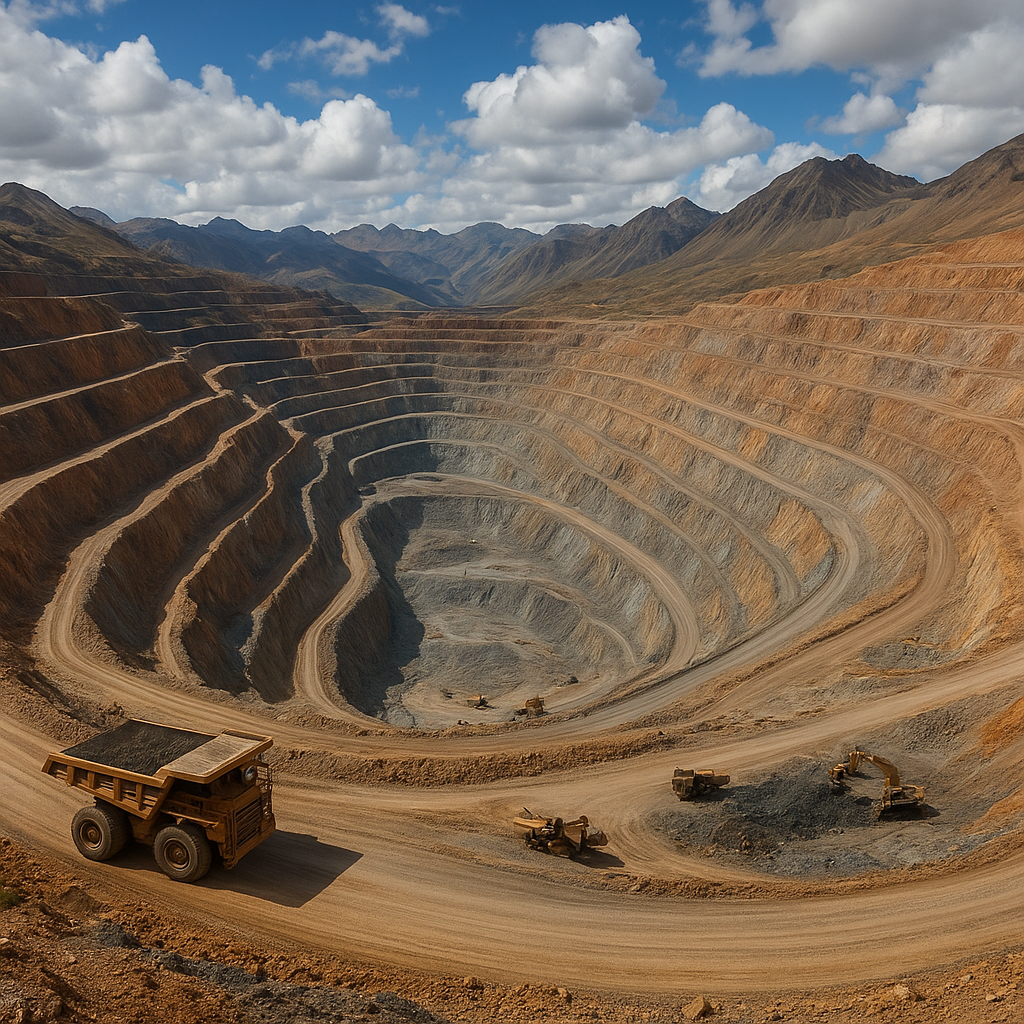
The Antapaccay mine, set high in the Andes of southern Peru, is a modern example of how large-scale mineral extraction shapes regional economies, landscapes and global commodity markets. This article describes where Antapaccay is located, what is extracted there, how the operation works, its economic importance and several noteworthy aspects that illustrate why the mine attracts attention from industry observers, local communities and investors alike.
Location and geological setting
Antapaccay is located in the province of Espinar, within the Cusco region of Peru, in the high Andean plateau that forms part of the Central Volcanic Zone of the Andes. The mine sits at an elevation of roughly high-altitude Andean terrain—commonly cited as around 3,900 to 4,200 metres above sea level—which imposes specific technical and social challenges related to climate, accessibility and human settlement.
The deposit belongs to a family of porphyry copper systems and associated hydrothermal mineralization typical of southern Andean geology. Mineralization at Antapaccay is dominated by copper-bearing sulfides; the orebody is hosted in altered volcanic and intrusive rocks. The geological characteristics—disseminated chalcopyrite, bornite and other copper sulfides, with locally significant gold and silver values—make the deposit amenable to conventional open-pit mining and concentrator processing.
What is produced at Antapaccay
The principal product of the operation is copper, recovered primarily as a copper concentrate through a conventional flowsheet of crushing, grinding and flotation. In addition to copper, the concentrator yields payable quantities of gold and silver as by-products, which add to the economic returns of the mine. The concentrate is typically shipped to smelters and refineries—often outside Peru—where it is refined into cathode copper and separated base and precious metals.
Mining method and processing
- Open-pit mining is the primary extraction method. The mine expands benches into the orebody, employing large haul trucks and fleet equipment to deliver ore to the processing plant.
- Processing involves a conventional comminution circuit (crushing and milling) followed by flotation to produce a copper-rich concentrate. Regrinding and cleaner flotation stages improve concentrate grade.
- Water management, tailings storage and coarse/filtration choices reflect evolving industry practice at high-elevation sites. Antapaccay has implemented designs for tailings containment and water recycling to minimize freshwater withdrawal from local catchments.
The mine’s metallurgical characteristics and operational choices determine concentrate grade and recovery rates. While specific recovery and grade metrics vary with ore type and operational campaigns, Antapaccay’s product mix follows the pattern of most porphyry-hosted copper operations: a concentrate containing a significant copper percentage plus trace precious metals that are credited in concentrate sales.
Ownership, development history and scale
Antapaccay was developed to succeed and complement nearby operations and has been advanced by a major international mining company. The project involved substantial capital investment during construction—investment figures reported in various public sources place the initial capital cost in the ballpark of hundreds of millions to over a billion US dollars. The mine entered production in the early 2010s and has since operated as an important source of copper for the company and for Peru’s mining export portfolio.
Proximity to the older Tintaya mine influenced Antapaccay’s development: the two sites share regional infrastructure, road access and a local workforce experienced in large-scale mining. Antapaccay’s life-of-mine and potential expansions have been tied to ongoing exploration and resource conversion that aim to extend production decades beyond the initial feasibility assumptions.
Economic significance
At national, regional and local levels, Antapaccay performs several economic functions:
- Exports and foreign exchange: Copper concentrate sales contribute to Peru’s export earnings. Copper is one of the country’s principal export commodities, and operations like Antapaccay support Peru’s trade balance and national revenues.
- Employment and services: The mine provides direct employment—technical, operational and managerial—and indirectly supports contractors, transport services, suppliers and local businesses in Espinar and neighbouring districts.
- Government revenues: Taxes, royalties and other fiscal flows from Antapaccay add to regional and national budgets. Royalties and municipal transfers finance local public services and infrastructure projects.
- Regional development: Infrastructure improvements—roads, power connections and social investment programs funded by the company—can raise living standards, though the scale and lasting benefit depend on effective governance and long-term planning.
Beyond these immediate effects, Antapaccay participates in the global copper supply chain. Copper is crucial for electrical infrastructure, telecommunications, renewable energy systems and electric vehicles; mines like Antapaccay thus feed manufacturing ecosystems that are central to decarbonization and technological growth worldwide.
Social and environmental considerations
Operating at high altitude near rural communities, Antapaccay has been the focus of social dialogue and occasional tensions. Concerns raised by local stakeholders have typically centred on water resources, potential contamination, land-use change and equitable distribution of mining benefits. In several periods since the mine’s commissioning, local protests and negotiations have occurred—reflecting both the strong stake communities attach to environmental quality and the demand for a fair share of benefits from mining activity.
Environmental management
Key environmental management themes include:
- Water stewardship: Minimizing freshwater withdrawals, maximizing recycling, and protecting high-Andean wetlands and glacially influenced catchments.
- Tailings and waste rock: Designing and operating tailings storage facilities to international safety standards and monitoring for seepage or contamination.
- Biodiversity and land rehabilitation: Progressive reclamation of disturbed areas and programs to protect native vegetation and wildlife habitats.
- Air quality and dust control: Managing emissions from mining fleets, crushing circuits and unpaved roadways to reduce dust impacts on communities and grazing lands.
Companies and authorities typically establish environmental monitoring programs, independent audits and community liaison bodies to track impacts and address grievances. The effectiveness of these measures is central to maintaining a social license to operate.
Community relations and local development
Antapaccay’s long-term acceptance depends on tangible benefits for local populations. Typical approaches include employment and training programs, local procurement policies, investments in education, healthcare and infrastructure, and community development funds financed by the company or through governmental transfers.
Negotiations around royalty distribution, impact mitigation and benefit-sharing have sometimes been contentious, leading to strikes or blockades that temporarily affect production. These episodes highlight the need for transparent, inclusive processes that integrate indigenous rights, traditional land uses and modern regulatory frameworks.
Logistics and integration into global markets
Transportation logistics involve moving concentrate from the mountain concentrator to sea ports for export. Depending on route choices, this can include long truck hauls over Andean roads to Pacific ports such as Matarani or Ilo; the choice of port and logistics chain affects shipment costs, timing and carbon footprint.
Once exported, the concentrate is processed in smelters and refineries—sometimes in Asia or other international hubs—before the copper enters industrial supply chains. Global copper prices, smelter terms, and freight costs therefore directly influence Antapaccay’s revenue and operational focus.
Interesting technical and operational aspects
Several aspects of Antapaccay are notable from a technical and operational standpoint:
- Operating at high elevation necessitates specialized maintenance, health protocols for workers (to manage altitude-related issues), and equipment adaptations for cold, low-oxygen conditions.
- Modern concentrator design and automation help improve recoveries and reduce operating costs, allowing the mine to remain competitive even when copper prices fluctuate.
- Exploration around Antapaccay continues to target deeper or satellite mineralized zones, with the potential to convert resources to reserves and extend the mine’s productive life.
- The presence of precious metal credits (gold and silver) in the concentrate provides an important revenue buffer during periods of weaker copper prices.
Governance, regulation and fiscal context
The mine operates within the Peruvian regulatory framework for mining, which includes environmental impact assessments, permitting, labor regulations and fiscal obligations such as royalties and income taxes. Provincial and municipal governments play roles in overseeing local impacts and distributing benefits, while national institutions manage larger-scale permitting and oversight.
Policy shifts—on taxes, royalties, or environmental regulation—can materially affect investment decisions, while constructive public-private collaboration can improve outcomes for both the company and local communities. Transparent disclosure of environmental data and fiscal contributions can improve trust and enable evidence-based dialogue.
Future prospects and potential developments
Antapaccay’s future will be shaped by several interacting forces:
- Global copper demand: Forecasts tied to electrification and grid expansion suggest robust demand for copper, which supports medium- to long-term prospects for established mines.
- Exploration success: Converting inferred resources to reserves or discovering nearby satellite deposits can extend operations and justify additional investment.
- Operational improvements: Efficiency gains, cost control and metallurgical optimization can enhance profitability even under price pressure.
- Social license and environmental performance: Sustained community engagement and strong environmental stewardship are essential for uninterrupted operations and potential expansions.
Technological shifts—such as greater use of electrified mining fleets and renewable energy for operations—could reduce the mine’s carbon footprint and operating costs, while aligning the project with global decarbonization trends.
Notable historical and contextual moments
Antapaccay’s commissioning marked a transition in the local mining landscape, providing a contemporary replacement for older operations and sustaining regional employment. Periods of protest and negotiation over environmental concerns, royalties and local benefits have pulled public attention to the broader issue of how extractive industries partner with Andean communities. These episodes underscore the interplay of geology, economics and social dynamics in resource-rich regions.
Why Antapaccay matters beyond copper
While the mine’s immediate output is copper and associated precious metals, its broader significance includes:
- Serving as a case study in high-elevation mining management and the logistical challenges of Andean operations.
- Demonstrating how global commodity markets connect remote mountain communities to international manufacturing and technology sectors.
- Highlighting the importance of transparent royalties, inclusive community engagement and investments that support long-term regional development.
- Providing lessons in environmental stewardship and the application of modern tailings and water-management practices in sensitive catchments.
Antapaccay represents the multifaceted impacts of modern mining: an engineered industrial site extracting critical raw materials, an economic anchor in a rural province, and a focal point for debates about sustainability, equity and development in the Andes. Its continued operation depends not only on geology and markets but on the effectiveness of governance, community relationships and the industry’s ability to adapt to environmental and social expectations.
Key terms and concepts associated with Antapaccay
- Antapaccay — the mine’s name and the primary copper project discussed here.
- Glencore — representative of the class of major international mining companies involved in similar projects; operatorship and ownership can change over time.
- Concentrate — the product shipped to smelters after flotation.
- Production — the operational throughput and metal output that determines economic performance.
- Espinar — the province hosting the mine, whose communities are central to the mine’s local impact.
- Sustainability — the integrated approach to environmental, social and governance practices that shapes the modern mining agenda.
Further reflection
Discussing Antapaccay illuminates how a single mine can embody the technical complexity of modern mineral extraction and the social complexity of hosting large industrial projects in traditional, high-Andean landscapes. Its role in the copper supply chain ties a remote Andean operation to global ambitions—grid expansion, electric mobility and technological growth—while the local story remains anchored in water, land use and equitable development.

