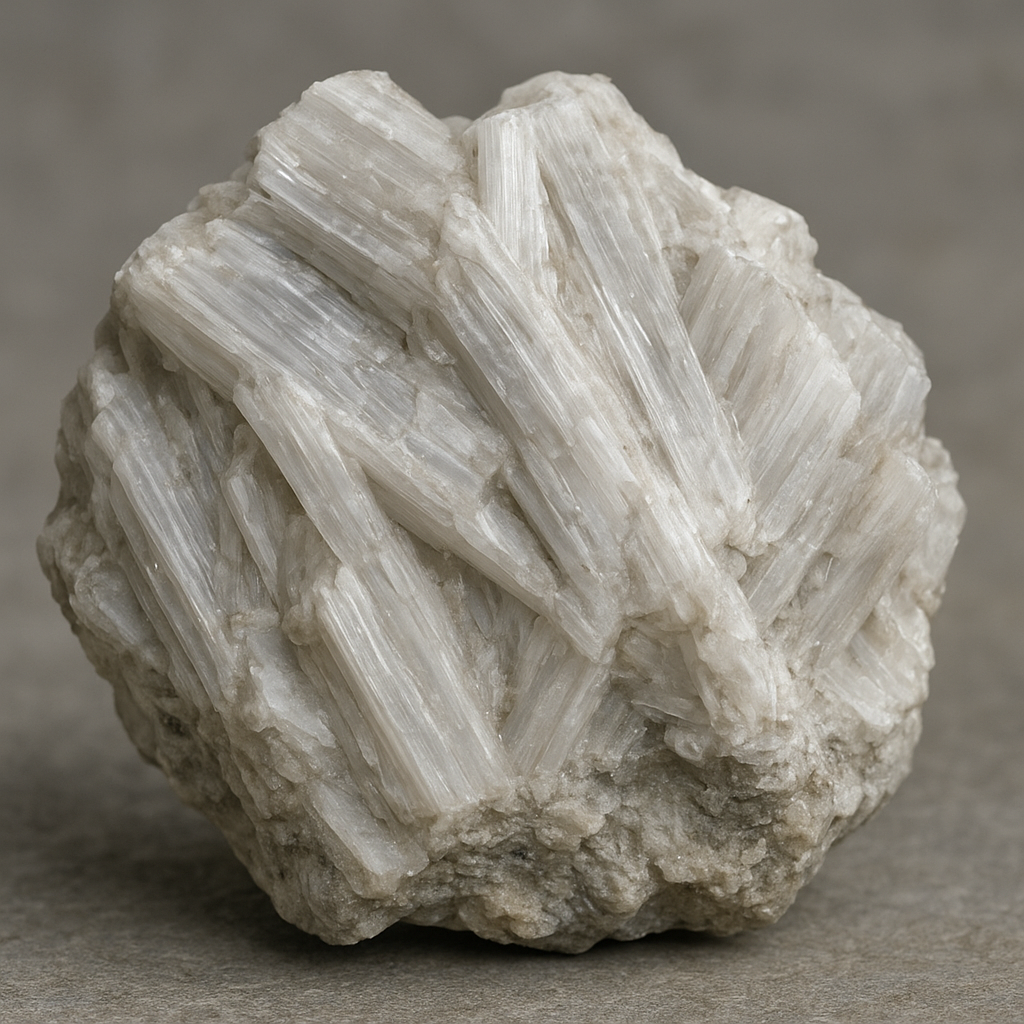
Anhydrite is a widely distributed mineral with a deceptively simple composition and surprisingly diverse implications for industry, geology, and engineering. Found in natural sedimentary deposits, hydrothermal veins, and as a product of the dehydration of related minerals, it plays roles that range from being a raw material for industrial processes to a geological agent that can significantly affect landscapes and built structures. This article reviews the mineral’s chemistry, occurrences, physical and mechanical properties, practical uses, and some intriguing aspects that connect anhydrite to broader geological and technological themes.
Composition, Structure and Physical Properties
The mineral known as anhydrite is chemically calcium sulfate, with the formula CaSO4. It is the anhydrous end-member of the calcium sulfate group, closely related to gypsum (CaSO4·2H2O). The absence of water in anhydrite’s crystal structure is central to its physical behavior and to many practical considerations. Anhydrite crystals belong to the orthorhombic system and often form compact, granular, or crystalline masses. Their color ranges from white and grey to blue, green, or reddish, depending on trace impurities.
Key physical characteristics include a relatively high density compared with gypsum, a vitreous to pearly luster on cleavage surfaces, and perfect cleavage in three directions. Anhydrite’s hardness is about 3.5 to 4 on the Mohs scale. The mineral does not readily dissolve in water but will slowly hydrate to form gypsum over time when exposed to moisture, a reaction that has major engineering implications.
Crystal chemistry and transformations
Anhydrite’s structural framework consists of sulfate tetrahedra linked to calcium cations. The ability of anhydrite to convert to gypsum through the uptake of water is reversible under certain temperature and humidity conditions. Thermal dehydration of gypsum yields anhydrite; conversely, hydration of anhydrite yields gypsum. Industrial processes exploit this reversible chemistry to produce different calcium sulfate products with tailored properties.
Distinguishing anhydrite from gypsum
- Density: anhydrite is notably denser than gypsum.
- Hardness and fracture behavior differ subtly, detectable by simple hand-sample tests.
- Hydration behavior: anhydrite will gradually take up water to become gypsum, often accompanied by a volumetric expansion.
Where anhydrite occurs
Natural occurrences of anhydrite are typically associated with evaporite environments, hydrothermal systems, and subsurface salt-related features. Its distribution spans many geological settings and continents.
Evaporite basins
Large sedimentary basins that underwent repeated cycles of evaporation are classic anhydrite hosts. In such basins, seawater or saline lake water concentrates and precipitates a sequence of salts: carbonates, sulfates (including anhydrite and gypsum), halite, and potash minerals. Anhydrite beds are commonly interlayered with gypsum and halite, forming massive units that can be laterally extensive. Examples include parts of the North Sea, the Zechstein Basin in Europe, and evaporitic sequences in the Middle East.
Diagenetic and hydrothermal contexts
During diagenesis, gypsum that is buried and subjected to higher temperatures can lose its water and transform into anhydrite. Hydrothermal fluids can also precipitate anhydrite directly from sulfate-rich solutions, forming veins and replacement deposits in host rocks. In geothermal and volcanic regions, anhydrite may appear in fumarolic or high-temperature alteration zones.
Subsurface occurrences and engineering relevance
Anhydrite is often present in the subsurface as thick, competent layers within sedimentary sequences. These strata can behave very differently from surrounding claystones, sandstones, or carbonates in response to fluid flow or groundwater infiltration. When anhydrite hydrates in situ, the resulting increase in volume can cause ground heave, subsidence elsewhere, or structural damage to foundations, roads, and buildings. Such behavior makes anhydrite a significant concern for civil engineers and geotechnical specialists.
Industrial and technical applications
Anhydrite’s physical and chemical properties have led to several important uses. It is both a raw material and a functional additive across a number of sectors.
Construction materials
- Cement and concrete: Anhydrite is used as a set regulator and as a sulfate source in specialized cement formulations. It can influence hydration kinetics and final strength when properly processed.
- Screeds and floor levelling: Ground anhydrite (often called anhydrite binder or self-leveling screed) is used for interior floor screeds. Its capacity to form a smooth, durable surface when mixed with water and additives makes it valuable for flooring systems, underfloor heating installations, and industrial floors.
- Plasters: While gypsum is more common for plasters, anhydrite-based products are used when low moisture sensitivity and slower setting times are desired.
Chemical industry and specialized uses
Anhydrite is a source of calcium sulfate in chemical manufacturing. It can be used to produce sulfuric acid derivatives, in paper and textile processing as a filler or coating, and in some ceramic formulations. Industrial anhydrite may be synthesized by heating gypsum under controlled conditions to achieve a specific degree of dehydration and reactivity.
Agriculture and environmental uses
Ground calcium sulfate contributes sulfate and calcium to soils, acting as a soil amendment in some contexts. It helps improve soil structure in sodic soils and supplies nutrients to certain crops. Anhydrite has also been examined as a medium for carbon sequestration in engineered settings where its sulfate matrix can immobilize certain contaminants.
Oil, gas and mining industries
In hydrocarbon exploration and production, anhydrite layers can act as seals or cap rocks due to their low permeability. However, they can also present drilling challenges: when anhydrite zones hydrate to gypsum in boreholes or upon contact with water-based drilling fluids, they may change volume and mechanical behavior, potentially causing borehole instability. Mining of anhydrite itself is less common on its own but occurs where it is a significant component of evaporite deposits exploited for multiple products.
Engineering and environmental challenges
When moisture conditions change, anhydrite’s tendency to hydrate to gypsum creates risks. The transformation involves a volumetric expansion that, if it occurs in confined subsurface settings beneath structures, can generate upward pressure and result in surface heave or damage to buildings. Conversely, dissolution of anhydrite by aggressive groundwater may create voids and lead to subsidence or sinkhole development.
Ground heave and building damage
Anhydrite heave is a well-documented cause of structural damage in areas where groundwater infiltration or changes due to construction activities increase moisture availability in subsurface anhydrite beds. Assessing the potential for heave requires geological mapping, drilling, laboratory hydration tests, and careful hydrogeological modeling. Mitigation strategies include dewatering, impermeable membranes, controlled moisture barriers, or selecting alternative foundation designs that accommodate potential movements.
Environmental interactions
Because anhydrite is slightly soluble, prolonged contact with aggressive waters can mobilize sulfate into groundwater, influencing water chemistry and potentially contributing to scaling in pipelines or sulfate-sensitive environments. In some contaminated sites, sulfate can interact with metals and other contaminants, affecting mobility and remediation strategies.
Extraction, processing and synthetic varieties
Mining of anhydrite typically involves conventional surface or underground methods, depending on depth and deposit geometry. Beneficiation often includes crushing, grinding, and screening to obtain the required particle size for construction or chemical uses. Purification may require washing to remove clays or halite intergrowths.
Synthetic anhydrite and controlled dehydration
Industries often produce synthetic anhydrite by heating gypsum at temperatures that drive off structural water without progressing to decomposition of the sulfate group. The resulting material can be engineered to specific solubility, reactivity, and setting characteristics for use in cements, screeds, and fillers. Control of temperature, residence time, and particle size distribution allows manufacturers to tailor product behavior.
Quality factors
- Purity: lower impurities like clay or salt improve material performance in many applications.
- Particle size: influences reactivity, setting time, and mechanical properties in construction mixes.
- Hydration potential: controlled to prevent unwanted expansion in final products.
Interesting geological and cultural aspects
Anhydrite has several intriguing facets beyond its practical uses. Its role in large evaporite basins connects it to paleoclimate signals: thick sequences of sulfate minerals indicate episodes of significant evaporation and restricted marine conditions. Anhydrite beds may also act as markers for subsurface geology, guiding exploration for hydrocarbons where evaporite seals cap oil-bearing reservoirs.
Geological indicators and basin evolution
Sequences containing anhydrite can record repeated sea transgressions and regressions. The lateral variability of anhydrite vs gypsum in a basin can reflect subtle shifts in salinity, temperature, and basin hydrology through time. In some basins, anhydrite layers are associated with mineralization processes that concentrate metals or create conditions favorable to potash deposition.
Mineralogical curiosities
Certain varieties of anhydrite display striking crystal habits or unusual colors attributable to trace elements. In rare instances, the conversion of anhydrite to gypsum preserves ghost structures or replacement textures that are of interest to mineralogists and collectors. Additionally, anhydrite’s reversible hydration provides a natural laboratory for studying mineral-fluid interactions and pressure-volume relationships in rocks.
Applications in heritage and restoration
Understanding anhydrite content in historic building materials is important for conservation. Older mortars, plasters, or floor levellers may contain anhydrite or hydrated phases that respond unpredictably to modern renovation methods. Conservation specialists must consider the mineralogy to avoid inducing damaging hydration or dissolution processes during repairs.
Testing, identification and safe handling
Identifying anhydrite in the field and laboratory requires a combination of tests. Optical properties under a petrographic microscope, X-ray diffraction, and infrared spectroscopy are commonly used. Simple field observations—such as reaction to water (slow hydration to gypsum), higher density relative to gypsum, and cleavage patterns—provide initial clues.
- Laboratory hydration tests quantify potential expansion and reactivity.
- Chemical assays determine purity, sulfate content, and trace impurities.
- Geotechnical tests assess mechanical strength and behavior under load.
In handling and processing, anhydrite is not acutely hazardous, but dust control, appropriate respiratory protection, and standard industrial hygiene practices are prudent, particularly in grinding and material handling operations. Its sulfate content means that disposal and environmental management should consider potential contributions to soil and water chemistry.
Final technical notes and directions for further interest
Research into anhydrite continues across disciplines: material science explores tailoring its reactivity for advanced cements and sustainable construction; geology investigates its role in basin evolution and as a proxy for past climates; environmental engineering examines its interactions with groundwater and contaminants. For professionals—engineers, geologists, and quarry operators—comprehending the subtle differences between anhydrite and its hydrated relatives is essential for predicting behaviour, designing mitigation, and maximizing the mineral’s practical benefits.
Whether considered as an industrial raw material, a geological marker, or a potential engineering hazard, anhydrite occupies a unique position among evaporite minerals. Its simple chemistry belies complex behavior that touches on construction, resource extraction, and environmental management, making it a mineral well worth the attention of both scientists and practitioners.