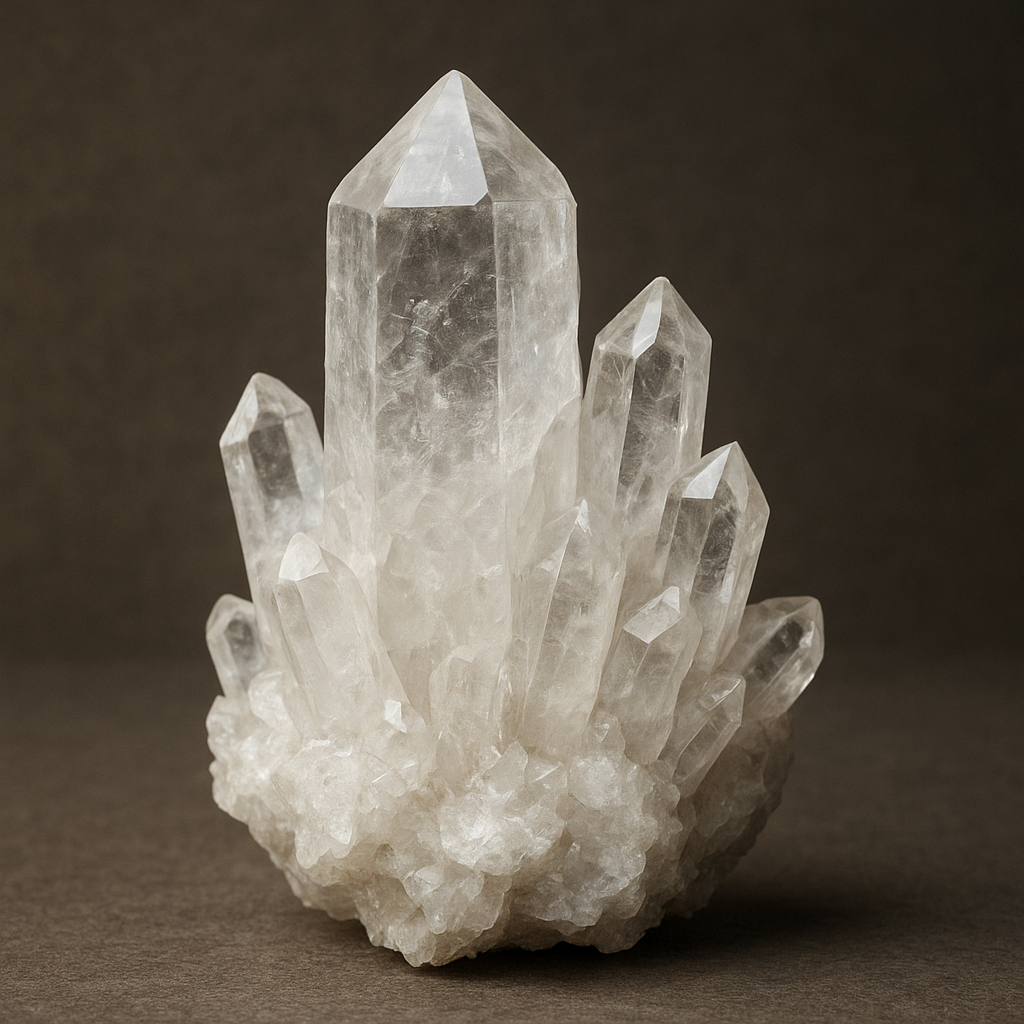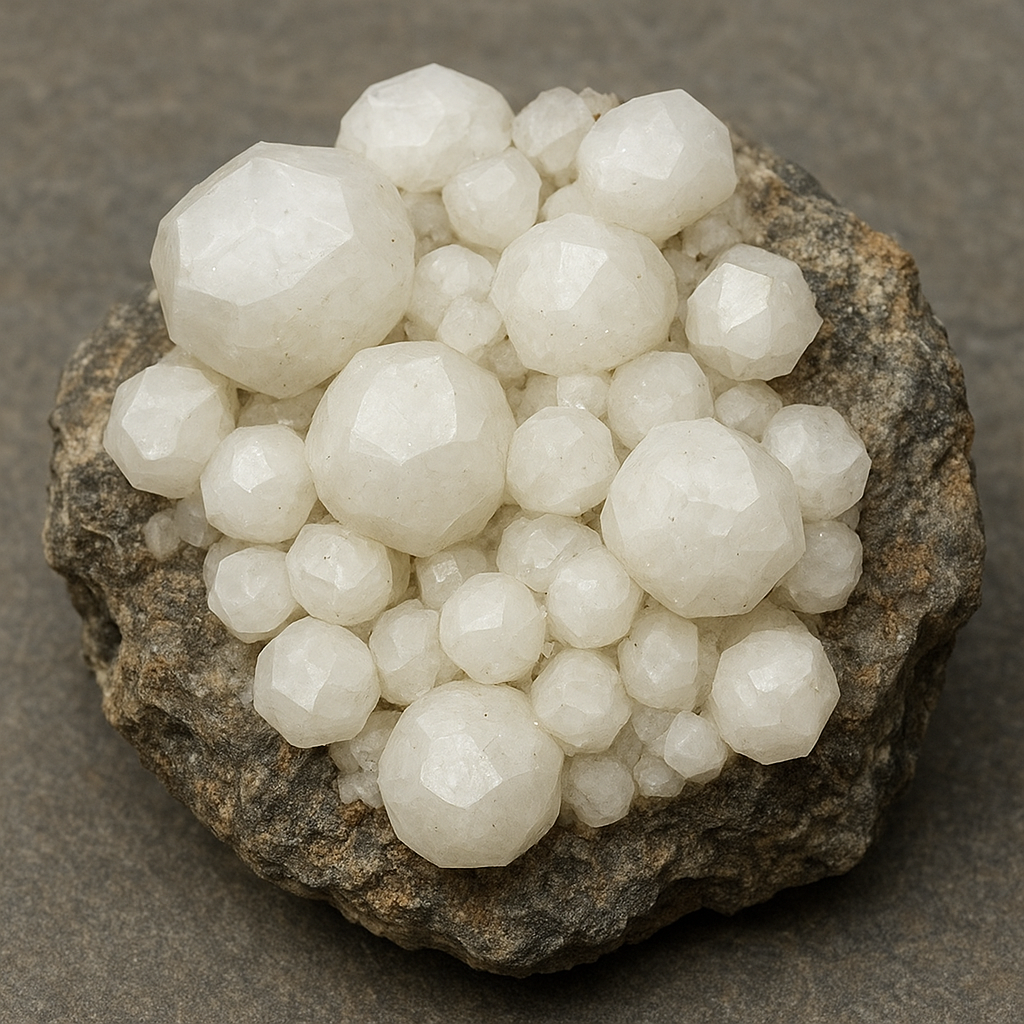
Analcime is a striking and sometimes enigmatic member of the zeolite family, admired by mineral collectors and studied by petrologists and material scientists alike. Though often overlooked in broad discussions of industrial zeolites, it occupies a fascinating niche at the intersection of igneous petrology, low-temperature hydrothermal alteration, and zeolite mineralogy. In this article, we will explore what analcime is, where it forms, its physical and chemical characteristics, practical and scientific uses, and several intriguing facts that reveal why this mineral continues to capture attention.
What is analcime?
Analcime (sometimes written as analcite) is a hydrous sodium aluminosilicate with a general formula close to NaAlSi2O6·H2O, though natural specimens commonly contain significant substitutions by calcium, potassium or other cations. It is classed among the zeolite minerals, a group known for open-framework structures and the ability to host water molecules and exchangeable cations within their voids. Analcime differs from many zeolites in that its framework yields fewer continuous channels, giving it somewhat different physical and chemical behavior compared with classical zeolites such as clinoptilolite or zeolite A.
Crystals of analcime are typically wedge-shaped or trapezohedral, and they often present a deceptive, almost cubic habit. This pseudo-cubic appearance has led historically to debates about its symmetry, but the mineral’s external forms and internal lattice are distinctive. Color ranges from white and gray to shades of pink, red or brown when iron oxides or other impurities are present. Luster is commonly vitreous to pearly, and transparent to translucent specimens are prized by collectors for their bright, glassy faces.
Occurrence and geological settings
Analcime appears in a variety of geological settings, but it is especially associated with alkaline igneous rocks and with zeolitic alteration of volcanic material. The mineral is commonly found in:
- Vesicles and cavities of basaltic and other mafic volcanic rocks — where circulating hydrothermal fluids deposit zeolites and related minerals.
- Alkaline intrusive rocks and syenites, sometimes as a primary phenocryst or as a late-stage hydrothermal mineral.
- Low-grade metamorphic environments (zeolite facies), where burial and diagenetic processes convert glassy volcanic sediments into zeolite-rich assemblages.
- Volcanic tuffs and pumice, where alteration by groundwaters or hydrothermal solutions generates zeolite mineral suites.
Worldwide, notable localities include Iceland (classic basaltic zeolite localities), parts of Italy and the Mediterranean region, Japan, the western United States (especially Oregon and New Jersey), and several Canadian sites such as Mont Saint-Hilaire in Quebec. In these places, analcime often associates with other zeolites (for example, heulandite, chabazite, and natrolite), as well as calcite, prehnite, quartz and various iron oxides.
Physical and chemical properties
Analcime’s structure is built from a framework of linked silica (SiO4) and alumina (AlO4) tetrahedra. The framework encloses small cavities that hold water molecules and exchangeable cations — but unlike many zeolites with extensive channel systems, analcime’s pore connectivity is limited. This structural characteristic influences its ion-exchange capacity and adsorption behavior.
- Typical hardness: approximately 5 to 5.5 on the Mohs scale.
- Specific gravity: about 2.2 to 2.4, relatively light for a silicate mineral.
- Cleavage: generally poor or absent, with conchoidal to uneven fracture.
- Luster: vitreous to pearly.
- Common colors: white, gray, pink, brown; transparent to translucent specimens occur.
Analcime’s chemical variability — particularly the partial substitution of Na by Ca, K, and occasionally other cations — means that natural samples range in composition. This variability alters physical properties subtly and can affect where the mineral is stable in natural and experimental systems. Analcime also commonly forms as pseudomorphs after other minerals (for example, after leucite in some alkaline volcanic rocks), preserving earlier textures while changing mineralogy.
Uses and applications
Compared with some zeolites that are exploited industrially for water purification, gas separation, catalysis and agriculture, analcime’s direct commercial use is relatively limited. A few reasons for this include its reduced channel connectivity and lower cation-exchange capacity relative to other zeolites that have larger, more accessible pore networks. Nonetheless, analcime has relevance in several applied and scientific contexts:
- Petrology and mineralogy: Analcime is an important indicator mineral for specific magmatic environments (alkaline, silica-undersaturated systems) and for zeolitic alteration stages. Its presence can reveal details about the chemistry of late-stage hydrothermal fluids and the temperature-pressure conditions of rock formation.
- Geological indicators: In metamorphic petrology, analcime marks the lower-temperature zeolite facies; its occurrence in sedimentary rocks may signal diagenetic processes and fluid chemistry during burial.
- Collecting and lapidary: High-quality analcime crystals, especially those with transparency and attractive color, are sought by mineral collectors. Some specimens are cut as collector’s gemstones, though they are not commonly used in mainstream jewelry because of moderate hardness and perfect cleavage is absent.
- Research and analog materials: Synthetic analogues of analcime and related framework silicates are studied in materials science for applications such as ion exchange, selective adsorption and catalysis. While natural analcime is not the preferred industrial zeolite, understanding its structure and formation helps guide synthesis of new microporous materials with tailored properties.
- Environmental and engineering contexts: The broader zeolite family is valuable in water treatment, waste remediation and soil amendment. Research occasionally explores analcime-bearing rocks or analcime-rich tuffs as potential natural sorbents or as constituents in engineered materials, where local availability and cost can make them attractive.
Analcime and associated minerals
Analcime rarely occurs alone. It typically forms part of zeolite assemblages that record a sequence of mineral formation from cooling magmatic systems or from hydrothermal fluids percolating through volcanic rocks. Common associations include:
- Heulandite and chabazite — other zeolites that often form in the same cavities.
- Prehnite and epidote — minerals indicative of low-grade metamorphism or hydrothermal alteration.
- Calcite and quartz — late-stage gangue minerals that often fill residual pore spaces.
- Leucite and nepheline — minerals found in silica-undersaturated, alkaline volcanic rocks where analcime can be primary or replace earlier phases.
For collectors and researchers, the coexistence of these minerals provides a story of evolving chemistry: changes in temperature, pH and the concentrations of sodium, calcium and silica control which zeolite species will crystallize. Analyses of such mineral parageneses can therefore reconstruct aspects of fluid evolution in volcanic or diagenetic environments.
Identification, collecting and preservation
Identifying analcime in the field generally involves a combination of habit, hardness testing, luster and associated minerals. Analcime crystals are often wedge- or barrel-shaped, sometimes with a rounded, dogtooth-like appearance. They show a vitreous luster and are relatively light. A few practical tips for collectors and curators:
- Handle transparent crystals with care — despite reasonable hardness, cleavage and internal fractures can make specimens fragile.
- Store analcime away from aggressive chemicals and extreme humidity changes; as a hydrous mineral, long-term exposure to drying or heating can alter appearance.
- Label locality information precisely — the most valued specimens link attractive crystallography with famous localities such as certain basaltic zeolite sites or alkaline intrusive complexes.
- Use X-ray diffraction (XRD), scanning electron microscopy (SEM) and electron microprobe analyses when precise composition or structure needs confirmation — optical and chemical variability can be subtle.
Analcime in scientific research and emerging topics
Although not the industrial champion of the zeolite world, analcime provides important insights in several research areas:
- Experimental petrology uses analcime stability experiments to constrain conditions of formation in alkaline magmas and hydrothermal systems. Understanding the temperatures and fluid chemistries that stabilize analcime helps model the evolution of volcanic plumbing systems.
- Materials scientists draw inspiration from natural analcime frameworks to design synthetic microporous materials. The concept of a robust aluminosilicate framework that hosts exchangeable cations and water molecules continues to influence the development of molecular sieves and catalysts.
- Environmental geoscience examines natural zeolitic tuffs and analcime-containing rocks as low-cost sorbents for heavy metals or ammonium in wastewater treatment, particularly where such deposits are locally abundant.
- Isotopic and fluid-inclusion studies of analcime and its host minerals reveal paleofluid temperatures and the origins of mineralizing fluids, contributing to basin modeling and geothermal research.
Interesting mineralogical tidbits
Some facts about analcime that often surprise non-specialists:
- Analcime sometimes occurs as a primary igneous mineral in highly alkaline, silica-undersaturated magmas — a contrast to its common role as a secondary zeolite in altered basalts.
- Analcime can form pseudomorphs after other minerals, meaning it replaces an earlier mineral while preserving the original shape. Pseudomorphs after leucite and nepheline are classic examples from certain volcanic suites.
- Because of its pseudo-cubic habit, analcime can be mistaken for several unrelated minerals; careful testing is necessary for accurate identification.
- Microporosity in analcime is small and discontinuous compared with many industrial zeolites, which explains differences in adsorption and ion-exchange behavior despite their family relationship.
Conclusion of sections (no summary)
Analcime occupies a distinct place among aluminosilicate minerals: an elegant zeolite that bridges primary igneous mineralogy and secondary zeolitic alteration. Whether encountered as sparkling cavity fillings in basalt, as phenocryst-like grains in alkaline rocks, or as a subject of experimental and materials research, analcime offers both visual appeal and scientific value. Its chemistry and structure speak to the diversity of environments in which zeolites form, and continuing studies of analcime and its analogues help expand applications in materials science and environmental technology.