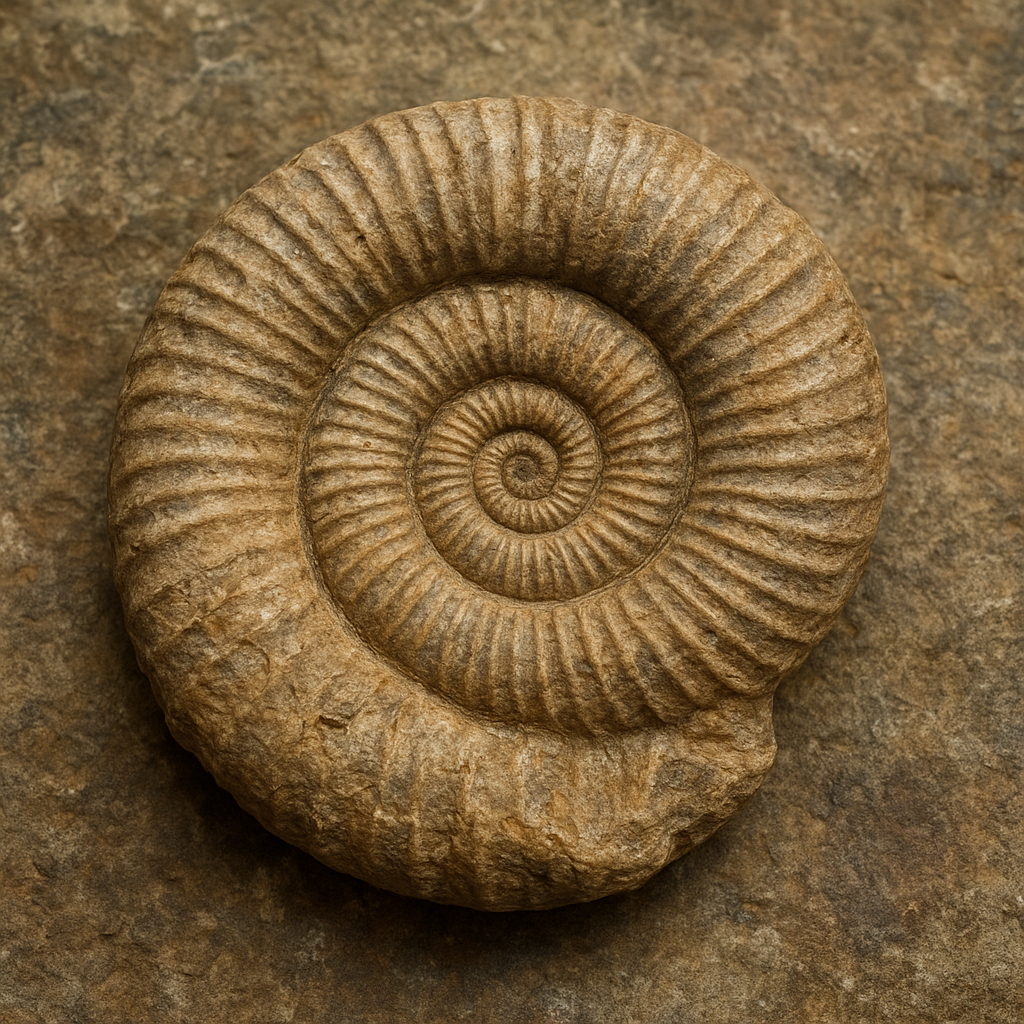
Ammonites are among the most iconic and visually arresting fossils in the world, instantly recognizable by their coiled, chambered shell that echoes the spiral forms found across nature. Once living marine cephalopods, they thrived for hundreds of millions of years, left a rich fossil record, and continue to shape fields from paleontology to jewelry-making. This article explores who the ammonites were, where their remains are found, how they are used by science and culture, and several fascinating aspects of their biology and geological significance.
What ammonites were: biology, classification and shell structure
Ammonites belong to the subclass Ammonoidea, a major lineage within the class Cephalopoda. They are not direct ancestors of modern octopuses or squids but are more closely related to the shelled nautilus. The group first appears in the fossil record in the Devonian period and prospers through the Paleozoic and Mesozoic before succumbing at the end of the Cretaceous with many other taxa in the mass extinction event about 66 million years ago.
Morphology and internal structure
The external form most people associate with ammonites is the planispiral, flattened coil. Internally, the shell is divided into a series of chambers called camerae; the animal occupied only the last and largest chamber, while the earlier chambers were used for buoyancy control. These chambers were connected by a tube called the siphuncle, which regulated gas and fluid to adjust buoyancy. The surface of the shell could be smooth or ornamented with ribs, nodes, and spines, while the internal joins between septa and the outer shell created complex lines called sutures.
Suture patterns are a diagnostic and evolutionary hallmark: early ammonoids showed simple undulating sutures (goniatitic), later forms developed crenulated or lobed patterns (ceratitic), and the most elaborate, frilly sutures (ammonitic) evolved in many Mesozoic forms. Those suture lines are not just beautiful; they have been used extensively in taxonomic classification and in understanding evolutionary trends.
Life habits and ecology
Ammonites were likely active predators or scavengers. Their soft anatomy—muscular hyponome for jet propulsion, tentacles for capturing prey, and an ink sac—resembled modern cephalopods. Shell geometry influenced mobility: tightly coiled planispiral shells offered hydrodynamic advantages and likely supported a nektonic (swimming) lifestyle, whereas heteromorphic (irregularly coiled) forms may have been slower or occupied different ecological niches, perhaps drifting or living near the seafloor.
Where ammonites are found: geological occurrence and famous localities
The fossil record of ammonites is truly global. Their remains are embedded in marine sedimentary rocks from shallow continental shelves to deeper basinal deposits. Because they evolved rapidly and were widely distributed, they are abundant in rocks of many ages—especially the Jurassic and Cretaceous periods.
Notable fossil localities
- Lyme Regis and the Dorset Coast, England — part of the Jurassic Coast, famous for Mary Anning’s discoveries and spectacular ammonite finds.
- Madagascar — produces brightly preserved, often large and aesthetic ammonites frequently sold to collectors and museums.
- Morocco — a prolific source for Cretaceous ammonites; many specimens are commercially prepared here.
- Alberta, Canada — the Bearpaw Formation yields shells that, when preserved as thin iridescent layers, form the gemstone ammolite.
- Germany (Holzmaden, Solnhofen) — exceptional preservation sites have yielded ammonites with soft-part traces or rare articulation details.
- Lebanon (Sahel Alma) — Cretaceous limestones here preserve delicate ammonites in stunning detail.
- Kansas and the Western Interior Seaway (USA) — Cretaceous marine sediments full of ammonite faunas, often found in chalk and shale.
Ammonites occur in strata worldwide—from Europe and Africa to North and South America, Asia, and Australasia—making them vital tools for geologists working on nearly every continent.
Uses and applications: from science to gemstones
Ammonites are not only objects of aesthetic interest but also powerful tools for geological and paleobiological research. Their attributes make them uniquely useful in several applied and academic fields.
Biostratigraphy and correlation
One of the most important scientific roles of ammonites is as index fossils. Because many ammonite species had wide geographic ranges yet short stratigraphic durations, they are ideal for correlating rock layers of the same age across different regions. Mesozoic chronostratigraphy, particularly of the Jurassic and Cretaceous, relies heavily on ammonite zonation schemes—fine-scale subdivisions of time based on ammonite species succession.
Paleoenvironmental and paleoclimate proxies
Isotopic analysis (oxygen and carbon isotopes) of ammonite shell material can record seawater temperatures and carbon cycling at the time the shell formed. Additionally, shell chemistry and preservation style offer clues about ocean chemistry, salinity, and the depositional environment. Ammonites thus contribute to reconstructions of ancient climates and oceanographic conditions.
Economic and cultural uses
Ammonite shells have a variety of uses beyond science:
- Jewelry and decorative arts: polished ammonite sections and ammolite—an opal-like iridescent material derived from ammonite shell material—are used in rings, pendants, and inlays.
- Educational specimens: schools and museums rely on ammonites as accessible examples to teach evolution, ecology, and stratigraphy.
- Tourism and heritage: places like the Jurassic Coast draw visitors who search for or view ammonite fossils, supporting local economies and public interest in Earth history.
- Oil and gas geology: ammonite-based correlation assists in dating sedimentary sequences useful for subsurface mapping during hydrocarbon exploration.
Fossilization, preservation styles and collecting practices
The way ammonites are preserved varies widely and can range from simple molds in sedimentary rock to exquisite mineralized specimens. The mineralogy and fossilization pathway often determine both scientific value and commercial appeal.
Common modes of preservation
- Internal and external molds: sediment fills the shell and later hardens, leaving a cast when the shell dissolves.
- Permineralization and replacement: original aragonitic shell material can be replaced by calcite, pyrite, silica, or opal, producing robust fossils.
- Pyritization: in some oxygen-poor sediments, organic and shell materials are replaced by iron sulfide (pyrite), producing glittering specimens.
- Opalization and ammolite formation: rare conditions lead to preservation as precious opal or iridescent aragonite layers, forming the gemstone ammolite.
Collecting ammonites carries responsibilities. Many fossil localities are protected, and commercial collecting can conflict with scientific and cultural preservation. Ethical collecting follows local laws, records and reports significant finds to institutions, and prefers responsibly sourced specimens for display or sale.
Heteromorph ammonites and evolutionary experiments
One of the most intriguing chapters in ammonite evolution is the repeated emergence of heteromorphic (irregularly coiled) forms. Unlike the typical planispiral coil, heteromorphs took on a variety of shapes: straight shells, helically coiled, hooked, or even bizarrely looping geometries. These forms reached their height in the Cretaceous.
Examples and ecological implications
- Baculites — a straight-shelled Cretaceous ammonite that suggests a different swimming posture and life habit than coiled relatives.
- Nipponites — with its perplexing, tangled coils, raising questions about buoyancy, stability, and lifestyle.
- Hamites — hooked shells that likely reflected different feeding or drifting strategies.
Heteromorphs illustrate the evolutionary plasticity of ammonoids and invite study into how shell shape affects buoyancy, hydrodynamics, and predator-prey interactions. They also serve as reminders that evolution experiments with form in diverse and sometimes unexpected ways.
Ammonites and their extinction: the end of an era
Ammonites vanished at the Cretaceous–Paleogene (K–Pg) boundary alongside non-avian dinosaurs and many other marine and terrestrial groups. The leading cause is tied to the large asteroid impact at Chicxulub and its cascading environmental effects: darkness from atmospheric dust, collapse of photosynthesis, rapid cooling and warming, acidification, and food web disruptions.
However, ammonite extinction dynamics are complex and likely varied among groups; some shallow-water assemblages may have been more vulnerable than others. The extinction of ammonites underscores how rapid and multifactorial environmental change can eliminate even highly successful and diverse clades.
Ammonites in culture, folklore and art
Ammonites have inspired human imagination for centuries. In Europe, they were called “snakestones” or “ram’s horns” and linked to myths about snakes turned to stone by saints. Indigenous cultures in some regions incorporated fossil spirals into symbolism and jewelry. In modern times, the distinctive spiral appears frequently in art, architecture, and design, emblematic of natural pattern and deep time.
Artists and jewelers prize ammonites for their organic geometry and sometimes iridescent color. Fossils become focal pieces in galleries and private collections, where polished sections reveal cross-sections of chambers, sutures, and internal textures that are both scientifically informative and aesthetically compelling.
Why ammonites remain scientifically and culturally compelling
Ammonites are a nexus of disciplines: evolutionary biology, geology, chemistry, conservation, art, and commerce. They help answer scientific questions about past life and environments, serve practical roles in geological mapping, fuel the fossil trade and tourism, and captivate public imagination with their ornate forms.
Their diversity—from tiny, delicately ornamented shells to monumental, meter-scale specimens—provides a window into life in ancient seas, and the complexity of their suture lines and shell architectures continues to challenge researchers studying biomechanics, developmental biology, and evolutionary patterns. As research methods evolve, including high-resolution imaging, isotopic microanalysis, and computational fluid dynamics, ammonites keep yielding new insights about how morphology, environment, and behavior interacted over deep time.
Further reading and related topics worth exploring
- Comparative anatomy of modern cephalopods (nautilus, squid, octopus) and implications for interpreting ammonite behavior.
- Detailed suture pattern evolution and what it reveals about shell strength and growth.
- Isotopic studies of shell material for reconstructing marine temperature gradients and ocean chemistry through the Mesozoic.
- Heteromorph functional morphology and experimental hydrodynamics.
- Fossil preparation techniques and ethical collecting frameworks in major ammonite-producing regions.
Ammonites are more than pretty spirals in stone: they are key records of life’s history, brilliant examples of evolutionary innovation, and enduring symbols of the ancient seas. Whether studied in the laboratory, displayed in a museum, or worn as a piece of jewelry, their legacy continues to illuminate both science and culture.