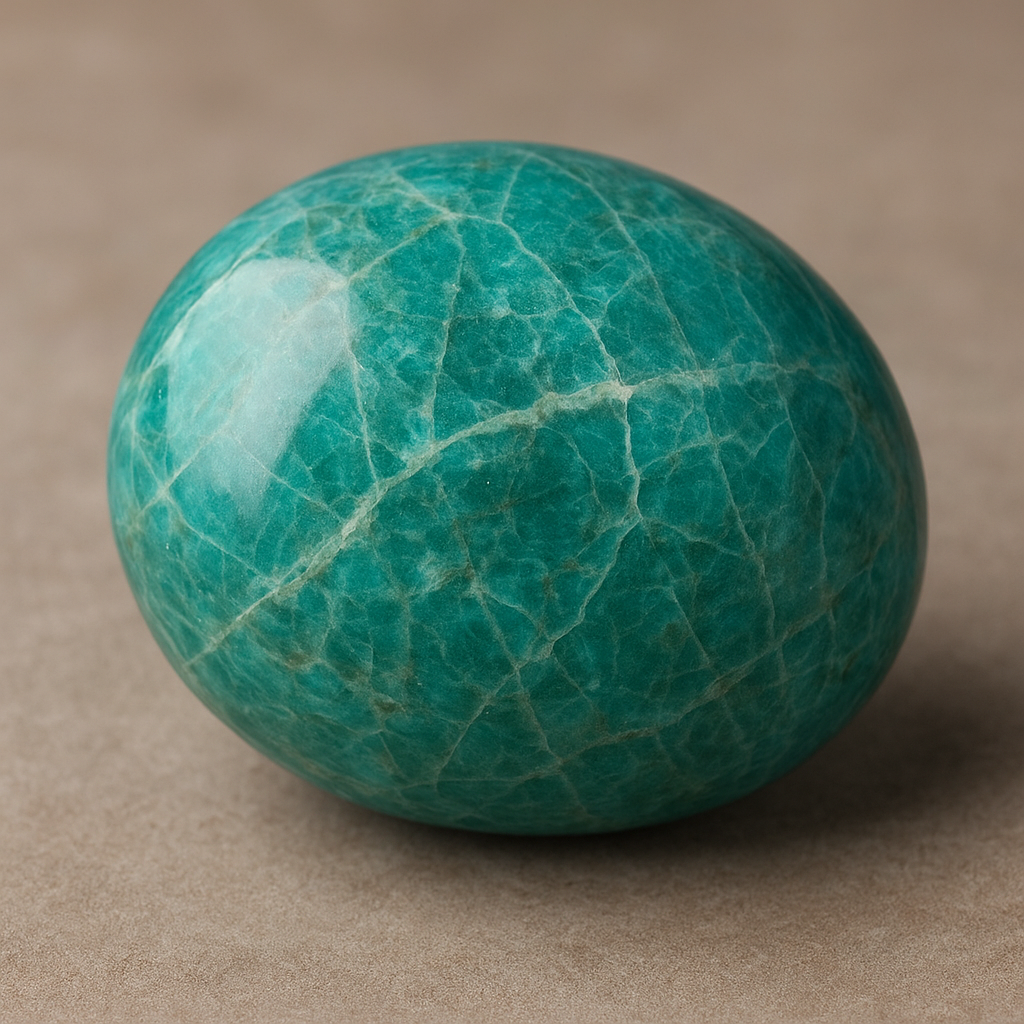
Amazonite is a captivating variety of potassium feldspar prized for its soothing blue-green hues and striking presence in both collections and wearable art. This article explores its mineralogy, where it forms, how it is used, identification and care, as well as cultural and market contexts that make amazonite a stone of ongoing fascination for geologists, lapidaries and collectors alike.
Mineralogy and physical properties
At its core, amazonite is a variety of microcline, a potassium-rich member of the feldspar group. Its defining characteristic is the distinctive green to blue-green coloration, which can range from pale mint tones to rich, vivid slabs. The mineral crystallizes in the triclinic system and often shows pronounced twinning and perthitic textures — intergrowths of different feldspar phases visible under magnification.
Key physical properties to know:
- Mohs hardness: typically between 6 and 6.5, making it durable enough for many jewelry uses but softer than quartz and some other gems.
- Specific gravity: around 2.56–2.58, moderate for a silicate mineral.
- Cleavage: two good cleavages at near-right angles, which is a critical consideration for cutting and shaping. Cleavage makes thin sections or very intricate carvings more prone to breakage.
- Fracture: uneven to conchoidal in places where cleavage is not manifested.
The exact cause of amazonite’s color has been the subject of research and debate. Modern studies suggest that trace elemental impurities and lattice defects, including the presence of lead and water within structural sites and possibly contributions from copper in some occurrences, create color centers that absorb specific wavelengths of light. Irradiation and micro-inclusions can also influence hue and intensity.
Geological formation and common occurrences
Amazonite typically forms in coarse-grained igneous rocks, especially in the late-stage cavities and veins of granitic pegmatites. These pegmatites provide the slow-cooling environment and chemical enrichment needed for large well-formed crystals of microcline to develop. It can also be associated with other pegmatitic minerals like quartz, mica (muscovite/biotite), tourmaline and beryl.
Notable producing regions include:
- United States: the Pikes Peak region of Colorado is world-famous for its deep-colored amazonite crystals within granite pegmatites.
- Russia: the Ilmen Mountains and surrounding areas have long produced fine specimens prized by collectors and museums.
- Brazil: Minas Gerais and other pegmatite-rich zones yield attractive material used in both jewelry and ornamental carving.
- Madagascar and Namibia: newer sources that have supplied the market with a variety of grain sizes and tones.
- India and China: contribute material, often for bead and mass-market jewelry production.
Despite the name, amazonite has no strong historical association with the Amazon River; the origin of the name relates to historical beliefs and early trade rather than proven locality. Typically, the largest, most gemmy crystals appear in pegmatitic settings where fluids and volatiles concentrate incompatible elements, allowing the growth of large, well-formed microcline crystals that later develop the characteristic coloring.
Uses in jewelry and ornamentation
Amazonite’s attractive hues and relative affordability have made it a popular choice in a wide range of decorative uses. Its typical applications include:
- Cabochons and beads: the most common lapidary forms, where the stone’s color and opacity are showcased while minimizing cleavage-related problems.
- Carvings and sculptures: medium-sized blocks can be carved into figurines and decorative objects, though artisan skill is required to avoid fracturing along cleavage planes.
- Bezel-set pendants and inlay: the stable silhouette of cabochons makes them suitable for secure bezel settings; amazonite can also be used as accent inlays in boxes, furniture, and mosaics.
- Tumbled stones and metaphysical goods: polished tumbled pieces are widely sold in crystal shops and used in various spiritual practices.
When used in jewelry, amazonite is most often cut as cabochons rather than faceted gems because of its translucency and cleavage. Setting style and protective bezels are chosen to reduce impact risks. Despite its moderate hardness, amazonite can be damaged by blows, ultrasonic cleaners and harsh acids; professional jewelers often recommend gentle cleaning with warm soapy water and a soft cloth.
Historical, cultural and metaphysical associations
Amazonite has been admired by many cultures for centuries. While some ancient sources attribute talismanic uses to similar green stones, amazonite itself appears in archaeological contexts ranging from beads to small amulets. Ancient Egyptians and other Mediterranean and Near Eastern cultures used green-blue feldspar and other green stones in ornamental and ritual contexts.
In the realm of contemporary crystal lore, amazonite is often associated with emotional balance and communication. Practitioners of crystal healing attribute calming energies and throat- and heart-chakra connections to the stone. It is common to see amazonite marketed for stress relief, enhanced intuition and clearer expression. While these metaphysical claims are culturally meaningful for many users, they are not supported by scientific evidence and should be appreciated as part of the stone’s cultural story rather than empirical fact.
Identification, imitations and treatments
For collectors and buyers, distinguishing genuine amazonite from look-alikes is important. Natural identification clues include the feldspar cleavage, moderate hardness, specific gravity, and internal perthitic twinning visible under magnification. Amazonite often shows a slightly mottled or streaked appearance rather than completely uniform color.
Common imitations and treatments:
- Dyed howlite or magnesite: porous white minerals dyed green to imitate amazonite color. These are softer and can show concentrated dye in fractures.
- Glass and plastic: cheaper imitations may mimic color but differ markedly in weight and hardness.
- Dyed quartz or chalcedony: sometimes used to produce amazonite-like beads in the mass market.
- Heat and surface treatments: while extensive stabilization is less common than with porous stones, some specimens may be coated or treated to enhance sheen or color uniformity.
Simple tests that help identify real amazonite:
- Scratch test on an inconspicuous area or a similar reference: amazonite should resist scratching by a steel blade but can be scratched by a 7 Mohs hardness material.
- Specific gravity measurement: glass and plastics will be noticeably lighter or heavier depending on composition.
- Magnification: look for feldspar twinning (grid-like or cross-hatched patterns) and crystal inclusions typical of pegmatitic growth.
Mining methods and environmental-social considerations
Most gem-quality amazonite is extracted from pegmatite mines that vary from small artisanal operations to larger industrial quarries. Surface and shallow underground methods are common because amazonite tends to occur in discrete veins and pockets within granite pegmatites.
Environmental and social concerns mirror those of other colored-stone mining sectors:
- Landscape disturbance and habitat impact from open pits and tailings.
- Water quality issues if tailings are not managed and if chemicals are used in processing (less common with amazonite than with metal ores, but still relevant).
- Labor conditions: small-scale mining can involve informal labor without safeguards; buyers increasingly seek responsibly sourced material.
Consumers and jewelers concerned with ethics can look for stones sourced from operations that adhere to environmental best practices, offer fair wages and demonstrate transparency in the supply chain. Certification initiatives and direct partnerships with mining communities are growing trends that improve accountability in the gemstone trade.
Care, preservation and storage
Because of its cleavage and moderate hardness, amazonite requires thoughtful care:
- Avoid exposure to acids, including household cleaners and perfumes, which can alter surface appearance.
- Do not use ultrasonic or steam cleaners; mechanical vibration and rapid temperature changes can exploit cleavage planes and cause fractures.
- Store pieces separately in soft cloth or padded compartments to prevent scratches from harder gems such as diamonds or sapphires.
- When setting into rings or bracelets that receive frequent knocks, opt for protective bezel settings rather than prongs that leave edges exposed.
Lapidary techniques and design tips
Lapidaries working with amazonite emphasize the following:
- Orientation: cut to showcase the most even and saturated color while minimizing visible cleavage intersections.
- Cabochon cutting: preferred technique; rounded domes reduce the risk associated with internal splits and are visually appealing.
- Stabilization: for fractured or highly porous specimens, low-viscosity resins can be used carefully to improve structural integrity before polishing.
- Polishing: use progressively finer abrasives and finish with a soft cloth and non-abrasive polish to bring out a gentle luster rather than a glassy shine, which suits the stone’s character.
Market, grading and collecting
Amazonite specimens vary widely in price depending on color intensity, uniformity, size and cut. Deep, saturated blue-green slabs and large museum-quality crystals command higher values, while common greenish masses used for beads and small cabochons are affordable. Collectors often prize specimens with intact crystal faces, dramatic cleavage planes, or striking color zoning.
Grading considerations:
- Color: depth and evenness are primary drivers of desirability.
- Clarity and texture: absence of large fractures and pleasing grain structure are positive.
- Size and provenance: sizeable, well-documented pieces from classic localities like Colorado or the Ilmen Mountains can be collectible.
Interesting facts and surprising uses
Amazonite continues to surprise in both scientific and artistic contexts. A few engaging points:
- It is a feldspar that can rival some colored gemstones in visual appeal while remaining relatively accessible as an ornamental stone.
- Specimens from classic pegmatite mines are often displayed in museums as examples of large, well-formed microcline crystals with unusual coloration.
- Contemporary designers incorporate amazonite into mixed-material pieces, pairing it with metals that accentuate its cool tones or with warmer stones for contrast.
Whether appreciated for its mineralogical story, its visual charm, or its place in cultural practices, amazonite occupies a unique niche. It is a stone that blends geological complexity with aesthetic warmth, making it a continual favorite among collectors, lapidaries and designers seeking a distinctive blue-green accent in their work.