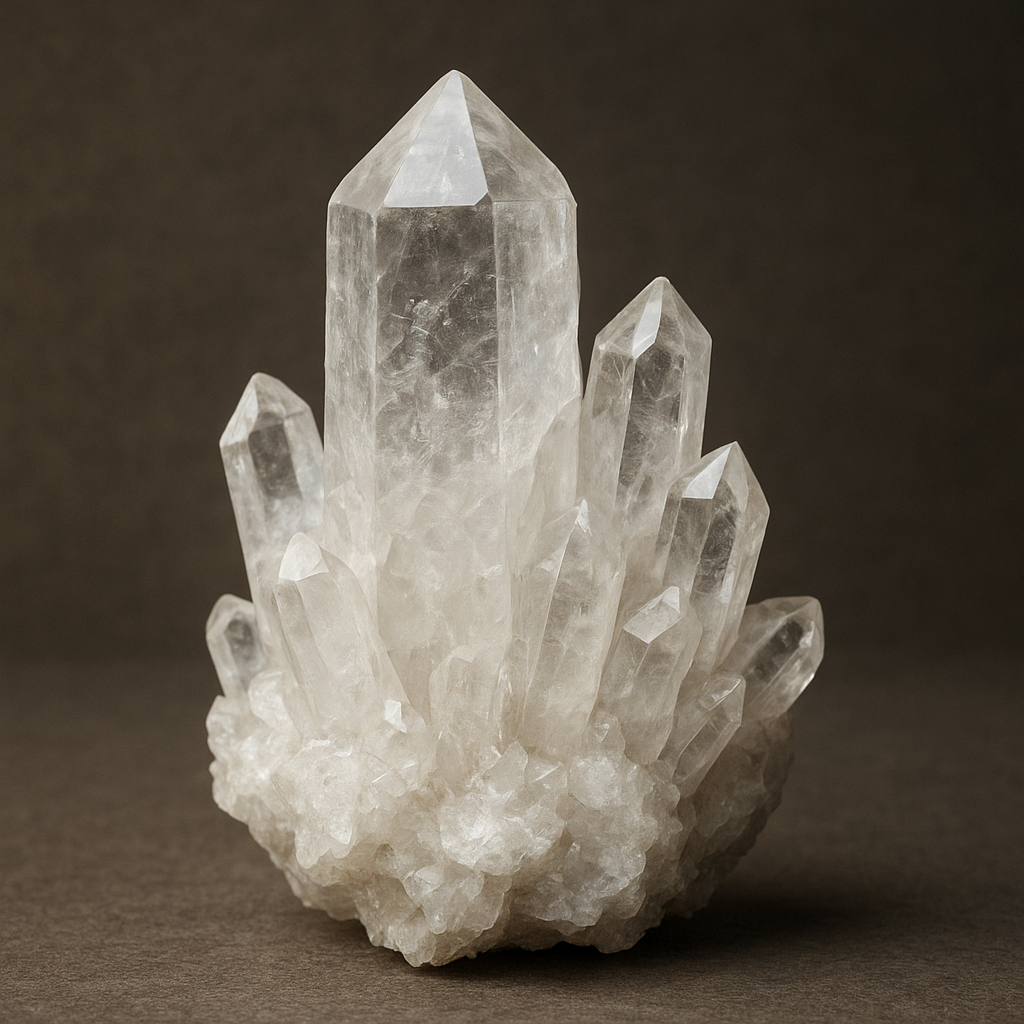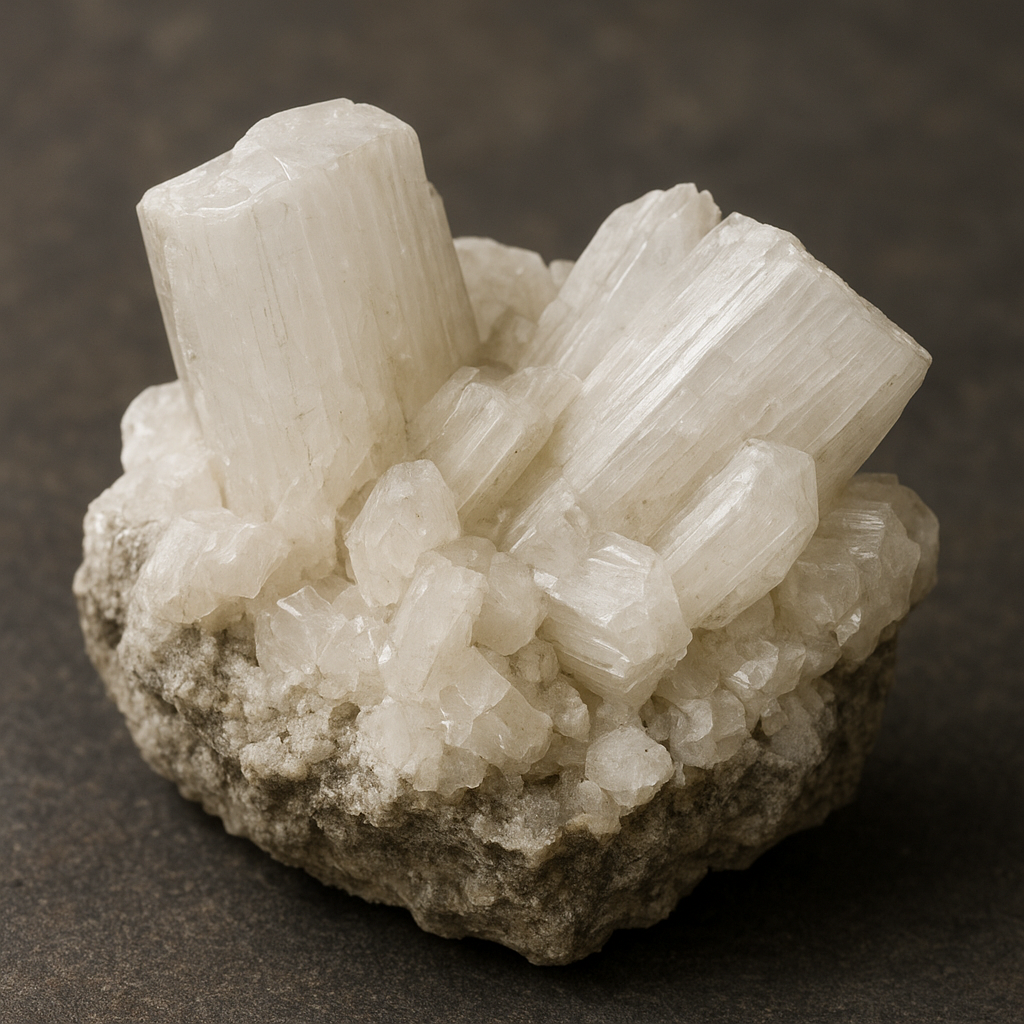
Albite is a common and versatile mineral whose presence weaves through the story of the Earth’s crust. This sodium-rich member of the feldspar family plays a key role in igneous, metamorphic and sedimentary processes, and carries both scientific importance and practical value. The following article explores where albite occurs, how it is used in industry and research, and highlights several interesting aspects of its crystal chemistry, textures and economic significance.
What Albite Is: Composition and Crystal Structure
Albite is the sodium endmember of the plagioclase feldspar solid solution series, with chemical formula NaAlSi3O8. As a feldspar, it belongs to one of the most abundant mineral groups in the continental crust. Plagioclase ranges from albite at the sodium-rich extreme to anorthite (CaAl2Si2O8) at the calcium-rich end; compositions in between are common in nature. Albite typically occurs in two structural varieties: a well-ordered low-temperature form commonly referred to as “low albite” and disordered or high-temperature varieties that exhibit subtle changes in symmetry and lattice parameters.
Cristallographically, albite is generally triclinic. It displays characteristic cleavage on two directions near 90°, which gives many albite-bearing rocks a blocky or tabular appearance. A distinctive diagnostic feature is the presence of twinning: the so-called albite twin law produces lamellar patterns visible both in hand specimen and under the microscope. These twinning patterns are essential for identifying plagioclase in thin section and for interpreting the thermal history of a rock.
Occurrence: Where Albite Is Found
Albite is ubiquitous in many geological environments. It forms in igneous rocks, metamorphic terrains, and in hydrothermal settings; it can also appear as an alteration product of other feldspars.
Igneous Rocks
- Granites and granodiorites often contain significant amounts of feldspar, including albite, especially in more evolved, silica-rich compositions.
- Pegmatites—coarse-grained igneous bodies associated with the final stages of magma crystallization—are famous for producing large and well-formed albite crystals. These crystals can reach impressive sizes and are prized by collectors.
- Volcanic rocks that have undergone magmatic differentiation may show albite in groundmass or phenocrysts, particularly in rhyolites and dacites.
Metamorphic Rocks
During metamorphism, particularly in low- to medium-grade conditions, albite can form through solid-state reactions. It appears in schists, gneisses and blueschists, often recording pressure-temperature conditions and fluid activity. In some contact metamorphic aureoles, albite-rich assemblages indicate sodium enrichment from hydrothermal fluids.
Hydrothermal and Alteration Settings
Hydrothermal veins and metasomatic zones commonly host albite as a primary or secondary phase. Hydrothermal fluids can replace calcium-rich plagioclase with sodium-rich albite in a process called albitization, which sometimes creates economically important alteration halos around ore deposits. This process is significant in porphyry copper systems and some hydrothermal gold deposits.
Sedimentary Contexts and Soils
Although feldspars are susceptible to chemical weathering, albite can persist as sand-sized particles or as detrital grains in sedimentary rocks. Weathering of albite contributes to soil formation and the supply of silica and aluminum to secondary minerals like clays.
Notable Localities
- Albite is found worldwide; notable localities include pegmatite districts in Brazil, the granitic regions of New England (USA), parts of Scandinavia, and pegmatites of the Canadian Shield.
- Well-crystallized albite specimens are often reported from mineral-rich pegmatites in Minas Gerais (Brazil), the Alps, and parts of eastern Canada.
Physical and Optical Properties Important for Identification
Identification of albite relies on a combination of macroscopic and microscopic properties. Its hardness, cleavage, specific gravity and optical behavior under polarized light are all useful indicators.
- Cleavage: Two directions near 90° create blocky fragments.
- Twinning: Characteristic lamellar twinning patterns (albite, pericline, and Carlsbad twins) are diagnostic.
- Color: Typically white, gray, or colorless; can be tinted by inclusions or altering iron oxides.
- Luster: Vitreous to pearly on cleavage surfaces.
- Optical properties: Under the petrographic microscope albite shows characteristic birefringence and twinning that enables rapid identification in thin section.
Textures and Microstructures: What Albite Reveals About Rock History
Albite often preserves microstructures that geologists use as records of a rock’s thermal and chemical history. Examples include exsolution textures, perthitic intergrowths, and micro-twinning.
Perthite and Exsolution
When sodium and potassium feldspars are present together, slow cooling of a high-temperature solid solution can lead to exsolution, producing intergrowths known as perthite. In perthitic textures, thin lamellae or patches of albite are intergrown with K-feldspar; these textures can be visible at the hand-specimen scale or require microscopic observation. The scale and morphology of exsolution textures help constrain cooling rates and thermal histories of plutons.
Twinning and Ordering
Twinning in albite is not only diagnostic but also informative. The degree of structural ordering—how aluminum and silicon occupy tetrahedral sites—affects twin laws and symmetry. Heat treatment experiments reveal that ordering/disordering transitions occur at elevated temperatures and can be partially irreversible, allowing natural samples to retain memory of metamorphic or magmatic events.
Albite in Petrology and Geochemistry
Albite plays multiple roles as a geochemical indicator and as a component controlling melt and fluid compositions. Its stability fields, compositional variations and reaction relationships with other minerals are central topics in petrological studies.
- Phase equilibria: In phase diagrams of crustal rocks, albite defines parts of melting and crystallization reactions; the presence or absence of albite affects liquid compositions and crystallization sequences.
- Geochemical tracer: Because sodium and calcium partition differently between plagioclase and melt, the composition of plagioclase can be used to infer magma evolution and differentiation processes.
- Albitization: Sodium metasomatism that transforms feldspar assemblages is an important hydrothermal process often associated with ore formation. Such alteration halos are explored in mineral exploration programs.
Industrial and Technological Applications
Although albite itself is not as widely used industrially as some other minerals, its presence and derivatives have several practical applications.
Ceramics and Glass Industry
Feldspar minerals, including albite, are important raw materials in the production of ceramics and glass. They act as fluxes, lowering melting temperatures and helping to form strong glassy matrices. In ceramic glazes and bodies, albite contributes alumina and silica, affecting thermal expansion, strength and appearance. In this context, the ceramics industry often selects feldspars for their compositional consistency and melting behavior.
Abrasives, Fillers and Geotechnical Uses
Feldspar sands are used as fillers in paints, plastics and rubber. Ground albite-bearing rocks can serve as aggregate or mineral filler where suitable hardness and chemical properties are required.
Optical and Scientific Uses
High-quality albite crystals from pegmatites are sometimes used by mineral collectors and for optical experiments. Synthetic and natural albite are also subjects of experimental petrology to study ordering kinetics, diffusion and reaction rates under controlled conditions.
Analytical Techniques: How Scientists Study Albite
Investigating albite requires a blend of classical mineralogy and modern analytical tools. Methods commonly used include:
- X-ray diffraction (XRD) for determining crystal structure and distinguishing ordered vs. disordered polymorphs.
- Electron microprobe and LA-ICP-MS to measure chemical composition and trace-element content, which help define plagioclase compositions along the albite–anorthite join.
- Optical petrography to observe twinning, zoning and exsolution textures in thin section.
- Raman spectroscopy and IR spectroscopy for structural and bonding information.
- Atom probe and TEM for high-resolution imaging of exsolution lamellae and diffusion profiles.
Albite in Environmental and Soil Processes
As feldspar weathers, it releases sodium, aluminum and silica into soils and waters. The rates and pathways of albite weathering influence soil formation, nutrient availability and the chemistry of groundwater. Weathering leads to secondary minerals such as clays (kaolinite, smectite) and can be a source of dissolved silica in rivers. In cold climates, physical breakdown of albite-bearing rocks also contributes to sediment budgets and landscape evolution.
Gemology, Collecting and Aesthetic Varieties
While albite is not a mainstream gemstone, attractive crystals from pegmatites can be transparent and bright, sometimes included with other minerals such as tourmaline, quartz and mica, producing striking mineral specimens. Collectors prize well-formed albite crystals for crystal habits and association with colorful accessory minerals. Albite’s pearly cleavage surfaces and occasional schiller (silvery luster) effects in certain intergrowths are appealing to mineral enthusiasts.
Synthetic Albite and Experimental Investigations
Laboratory synthesis of albite and its solid solutions is a routine part of experimental petrology. Researchers synthesize albite to study diffusion of elements, ordering-disordering kinetics, phase transitions, and melt-crystal equilibria. These experiments inform models of magmatic cooling rates, metamorphic reactions and the timescales of geological processes.
Implications for Geochronology and Thermometry
Compositional zoning and diffusion profiles in albite can be modeled to obtain timescales of cooling or metamorphism. When combined with radiometric dating of coexisting minerals, these diffusion studies provide powerful constraints on the timing and duration of geological events.
Interesting and Lesser-Known Facts
- Albite twins are so predictable that patterns of twin orientation are used to interpret tectonic deformation and strain in rocks.
- In some metamorphic rocks, the progressive conversion of more calcium-rich plagioclase into albite-like compositions is a record of increasing sodium activity in fluids during metamorphism.
- Albitization, the metasomatic replacement by albite, can form distinctive alteration zones that are visually recognizable and can guide mineral exploration.
- Because plagioclase composition responds sensitively to magma composition and temperature, detailed albite studies can reconstruct magmatic histories with remarkable fidelity.
Challenges and Current Research Directions
Modern research on albite addresses several challenging topics that bridge mineralogy, petrology and material science. These include understanding the atomic-scale mechanisms of ordering and disordering, quantifying element diffusion under complex P-T-fluid conditions, and improving thermodynamic models for feldspar solid solutions. The interplay between crystal chemistry and large-scale geologic processes keeps albite a focal mineral for interdisciplinary studies.
Computational and Experimental Approaches
Advances in computational mineral physics allow scientists to simulate atomic arrangements and defects in albite, complementing high-pressure, high-temperature experiments that probe phase stability. Such combined approaches aim to predict how plagioclase will behave in planetary interiors and during crustal evolution.
Final Observations
Albite, though sometimes overlooked because it is so common, is a mineral of outsized importance. From influencing rock textures and magmatic processes to guiding mineral exploration and contributing to industrial products, albite’s role is both practical and scientific. Its characteristic twinning, compositional variability within the plagioclase series, and responsiveness to fluids and temperature make it a rich subject for study. Whether encountered as a blocky grain in a granite, a gleaming crystal in a pegmatite, or a reactive phase in a hydrothermal alteration zone, albite continues to reveal valuable clues about Earth’s dynamic systems.