
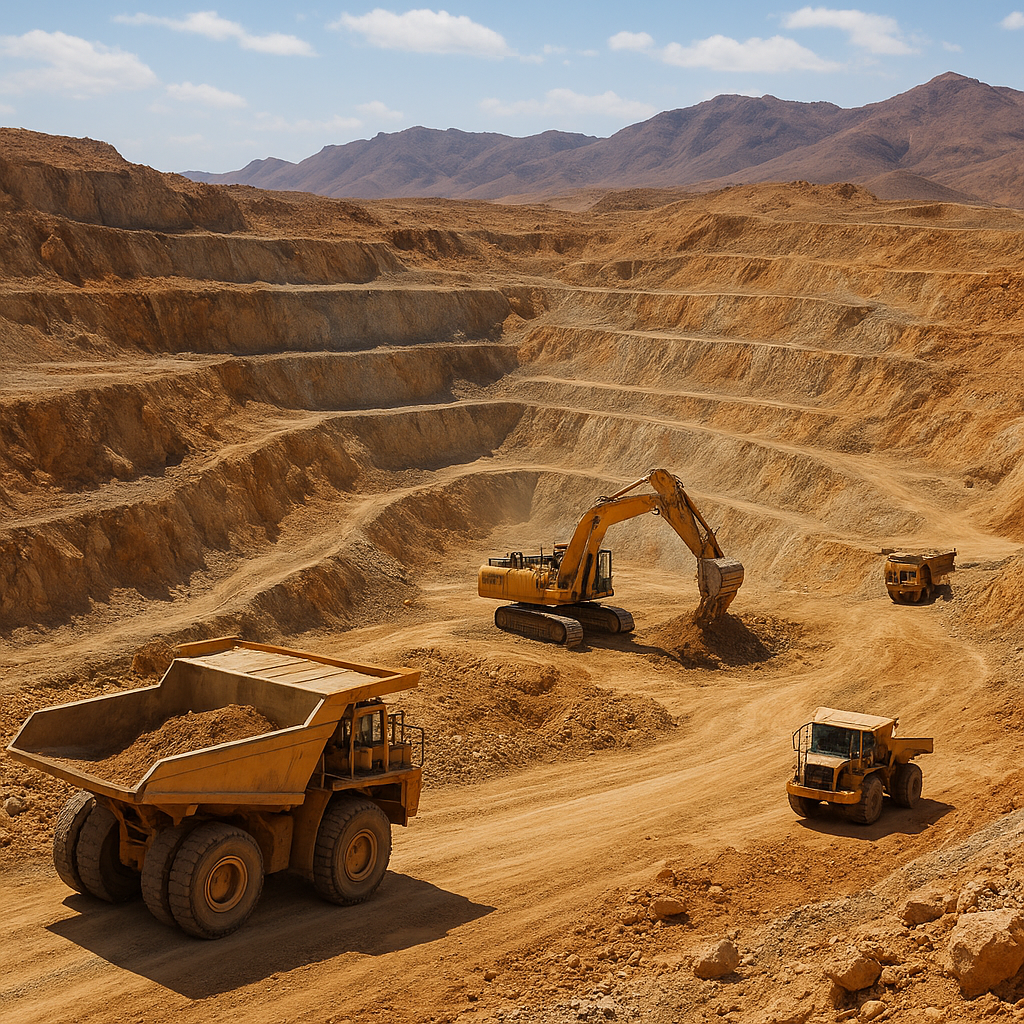
The following article explores the Akka Gold Mine in Morocco, examining its location, geological setting, the minerals and materials produced, and the broader economic and social implications of the operation. It also highlights interesting historical, technical and environmental aspects that make the site noteworthy. Throughout the text several key terms are emphasized to draw attention to the most important concepts.
Location and Geological Setting
The Akka mine is situated in southern Morocco, in an area characterized by a long tradition of mineral exploitation and diverse geological environments. Although the precise coordinates of the deposit are often kept confidential by operators and local authorities for security and commercial reasons, the mine sits within a belt of Precambrian and Paleozoic rocks that have undergone multiple phases of deformation and hydrothermal activity. These geological processes created favorable conditions for the concentration of gold and associated metals in discrete veins and disseminations.
Regional context
- The surrounding terrain includes metamorphic and igneous rocks, with structural features such as faults and shear zones that guided mineralizing fluids.
- Climate in the region is largely arid to semi-arid, placing a premium on water management for both mining operations and local communities.
- Transport links to coastal ports allow concentrates and refined products to enter global markets, while regional infrastructure improvement is often driven by the mine’s presence.
Local geology and mineralization
At the deposit scale, mineralization typically occurs in quartz veins, veinlets, and replacement zones within host lithologies. The gold is commonly associated with sulfide minerals such as pyrite and arsenopyrite, and may be accompanied by minor quantities of silver, copper or other trace elements. Both oxide and primary (sulfide) zones can be present, which influences processing choices.
Geological studies and exploration drilling have often revealed a complex history of hydrothermal pulses, meaning that gold may be distributed in higher-grade shoots as well as more diffuse lower-grade halos. This heterogeneity makes thorough geological modeling essential for efficient extraction and long-term mine planning.
Mining Methods and Extractive Processes
The Akka operation uses a combination of modern mechanized methods and, in some nearby areas, artisanal techniques. The choice of mining method depends on orebody geometry, depth, and economic considerations.
Open-pit and underground mining
- Near-surface mineralization is commonly mined via open-pit methods, employing large-scale excavation equipment, drilling and blasting, and haulage to processing facilities.
- Deeper and more structurally complex portions of the deposit are accessed by underground works—drifts, stopes, and raises—where selective mining can target higher-grade zones and reduce dilution.
Processing and metallurgical routes
Ore from the Akka deposit is processed using flowsheets adapted to the mineralogical characteristics of the material. Typical elements of a processing circuit include crushing, grinding, gravity concentration, and chemical treatment.
- Gravity methods recover coarse liberated gold particles early in the circuit, improving overall recovery and reducing cyanide demand.
- For fine or refractory gold locked within sulfide minerals, comminution followed by leaching—often cyanidation—or oxidative pretreatment (pressure oxidation, bio-oxidation) may be employed to liberate gold before cyanide extraction.
- Carbon-in-pulp (CIP) or carbon-in-leach (CIL) systems are standard for adsorption of gold from solution, followed by elution and electrowinning to produce doré bars.
Processing plants are designed to balance recovery, operating costs, and environmental controls. Tailings management and water recycling are critical elements of plant design, given the arid regional climate.
Production, Reserves and Economic Significance
The Akka mine contributes to production of gold for both domestic and export markets. While specific annual output and reserve figures vary with exploration success and market conditions, the mine is important at multiple scales: locally through employment and services, nationally through export revenue and fiscal contributions, and for investors through returns tied to commodity prices.
Economic contributions
- Direct employment of mining, engineering, and administrative staff: the mine creates a wide range of jobs from highly skilled positions to contract and service roles.
- Indirect economic activity: suppliers of fuel, parts, food, and accommodation profit from mine-related demand, stimulating regional economic multipliers.
- Government revenue: taxes, royalties, and permit fees provide income for regional and national budgets, which can fund infrastructure and public services.
- Export earnings: gold exports support the national balance of payments and can help stabilize foreign exchange reserves.
Local social impact
At the community level, the mine often becomes a catalyst for development. Roads, power lines, and water systems built for mining operations may be shared with local populations. Many modern mining companies implement community development programs focused on education, health, vocational training, and support for small businesses.
However, economic benefits are balanced by challenges: managing expectations, ensuring fair employment opportunities for local residents, and mitigating disruptions to traditional livelihoods such as agriculture and pastoralism.
Environmental Management and Sustainability
Environmental stewardship is a central concern for any modern gold mine, and the Akka operation is no exception. The arid environment amplifies the importance of careful resource use and biodiversity protection.
Water use and tailings
- Water-efficient processing and recycling systems reduce freshwater withdrawals and support long-term operational sustainability.
- Tailings storage facilities are engineered to international standards to minimize the risk of seepage, slope failure, or accidental release. Progressive rehabilitation—where portions of tailings and disturbed lands are rehabilitated during the life of the mine—reduces long-term liabilities.
Air, land and biodiversity
Dust control, emissions monitoring, and careful planning of land disturbance are implemented to keep environmental impacts within permit limits. Reclamation plans include re-contouring land, replacing topsoil, and introducing native vegetation to restore ecological function. Where operations affect sensitive habitats, offsets and conservation partnerships can be established as part of the mine’s environmental and social governance (ESG) commitments.
Health and safety
Worker safety programs, occupational health monitoring, and emergency response planning are core elements of responsible mining. Reducing workplace incidents through training and technology not only protects people but also underpins continuous, efficient production.
Exploration, Technology and Innovation
Exploration around Akka continues to be a priority. Geological mapping, geochemical sampling, and geophysical surveys identify new targets, while deep drilling tests extensions of known orebodies. Technological innovation also plays an increasing role in improving recovery rates and reducing environmental footprints.
Advanced exploration techniques
- Remote sensing and hyperspectral imagery help to map alteration zones associated with mineralizing fluids.
- 3D geological modeling synthesizes drill data to refine resource estimates and mine plans.
- Machine learning and data analytics enhance the interpretation of complex datasets, potentially revealing subtle geological patterns that traditional methods miss.
Automation and operational efficiencies
Automation of haul trucks, remote operation of equipment, and predictive maintenance systems reduce operating costs and improve safety. In processing, sensor-based ore sorting and real-time monitoring optimize throughput and recovery while minimizing energy and reagent use.
Historical, Cultural and Social Dimensions
The area around the Akka mine has long been part of local cultural landscapes. Mining and artisanal extraction of minerals often predate modern operations, with local communities possessing generational knowledge of the land and its resources.
Artisanal mining and heritage
Artisanal miners sometimes operate on the fringes of larger deposits, and integrating these miners into formalized supply chains can uplift livelihoods while improving health and environmental outcomes. Programs that provide training, access to safer tools, and avenues for legalizing small-scale production are increasingly common as a means of reducing conflict and promoting sustainable development.
Archaeological and cultural sensitivity
Before major works proceed, environmental and social impact assessments routinely include archaeological surveys to avoid or document important cultural sites. Where heritage sites are present, mitigation measures and stakeholder engagement help balance development and conservation.
Interesting Aspects and Lesser-Known Facts
Several features of the Akka Gold Mine make it an intriguing case study in modern resource development.
- Hybrid labor models: The site blends modern mechanized mining with a continuing artisanal presence nearby, creating a unique socio-economic mosaic.
- Innovation under arid conditions: Water scarcity has driven creative approaches to water recycling, dust suppression and tailings design suited to desert environments.
- Multi-commodity potential: While gold is the primary focus, exploration often reveals by-products—silver and occasional base metals—that can materially improve project economics.
- Community partnerships: The mine has prompted examples of public-private collaboration for infrastructure—new roads and electrification projects that benefit remote towns.
- Geological complexity: The deposit’s structure provides an educational natural laboratory for students and researchers studying hydrothermal mineralization and structural control of orebodies.
Future Prospects and Challenges
Looking ahead, the future of the Akka mine will depend on a mix of geological potential, commodity prices, technological advances, and social license to operate. Continued exploration could extend mine life by adding resources at depth or along strike. Simultaneously, global trends in responsible sourcing, ESG reporting, and investor scrutiny require ongoing improvements in transparency and environmental performance.
Key challenges include ensuring water security for all stakeholders, managing tailings and legacy environmental liabilities, integrating local communities into the benefits of development, and adapting to fluctuating gold markets. Opportunities lie in adopting cleaner technologies, diversifying local economies, and leveraging the mine’s presence to catalyze long-term regional development.
Governance, Royalties and Legal Framework
Mining operates within a framework of national laws, permits, and community agreements. The governance model influences how revenues are shared and how environmental and social obligations are enforced. Negotiated impact benefit agreements, local content requirements, and transparency in payments and contracts all shape the long-term relationship between the mine and its host region.
Regulatory compliance and voluntary standards—such as membership in industry sustainability initiatives—help ensure that the Akka operation aligns with broader expectations for responsible natural resource development.
Concluding Observations
The Akka Gold Mine stands as a multifaceted enterprise where geology, engineering, economics and community intersect. Its role extends beyond simple mineral extraction: the mine affects regional infrastructure, local livelihoods, and national export performance. By combining careful geological science with modern processing, environmental management, and meaningful community engagement, Akka illustrates both the opportunities and responsibilities inherent in contemporary mining.

