
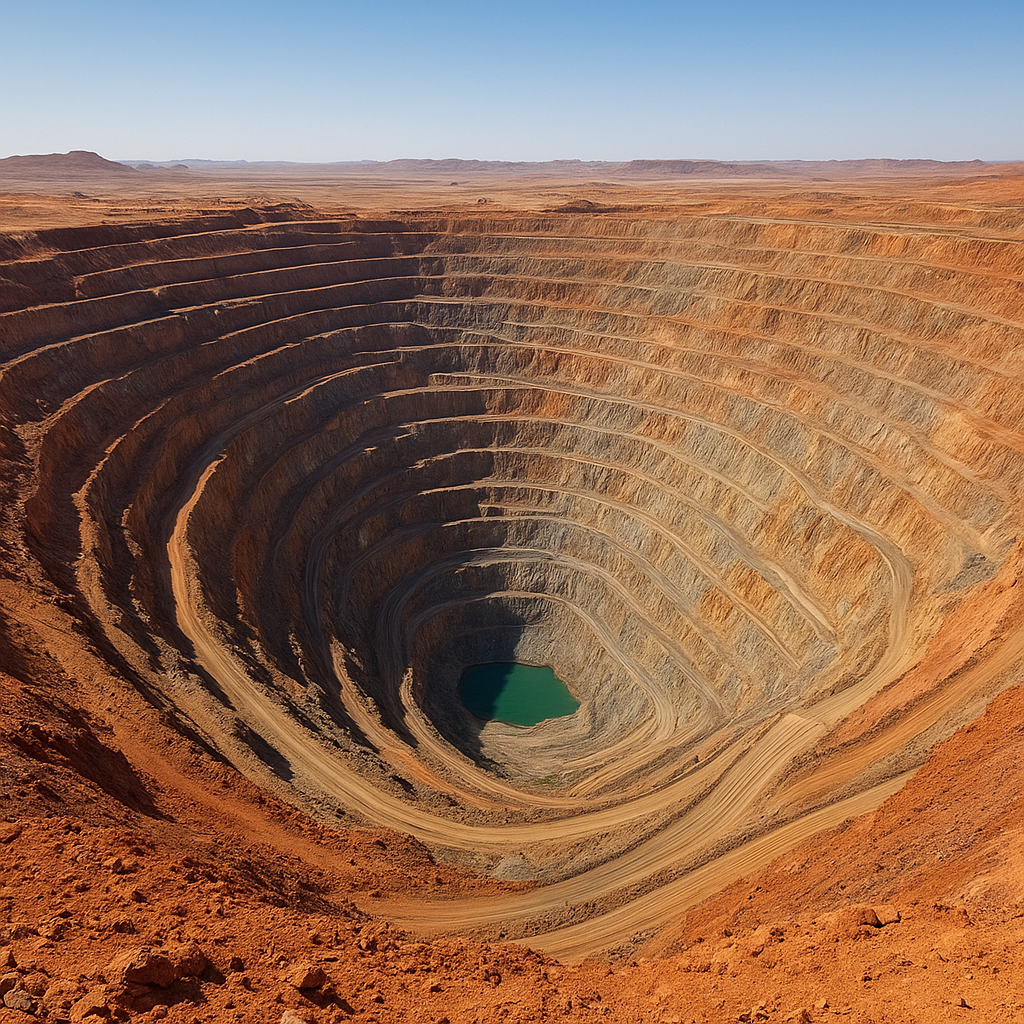
The Akjoujt mine sits as one of the better-known mineral localities in western Africa, located in the country of Akjoujt’s region of interest within Mauritania. This site has drawn attention for its base-metal mineralization, most notably copper, and for the role it has played in regional mining development. The following article examines where the mine is, what commodities are produced or have been found there, its economic significance for local and national stakeholders, and a selection of technical and historical facts that make Akjoujt noteworthy. Perspectives range from geology and operations to socio-economic and environmental concerns, and from historical activity to contemporary prospects driven by rising global demand for copper.
Location and geological setting
The Akjoujt mining area lies in western Mauritania, in proximity to the small town of Akjoujt, which functions historically as a mining centre and local service hub. The site is accessible by road from the capital region and serves as an example of mineral extraction occurring away from coastal and urban centres in the Sahel–Sahara transition zone. The terrain surrounding the mine is semi-arid, with limited surface water and sparse vegetation, conditions that have influenced logistics, water management and community life.
Geology and mineralization
The deposit at Akjoujt is hosted within ancient crystalline basement rocks and is the product of hydrothermal processes that concentrated metals into exploitable ore bodies. While descriptions of individual deposits vary, Akjoujt is best known for significant copper mineralization commonly accompanied by other metals such as zinc, gold and occasional silver in varying proportions. Ore textures and mineralogy reported from the area typically include chalcopyrite, sphalerite and other sulfide minerals, indicating sulphide-rich systems formed during episodes of intense fluid flow and rock alteration.
From an exploration standpoint, the Akjoujt area is attractive because its mineralization occurs within structural corridors and altered zones that can extend beyond exposed outcrops. That means that both near-surface and deeper targets are potentially present, which has encouraged multiple rounds of exploration by different companies over the decades.
History of operations and mining methods
Mining activity in Akjoujt has a layered history. Initial extraction efforts in the 20th century established the town’s mining identity, and throughout subsequent decades the site has been the subject of both state-operated and private-company initiatives. Periods of active production have alternated with intervals of care-and-maintenance or exploration-only activity, reflecting commodity price cycles, changes in technology and evolving corporate strategies.
Mining and processing
Operations at Akjoujt have used a combination of mining techniques tailored to the geometry of ore bodies. In many instances, near-surface ore has been exploited using open-pit methods for their cost-effectiveness and speed, while higher-grade or deeper portions have been targeted by underground development where appropriate. Ore from the mine has been processed through crushing, grinding and flotation to produce concentrates, which are then dried and prepared for sale on international markets. Local processing capacity has varied over time; in some phases concentrates were shipped abroad for smelting, while at other times efforts were made to add value closer to the source.
Logistics and access have been important operational factors. The semi-arid environment necessitates reliable transport links for concentrate shipments, fuel and reagents, as well as infrastructure for worker housing, power and water. These infrastructure components often serve dual purposes: supporting the mine and benefiting the surrounding population.
Economic importance and regional impact
The Akjoujt mine contributes to both the local and national economy in a number of ways. As a producer of export-grade concentrates, the project generates foreign exchange earnings that help diversify Mauritania’s resource-driven export base. This is particularly meaningful in a country where iron ore and fisheries have traditionally dominated export revenues; copper and associated base metals provide a complementary revenue stream and reduce dependency on a single commodity.
- Employment: Mining operations create direct jobs in extraction, processing and administration, and indirect jobs in transport, maintenance and services. For many residents of Akjoujt and nearby settlements, the mine is a primary employer and contributes to household incomes.
- Revenue and fiscal flows: Taxes, royalties and fees paid by mining companies contribute to public finances. When managed transparently, these revenues can finance infrastructure, education and health services.
- Infrastructure development: Roads, power supply improvements and water systems developed to serve the mine often have spillover benefits for local communities. Investment in telecommunications and housing can also accompany mining projects.
- Skills and capacity building: Mining operations bring technical skills, on-the-job training and health-and-safety practices that can raise local labor capabilities and facilitate entrepreneurship.
Beyond direct economic measures, the mine influences regional development planning and investment decisions. Its presence has put Akjoujt on national and international maps for prospective investors and service contractors, supporting ancillary businesses such as equipment suppliers and logistics firms.
Environmental and social considerations
Mining in a semi-arid region raises specific environmental challenges. Water is a scarce resource, and mines must manage water use carefully for ore processing, dust suppression and domestic needs. Waste rock and tailings disposal require robust containment to avoid the spread of acid-generating materials and heavy metals into soils and groundwater. Dust control and air quality management are also important to protect worker and community health.
Socially, mining projects interact with local populations in complex ways. Positive effects include job creation, better amenities and improved local services; potential negative effects include land-use change, disruptions to pastoral and agricultural practices, and pressures on local resources. Sustainable mining practice increasingly emphasizes community engagement, benefit-sharing, and planning for mine closure and post-mining land use.
To reduce environmental footprint and improve outcomes, operators in and around Akjoujt have explored measures such as:
- Water recycling in processing plants to limit freshwater withdrawal
- Proper lining and monitoring of tailings facilities
- Progressive rehabilitation of disturbed areas
- Local employment quotas and training programs
- Investment in community health, education and small-business support
Strategic relevance and future prospects
Global demand for copper is expected to rise as electrification, renewable energy systems and electric vehicle manufacturing expand. This macro trend strengthens the strategic value of deposits such as Akjoujt. For Mauritania, maintaining active and well-governed projects offers an opportunity to attract further exploration capital and transition from raw-material export to greater local beneficiation over time.
Potential avenues for future development include:
- Exploration of satellite deposits and deeper ore zones to extend mine life
- Investment in processing and smelting capacity to capture more value domestically
- Integration of renewable energy sources—solar power is particularly promising in this sun-rich region—to lower operating costs and reduce carbon footprint
- Adoption of modern mine automation and digital monitoring to improve safety and productivity
Whether these opportunities are realized depends on commodity prices, the regulatory environment, investment conditions and how well environmental and social expectations are managed. Improved governance and transparent use of mining revenues can amplify the long-term benefits to local communities and the national economy.
Interesting facts and lesser-known points
- Historical continuity: The Akjoujt area has seen multiple phases of activity—initial discovery and small-scale extraction, followed by larger industrial efforts—which have embedded mining into the town’s identity.
- Multimetal nature: Although primarily associated with copper, Akjoujt ores often contain significant amounts of zinc and sometimes traces of gold, which can enhance project economics through by-product credits.
- Local names and culture: The town of Akjoujt has developed a micro-economy around the mine, with local markets, trades and services that reflect the needs of a mining community in a semi-arid environment.
- Logistics ingenuity: Remote-site operations like Akjoujt have historically innovated in supply chain planning—water trucks, mobile workshops and scheduled concentrate haulage—to operate efficiently away from major ports.
- Potential for green transition: Given Mauritania’s abundant solar resource, mines in the region, including Akjoujt, are well-placed to integrate solar power to support operations and lower greenhouse gas emissions, strengthening their long-term competitiveness.
- Community programs: Over various operational phases, companies operating in the Akjoujt area have implemented local training, health outreach and small-business support programs intended to build capacity beyond the mine’s lifetime.
- Scientific interest: The geology of Akjoujt attracts geoscientists interested in the processes that concentrate base metals in arid environments—studies that can guide exploration elsewhere in the African craton.
Challenges and considerations for stakeholders
To unlock the full potential of the Akjoujt mine while minimizing negative impacts, several challenges must be addressed by government, operators and communities:
- Balancing water use between mine requirements and local needs in a water-scarce landscape;
- Ensuring robust tailings and waste management systems to prevent long-term contamination;
- Designing transparent fiscal frameworks so that mining revenues meaningfully support public services and development;
- Fostering local employment and procurement policies that leave a sustainable local economic base after mine closure;
- Monitoring environmental performance and adopting international best practices for social responsibility;
- Attracting sustained investment for exploration and processing while maintaining stable and predictable regulatory regimes.
The Akjoujt mine illustrates how a single mineral locality can influence a town, a region and a national conversation about resource management. Its deposits—centered on copper and other base metals—provide export potential and employment, while also presenting challenges typical of mining in arid and developing regions. For stakeholders intent on building long-term value, the focus will likely remain on careful environmental stewardship, local capacity building, and capturing additional parts of the mineral value chain through thoughtful planning and investment in infrastructure and processing. As global demand for copper tied to electrification and green technologies continues to grow, the strategic importance of deposits such as Akjoujt is poised to increase, provided that sustainability and governance considerations are managed proactively.

