
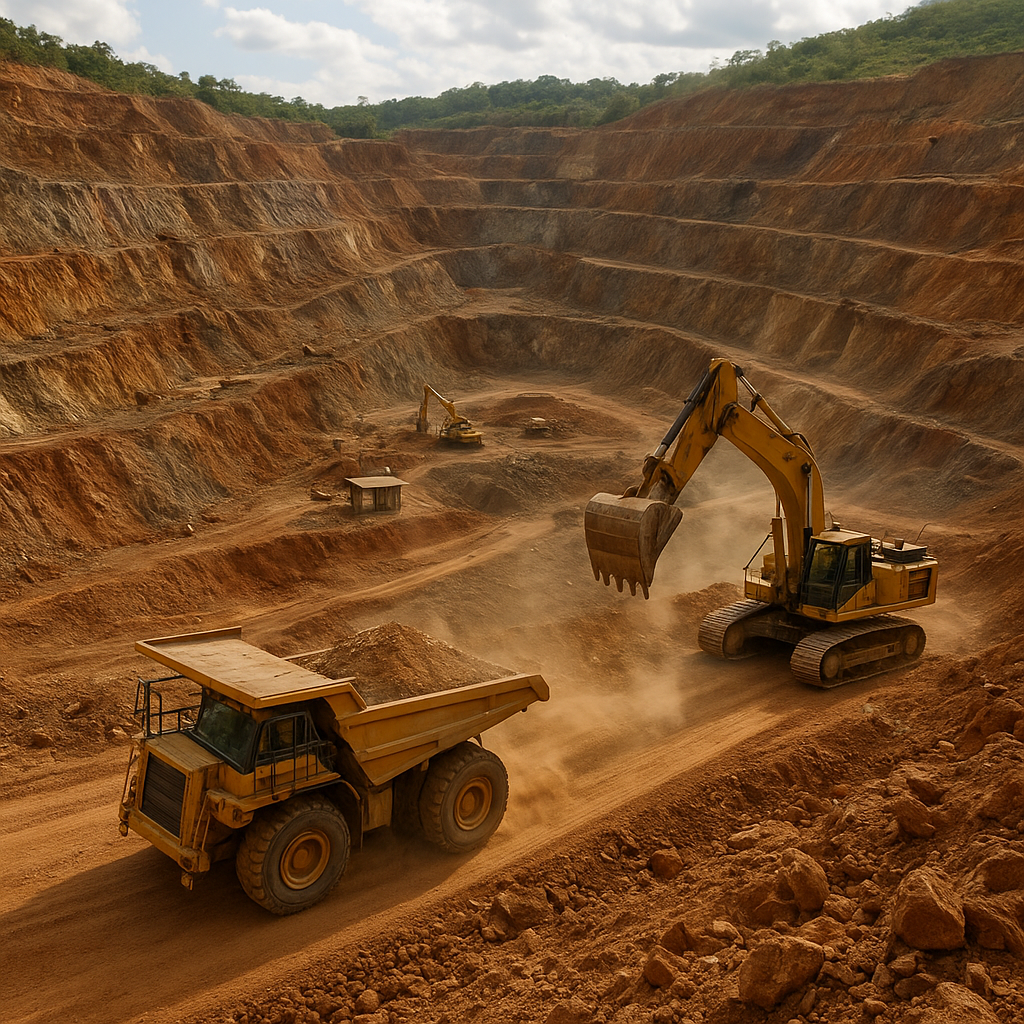
The Ahafo mine is one of West Africa’s prominent gold-producing operations and an important part of Ghana’s modern mining landscape. This article examines where the mine is located, the geology and ores it exploits, how it operates, its economic significance for local and national stakeholders, and several noteworthy technical, environmental and social aspects that make Ahafo distinct. Throughout the text you will find information intended for readers who want a clear and reasonably detailed picture of a contemporary large-scale mine in a major gold-producing country.
Location and geological setting
Where the mine sits
The Ahafo mine is located in central-western Ghana, within an area historically referred to as the Brong-Ahafo administrative region (now split into Bono, Bono East and Ahafo regions). The site lies several tens of kilometres north of the regional centre of Sunyani and to the west of the city of Kumasi. Its position places it squarely in one of West Africa’s most mineral-endowed corridors, an area that has long been a focus of exploration and mining activity.
Geological context
Ahafo’s deposits are hosted within the Archean-Proterozoic terranes that form part of the West African craton. The deposit style is characteristic of the wider Birimian greenstone belt system: mineralisation is commonly associated with quartz veins, sulphide-rich structures and shear-hosted zones within metavolcanic and metasedimentary sequences. This geological setting favours extensive, near-surface mineralisation which is amenable to large-scale surface mining methods.
What is mined and how it is produced
Primary commodity
The operation is primarily a gold mine. Gold is recovered through conventional bulk mining, milling and metallurgical processing. The ore is extracted from large excavations, hauled to a processing facility, and treated using a combination of crushing, grinding and carbon-in-leach (CIL) or similar cyanide-based processes that are standard in modern gold production.
Mining method and processing
Ahafo operates as a predominantly open-pit mine, with progressive expansion of pit limits as new resources are converted to reserves. Open-pit methods enable the economical extraction of the relatively low-grade, high-tonnage ore bodies typical of the region. Process plant infrastructure includes primary crushers, SAG and ball mills, classification circuits, and CIL circuits for gold recovery, alongside tailings management facilities and water treatment systems.
Scale and outputs
The mine has historically produced hundreds of thousands of ounces of gold annually, making it a major contributor to corporate production for its owner and to national gold output. The operation includes not only mining and processing but also supporting infrastructure such as access roads, power supply arrangements, water management systems and community development facilities that together define the scale of a modern mining complex.
Ownership, development and operational highlights
Corporate background
Ahafo is developed and operated by a major international gold company. Through exploration, feasibility studies and staged capital investments the project moved from discovery through construction and into sustained commercial production. The operator has invested in mineral resource expansion, plant optimisation and community programs to support long-term operations.
Expansion and mine life
Over the life of the operation, investments have been made to extend the mine life via additional open-pit phases, satellite discoveries and processing improvements. These expansions have involved additional engineering, permitting and increased capital expenditure but have the effect of leveraging fixed plant infrastructure to treat additional ore and thereby extend the economic life of the site.
Economic significance
National and regional contributions
Mining is one of Ghana’s largest foreign exchange earners, and Ahafo contributes to that position by producing a steady stream of high-value commodity for export. The operation pays taxes, royalties and other fees to the state, and it is a source of foreign direct investment that supports balance-of-payments needs. Revenues derived from the mine support public budgets at multiple levels—national, regional and local—through direct fiscal transfers and employment-related taxes.
Employment and local procurement
Beyond direct employment, the mine generates substantial indirect economic benefits. It creates hundreds to thousands of jobs during construction and sustained employment during operations for technicians, operators, maintenance staff and support services. Local procurement policies often channel a significant portion of goods and services purchases to national and regional suppliers, stimulating small and medium enterprise growth in the supply chain. This contribution to employment and local business development is one of the more visible economic benefits in mining jurisdictions.
Infrastructure and social investment
Mining companies commonly invest in local infrastructure—roads, schools, clinics and water systems—either through formal agreements with government or as part of corporate social responsibility programs. These investments provide non-extractive economic benefits that can catalyse additional local development, improve living standards and increase access to services for surrounding communities.
Environmental and social considerations
Land, resettlement and community relations
Large-scale open-pit mining requires the clearing of land and, in many cases, the resettlement of people and agricultural activities. Ahafo has engaged in resettlement and compensation programs to address the displacement of households, farmland and community infrastructure. Managing these processes transparently and equitably is central to maintaining social license to operate; the mine’s experience highlights the complexity and sensitivity of balancing development with community rights and livelihoods.
Water, tailings and biodiversity
Water management is critical both for processing and for protection of downstream ecosystems. The operation uses tailings storage facilities and water treatment plants to manage process effluents and minimise environmental impacts. Biodiversity management and rehabilitation of disturbed land form part of longer-term closure planning. Modern operations often incorporate progressive rehabilitation—recontouring, replacing topsoil and replanting—to reduce the environmental footprint over time.
Regulatory compliance and controversies
Like many large projects, Ahafo has faced scrutiny over its environmental and social record. Controversies in mining regions can include disputes over compensation, water use, and impacts on agriculture. Regulatory oversight, stakeholder engagement and independent monitoring are tools used to address concerns, and ongoing dialogue with communities and authorities is necessary to mitigate tensions and improve outcomes.
Interesting aspects and technological innovations
Integration of modern technologies
Ahafo utilises many of the technologies expected in a contemporary mine: mechanised earthmoving fleets, fleet management and optimisation software, remote sensing for exploration and pit monitoring, and modern metallurgical techniques to increase recovery rates. Continuous improvement programs seek to increase efficiency while reducing energy and water intensity per ounce of recovered gold.
Focus on sustainability and legacy planning
Modern mining projects increasingly emphasise long-term sustainability. At Ahafo this takes the form of programs for progressive rehabilitation, community development agreements, skills training for local populations and investments in small-scale agriculture or enterprise development aimed at leaving a positive legacy after mine closure. Efforts to lower greenhouse gas emissions and increase water recycling are examples of operational changes aligning the mine with broader sustainability goals.
Community and cultural interactions
What is often overlooked in technical descriptions of mines are the cultural and human dimensions. The Ahafo project has engaged with chiefs, local leaders and civil society organisations to negotiate land access, compensation and development priorities. These relationships shape the day-to-day experience of the operation and influence its social performance indicators.
Key takeaways about Ahafo
- The mine is a large-scale, open-pit gold operation situated in the heart of Ghana’s mineral belt, within the broader Birimian geological province characterised by widespread gold mineralisation and rich mining history.
- It produces significant quantities of gold, supplying both corporate production targets and national export earnings, while supporting thousands of jobs and delivering fiscal benefits via taxes and royalties.
- Environmental management, resettlement and community engagement are central challenges; successful long-term operations require credible commitments to rehabilitation, social investment and transparent governance.
- Technological and operational innovations aim to improve recovery, reduce impacts and optimise the mine’s contribution to the regional economy, while sustaining employment and procurement opportunities for local businesses.
- The project illustrates how a modern mining asset—operated by a major international company—intersects with local communities, national policy and global markets, emphasizing the need for balanced approaches that marry resource extraction with social and environmental responsibility.
Beyond the extraction of precious metal, Ahafo stands as an example of how geology, engineering, economics and social policy combine in practice. Its ongoing evolution—through expansions, technical improvements and community programs—reflects the dynamic nature of contemporary mining and the multiple stakeholders whose interests must be managed over a mine’s multi-decade life. For observers interested in mining’s role in development, Ahafo offers a rich case study in both the opportunities and obligations associated with natural resource production.

