
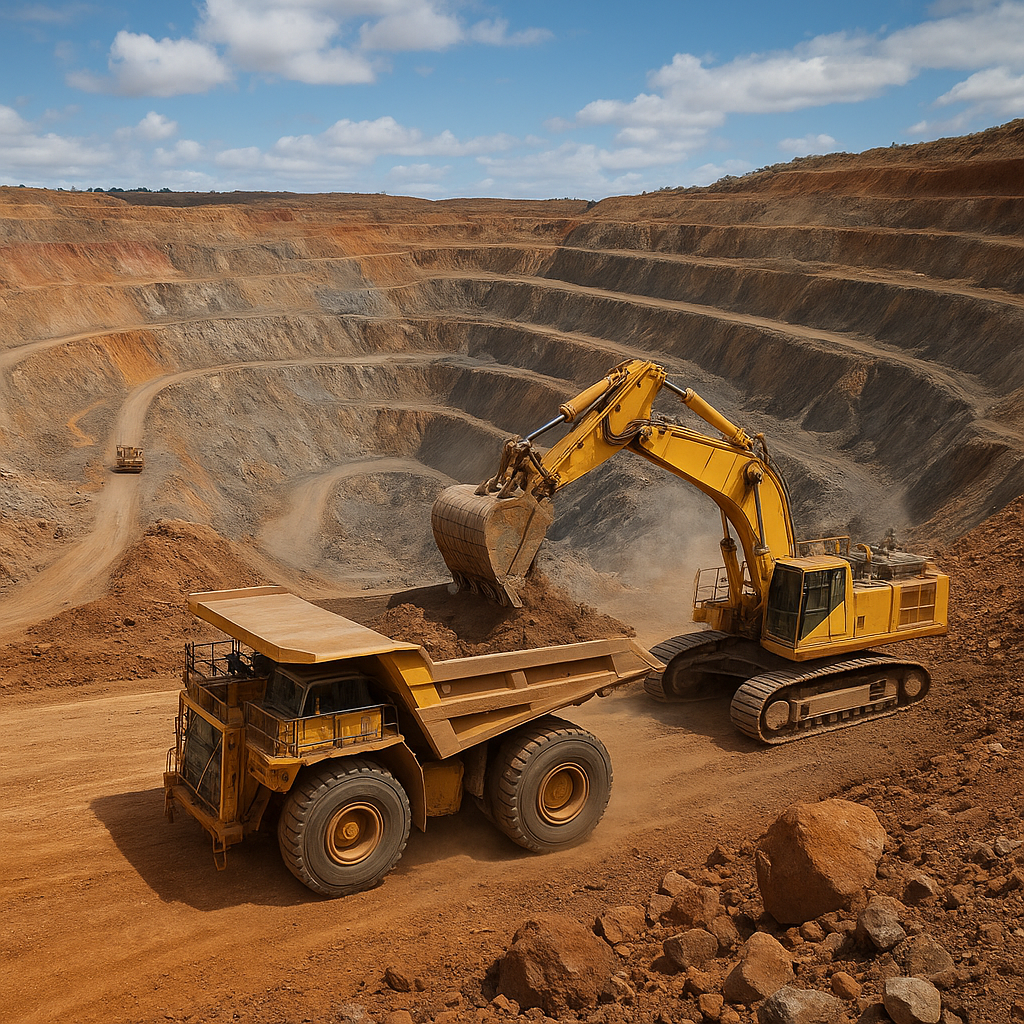
The Agnew Mine is one of Western Australia’s most notable gold operations, combining modern underground techniques with a long regional mining history. Located within a landscape shaped by ancient geology and contemporary resource demand, the mine plays an important role in local employment, regional economies and Australia’s position in the global gold market. The following sections explore where the mine is located, what is produced and processed there, its economic significance, and several interesting aspects of its operation and context.
Location and geological setting
Agnew Mine sits in the eastern part of Western Australia’s mineral-rich crust, within the broader Yilgarn Craton — a region renowned for its mineral endowment. The operation is positioned in a sparsely populated area characterized by semi-arid bushland and mining towns that support the local workforce and supply chains. The nearest service towns and transport links provide the logistical backbone that enables ore to be mined, processed and transported to market.
Geology and ore characteristics
The deposit exploited at Agnew is hosted in Archean greenstone sequences typical of many profitable Australian goldfields. Gold mineralization commonly occurs in structurally controlled veins and sulphide-rich zones where hydrothermal fluids deposited valuable minerals into fractures and weaker rock units. These geological settings often produce high-grade, narrow ore shoots that require selective underground mining methods rather than large-scale open-pit extraction.
- Western Australia geology: Archean-aged greenstones and granitoids.
- Mineralization style: structurally controlled veins with sulphide association.
- Ore character: often high-grade and suitable for underground mining techniques.
Operations and what is mined
The principal commodity extracted at Agnew Mine is gold, often associated with sulphide minerals and hosted in vein systems. Mining methods reflect the nature of the orebody: predominantly underground methods are used to access the higher-grade horizons, often supplemented by smaller-scale open pit works where appropriate. Modern mechanized underground mining — including declines, stoping and paste backfill — allows safe, efficient extraction of narrow but high-value ore zones.
Processing and recovery
Once ore is brought to surface, it undergoes crushing and milling to liberate gold-bearing minerals. Conventional gravity separation and flotation can be part of the flowsheet, followed by leaching and carbon-in-pulp or carbon-in-leach processes to recover gold to a saleable dore product. The processing circuit is designed to maximize recovery while managing sulphide-rich material and minimizing environmental impact.
- Mine type: predominantly underground with periodic open pit activity.
- Main product: refined gold dore or gold bullion sold to markets.
- Processing steps: primary crushing, milling, gravity separation, chemical leaching and recovery.
Economic importance
Agnew Mine contributes to multiple tiers of the economy, from the immediate regional economy around the mine site to national export earnings. As a source of employment, the operation supports mining crews, technical specialists, maintenance teams, contractors, and local service industries such as accommodation, transport and equipment supply. Royalties and taxes paid by mining companies provide revenue to state and federal governments, which in turn fund public services and infrastructure.
Regional development and supply chain
Large mining operations like Agnew stimulate local procurement and create opportunities for regional businesses. The need for drilling services, earthmoving contractors, truck fleets, catering and camp management supports diverse enterprises. The presence of the mine also fosters training and skill development among local workforces, offering pathways into engineering, geology, and mining operations.
- Employment: direct jobs on-site and indirect jobs through contractors and suppliers.
- Government revenue: royalties and corporate taxes derived from mineral sales.
- Exports: gold is a high-value export commodity that supports Australia’s trade balance.
Social and environmental considerations
Operating in a sensitive environment requires attention to social license and ecological management. Agnew Mine — like many modern Australian mines — implements environmental controls, rehabilitation plans and community engagement programs. Water usage, waste rock management, tailings storage and biodiversity protection are core elements of the environmental strategy. Engagement with traditional owners and local communities is critical for cultural heritage protection and shared economic benefits.
Community engagement and Indigenous partnerships
Mining companies often develop formal agreements with Indigenous groups and local councils to ensure heritage sites are respected and potential benefits are shared. Programs may include employment initiatives, training scholarships, business development opportunities for local contractors and cultural heritage surveys.
Environmental management
Key environmental practices at modern mines include progressive rehabilitation of disturbed land, controlled tailings management, dust suppression, and monitoring programs for groundwater and surface water. Reclamation plans aim to return disturbed areas to a stable landform and, where possible, to a condition that supports native vegetation or productive land uses.
Technological advances and operational innovation
Agnew Mine has benefited from advances in mining technology and process optimization. These innovations improve safety, lower operating costs and reduce environmental footprints. Examples include improved orebody modeling and grade control, mechanized mining equipment, and more efficient processing circuits that maximize recovery.
- Innovation in drilling and blasting has increased productivity and selectivity for narrow high-grade veins.
- Automation and remote monitoring help reduce exposure of personnel to hazardous underground environments.
- Process improvements and metallurgical testing support higher gold recovery and lower reagent consumption.
Interesting aspects and lesser-known facts
Certain features of Agnew and similar operations often attract interest beyond the straightforward extraction of metal. These include geological oddities, engineering achievements and the interplay between mining culture and remote Australian life.
High-grade underground pockets
The nature of Agnew’s mineralization can produce very high-grade pockets of gold within narrow veins. These pockets require careful mapping and precision mining to extract economically. Successfully targeting such shoots can substantially increase the value of mined ore and prolong the life of underground operations.
Remote operations and fly-in fly-out lifestyle
Many workers at Agnew and other remote mines live a fly-in fly-out lifestyle, spending rostered weeks on-site followed by periods at their home towns. This model supports operations in remote locations and has shaped local and national discussions about workforce wellbeing, mental health, and the sustainability of remote communities.
Value chain and global linkages
Gold extracted at Agnew is part of a global value chain. Refined product moves from mine to refinery and then into global markets where it serves roles in finance, investment, electronics and jewelry. The high value density of gold means that relatively small volumes can translate into significant economic impact.
Challenges and future prospects
Mines like Agnew face common industry challenges: fluctuating commodity prices, the need for continuous exploration to replace reserves, regulatory and environmental constraints, and the requirement to adopt new technologies to remain competitive. Ongoing exploration in the region is essential to identify new ore shoots or extensions to existing deposits that can sustain mining at profitable levels.
Exploration and reserve replacement
Exploration is a constant activity in the region surrounding Agnew as geologists seek to extend the life of the operation by discovering satellite deposits or deeper continuations of known mineralized systems. Successful exploration can transform the economics of a mine and create opportunities for further investment and employment.
Economic sensitivity and market forces
The economics of gold mining are influenced by global prices, exchange rates, input costs (energy, labor, consumables), and regulatory changes. Mines must be flexible and efficient to maintain profitability across cycles. Investment in technology and process optimization is often the answer to improving margins and environmental performance.
Key takeaways and notable points
- Agnew is a significant gold operation within Western Australia’s prolific mineral province.
- The mine focuses on extracting high-value gold from structurally controlled, often narrow underground deposits.
- It contributes to regional employment, government revenues, and Australia’s export economy.
- Sustainability, community engagement and technological innovation are central to modern operations.
- Exploration and careful reserve management will determine the mine’s longevity and future contributions.
Agnew Mine exemplifies how modern mining blends geological science, engineering, economic importance and social responsibility. Its operation highlights the complexities of extracting precious resources in remote settings while providing substantial benefits to local communities and national markets. As the industry evolves, Agnew remains an example of the technical and managerial approaches required to responsibly and profitably produce one of the world’s most valued metals.

