
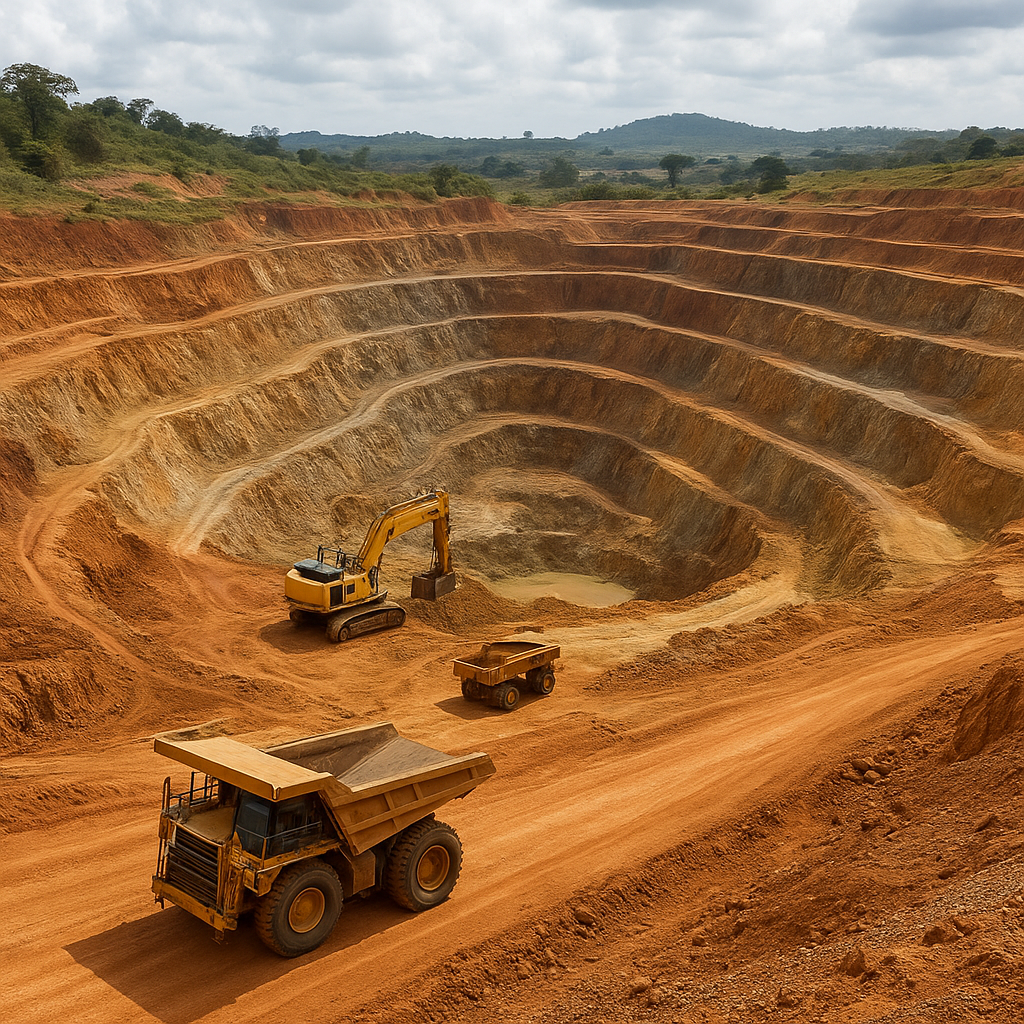
The Agbaou Mine is one of the notable gold-producing sites in West Africa, located within the borders of the Ivory Coast. Its presence reflects the country’s expanding role in the global gold market and demonstrates how modern extraction projects can shape local economies, infrastructure, and environmental practice. This article explores where Agbaou is located, what is extracted there, the mine’s economic importance, and a number of engaging facts and practical aspects that make Agbaou a subject of interest for analysts, investors, and local communities alike.
Location and geological context
The Agbaou Mine is situated in the southern-central part of the Ivory Coast, in a region characterized by lateritic soils, tropical forest and savanna transitions, and a complex geological history favorable to mineralization. The mine is accessible from national transportation routes and relies on regional infrastructure for the movement of personnel and materials.
Geologically, the Agbaou deposit is associated with greenstone belt-type mineralization and shear-hosted quartz veins, typical of many West African gold districts. Mineralization generally occurs in both oxide and sulphide zones, which influences the mining and processing methods used on site. The presence of weathered, near-surface oxide ore often allows for initial, lower-cost extraction using open-pit methods, while deeper or more refractory sulphide mineralization may require additional processing technologies.
What is produced and how it is processed
The primary product of the Agbaou Mine is gold. Extraction methods are oriented toward efficiently recovering gold from the types of ore present at the deposit. Typical operations at a site like Agbaou include:
- Surface mining with staged benches and haul roads to remove overburden and access ore.
- Crushing and grinding to reduce particle size and liberate gold-bearing minerals.
- On-site processing using conventional gold recovery techniques, often based on carbon-in-leach/carbon-in-pulp (CIL/CIP) circuits, which are well-suited to oxide and transitional ores.
- Tailings management and water recycling systems designed to minimize fresh water use and manage waste rock and tailings safely.
Operational details can vary with changes in ore characteristics during the mine life. For example, as operations progress from shallow oxide ore into deeper sulphide zones, processing circuits may require modification or augmentation, such as flotation to concentrate sulphide material prior to leaching, or the adoption of pressure oxidation or bio-oxidation methods for more refractory ore. Continuous metallurgical testing guides such adjustments to maximize recovery rates and economic return.
Economic significance
Gold mining at Agbaou contributes to several layers of economic activity in the Ivory Coast. At the national level, gold production supports export earnings and fiscal revenues through corporate taxes, royalties, and other government receipts. For a resource-rich economy seeking diversification beyond agriculture and traditional exports, the expansion of gold mining helps stabilize foreign exchange inflows and can improve the investment profile of the country.
Locally, the mine plays a role in employment and indirect economic multipliers. Direct jobs at the mine include positions in operations, engineering, maintenance, environmental management, and office administration. Indirect employment arises through contractors, transport providers, suppliers of goods and services, and small businesses that cater to mine workers and their families. The presence of a major industrial project often stimulates improvements in roads, power supply, and communications infrastructure that benefit surrounding communities.
Beyond wages and direct spending, mining projects commonly enter into community development agreements or social investment initiatives. These can include support for schools, health clinics, water and sanitation projects, agricultural training, and the creation of local procurement programs designed to increase the participation of small and medium enterprises in the mine’s supply chain.
Environmental management and social responsibility
Modern mining operations are expected to follow internationally recognized standards for environmental protection, health and safety, and social performance. At Agbaou, as at other responsible operations, environmental management focuses on minimizing the footprint of mining activities and mitigating potential impacts on water resources, soils, and biodiversity. Typical mitigation measures include:
- Progressive rehabilitation of disturbed land, including topsoil conservation, re-vegetation, and slope stabilization.
- Water management systems that control runoff, prevent contamination, and promote reuse in processing circuits.
- Tailings storage facilities designed, monitored, and maintained to prevent seepage, erosion, and failure.
- Air quality controls to reduce dust from haul roads and crushing circuits.
On the social side, engagement with local communities is a central component of sustainable mine management. Stakeholder consultation, grievance mechanisms, livelihood restoration programs, and local hiring initiatives are typical practices to build trust and ensure that benefits extend beyond the immediate workforce. Transparency in payments and community investments is increasingly important for maintaining a social license to operate.
Infrastructure and logistics
Although the Agbaou Mine benefits from its proximity to national road networks and regional hubs, reliable logistics remain a critical factor. Mining operations require steady supplies of fuel, reagents, spare parts, and other consumables. They also depend on secure routes to export refined or bullion product, either through domestic refineries or export terminals. Investment in transport infrastructure for heavy vehicles, and in on-site facilities such as power generation and water treatment plants, reduces operating risk and improves efficiency.
Power supply is often a central concern in remote or semi-remote mining districts. Some mines maintain hybrid systems combining connection to the national grid with on-site generation (diesel, gas, or increasingly solar) to manage costs, ensure continuity, and reduce greenhouse gas emissions. Water sourcing and conservation is equally critical; recycling rates in processing circuits can significantly reduce the need for fresh water abstractions and preserve local water resources for agricultural and domestic use.
Regulatory and investment context
Mining in the Ivory Coast operates under national mining laws and regulations that define licensing, environmental permitting, taxation, and community obligations. Investors consider the predictability and clarity of these regulatory frameworks when planning capital-intensive mining projects. Stability in the regulatory environment, together with clear fiscal terms and fair permitting timelines, attracts long-term investment and supports the expansion of exploration activities that can lead to new projects.
International standards and voluntary initiatives—such as the Extractive Industries Transparency Initiative (EITI) and environmental, social and governance (ESG) reporting—are increasingly shaping how mines are financed and operated. Compliance with best practices can lower the cost of capital, broaden access to international markets, and improve community relations.
Local impacts and community dynamics
For communities near Agbaou, the mine represents both opportunity and change. Employment opportunities and community investments can improve livelihoods, education, and health outcomes. However, such projects also bring challenges, including increased demand for housing and public services, possible disruption to agricultural land use, and social dynamics tied to an influx of outside workers.
Mitigating negative impacts requires proactive planning: transparent land access processes, fair compensation where displacement occurs, skills training for local residents, and mechanisms to prioritize local suppliers. Inclusive hiring policies and support for local entrepreneurs can amplify the economic benefits of the mine and reduce dependency on external labor.
Technological and operational highlights
Operational efficiency at Agbaou benefits from modern mining technology and best-practice processes. Examples include:
- Fleet management and mine planning software that improve haulage efficiency and reduce fuel consumption.
- Automated and remotely monitored instrumentation for water treatment, tailings monitoring, and environmental compliance.
- Metallurgical optimization programs that improve recovery rates and reduce reagent consumption.
- Initiatives to reduce greenhouse gas emissions, such as energy efficiency projects and renewable energy integration.
Adoption of such practices not only enhances profitability but also supports environmental goals and community expectations. The capacity to adapt process flows and implement incremental improvements over the life of a mine is central to sustaining returns and minimizing legacy liabilities.
Interesting facts and broader context
Agbaou is part of a larger narrative in West Africa where gold has emerged as a key mineral resource driving economic transformation for several countries. A few points of interest:
- The rise of gold mining in the region has encouraged greater geological exploration, leading to discovery of new deposits and the extension of mine lives through brownfields exploration.
- Gold operations often act as a catalyst for regional development, prompting investments in roads, telecommunications, and social infrastructure that can be leveraged by non-mining sectors.
- Responsible mine closure planning is an increasingly visible component of project design—planning for post-mining land use, community transition, and the long-term management of water and tailings facilities.
- Agbaou and similar projects highlight the complex balance between maximizing short- and medium-term economic benefits and ensuring long-term environmental stewardship and social resilience.
Future prospects and challenges
Looking ahead, the longevity and success of Agbaou depend on several variables. Exploration success in surrounding tenements can extend the economic life of the operation. Commodity price movements, particularly changes in the international gold price, directly affect project economics. Operational challenges such as maintaining high recovery rates, controlling costs, and managing environmental performance also influence viability.
Strategically, mines that invest in workforce training, local supplier development, and meaningful community partnerships tend to create more durable local benefits. Likewise, integrating sustainability principles into planning—reducing water and energy consumption, improving waste management, and enhancing biodiversity outcomes—reinforces social license and ensures that legacy considerations are addressed well before production ends.
Conclusion
The Agbaou Mine exemplifies the modern, mid-sized gold operation in West Africa: rooted in favorable geology, providing valuable economic contributions, and operating within a framework that increasingly emphasizes responsible environmental and social management. Its significance extends beyond the ounces of gold recovered each year to the infrastructure improvements, employment opportunities, and community investments it supports. As the mine continues its operational life, the interaction between efficient mining, sound environmental stewardship, and constructive community engagement will determine its long-term legacy in the Ivory Coast and the broader region.

