
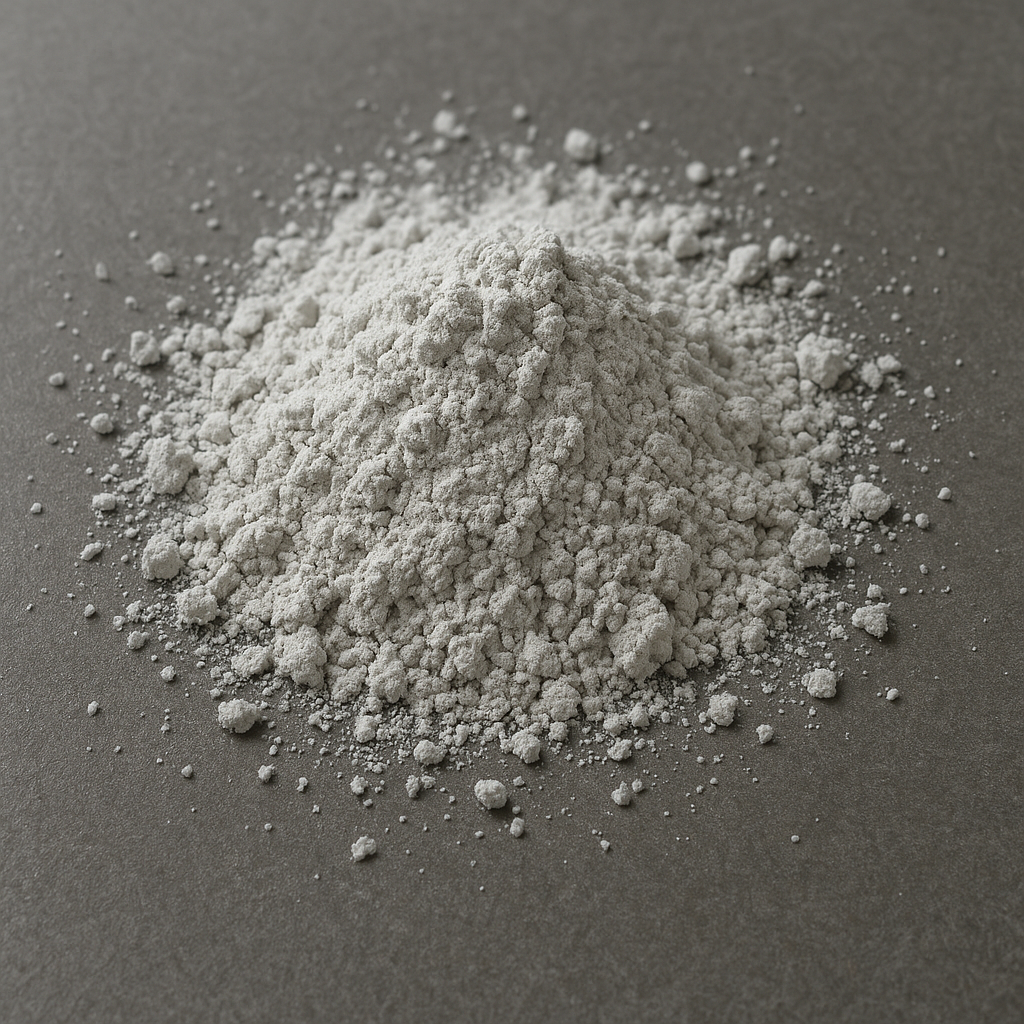
Praseodymium oxide is a member of the family of compounds formed by the rare-earth metal praseodymium and oxygen. It appears in several stoichiometries, most commonly as Pr6O11 (a mixed-valence oxide) and Pr2O3, and combines interesting magnetism, optical behavior and chemical reactivity that make it valuable across a range of modern technologies. This article examines where praseodymium oxide is found in nature and industry, how it is produced and processed, and the most compelling applications and ongoing research directions tied to this unusual oxide of a rare-earth element.
Occurrence, Mining and Primary Production
Praseodymium is not found as a native metal in nature; instead it occurs mixed with other lanthanides in mineral assemblages. The major sources of praseodymium-bearing ores are minerals such as monazite and bastnäsite, which are mined in several parts of the world. After extraction of the ore, a series of mineral processing steps separates the lanthanide fraction from thorium and other impurities.
Recovery of individual rare-earth elements, including praseodymium, relies heavily on solvent extraction and ion-exchange techniques. These separation chemistries exploit subtle differences in ionic radius and complexation behavior among the lanthanides. The processed praseodymium is typically converted into salts—commonly oxalates, carbonates or chlorides—which can be thermally decomposed or otherwise converted to produce the corresponding oxides such as Pr2O3 or Pr6O11.
- Primary mineral hosts: monazite, bastnäsite, xenotime in smaller proportions.
- Typical geographies: deposits in China, the United States, Brazil, Australia, India and others.
- Processing methods: cracking of ore, separation by solvent extraction, precipitation of individual rare earths, calcination to oxides.
Because praseodymium is almost always co-produced with other light lanthanides (lanthanum, cerium, neodymium), its availability is linked to the economics and geopolitics of the broader rare-earth industry.
Structure, Phases and Physical Properties
Praseodymium forms several oxide phases with distinct stoichiometries and properties. The two most studied ones are the sesquioxide Pr2O3 and the mixed-valence oxide Pr6O11. The non-stoichiometric or mixed-valence character of some praseodymium oxides arises from the ability of praseodymium to exist in more than one oxidation state—primarily +3 and +4—under different conditions.
Chemical and Crystallographic Features
- Pr2O3: typically a greenish-white powder in the cubic or hexagonal sesquioxide form; it features trivalent praseodymium and behaves as a basic oxide.
- Pr6O11: a brown or black mixed-valence oxide often written as PrO1.83 to emphasize non-stoichiometry; it contains both Pr3+ and Pr4+ and demonstrates oxygen vacancy behavior and good redox flexibility.
These structural differences lead to varied optical and electronic properties. The presence of localized 4f electrons in praseodymium ions gives rise to narrow absorption and emission bands (f–f transitions) that are central to optical uses. Electronically, praseodymium oxides are typically insulating to semiconducting, though defect chemistry and doping can tune conductivity.
Thermal and Mechanical Properties
Praseodymium oxides are refractory materials with relatively high melting points and thermal stability, which explains their use in high-temperature ceramics and as components in specialized coatings. They are chemically robust in neutral environments but can be reactive in the presence of strong acids or reducing atmospheres, where valence changes become important.
Applications and Technological Uses
Praseodymium oxides and praseodymium-doped materials find use across several industrial and scientific domains. While not as widely used as cerium oxide, praseodymium oxide offers unique combinations of optical, chemical and electronic properties that are exploited in targeted applications.
Glass and Ceramics
One of the best-known uses of praseodymium compounds is as a glass coloring agent. Small additions of praseodymium oxide impart yellow to green hues to glass and are used to produce specialty optical glasses, including filters and decorative glass. In ceramics, praseodymium oxide can be incorporated as a pigment or functional additive, altering color and thermal/mechanical behavior.
Catalysis and Surface Chemistry
Because of its mixed-valence behavior, Pr6O11 exhibits interesting redox chemistry that makes it a candidate for oxidation catalysts, oxygen-storage materials and promoter components in catalytic formulations. Research explores praseodymium-containing oxides in oxidative catalysis for hydrocarbons, CO oxidation, and as modifiers of active phases to enhance durability or selectivity. In many catalytic systems, praseodymium is considered for tuning oxygen vacancy concentrations and surface reactivity.
Permanent Magnets and Metal Alloys
Praseodymium metal, often derived from the oxide, is an important alloying element in high-performance permanent magnets—particularly in Nd–Fe–B-type magnets where praseodymium partially substitutes for neodymium to tailor magnetic properties and temperature stability. Although the oxide itself is not the magnet material, it is the oxide-to-metal production chain that underpins this critical application.
Optical Materials, Lasers and Phosphors
Praseodymium ions (Pr3+) have sharp electronic transitions inside the 4f shell that produce distinct emission and absorption lines across the visible and near-infrared. This behavior is exploited in:
- Pr-doped lasers and solid-state gain media (e.g., praseodymium-doped YAG or fluoride glass) producing visible laser lines.
- Praseodymium-doped fiber amplifiers and specialty optical fibers, particularly in fluoride glass matrices, used for certain wavelength regions.
- Phosphors and luminescent materials where Pr3+ provides characteristic emission useful in displays, lighting or sensing.
Energy and Electrochemical Devices
In energy technologies, praseodymium-containing oxides are being investigated for components of solid oxide fuel cells (SOFCs) and oxygen-permeable membranes. Complex perovskite phases containing praseodymium (e.g., praseodymium cobaltates and praseodymium-based mixed-conductors) show promising mixed ionic-electronic conductivity and catalytic activity for oxygen reduction and evolution reactions. This makes them potential cathode materials or functional layers in electrochemical devices.
Emerging Uses: Nanomaterials and Thin Films
Nano-sized praseodymium oxide particles and thin films are an active area of research. At the nanoscale, surface area and defect chemistry amplify catalytic and optical effects, and tunable synthesis yields particles for sensors, catalytic supports, and experimental biomedical applications. Thin films of praseodymium oxides are investigated for electronics—particularly as dielectric layers or as part of oxide heterostructures exhibiting novel electronic phases.
Synthesis, Processing and Handling
Praseodymium oxides are produced by thermal decomposition (calcination) of praseodymium salts such as oxalates or carbonates. Control of atmosphere, temperature and precursor chemistry allows tailoring of phase, particle size and oxidation state. Typical routes include:
- Precipitation of praseodymium hydroxide or oxalate from aqueous solutions followed by drying and calcination to yield Pr2O3 or Pr6O11 depending on conditions.
- Controlled oxidation of Pr2O3 to obtain Pr6O11 by heating in air; reduction under hydrogen can shift the balance back toward lower oxidation states.
- Sol–gel and combustion syntheses that produce fine powders and enable doping or formation of composite oxides.
- Thin film deposition by pulsed laser deposition (PLD), sputtering, chemical vapor deposition (CVD) and atomic layer deposition (ALD) for electronic and optical applications.
Handling praseodymium oxides in the laboratory or plant environment requires attention to dust control, proper personal protective equipment and appropriate waste treatment. While praseodymium compounds are not among the most toxic elements, inhalation of fine powders and uncontrolled environmental release should be minimized.
Interesting Chemistry and Research Directions
Several aspects of praseodymium oxide chemistry make it a fertile ground for academic and applied research:
Mixed Valence and Oxygen Non-stoichiometry
The coexistence of Pr3+ and Pr4+ in Pr6O11 and related phases creates dynamic redox chemistry with implications for oxygen storage capacity and catalytic reactivity. Controlling oxygen vacancies enables tuning of electronic conductivity and catalytic sites, which is central to developing functional oxides for energy conversion.
Strongly Correlated Electrons and Magnetism
Praseodymium ions with partially filled 4f shells contribute to complex magnetic and electronic behavior in oxide lattices. In some praseodymium-containing perovskites and layered oxides, low-temperature magnetic ordering and unusual transport phenomena have been observed. These effects are of interest both for fundamental condensed-matter studies and for potential device applications in spintronics.
Nanoengineering and Surface Functionalization
At the nanoscale, praseodymium oxide particles exhibit enhanced surface reactivity useful for catalysis and sensing. Functionalization with other oxides or metals can yield hybrid materials where praseodymium oxide promotes specific redox cycles or stabilizes active phases. Research explores controlled morphologies (nanorods, nanocubes, porous frameworks) that maximize active surface area and tune electronic properties.
Optical Tailoring and Photonic Devices
Doping glass and crystal matrices with Pr3+ ions opens up many possibilities in photonics. The narrow linewidths of f–f transitions, combined with host-dependent lifetimes and cross-relaxation processes, enable design of wavelength-specific emitters and absorbers. Investigations aim to optimize host materials, reduce non-radiative losses, and integrate praseodymium-doped components into compact photonic systems.
Environmental, Health and Economic Considerations
Mining and processing of rare-earth elements pose environmental challenges: radioactive impurities in monazite (thorium), large volumes of waste streams, and chemical residues from solvent extraction. Responsible production practices aim to reduce environmental footprint and recover critical byproducts. From a health standpoint, praseodymium oxides are handled as dust hazards; standard occupational safety measures (ventilation, dust collection, respirators when necessary) are advised.
Economically, praseodymium is a strategic element because of its role in permanent magnets and specialty materials. Market dynamics are influenced by supply chain concentration, recycling of rare-earth magnets and the development of substitutes or reduced-rare-earth formulations. Recycling of praseodymium from end-of-life magnets and electronic waste is an important emerging sector that could improve long-term availability.
Practical Notes and Tips for Researchers and Engineers
- When synthesizing a specific oxide phase, carefully control the calcination atmosphere and temperature: air favors higher oxidation states while inert or reducing atmospheres stabilize Pr2O3.
- To probe oxidation state and defect chemistry, use techniques such as X-ray photoelectron spectroscopy (XPS), X-ray absorption near-edge structure (XANES) and electron paramagnetic resonance (EPR).
- For optical applications, select the host matrix (oxide, fluoride, crystal) to minimize phonon quenching and optimize radiative lifetimes of Pr3+ transitions.
- In catalytic formulations, consider mixing praseodymium oxide with ceria or transition-metal oxides to combine oxygen storage properties with active redox centers.
Notable Examples and Case Studies
Several real-world materials and device concepts illustrate the versatility of praseodymium oxides and praseodymium-containing phases:
- Praseodymium-doped fluoride glasses producing visible laser emission lines used in research-grade lasers and photonics experiments.
- Perovskite-type cathodes incorporating praseodymium for solid oxide fuel cells, where the material’s mixed conductivity improves performance at intermediate temperatures.
- Permanent magnet alloys where praseodymium metal (derived from oxide) optimizes coercivity and temperature coefficients for motors and generators.
These examples highlight how praseodymium oxide is not only a chemical curiosity but a practical component bridging mineral extraction to high-technology systems.
Final Thoughts on Future Potential
Interest in nanoparticles, advanced energy materials and photonic devices ensures that praseodymium oxide will remain a material of study and selective application. Whether as a component in catalysts, a dopant in optical media, or a feedstock for alloys that power modern electrification, the interplay of its redox flexibility, optical signature and structural diversity gives praseodymium oxide a distinctive niche among the rare-earth oxides. Continued improvements in synthesis, recycling and environmental management will shape how extensively praseodymium oxide features in next-generation technologies.