Zinkenite is a striking and intriguing mineral belonging to the class of complex sulfosalts. With a metallic sheen, elongated crystals and a chemical composition dominated by lead, antimony and sulfur, zinkenite attracts the attention of mineralogists, collectors and economic geologists alike. This article explores its chemistry and appearance, the geological environments where it forms, practical and scientific applications, and several fascinating aspects of its crystal chemistry and secondary alteration. The goal is to provide a solid, engaging overview of a mineral that serves both as an ore indicator and an object of scientific curiosity.
Composition, appearance and physical properties
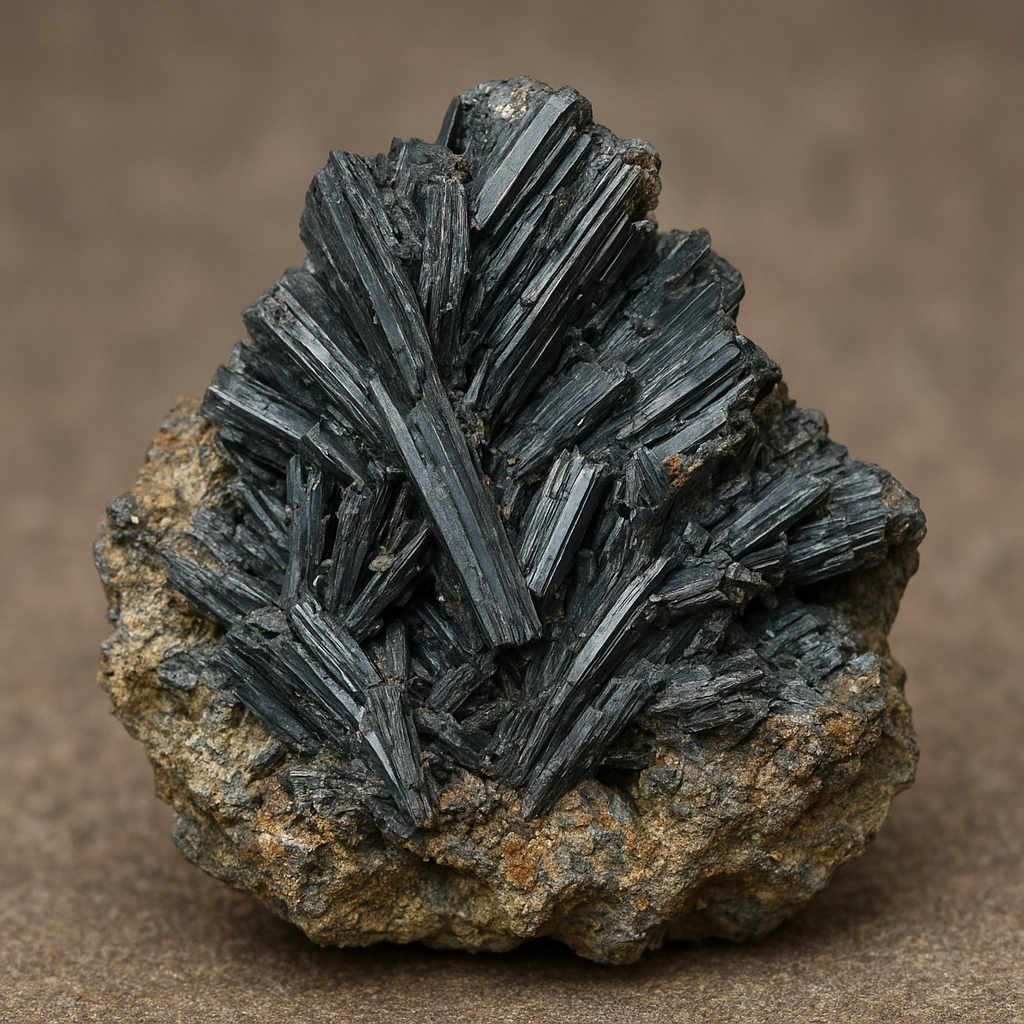
Zinkenite is a lead–antimony sulfosalt whose approximate chemical formula can be written as Pb9Sb22S42. This composition places it among the more complex sulfosalts, minerals that commonly combine a heavy metal such as lead with semimetals like antimony (or arsenic) and sulfur to produce intricate crystal structures. Zinkenite typically displays a metallic to semi-metallic luster and a lead-gray to black color; surfaces may show subtle brownish or reddish tarnish from surface oxidation.
Common habits include elongated, prismatic or acicular crystals that form radiating aggregates, fibrous masses or columnar clusters. Well-formed crystals can be slender and needlelike, sometimes exhibiting twinning or intergrowths with other sulfosalts. The mineral is relatively soft, with a Mohs hardness typically in the low single digits, and is notably dense due to its large proportion of heavy metals; specific gravity values are generally high compared with many rock-forming minerals.
Under the microscope and in polished section, zinkenite shows complex internal textures and reflectance contrasts with associated phases. Electron microscopy and X-ray diffraction studies have revealed the intricate arrangements of Pb and Sb atoms that give sulfosalts their structural complexity; such arrangements often produce characteristic cleavage and fracture behavior in hand specimen.
Where zinkenite forms — geological settings and notable localities
Zinkenite is most commonly encountered in hydrothermal vein deposits formed at relatively low to medium temperatures. These veins are typically part of polymetallic systems that concentrate lead, antimony, silver and other sulfide minerals. Zinkenite often occurs together with galena (lead sulfide), pyrite, sphalerite, stibnite, boulangerite, jamesonite, tetrahedrite and other sulfosalts. It can be found in both massive veins and in stringer zones where late-stage hydrothermal fluids precipitated sulfosalts in open spaces and fractures.
Although zinkenite is not a globally abundant mineral, it has been recorded from many classic ore provinces. Well-known occurrences include historical mining districts in Europe, such as parts of Germany (Harz region and other historic silver–lead–antimony mines) and Romania, as well as numerous localities in the Americas — Mexico, Bolivia, Peru and the western United States. Fine specimens have also come from Cornwall and other old mining areas in the United Kingdom, where sulfosalt minerals are common in hydrothermal vein systems.
The mineral typically forms in the late stages of vein evolution, when the composition of the fluid evolves to favor sulfosalt stability over simpler sulfides. Temperatures of formation are commonly in the range considered low-to-moderate for hydrothermal systems (roughly 100–300 °C), although exact conditions vary with the host rock, fluid chemistry and pressure.
Economic and practical uses
Zinkenite has no large-scale industrial use because it is relatively rare and usually present in small amounts within polymetallic ores. Nonetheless, it carries economic significance in several ways:
- Ore indicator: In ore exploration, the presence of zinkenite can signal enrichment in antimony and lead. Antimony, in particular, is a commodity metal used in flame retardants, batteries, some alloys, and specialized electronic applications. Finding zinkenite in a geological setting often prompts geologists to investigate the potential for recoverable quantities of antimony and associated metals.
- Source of antimony and lead: In some deposits where zinkenite is abundant, it contributes to the overall metal inventory that is processed during ore beneficiation and smelting. Historically, some antimony and lead have been recovered from sulfosalt-rich ores, though processing complex sulfosalts can be more challenging than treating simpler sulfides.
- Scientific and educational value: Zinkenite specimens are valued by mineral collectors and museums for their unusual crystal habits and metallic appearance. High-quality samples can be displayed as representatives of sulfosalt mineralogy and used for teaching crystallography, ore-paragenesis and mineral alteration processes.
Processing sulfosalt-rich ores poses metallurgical challenges because complex atomic arrangements and intimate intergrowths with other minerals can reduce the efficiency of conventional flotation and smelting routes. Modern extractive metallurgy sometimes employs specialized roasting, leaching, or pressure oxidation approaches to liberate target metals, but the economics depend strongly on metal concentrations and market prices.
Crystal chemistry and research interest
Sulfosalts such as zinkenite have long captured research interest because of the remarkable complexity of their crystal structures. At the atomic level, sulfosalts often display ordered arrangements of metal and semimetal atoms within frameworks of sulfur, producing modular structural motifs that can repeat and intergrow in many ways. Zinkenite’s structure exemplifies how multiple cation sites and mixed-valence behavior can generate long-period or modulated structures, leading to interesting physical properties and distinct habits.
Modern techniques — including high-resolution transmission electron microscopy (HRTEM), single-crystal X-ray diffraction and electron probe microanalysis (EPMA) — allow mineralogists to explore subtle compositional zoning, exsolution textures and nanoscale inclusions that reveal a mineral’s thermal and chemical history. Zinkenite studies contribute to broader understanding of ore genesis, element mobility in hydrothermal systems and the conditions that favor sulfosalt formation over other sulfide minerals.
Another scientific angle involves the oxidation and weathering of zinkenite-bearing ores. On exposure to oxygenated fluids, zinkenite may alter to secondary phases such as anglesite (lead sulfate), cerussite (lead carbonate), and various antimony oxy-hydroxides and sulfates. These weathering products control the mobility of toxic elements in mine wastes and thus are important in environmental mineralogy and remediation studies.
Handling, hazards and collecting considerations
Because zinkenite contains appreciable amounts of lead and antimony, it is important to approach specimen handling with care. Although intact crystals are not immediately dangerous, prolonged exposure to dust or ingestion of mineral particles can be harmful. Guidelines for collectors and curators include:
- Wash hands after handling specimens and avoid touching face or food while handling minerals.
- Use gloves and a mask if cutting, grinding or polishing specimens to minimize inhalation of dust.
- Store specimens in labeled containers to prevent accidental exposure and to document provenance and associations for future study.
For museums and academic collections, zinkenite specimens are valuable both scientifically and aesthetically. Proper labeling with locality, paragenesis (the mineral assemblage and sequence of formation), and any analytical data enhances the specimen’s research utility. Collectors prize well-crystallized zinkenite samples, particularly those that show attractive radiating groups or contact relationships with contrasting minerals such as galena or stibnite.
Interesting aspects and wider context
Several features make zinkenite an interesting mineral beyond its immediate economic associations:
- Structural complexity: The mineral is an excellent example of how relatively simple chemical components can combine into a structurally complex phase. This complexity underpins research into crystallographic ordering, polysomatism and modulation in minerals.
- Paragenetic clues: Zinkenite’s occurrence late in vein sequences helps geologists reconstruct the evolving composition and temperature of the hydrothermal fluid. Mapping zonation of zinkenite versus earlier sulfides (e.g., galena or sphalerite) informs models of ore formation and can guide exploration strategies.
- Collector appeal: Attractive metallic prismatic crystals and uncommon habits make zinkenite desirable to specialist collectors. Fine specimens that preserve sharp crystal outlines and clear intergrowth textures with associated minerals are particularly prized.
- Environmental relevance: Because it contains toxic metals, zinkenite and its weathering products are relevant in studies of mine drainage, contaminant mobility and remediation design. Understanding natural attenuation and secondary mineral formation is essential for managing legacy mining sites where sulfosalts were concentrated.
From a cultural perspective, minerals like zinkenite remind us that ore deposits are complex archives of geochemical processes. They record fluid compositions, temperature changes and tectonic events that occurred over geological timescales. Each sulfosalt-bearing vein is, in a sense, a natural laboratory that archives the interplay of chemistry and geology.
Final notes
Although zinkenite is not a common ore mineral at the scale of industrial mining, it occupies a distinctive niche: a visually and structurally compelling sulfosalt that informs both economic geology and fundamental mineralogical research. Its metallic crystals and intimate associations with other sulfides make it a useful indicator in the field, while its chemical complexity challenges scientists to refine models of atomic ordering and mineral stability. Whether admired in a cabinet of specimens or studied under the microscope, zinkenite remains an instructive and visually appealing member of the sulfosalt family.