
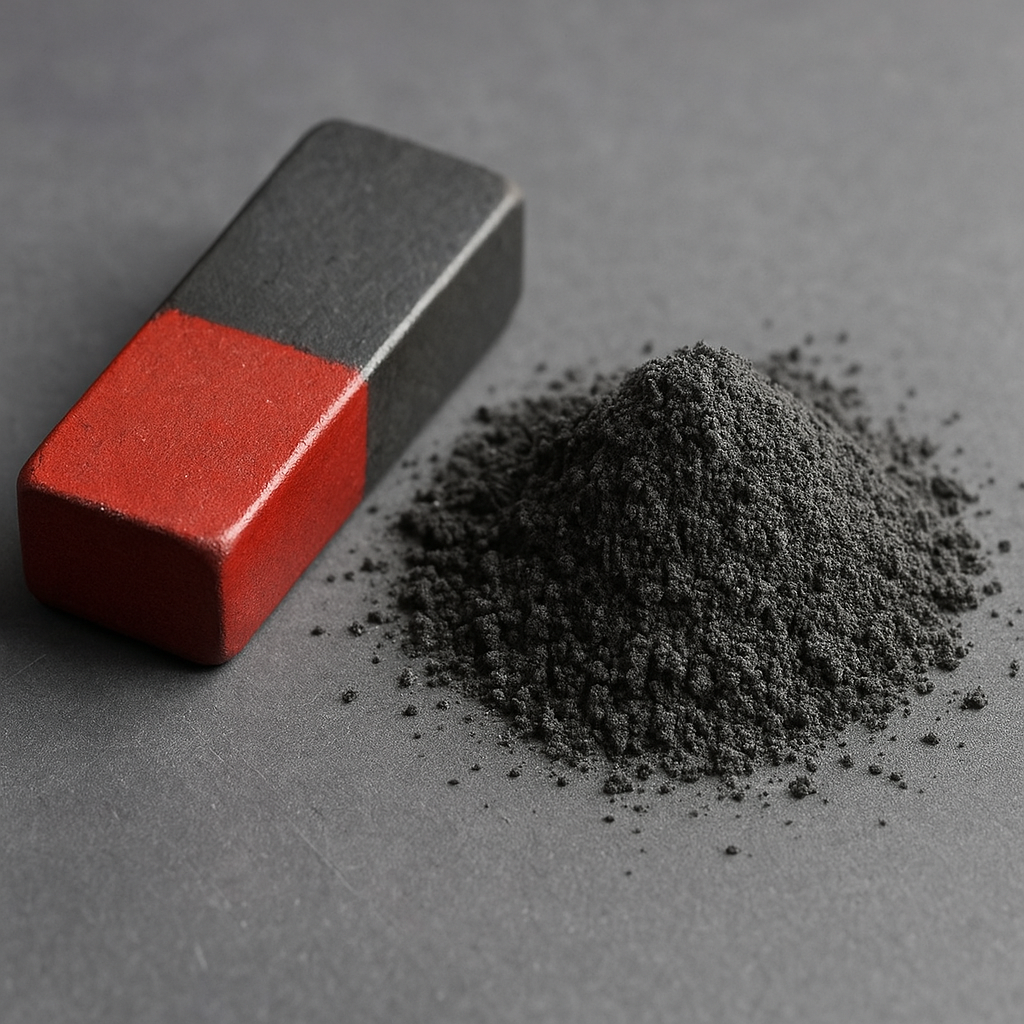
Neodymium Iron Boron magnets are among the most powerful permanent magnets available today, underpinning a wide range of modern technologies from small consumer electronics to large-scale renewable energy systems. This article explores what these magnets are made of, where the raw materials come from, how the magnets are manufactured and used, and the environmental, economic and technological issues connected to their production and disposal. Along the way you will find technical details, practical applications and some lesser-known facts that illustrate why Neodymium Iron Boron has become central to the electrification and miniaturization trends of the 21st century.
What Neodymium Iron Boron actually is
At its core, Neodymium Iron Boron is a family of permanent magnets based on the crystalline phase Nd2Fe14B. The material combines Neodymium (Nd), a rare-earth element, with iron (Fe) and a small amount of boron (B) to form an intermetallic compound that exhibits very high magnetic performance. Key magnetic properties include high remanence (Br), which measures the magnet’s ability to retain magnetization, and high intrinsic coercivity (Hci), which resists demagnetization. Together these properties give NdFeB magnets a much higher energy product (BHmax) than traditional ferrite or AlNiCo magnets.
Composition and grades
NdFeB magnets are not a single composition but come in various grades, typically named N followed by a number (for example N35, N52). The number roughly correlates to the maximum energy product expressed in Mega-Gauss-Oersteds (MGOe); higher numbers indicate stronger magnets. Manufacturers also produce variants with added elements such as dysprosium (Dy) or terbium (Tb) to improve high-temperature performance and coercivity.
- Alloys: Primary phase Nd2Fe14B; small additions of heavy rare-earths (HREs) like Dy increase coercivity.
- Sintered vs bonded: Sintered NdFeB has higher performance; bonded (polymer-bound) NdFeB allows complex shapes and lower-cost machining.
- Coatings and platings (nickel, epoxy, gold) are common to reduce corrosion susceptibility.
Where the materials occur and how they are sourced
Although called rare-earth elements, neodymium is relatively abundant in the Earth’s crust compared with precious metals. However, it does not occur in high-concentration deposits and is usually extracted from minerals like bastnäsite, monazite and xenotime. The global industry that supplies neodymium and other rare-earth elements is concentrated geographically and technologically complex.
Primary sources
- China: Historically dominant in both mining and processing of rare-earths, with major production from Bayan Obo and other sites.
- United States: Mountain Pass (California) has been a significant source after periods of inactivity and investment to restart production and processing.
- Africa and Australia: Countries like Burundi, Malawi, South Africa, and Australia have rare-earth deposits and expanding projects.
Processing and refinement
Raw ores must be separated and refined into individual rare-earth oxides (REOs) through chemical processing that involves crushing, flotation, acid leaching and solvent extraction. Refining REOs into metallic neodymium requires further metallurgical steps. These processing stages can be environmentally intensive and are a major reason why the industry is localized: both capital and environmental controls are necessary to responsibly produce Nd feedstock.
Supply chain considerations
The supply chain for NdFeB magnets includes mining, chemical separation, metal production, alloying, magnet manufacturing, and end-use assembly. Because some high-performance magnets use heavy rare-earths like dysprosium to maintain coercivity at elevated temperatures, geopolitical risk and price volatility can affect magnet costs and availability. Countries and companies are investing in diversification, stockpiling, and recycling programs to mitigate these risks. Many companies also pursue vertical integration to control more stages of the value chain.
Manufacturing processes and material science
Producing NdFeB magnets is a multi-step metallurgical and mechanical process that converts refined metals into dense, magnetically aligned components.
Major production routes
- Melting and casting: Raw metals are melted in vacuum induction furnaces and cast into ingots.
- Powdering: Ingots undergo hydrogen decrepitation or melt spinning to produce fine magnetic powders.
- Pressing and aligning: Powder is compacted in a magnetic field to align magnetic grains, crucial for maximizing remanence.
- Sintering: Compacted parts are sintered at high temperature to densify the material and form the Nd2Fe14B phase.
- Heat treatment: Tailors magnetic and mechanical properties through controlled annealing.
- Coating: To prevent corrosion, magnets receive protective layers like nickel-copper-nickel, epoxy, or gold plating.
Sintered vs bonded magnets
Sintered NdFeB magnets offer the highest magnetic strength and are widely used in applications where performance per unit volume matters. Bonded NdFeB magnets, made by mixing magnetic powders with a polymer binder, allow for complex shapes, near-net-shape molding, and lower-cost machining. Bonded magnets typically have lower magnetic densities but can be used where shape flexibility and cost are prioritized.
Key material challenges
- Corrosion: NdFeB is prone to oxidation and corrosion; coatings are essential for durability.
- Temperature sensitivity: Without heavy rare-earth additions, coercivity declines at elevated temperatures, limiting some applications.
- Machining hazards: Grinding and machining produce fine particulate that is pyrophoric and requires careful handling.
Applications across industries
The extraordinary power-to-weight ratio of NdFeB magnets has enabled significant improvements in many devices and systems. Below are major application areas with examples of how the magnets are used.
Transport and electrification
- Electric vehicles (EVs): Permanent magnet synchronous motors (PMSMs) often use NdFeB magnets for high torque and compact motor design.
- Hybrid vehicles: Regenerative braking systems and compact motors benefit from strong NdFeB magnets.
- Rail and aerospace: Weight-sensitive systems use NdFeB where strong magnetic fields reduce mass and volume.
Renewable energy
Wind turbine generators, particularly direct-drive and permanent-magnet generators, increasingly rely on NdFeB magnets to reduce mechanical complexity and increase efficiency. Using strong permanent magnets allows for fewer moving parts and smaller nacelle sizes, helping to lower maintenance costs and improve reliability.
Consumer electronics and audio
- Hard disk drives (HDDs) and actuators: NdFeB magnets enable precise positioning in read/write heads.
- Smartphones and earbuds: Tiny but powerful magnets help miniaturize speakers, microphones, and vibration motors.
- Speakers and headphones: High magnetic flux densities enable compact transducers with improved sound quality.
Industrial and medical devices
- Motors and sensors: High-power density motors and precision sensors for automation benefit from NdFeB.
- Magnetic resonance and medical instruments: While large MRI systems use superconducting magnets, NdFeB is used in smaller medical devices, surgical tools, and magnetic separators.
- Magnetic couplings and bearings: NdFeB enables contactless torque transfer in sealed environments.
Environmental, economic and geopolitical issues
Because NdFeB magnets depend on rare-earth elements, their lifecycle raises several intertwined issues: environmental impact from mining and processing, market concentration and geopolitical leverage, and the challenge of recycling and substitution.
Environmental concerns
Mining and chemical separation of rare-earth ores can produce tailings, acidic wastewater, and radioactive residues (from associated thorium and uranium in some ores) if not managed properly. Cleaner production techniques, regulatory enforcement and modern processing plants reduce these risks but require capital and oversight. Manufacturing magnets also involves hazardous dust and waste streams that must be controlled.
Recycling and circularity
NdFeB magnets are theoretically recyclable, but practical recycling rates remain low due to technical and economic barriers. Recovering neodymium and other rare-earths usually involves dismantling, demagnetization, chemical treatment (hydrometallurgical or pyrometallurgical routes), and reprocessing to metallic form. The most promising approaches prioritize direct reuse of magnet material (remanufacturing or re-magnetization) or efficient separation processes that preserve value.
- Hydrometallurgy: Leaching followed by solvent extraction can separate REEs from scrap.
- Re-use strategies: Shredding and re-sintering or bonded approaches can reintroduce material into production.
Geopolitics and supply security
The concentration of processing capability in a few countries has led to strategic concerns. Supply disruptions, export restrictions, or sudden price spikes can affect manufacturers worldwide. These risks drive policies to diversify supply chains, invest in domestic processing capacity, and develop substitution strategies that reduce reliance on heavy rare-earths.
Alternatives and strategies to reduce dependency
To mitigate supply and environmental risks, several strategies are pursued by industry and researchers:
- Material substitution: Using ferrite, AlNiCo, or samarium-cobalt (SmCo) magnets where possible despite trade-offs in performance.
- Design optimization: Reducing magnet use through improved magnetic circuit design or demagnetization-resistant geometries.
- Heavy rare-earth minimization: Developing high-coercivity NdFeB formulations that avoid dysprosium by microstructural control and grain-boundary engineering.
- Recycling and urban mining: Scaling scrap collection and efficient recovery technologies to recapture valuable rare-earths.
Research directions
Active research areas include developing NdFeB magnets with reduced HRE content, novel coatings to improve high-temperature stability, and additive manufacturing processes to produce complex magnet geometries. Computational materials science and machine learning accelerate alloy and process optimization, potentially yielding magnets with higher temperature tolerance and lower reliance on scarce elements.
Interesting and lesser-known facts
Beyond technical details, several facts highlight the cultural and economic significance of NdFeB magnets:
- Small but mighty: A single modern NdFeB magnet can lift hundreds of times its weight; this dramatic power-to-weight ratio enabled the rapid miniaturization of many devices.
- Hidden value in waste: Old hard drives, electric motors and even dishwashers contain NdFeB magnets; establishing efficient recycling pathways can unlock a substantial secondary supply.
- Specialty grades for extreme conditions: Magnets used in aerospace or military applications are often tailored with added rare-earths and protective coatings to survive extreme temperatures and corrosive environments.
- Pyrophoric dust hazards: During machining, NdFeB particles can ignite spontaneously if not properly collected and passivated — a practical reason for controlled manufacturing environments.
- Innovation in coatings: Researchers have developed thin ceramic and metallic coatings that extend magnet life in harsh chemical or marine environments, increasing their suitability for offshore wind or marine propulsion.
Practical guidelines for engineers and designers
When designing with NdFeB magnets, several practical considerations help maximize performance and longevity:
- Understand operating temperature: Select grades or heavy-rare-earth-enriched variants if the application encounters high temperatures.
- Allow for corrosion protection: Select appropriate coatings and consider environmental sealing when magnets are exposed to moisture or chemicals.
- Magnetic circuit design: Use flux concentrators and proper gap design to achieve desired field strengths while minimizing magnet volume.
- Safety and handling: Implement dust control and proper storage to prevent accidental ignition of fine particles; label and instruct maintenance personnel about strong magnetic fields.
- Plan for end-of-life: Design assemblies to facilitate magnet removal for recycling and consider the economic trade-off of magnet salvage.
Future prospects
The role of NdFeB magnets is likely to expand with global trends toward electrification, miniaturization and renewable energy deployment. Improvements in magnet formulations, manufacturing efficiency, recycling technologies and supply diversification can reduce environmental impacts and geopolitical vulnerability. Emerging manufacturing techniques such as additive manufacturing and improved bonded magnet processes may open new design freedoms that further embed NdFeB in advanced technologies.
Whether driving the rotor of an electric car, generating electricity in a wind turbine, or producing rich sound in a compact speaker, NdFeB magnets are central components of modern technological infrastructure. Their combination of magnetic strength, versatility and evolving supply-chain dynamics ensures that the material will remain a focal point of materials science, industrial strategy and sustainability efforts for years to come.