
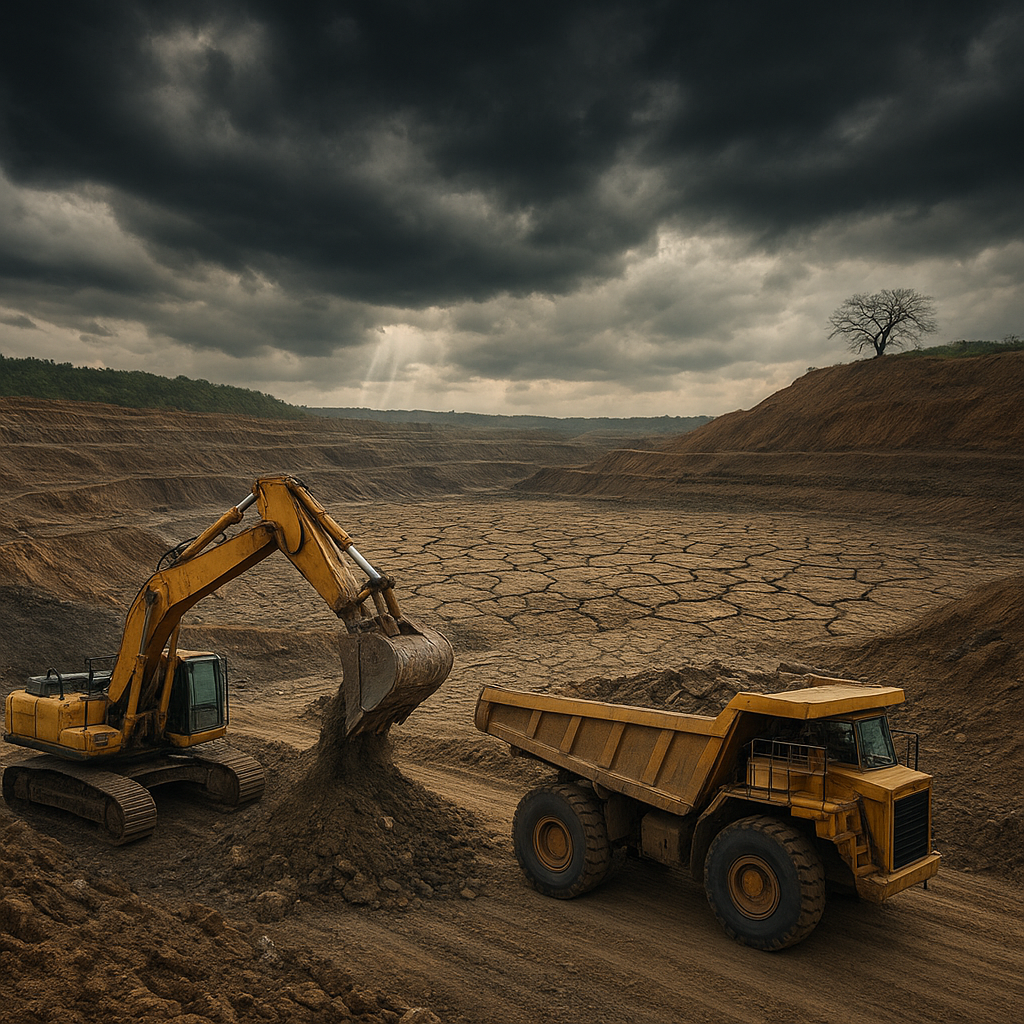
Climate change is reshaping the context in which mineral extraction operates, creating a cascade of challenges and opportunities for miners, host communities, regulators and investors. This article examines how shifting climates influence the physical environment of extraction sites, the availability and quality of critical resources, the resilience of logistical and processing systems, and the social and regulatory landscape that governs mining activity. Highlighted are practical strategies for reducing risk and seizing innovation-driven advantages as the industry adapts to a warmer, more volatile world.
Physical impacts on extraction sites and mine life
The direct, on-the-ground effects of a changing climate can be dramatic. Rising temperatures, altered precipitation patterns and the increasing frequency of extreme events destabilize the geological and engineering conditions upon which mines depend. Permafrost thaw in Arctic and sub-Arctic operations undermines foundations and access roads, accelerating ground subsidence and increasing maintenance demands. In temperate regions, heavier rainfall events exacerbate slope failures, erode waste rock piles and threaten tailings storage integrity.
Geotechnical stability and tailings management
Tailings dams and waste rock facilities were typically designed using historical climatic baselines. With more intense precipitation and shifts in freeze–thaw cycles, many of those baselines are no longer reliable. Operators face higher repair costs, reduced operational windows and greater safety oversight. Reinforcing containment systems, improving water diversion and updating design criteria to reflect future climate scenarios are essential.
Heat, dust and worker safety
Warmer average temperatures and more heatwaves increase heat-stress risks for workers, reducing productivity and elevating health costs. Conversely, lower humidity and stronger winds can increase dust generation, complicating air quality management and requiring enhanced dust suppression systems. Both trends force reconsideration of site scheduling, sheltering, cooling systems and personal protective strategies.
Water, hydrology and processing constraints
Water is a critical input for most mineral processing operations. Changing hydrological patterns create two contrasting but equally serious problems: scarcity and excess. In some jurisdictions, prolonged droughts limit the volume of freshwater available for ore processing, dust control and community needs. In other regions, flash floods and persistent heavy rains overwhelm drainage systems, contaminating rivers and wetlands with suspended solids and process chemicals.
- water scarcity can curtail production, force expensive water recycling investments and heighten competition with local users.
- In flood-prone areas, contamination risks increase, triggering costly remediation obligations and reputational damage.
To manage these dynamics, operators are adopting closed-loop processing, investing in desalination where coastal, and optimizing tailings paste or dry stacking technologies that reduce water demand and lower downstream risks. Strategic water management must also be integrated with community needs and watershed-scale planning to avoid exacerbating local shortages.
Extreme weather, logistics and supply chains
Extreme weather events disrupt the movement of ores, reagents and finished products, affecting both short-term flows and long-term supply reliability. Ports, rail lines and highways are vulnerable to flooding, erosion and storm damage. Remote operations that rely on seasonal ice roads or a single access route face heightened operational risk when those links become unreliable.
- Damage to infrastructure raises immediate repair costs and can halt production for extended periods.
- Insurance premiums increase, and in some cases, coverage becomes unavailable for assets in high-risk zones.
- supply chains become less predictable, amplifying price volatility for commodities and essential inputs.
Firms are responding by diversifying transport routes, investing in resilient on-site stockpiles, renegotiating contract terms to include climate-based contingencies, and collaborating with logistics providers to enhance redundancy.
Economic, market and regulatory pressures
Climate change is not just a physical threat; it is reshaping market expectations and regulatory landscapes. Governments and investors increasingly price in climate risk, while carbon-reduction policies and disclosure requirements are evolving rapidly. These shifts affect capital availability, project valuation and operating costs.
- emissions reporting and mitigation requirements may impose additional investment in cleaner energy sources, process improvements and carbon offsets.
- Financial institutions are tightening lending criteria, often requiring rigorous climate risk assessments and transition plans before financing projects.
- Commodity markets respond to perceived supply vulnerabilities, sometimes rewarding operators who demonstrate robust innovation and climate-resilient practices.
Mining companies must therefore factor climate considerations into project feasibility studies, explore low-carbon energy options, and engage proactively with regulators to shape pragmatic, science-based policy frameworks.
Environmental and social consequences
Climatic shifts compound the ecological footprint of mining. Altered runoff regimes, increased erosion and changing habitats can magnify impacts on local flora and fauna. In regions where biodiversity is already stressed, mining can tip systems toward irreversible change.
- Shifting species ranges and phenology disrupt ecological services that communities depend upon.
- Increased contamination events undermine trust between miners and host communities, elevating conflict potential and the risk of project stoppage.
- Indigenous communities and other vulnerable groups often bear disproportionate impacts due to their dependence on local ecosystems and limited adaptive capacity.
Robust environmental assessment must therefore incorporate climate scenarios and cumulative effects. Adaptive management, co-designed monitoring with local stakeholders, and investment in ecosystem restoration increase social license to operate and reduce long-term liabilities.
Adaptation, mitigation and innovation pathways
Addressing climate-related risks requires an integrated approach that couples technical measures with governance, finance and community engagement. Central to adaptation is enhancing resilience at multiple scales—from mine-site engineering to regional water governance.
Engineering and operational responses
- Redesigning infrastructure for higher loads and variable conditions, including elevated roadbeds, reinforced tailings facilities and flexible power systems.
- Implementing water-efficient processing, closed-loop circuits and alternative tailings technologies to reduce freshwater dependency.
- Deploying early-warning systems, real-time monitoring and predictive maintenance to prevent catastrophic failures.
Technology, policy and finance
Technological advances can reduce both climate impact and vulnerability. Electrification of fleets, renewable energy integration and automation reduce fuel dependence and improve operational flexibility. Investment in research and development supports low-emission processes and novel materials handling.
- technology adoption must be coupled with workforce retraining and change management to be effective.
- Climate-smart financing—such as green bonds and blended finance—can lower the cost of capital for resilient, low-carbon projects.
- Clear and predictable regulation incentivizes private investment in climate adaptation and rewards best practice.
Community partnerships and governance
Meaningful collaboration with affected communities builds trust and yields better outcomes. Joint contingency planning, shared water-resource governance, and benefit-sharing mechanisms can reduce conflict and distribute adaptation costs more equitably.
- Co-developing monitoring programs empowers local actors and supports transparent decision-making.
- Inclusive planning helps align corporate resilience measures with community priorities, ensuring social and ecological goals are reinforced.
Strategic recommendations for decision-makers
To navigate a climate-uncertain future, mining companies and regulators should prioritize actions that reduce exposure and enhance flexibility:
- Adopt scenario-based planning that accounts for a range of future climates and their probabilistic impacts on operations and supply chains.
- Invest in robust, climate-aware infrastructure and maintenance regimes to reduce downtime and safety risks.
- Integrate watershed-level water management and partner with local stakeholders to equitably allocate scarce resources.
- Transition to low-carbon energy systems and improve process efficiency to lower both emissions and long-term operating costs.
- Strengthen early-warning systems, data analytics and adaptive governance structures to enable rapid response to emerging threats.
Ultimately, success depends on recognizing climate change as a cross-cutting factor that touches every aspect of mineral extraction—from geology and engineering to markets and social performance. Proactive, coordinated action will not only reduce risk but create new competitive advantages for those who innovate responsibly and invest in shared resilience.
