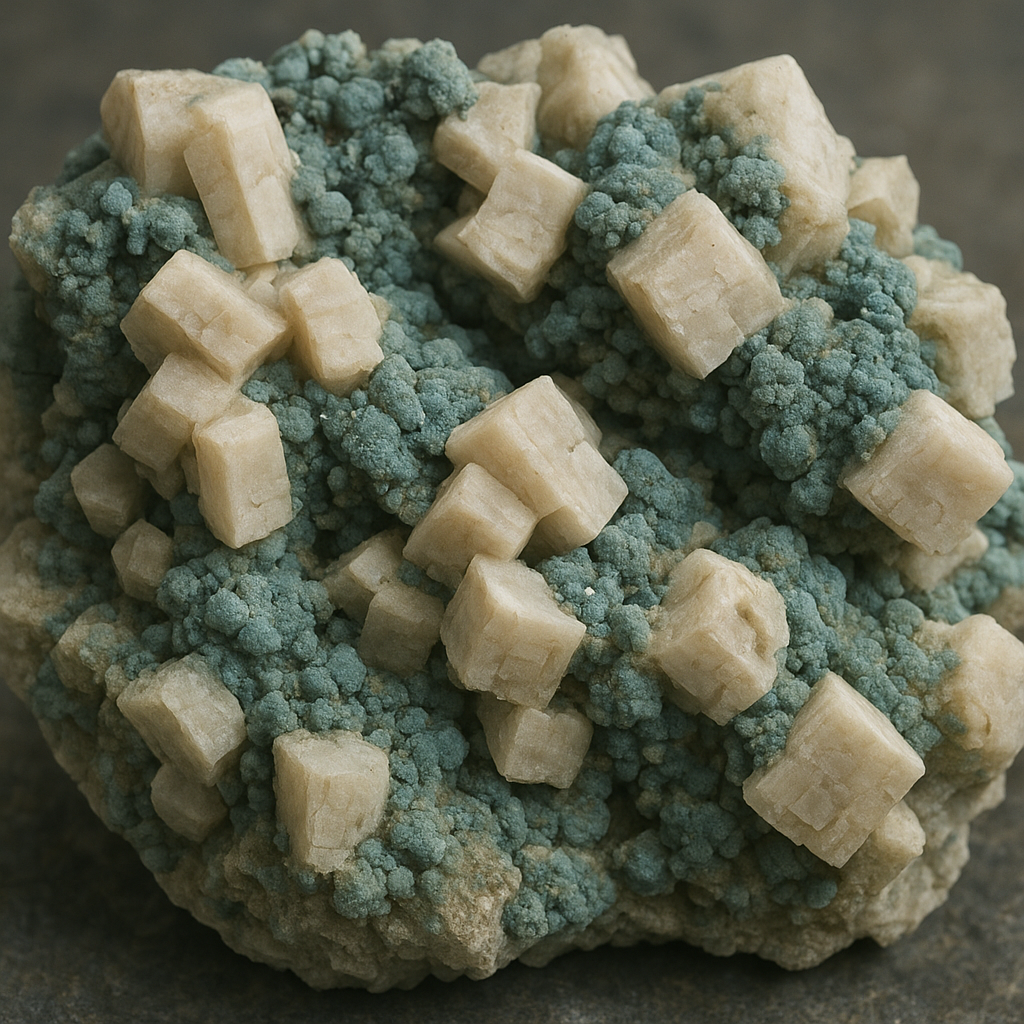
The story of the mineral world often converges on materials that are deceptively simple to the eye but profound in function. Among these, the family of porous aluminosilicates known as zeolite stands out for a unique combination of crystalline order, molecular-scale pores and a capacity to exchange ions and trap molecules. From natural deposits formed over millennia to tailor-made synthetic frameworks engineered for industrial catalysis, zeolites underpin a wide range of technologies that touch water treatment, energy conversion, environmental remediation and advanced materials research. This article explores where zeolites occur, how their structure dictates performance, and why both natural and synthetic varieties remain a hotbed of scientific and industrial innovation.
Occurrence and Geological Formation
Zeolites occur in both natural and synthetic forms. Natural zeolites crystallize from the alteration of volcanic glass and ash in alkaline, low-temperature environments or via hydrothermal processes. Over geological time, percolating groundwater alters volcanic tuffs and lavas, promoting the formation of zeolite minerals. Their characteristic porous frameworks arise as silica and alumina reorganize into open, ordered structures. The Swedish mineralogist Axel Fredrik Cronstedt first described zeolites in the 18th century, naming them from Greek roots meaning “boiling stone” because some specimens release water when heated.
Typical geological settings
- Altered volcanic tuffs and ash beds where glass reacts with alkaline fluids.
- Hydrothermally altered basalts and low-grade metamorphic zones.
- Sedimentary settings where zeolites precipitate from pore waters in marine or lacustrine environments.
- Secondary mineralization around fumaroles and geothermal systems.
Large natural deposits are found in regions with historic volcanic activity. Countries with notable occurrences include the United States, Turkey, Greece, Cuba, Italy and Iceland. One widely used natural species is clinoptilolite, prized for its ion-exchange capacity and availability. Natural zeolites often contain impurities and variable compositions, which influence their suitability for particular uses. Synthetic zeolites, by contrast, can be produced with controlled composition, purity and pore architecture.
Structure, Composition and Key Properties
At the heart of zeolite functionality lies their crystalline framework, built from corner-sharing TO4 tetrahedra (T = Si or Al). Substitution of Al3+ for Si4+ creates a net negative framework charge, balanced by exchangeable cations such as Na+, K+, Ca2+ and others. The arrangement of tetrahedra creates channels and cages with well-defined pore sizes, often in the micropore range (<2 nm). The diversity of connectivity patterns yields dozens of framework types — familiar examples include A, X, Y, ZSM-5 (MFI) and CHA.
Key properties that make zeolites technologically useful include:
- Microporous architecture: uniform channels and cages that act as molecular sieves.
- Ion-exchange capability: replaceable cations that enable removal or recovery of specific ions.
- Adsorption selectivity: preferential uptake of polar molecules, water and certain gases.
- Catalysis potential: acid sites and shape-selective environments that accelerate specific chemical reactions.
- Thermal and mechanical stability relative to many other porous solids.
Beyond pure aluminosilicate frameworks, zeolites can host other framework elements (e.g., B, Fe, Ti) or incorporate extra-framework species to tune acidity, hydrophobicity and catalytic behavior. Modifications such as dealumination, ion exchange or deposition of metals create hierarchical or multifunctional materials suited to particular tasks.
Major Applications and Industrial Uses
The functional versatility of zeolites drives widespread industrial deployment. Their role spans long-established commercial markets and cutting-edge research fields.
Detergents and water softening
Zeolite A (a synthetic framework) became a major component in laundry detergents as a phosphate alternative. It removes hardness ions (Ca2+, Mg2+) through ion-exchange, improving washing performance while reducing eutrophication associated with phosphates. Zeolite-based water softeners and ion exchangers are still widely used in household and industrial contexts.
Petrochemical and chemical catalysis
Synthetic zeolites are central to modern catalysis. Their shape-selective pores and acid sites make them ideal catalysts for cracking, isomerization and other petrochemical conversions. The fluid catalytic cracking (FCC) process in oil refineries often relies on zeolitic catalysts to convert heavy fractions into gasoline and other lighter products. ZSM-5 enabled the conversion of methanol to hydrocarbons, while Y and Beta zeolites support a range of acid-catalyzed transformations.
Gas separation, adsorption and air purification
Zeolites function as molecular sieves, separating gases by size and polarity. Molecular sieve beds made from zeolite 13X or 5A are used in pressure swing adsorption (PSA) systems to produce high-purity oxygen or nitrogen and to remove moisture or CO2 from gas streams. Their selective adsorption also makes them useful in volatile organic compound (VOC) control and air purification systems.
Environmental remediation and waste treatment
Natural and engineered zeolites are valuable for removing heavy metals, ammonium and radioactive isotopes from water. Following nuclear accidents such as Chernobyl and Fukushima, zeolites were used to capture cesium and strontium from contaminated waters. Their relatively low-cost and high selectivity for certain cations make them attractive for treating industrial effluents and landfill leachates.
Agriculture and animal health
Clinoptilolite and other natural zeolites are used as soil conditioners, slow-release carriers for fertilizers and feed additives to reduce ammonia release and bind toxins. Their porous matrices can retain nutrients and moisture, improving soil physical properties and nutrient efficiency. In animal husbandry, zeolites are sometimes used to control odors and reduce ammoniacal emissions from manure.
Construction and building materials
Zeolites are incorporated into lightweight aggregates, geopolymer cements and pozzolanic blends. Their high surface area and reactivity can enhance concrete properties, promote sustainable cement formulations and sequester alkali metals in certain blends.
Analytical, Synthetic and Advanced Research Directions
Recent decades have seen a surge in research that pushes zeolites beyond their classical roles. Advances in synthesis, characterization and computational modeling enable rational design and novel applications.
Controlled synthesis and hierarchical structures
Synthetic strategies now produce zeolites with hierarchical porosities — combining intrinsic micropores with meso- and macropores to improve mass transport in catalytic reactions. Structure-directing agents, surfactants and post-synthetic etching create nanosheets, hollow crystals and materials with tailored diffusion paths. These innovations address limitations of purely microporous zeolites in reactions where bulky molecules must access active sites.
Incorporation of metals and multifunctional catalysts
Doping zeolite frameworks with transition metals (e.g., Fe, Cu, Ti) or supporting metal nanoparticles yields bifunctional catalysts for redox or selective oxidation reactions. For example, copper-exchanged zeolites are investigated for selective catalytic reduction (SCR) of NOx in exhaust streams. Noble-metal loadings on zeolite supports improve activity for hydrogenation and reforming processes.
Membranes and separations
Zeolite membranes, grown as thin crystalline layers on supports, offer highly selective separations for gas and liquid mixtures. Their molecular sieving properties, combined with thermal robustness, make them candidates for energy-efficient separations such as dehydration of organics, olefin/paraffin separations and CO2 capture from flue gases.
Characterization and computational design
Advanced analytical tools — X-ray diffraction (XRD), nuclear magnetic resonance (NMR), electron microscopy (TEM/SEM), physisorption (BET) and synchrotron techniques — clarify subtle structural variations and defects. Computational modeling and machine learning accelerate the discovery of zeolite frameworks, predict adsorption isotherms and optimize catalytic sites. This combination of experiment and theory is enabling predictive design of zeolitic materials for targeted applications.
Environmental, Economic and Social Considerations
The widespread use of zeolites raises questions about resource sourcing, lifecycle impacts and sustainability. Natural zeolite mining can disturb ecosystems and generate dust; responsible extraction and reclamation practices are essential. On the positive side, zeolite-based technologies can reduce environmental burdens — replacing phosphate detergents, capturing pollutants, and enabling more efficient industrial processes.
- Life-cycle analyses often highlight reduced environmental impact when zeolites replace less sustainable chemicals or lower energy use in separations.
- Recyclability: many zeolite adsorbents and catalysts can be regenerated through thermal or chemical treatment, though performance may decline with repeated cycles.
- Health and safety: zeolite dust can be an irritant; appropriate handling and respiratory protection during processing and mining are recommended.
Policy incentives and market drivers — such as stricter effluent standards, carbon pricing, and demand for cleaner fuels — influence investment in zeolite-enabled technologies. In many low- and middle-income regions, low-cost natural zeolites provide accessible solutions for water treatment and agricultural productivity, linking material science to social impact.
Interesting and Emerging Applications
Beyond established uses, several innovative and interdisciplinary applications are gaining traction:
- Energy storage: engineered zeolite-like frameworks and analogous microporous materials are being explored for methane and hydrogen storage, aiming to combine high volumetric capacity with safety.
- Electronics and sensors: zeolite films and composites can act as selective membranes in sensors for gases or humidity, exploiting size- and polarity-based discrimination.
- Drug delivery and biomedicine: research into biocompatible zeolite composites investigates controlled release and adsorption of toxins, though translation to clinical practice requires rigorous safety validation.
- Carbon capture: zeolite sorbents are considered for post-combustion CO2 capture, particularly when tuned for high CO2/N2 selectivity and resistance to moisture.
- Photochemistry and photocatalysis: coupling zeolitic frameworks with light-absorbing materials creates hybrid systems for pollutant degradation and solar-driven chemical transformations.
These directions illustrate the adaptability of the basic zeolite concept: a rigid, ordered scaffold whose internal landscape can be chemically tailored to host reactions, separations and storage processes at the molecular level. The interplay between structure and function — the essence of zeolite science — continues to inspire multidisciplinary work spanning chemistry, materials science, geology and environmental engineering.
Practical Notes on Use and Selection
Selecting an appropriate zeolite for a given application depends on several factors:
- Pore size and topology: match the kinetic diameter of target molecules to the accessible channels.
- Si/Al ratio: controls acidity and hydrophilicity; higher Si/Al yields more hydrophobic and less cationic frameworks.
- Exchangeable cations: alter selectivity for specific ions and influence catalytic behavior.
- Thermal and hydrothermal stability: crucial for high-temperature catalysis or wet environments.
- Cost and availability: natural vs. synthetic choices weigh purity, performance and price.
Commercial suppliers offer a range of standard zeolites (e.g., 3A, 4A, 5A, 13X, Y, ZSM-5) with well-documented properties. For specialized needs, custom synthesis or post-synthetic modification often yields superior performance but at increased complexity and cost.
Closing Remarks
Zeolites represent a class of materials where precise atomic arrangement translates into outsized practical benefits. Whether encountered as natural deposits used for water treatment and agriculture, or as carefully engineered catalysts and adsorbents in high-tech industries, zeolites demonstrate the power of structure-directed functionality. Ongoing advances in synthesis, characterization and computational design promise new generations of zeolitic materials — more selective, more robust and more sustainable — continuing a legacy that began with a simple observation of a “boiling stone” centuries ago.