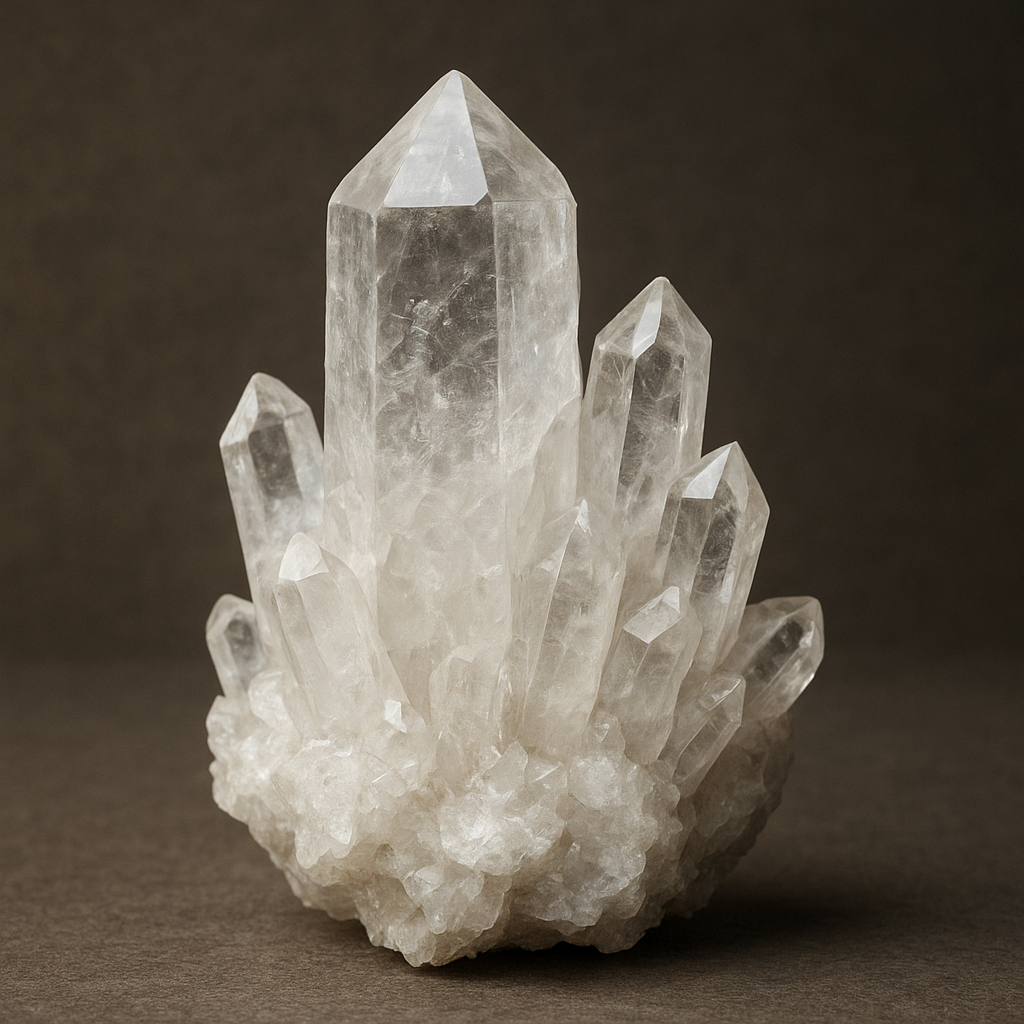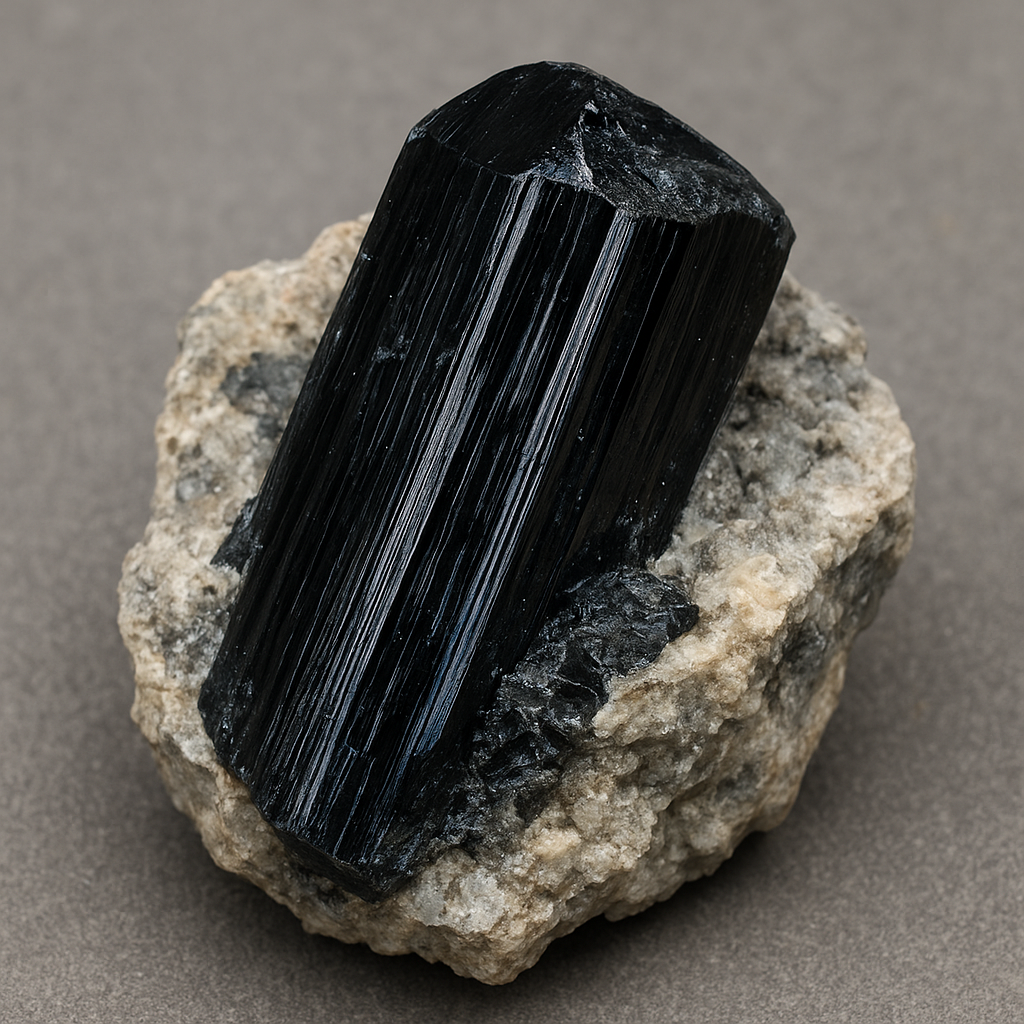
Zektzerite occupies a curious niche at the intersection of mineralogy, materials science and the world of collectors. Though not a household name, this mineral has captivated specialists because of its unusual chemistry and crystal behavior, and it raises questions about how rare phases form in extreme geologic settings. In this article I explore where zektzerite is found, what makes it distinctive in terms of composition and structure, how it has been and might be used, and several related themes that make it an intriguing subject for researchers and enthusiasts alike.
Geologic settings and natural occurrences
To understand zektzerite, it helps to look first at the environments that produce rare and complex silicate phases. Zektzerite is typically associated with highly evolved, alkali-rich igneous systems — places where late-stage magmatic fluids concentrate incompatible elements and generate rare minerals. These conditions are most commonly met in:
- Alkaline pegmatites and biotite-rich pegmatitic pockets, where volatile-rich residual melts crystallize unusual lithium and sodium-bearing silicates.
- Miarolitic cavities in peralkaline syenites and granites, where low-pressure pockets allow well-formed crystals to grow.
- Hydrothermal veins and pneumatolitic zones that interact with feldspathoid-bearing rocks, yielding uncommon assemblages.
Because zektzerite tends to concentrate in very specific, small-scale environments, it is often found as isolated crystals or sparse masses rather than as economically significant ore bodies. It is frequently found alongside minerals such as spodumene, lepidolite, albite, aegirine, feldspathoids, and accessory rare phases—an assemblage that points to pegmatitic or peralkaline magmatic evolution.
Reported localities for zektzerite (in the literature and collecting communities) span several continents, though occurrences are typically restricted and sporadic. These include a handful of classic pegmatite districts and alpine-type veins where late-stage lithium- and sodium-rich fluids could precipitate complex silicates. Because occurrences are both rare and often minute, the mineral is primarily of interest to researchers and specimen collectors rather than to extractive industries.
Structure, composition and identification
At the heart of zektzerite’s appeal is its crystal chemistry. The mineral belongs to a family of complex framework silicates in which tetrahedral silica networks accommodate alkali cations and, at times, small cations such as lithium. This results in interesting substitution mechanisms and sometimes in open-framework structures that can show ion-exchange behavior or unusual optical properties.
Typical physical characteristics
- Crystal habit: Often forms prismatic or tabular crystals; may appear as compact granular aggregates in pockets.
- Color: Ranges from colorless to pale shades (often subtle); some specimens show delicate tones resulting from trace-element substitutions.
- Luster: Vitreous to subvitreous; fresh fractures may show silky or pearly aspects depending on cleavage.
- Transparency: Transparent to translucent; gem-quality fragments are rare but prized when present.
- Associated tests: Hardness and specific gravity can help differentiate zektzerite from visually similar phases; more definitive identification is achieved through X-ray diffraction (XRD), electron microprobe analyses, Raman spectroscopy and infrared spectroscopy.
Because many rare silicates are chemically complex, definitive identification of zektzerite requires analytic methods that resolve its structure and elemental makeup. XRD reveals the geometric framework of tetrahedral silica units and their connectivity; electron microprobe or LA-ICP-MS analyses identify the major and trace cations (sodium, lithium and possibly other substituents), while spectroscopic techniques can detect structural water, hydroxyl groups or minor anionic substitutions.
Chemical flexibility and structural interest
A key point of research interest is how silicate frameworks tolerate a variety of cations. In zektzerite, the presence of small alkali ions such as lithium alongside larger sodium ions points to channels or interstitial sites within the framework that can host different species. This chemical flexibility not only affects stability and formation conditions but also suggests potential routes for synthesizing analog materials with tailored properties.
Crystallographers are particularly intrigued by minerals that sit on the boundary between dense frameworks and more open, zeolite-like topologies. While zektzerite is not a zeolite in the classical sense, studying its topology yields insight into how silica networks adapt to accommodate charge-balancing cations and how such frameworks respond to temperature and pressure during late-stage magmatic cooling.
Practical and potential applications
Because naturally occurring zektzerite is rare and occurs in limited quantities, its direct industrial applications are currently negligible. However, that scarcity does not preclude broader interest. Several paths, both practical and speculative, make zektzerite and its analogs noteworthy:
- Scientific research: As a natural example of sodium-lithium framework silicates, zektzerite informs models of crystal chemistry, ion migration, and late-magmatic fractionation processes. Its study helps refine thermodynamic databases and phase equilibria for pegmatitic systems.
- Materials science templates: The structural motifs observed in zektzerite may inspire the synthesis of novel framework materials designed for ion exchange, selective sorption or as precursors for battery-related materials. Engineers and chemists often look to natural minerals for stable, three-dimensional architectures that can be recreated synthetically for technological use.
- Gem and collector use: High-quality transparent crystals, when found, can be cut or polished as collector gems. Their rarity and crystal form make specimens desirable in museum collections and among specialist mineral collectors.
- Geothermometry and petrogenetic indicators: The presence of zektzerite within an assemblage can point to specific conditions during the last stages of magmatic crystallization, especially relating to volatile content, alkali activity and lithium mobility. Thus, it can be a diagnostic mineral in detailed petrogenetic studies.
It is also worth noting that even if zektzerite itself is not mined for commodity use, studying its formation can help locate other, more extractable lithium minerals in the same paragenetic environments. As lithium demand rises globally for batteries, understanding the full mineral ecology of Li-enriched systems becomes economically relevant.
Analytical techniques and research methods
Studying a rare phase like zektzerite requires a combination of field, analytical and experimental approaches. Typical steps include:
- Field characterization: Documenting the geological setting, host rock, orientation of pockets, and associated minerals gives context for paragenesis.
- Microscopy: Optical petrography and scanning electron microscopy (SEM) reveal textural relationships and growth features.
- Microchemical analysis: Electron microprobe and LA-ICP-MS quantify major and trace elements, clarifying substitution patterns and zoning.
- Diffraction and spectroscopy: XRD yields structural parameters; Raman and FTIR spectroscopy detect bond environments, structural water, and OH-groups.
- Experimental petrology: Laboratory experiments test the stability of zektzerite-like phases under controlled temperature, pressure and fluid compositions, which refines models of formation.
Combined, these methods permit reconstruction of a mineral’s history, from nucleation to final crystallization. For zektzerite, such work can reveal how shifts in alkali ratios, water activity, or cooling rate influence the crystallization of complex silicate frameworks.
Collecting, valuation and ethical considerations
For mineral collectors, zektzerite represents the kind of rarity that confers both scientific and aesthetic value. Well-formed crystals from notable localities can achieve high prices among specialists. A few considerations shape how the mineral is handled in the market and in conservation:
- Specimen rarity: Because zektzerite crystals are often small and localized, provenance (documented origin and context) significantly increases a specimen’s interest and value.
- Conservation: Many localities that yield rare minerals are small and ecologically sensitive. Responsible collecting practices and agreements with landowners or authorities are crucial to preserve sites for future study.
- Documentation: Proper labeling with geological context, photographs of in-situ finds, and analytical data (when available) make specimens much more valuable scientifically and commercially.
Museums and academic institutions often collaborate with private collectors to ensure that scientifically important specimens remain accessible for study. For zektzerite, where the mineral may be the only example of a particular crystal chemistry from a locality, this collaboration preserves opportunities for future analyses with improved techniques.
Related topics and intriguing research directions
Zektzerite is a springboard into a number of broader scientific and technological areas. Below are several directions where its study interacts with larger questions:
1. Open-framework silicates and ion mobility
Understanding how silicate frameworks accommodate mobile cations like lithium illuminates pathways for ion transport and exchange. This has implications for synthetic ion-sieving materials and could inform design principles for solid electrolytes in batteries. Natural minerals act as blueprints for stable, robust frameworks that function at extremes of temperature and chemistry.
2. Trace-element partitioning in late-stage magmas
Zektzerite and coexisting phases capture the behavior of rare elements during the terminal evolution of a magma body. Studying them helps decipher the partition coefficients that control whether elements end up in accessory minerals, remain in melt pockets or are mobilized in hydrothermal fluids.
3. Crystallography and topology
From a purely structural standpoint, minerals like zektzerite challenge and expand our understanding of silicate topologies. Detailed crystallographic studies can reveal novel connectivities and coordination environments that expand mineral classification schemes and inspire synthetic analogs with targeted properties.
4. Environmental and mining considerations
As the global demand for lithium and other strategic elements increases, understanding the full palette of lithium-bearing phases in a deposit becomes economically important. Zektzerite-rich parageneses might point to undiscovered concentrations of more extractable lithium minerals nearby, or they may indicate closed systems where lithium was trapped in rare phases and thus less accessible to leaching.
Interesting anecdotes and historical notes
Rare minerals often come with compelling backstories. The discovery of small, unusual crystals in a pegmatite pocket has historically led to intense interest from both local collectors and visiting mineralogists. In several well-documented cases, the initial recognition of an unfamiliar silicate prompted a flurry of analytical work that eventually clarified its status as a distinct mineral species. These episodes show how careful field observation, paired with modern analysis, continues to expand the catalog of known minerals.
For zektzerite, collectors have reported that even tiny, translucent crystals can display remarkable clarity and symmetry, making them memorable finds despite their modest size. Such specimens highlight the aesthetic value that drives much of the field collecting tradition, while simultaneously yielding samples for scientific work.
Practical advice for those who want to study or collect zektzerite
If you are interested in encountering zektzerite—either as a collector or researcher—consider these practical tips:
- Prioritize thorough documentation: photographs of the locality, host rock descriptions and sketches of in-situ relationships are invaluable.
- Bring appropriate tools for delicate extraction: many rare phases are fragile and require careful chiseling and stabilization.
- Engage with the academic community: collaborations with university geoscience departments can enable proper identification and analysis.
- Respect collecting regulations and landowner agreements to ensure continued access and conservation.
Analytical work need not be prohibitively expensive: many universities and regional geological surveys provide access to XRD and microprobe facilities, often in exchange for co-authorship on publications or deposit of voucher specimens in collections.
Concluding thoughts on significance and future prospects
Zektzerite exemplifies how a single, uncommon mineral can connect multiple threads of Earth science: the petrogenesis of alkali-rich magmas, the subtlety of crystal chemistry, the interface between natural templates and synthetic materials, and the human impulse to collect and study natural rarities. While natural zektzerite remains a mineralogical curiosity more than an industrial commodity, its study continues to yield insights that resonate far beyond the pockets where it forms.
As analytical methods improve and interest in lithium-bearing systems grows, the role of rare silicate phases like zektzerite in telling the story of element mobility and crystal structure will only increase. Whether as a museum specimen that sparks curiosity, a subject of detailed crystallographic analysis, or as inspiration for engineered materials, zektzerite has a quiet but meaningful place in the broader world of mineral science.