
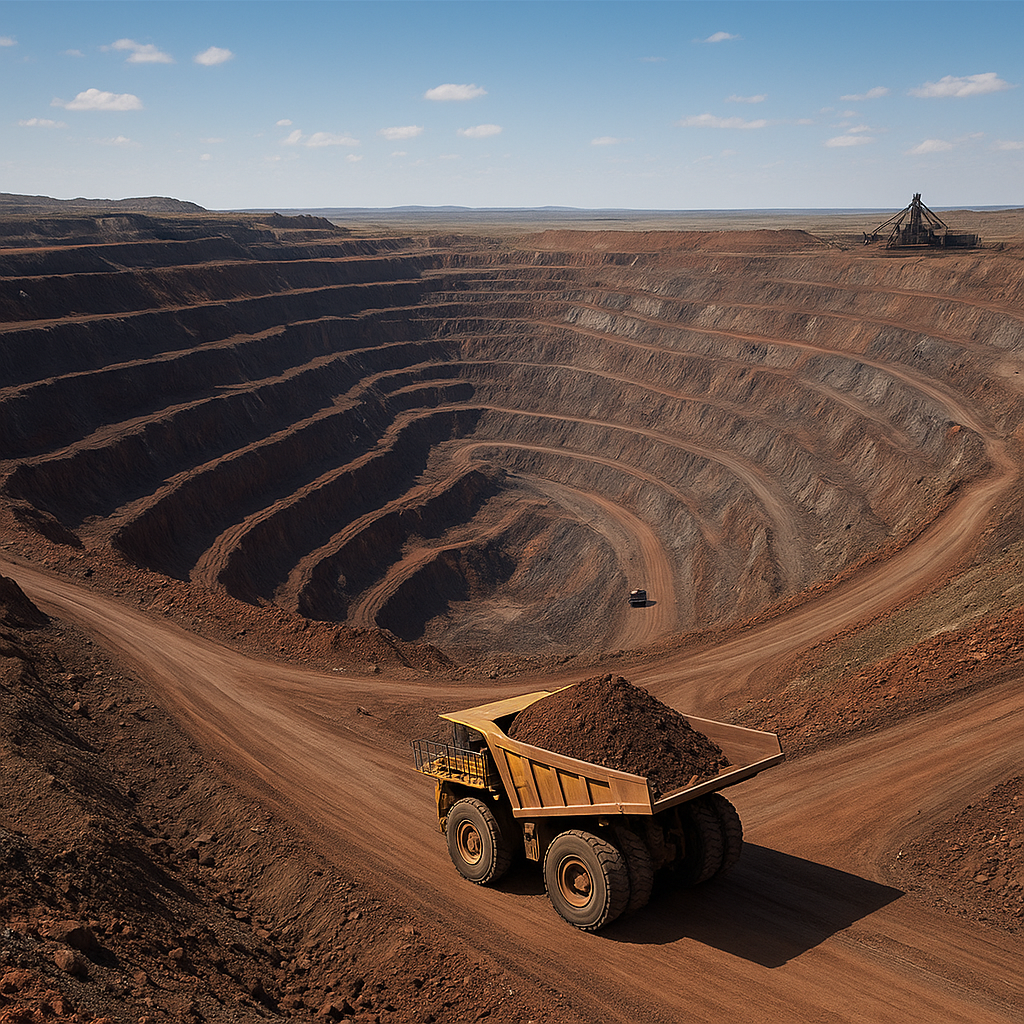
The Sokolov-Sarbai Mine stands among Kazakhstan’s most notable industrial sites, a large-scale iron ore complex whose operations shape regional economies and feed national and international steelmaking chains. This article explores the mine’s general location and geological setting, the types of material extracted and how they are processed, its economic role within Kazakhstan and beyond, and a selection of less obvious but fascinating aspects — from historical roots to modern challenges and innovations. Throughout the text you will find discussion of technical, social and environmental features that help explain why a single mining complex can have outsized importance for a country rich in mineral resources.
Location and geological setting
The Sokolov-Sarbai enterprise is located in the central-eastern part of Kazakhstan, embedded in a mineral-rich belt that formed during complex geological processes over hundreds of millions of years. Situated within a broad steppe landscape, the mine is accessible by regional transport links that connect it to rail corridors and industrial centers. Its geographical position makes it strategically placed to supply both domestic metallurgical plants and export markets to the east and west.
From a geological perspective, the deposit underlying the Sokolov-Sarbai area is characteristic of large, stratiform and sometimes metasomatic iron formations that commonly contain economically important concentrations of magnetite and hematite. These iron-bearing rocks are often associated with other mineral phases and layered sequences that give rise to economic ore bodies of significant lateral extent. The typical mining method in such deposits is open-pit extraction, which enables large volumes of rock to be removed and processed efficiently.
Regional geology and ore types
- Magnetite and hematite are the dominant iron minerals, providing feedstock for beneficiation plants.
- The ores usually occur in both massive and disseminated forms, influencing how they are mined and crushed.
- Gangue minerals such as silicates and carbonates are commonly present and require careful separation through beneficiation processes.
Understanding the local geology is essential to optimizing recovery rates, reducing waste, and designing post-mining landforms. The interplay between ore body geometry and rock mechanics also dictates bench heights, slope angles and the overall configuration of the open pits that define the mine landscape.
What is mined and how it is processed
Sokolov-Sarbai’s core product is iron ore — the raw material for steel production. The mine supplies several ore products tailored to different market needs: raw lump ore, crushed ore, mill feed for concentration, and iron ore concentrate used as feedstock for sinter plants and direct reduction processes. In many modern iron ore operations a portion of the ore is further upgraded into pellets, which are preferred in blast furnace or direct-reduced iron (DRI) routes because of their uniform size and metallurgical properties.
Mining methods and material flow
- The mine typically operates as a series of large open pits, with ongoing benching and progressive extraction.
- Run-of-mine material is hauled to primary crushers and screened to produce appropriate fractions for downstream processing.
- Crushed ore then proceeds to concentration circuits where physical separation methods — such as magnetic separation, gravity separation and flotation in some cases — upgrade the iron content.
- Final products include iron ore concentrate and, where facilities exist, pellets or sinter feed.
Processing at the plant focuses on maximizing iron recovery while minimizing silica and other deleterious elements. Modern plants incorporate closed-circuit grinding, staged magnetic separators and water recycling systems to reduce environmental footprint. The concentrate is typically transported by rail in unit trains or trucks to steelmaking centers, while a share is consumed by local metallurgical complexes, fostering industrial integration.
Economic and strategic importance
Sokolov-Sarbai plays a central role in Kazakhstan’s mining and metallurgy value chain. As a stable source of iron ore, it underpins domestic steel production, which in turn supplies construction, machinery, transport and energy sectors. The economic footprint of a mine like Sokolov-Sarbai extends far beyond direct employment: it supports logistics providers, equipment suppliers, contractors, local service industries and regional municipalities.
Employment and regional development
- The mine is a major employer in its region. Direct jobs include mining engineers, technicians, plant operators and maintenance crews; indirect employment arises through contractors and suppliers.
- Wage income and corporate procurement generate economic multipliers that sustain towns and communities in otherwise sparsely populated areas.
- Investment in local infrastructure – roads, power lines, housing, and social facilities – is frequently tied to the mine’s needs and benefits the broader population.
Strategically, reliable iron ore production contributes to Kazakhstan’s aspirations for a diversified industrial base and reduced dependence on imported raw materials. For exporters, the mine enhances the country’s position in regional commodity flows; for domestic steelmakers it ensures feedstock security and price stability.
Trade and market links
While much of the concentrate produced at Sokolov-Sarbai is destined for the national market, a notable portion can be exported to neighboring countries where demand for iron-bearing material remains strong. Export routes commonly use rail freight, and access to ports or transshipment hubs determines competitiveness in distant markets. The mine’s production levels can therefore influence regional iron ore balances and pricing dynamics.
Environmental, social and technological aspects
Large-scale iron ore operations inevitably raise environmental and social considerations. Responsible management requires attention to land disturbance, water use, dust and noise emissions, and the long-term rehabilitation of mined areas. Over recent decades the mining sector in Kazakhstan has increased its emphasis on environmental compliance, and Sokolov-Sarbai-type operations are adopting measures to reduce their impacts.
Water management and tailings
- Concentration processes use substantial volumes of water; modern plants implement closed circuits and clarifiers to recycle water and reduce fresh-water withdrawals.
- Tailings — the fine residues from concentration — are managed in engineered impoundments with monitoring systems to prevent seepage and ensure slope stability.
- Progressive reclamation is applied to retired benches and waste dumps to restore vegetation and reduce erosion risk.
Community engagement and corporate social responsibility are also critical. Local populations depend on mining jobs but are also affected by dust, noise and changing landscapes. Companies operating large mines often fund local schools, clinics and cultural projects, and negotiate agreements that channel benefits into community development programs.
Technological modernization and efficiency
Advances in mining and mineral processing technology present opportunities to improve recovery, lower operating costs and reduce emissions. Examples relevant to operations like Sokolov-Sarbai include:
- Automation of drilling, haulage and processing to increase safety and productivity.
- Use of real-time process control to optimize grinding and separation circuits, maximizing recovery and reducing energy intensity.
- Adoption of remote sensing and geotechnical monitoring for slope stability and orebody modelling.
- Electrification of equipment and integration with cleaner grid energy sources to reduce greenhouse-gas emissions.
These measures not only enhance economic performance but also align operations with international standards for sustainability and investor expectations.
Interesting facts, history and broader context
The story of Sokolov-Sarbai and similar Kazakh mining centers mirrors the broader history of resource development in Central Asia — from Soviet-era exploration and industrialization to post-Soviet privatization and modern investment. A number of aspects make this mine and its surroundings noteworthy:
- Historical continuity: Many of the region’s deposits were first delineated during intensive geological campaigns of the 20th century. Over decades, successive waves of technology and investment expanded capacity from simple extraction to fully integrated mining and processing complexes.
- Landscape transformation: The scale of open-pit mining reshapes the steppe, creating terraces, haul roads and large water-managed areas. Seen from above, these operations are striking examples of how geology and industry interact.
- Integration with metallurgy: Mines of this type are central nodes in industrial networks that include sinter plants, steel mills and shipyards. The proximity to consumers reduces transport costs and fosters clustered industrial development.
- Adaptation to market cycles: Iron ore operations respond to global steel demand and price volatility. Management strategies often include stockpiling, phased expansions and efficiency drives to ride commodity cycles.
- Scientific and educational linkages: Large mines provide opportunities for applied research in geology, metallurgy and environmental science; partnerships with universities and research institutes support innovation and workforce development.
One particularly compelling aspect is how modern rehabilitation techniques can convert former mining areas into new land uses. With careful planning, former pits and tailings areas can be reshaped for recreational lakes, wildlife habitats or even solar installations, turning legacies of extraction into productive landscapes for future generations.
Geopolitical and economic ripple effects
At a country level, dependable iron ore supplies support not only steelmaking but also infrastructure development — roads, rail and housing — which in turn underpin economic diversification. On the international stage, Kazakhstan’s mineral exports contribute to trade balances and diplomatic ties with major industrial neighbors.
From a human perspective, communities around Sokolov-Sarbai typify the complex social fabric of mining regions: families with multi-generational ties to the industry, skilled technical workforces, and a blend of traditional lifestyles alongside industrial modernity. Preserving cultural identity while fostering economic opportunity is an ongoing challenge and opportunity for policymakers and firms alike.
Future prospects and challenges
Looking ahead, the future of a mine like Sokolov-Sarbai rests on three interlocked themes: resource management, technological adaptation and sustainability. Responsible mining companies seek to extend mine life through efficient recovery and exploration of satellite deposits, while investing in processing that can handle lower-grade ores. At the same time, pressure to reduce carbon emissions and minimize environmental impacts will spur adoption of cleaner technologies and more circular approaches to waste and water.
- Exploration and reserves: Ongoing geological work can identify extensions or new deposits that prolong the operational life of the complex.
- Process improvement: Advancements in beneficiation and pelletizing can raise product quality and access premium markets.
- Sustainability measures: Reforestation, water recycling and energy transitions will be crucial to social license and regulatory compliance.
Ultimately, the story of Sokolov-Sarbai is both a tale of resource abundance and of modern responsibility. As Kazakhstan continues to chart its economic path, mines like this will remain pivotal — not only for the value they extract from the earth, but for how they shape livelihoods, landscapes and industrial futures.

