
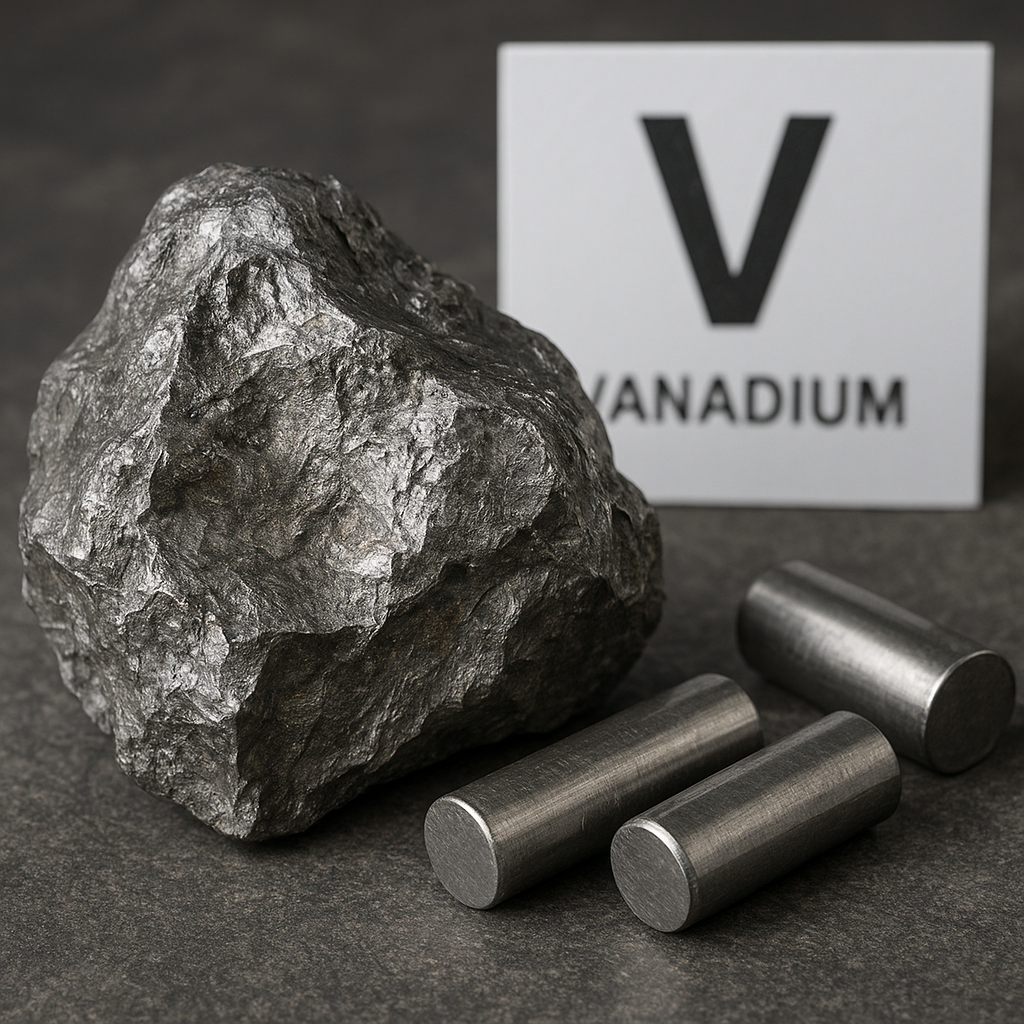
Vanadium is a transition metal that plays an outsized role in modern materials science, energy systems and catalysis. Its chemistry is rich, with multiple oxidation states and colorful compounds, and its industrial story stretches from ancient minerals to cutting-edge grid-scale storage. This article explores where vanadium is found, how it is extracted and processed, its major uses, and a selection of unusual and emerging topics that make it a fascinating element for researchers, engineers and policymakers alike.
Geology, Occurrence and Global Supply
The natural abundance and distribution of Vanadium determine much of its commercial availability. It occurs primarily in igneous and sedimentary rocks, and also as a trace component in fossil fuels. Globally, vanadium is not concentrated into huge, single deposits like some other metals, but is present in economically recoverable quantities in several mineral types and industrial byproducts.
Primary mineral hosts
- Vanadiferous titanomagnetite and magnetite-rich ores are among the most important sources. The mineral magnetite often contains vanadium in accessory amounts and is processed at smelters to produce vanadium-rich slag.
- Vanadinite (a lead vanadate), carnotite (a potassium uranium vanadate), and other oxide or vanadate minerals historically yielded vanadium, though few are mined solely for vanadium today.
- Unconventional sources such as black shales, oil sands and petroleum residues can contain high vanadium concentrations and are increasingly important as feedstocks in regions where these materials are abundant.
Principal producing regions
Major vanadium production comes from China, Russia, South Africa, Brazil and certain operations in Australia and the United States. Chinese production is notable not only for primary ores but for recovery from steel slags and petroleum residues. South Africa and Brazil have large titanomagnetite deposits, while Russia’s Ural and Siberian deposits are likewise significant.
Extraction and processing pathways
Commercial recovery typically involves one of two industrial routes. Magnetite-based ores are smelted in blast furnaces or electric furnaces, producing a vanadium-rich slag that is then leached and processed into V2O5 (vanadium pentoxide). Petroleum residues are processed by oxidation and leaching methods to extract vanadium. Increasingly, hydrometallurgical flowsheets and salt-roasting-leach techniques are tailored to specific feedstocks to optimize yield and reduce environmental impact.
Properties and Chemistry
Vanadium’s versatility arises from its multiple accessible oxidation states, most commonly +2, +3, +4 and +5. These states produce a range of colors and chemical behaviors, making vanadium useful in redox chemistry, catalysis and electronic materials.
Oxidation states and colors
- V(II): often gives violet or violet-blue solutions.
- V(III): typically green.
- V(IV): the vanadyl ion (VO2+) yields blue colors.
- V(V): vanadate species can be yellow to orange.
The element forms stable oxides and complex anions; among these, V2O5 is the most industrially significant compound, acting as a workhorse catalyst and precursor for many vanadium chemicals.
Interesting physical behaviors
One particularly notable vanadium compound is VO2, which exhibits a metal–insulator transition near 68 °C. Below this temperature VO2 is an insulator; above it, it becomes metallic and highly conductive. This abrupt and reversible change in electrical and optical properties has spurred research into smart windows, ultrafast switches and neuromorphic devices.
Major Industrial Applications
The primary commercial use of vanadium has long been in metallurgy, but new technologies are driving demand into energy storage and advanced materials.
Steel and high-strength materials
Small additions of vanadium dramatically improve the mechanical properties of carbon steels and low-alloy steels. Vanadium forms stable carbides and nitrides that hinder grain growth and increase yield strength and toughness. In the automotive and construction industries, microalloyed steels containing vanadium provide strength with reduced weight, enhancing fuel efficiency and structural performance. The word steel here links to a broad category of structural materials in which vanadium’s role is critical.
Beyond steels, vanadium is used in nickel-based alloys and special titanium alloys that serve aerospace and high-temperature applications, where strength-to-weight ratio and creep resistance are essential.
Catalysis and chemical industry
Vanadium pentoxide is a principal catalyst in the contact process for manufacturing sulfuric acid and in the oxidation of hydrocarbons to produce maleic anhydride and phthalic anhydride. Vanadium catalysts are prized for their redox flexibility, enabling multi-electron transformations that are key to industrial oxidation chemistry. The term catalyst encapsulates this central role.
Pigments, ceramics and glass
Vanadium compounds are used as pigments (vanadium oxides and vanadates provide yellow, red and green hues), in ceramic glazes and in some types of specialty glass. Their coloration arises from the variable oxidation states and associated electronic transitions.
Energy Storage: Vanadium Redox Flow Batteries and Beyond
One of the most talked-about applications in recent years is the use of vanadium in flow-battery technology. Vanadium redox flow batteries (VRFBs) store energy in liquid electrolytes containing vanadium ions in different oxidation states. This architecture offers distinct advantages for grid-scale energy storage.
How VRFBs work
- Two tanks hold electrolyte solutions: one for the positive half-cell (V(IV)/V(V)) and one for the negative half-cell (V(II)/V(III)).
- During charge and discharge, vanadium ions are oxidized and reduced; energy is stored chemically and can be accessed by pumping electrolytes through a cell stack where ion exchange occurs across a membrane.
- Because the same element is used on both sides, cross-contamination is less problematic than in systems where different chemistries are employed.
Advantages and limitations
VRFBs offer excellent cycle life, decoupled power and energy scaling (tank size vs cell stack), and strong safety characteristics. However, they face challenges in terms of energy density (relatively low) and upfront material costs driven by vanadium pricing. Advances in electrolyte chemistry, membrane design and supply-chain diversification are active research and commercial areas.
Market and strategic implications
As renewable generation grows, grid operators seek long-duration storage; VRFBs are a candidate technology for multi-hour storage needs. The link between vanadium supply and energy policy raises questions about strategic reserves, recycling and substitution. Recovery of vanadium from spent catalysts, slags and batteries becomes increasingly important, both economically and environmentally.
Biological Roles, Health and Environmental Issues
Vanadium’s interaction with biology is paradoxical: trace roles and potential therapeutics are counterbalanced by toxicity concerns at higher exposures.
Biological curiosity and medical research
Certain marine organisms concentrate vanadium to remarkable levels; some ascidians (sea squirts) accumulate vanadium in specialized cells. In humans and other mammals, vanadium has no established essential role, though it participates in enzyme inhibition and may affect signaling pathways. Compounds such as bis(maltolato)oxovanadium(IV) have been investigated as insulin-mimetic agents to improve glucose uptake, but clinical development has been hampered by safety and efficacy concerns.
Toxicity and exposure
Inhalation of vanadium pentoxide dust or fumes is the most common occupational hazard and can cause respiratory irritation, bronchitis and other pulmonary effects. Chronic exposure at high levels may lead to systemic issues. Environmental releases from mining, processing and combustion of fossil fuels can contaminate soils and waters. The topic of toxicity is therefore central to vanadium risk management, and regulatory limits govern workplace and environmental exposures.
Environmental recovery and recycling
Because many vanadium sources are byproducts of other industries, and because demand for vanadium in batteries and catalysts incentivizes reuse, recovery is a growing focus. Techniques for recovering vanadium from spent catalysts, steel slags and battery electrolytes are under continual improvement, reducing the pressure on primary mining and diminishing environmental footprints.
Historical Notes and Nomenclature
Vanadium has a colorful discovery history. It was first isolated by Andrés Manuel del Río in 1801 from a Mexican lead ore and named erythronium for the red color of some of its compounds. His claim was disputed, and the element was later rediscovered by Nils Gabriel Sefström in Sweden in 1830, who named it after Vanadis, another name for the Norse goddess Freyja, because of the beauty of its compounds.
Natural vanadium consists overwhelmingly of the isotope V-51, with a trace of radioactive V-50. The element’s place in the periodic table (period 4, group 5) gives it chemistry that overlaps with titanium and chromium yet remains distinct due to accessible multiple oxidation states.
Cutting-Edge Research and Future Directions
Research into vanadium spans materials science, catalysis, electrochemistry and environmental engineering. A few promising directions include:
- VO2 thin films and heterostructures for ultrafast switching, neuromorphic devices and adaptive optics.
- Advanced electrolyte formulations for VRFBs that increase energy density and lower cost, including mixed acids and complexing agents to stabilize vanadium in solution.
- Hydrometallurgical innovations to extract vanadium from low-grade ores, fly ash and oil residues with reduced emissions and water use.
- Bioinspired sequestration and remediation strategies leveraging microbes or engineered ligands to recover vanadium from dilute streams.
Socioeconomic and policy considerations
Because a substantial fraction of vanadium production is tied to steelmaking and petroleum industries, shifts in those sectors reverberate through the vanadium market. The rise of renewable energy and storage demand could reshape supply chains and incentivize new mining projects, urban mining and vertical integration by battery manufacturers. Policymakers and industry must weigh environmental impacts, worker safety and strategic supply concerns as vanadium’s role in the energy transition grows.
Practical Notes for Industry and Researchers
Working with vanadium requires attention to material compatibility, process control and health safeguards. Key practical elements include:
- Personal protective equipment and ventilation controls in facilities handling vanadium pentoxide dust or solutions.
- Analytical methods such as ICP-MS, XRF and XRD for quantifying vanadium and characterizing its mineralogy.
- Lifecycle assessments to compare primary mining versus recycling and to evaluate the trade-offs of vanadium use in long-duration energy storage.
- Collaborative approaches between metallurgists, electrochemists and environmental engineers to close material loops and develop sustainable supply chains.
Curiosities and Lesser-Known Facts
Vanadium appears in unexpected places. Some catalysts used in the production of maleic anhydride rely on vanadium-tungsten systems with elaborate surface chemistry. Certain brown coals in China historically yielded a high proportion of the world’s vanadium because plants burned petcoke and oil residues that concentrated vanadium. In the realm of art and archaeology, vanadium-containing pigments have been found in historical glazes and are used in modern ceramic artistry for their vivid colors.
Finally, vanadium’s capacity to adopt many oxidation states makes its compounds visually striking: as solutions and solids they span a spectrum from deep violet to bright yellow, reflecting an electronic playground that chemists continue to explore.