
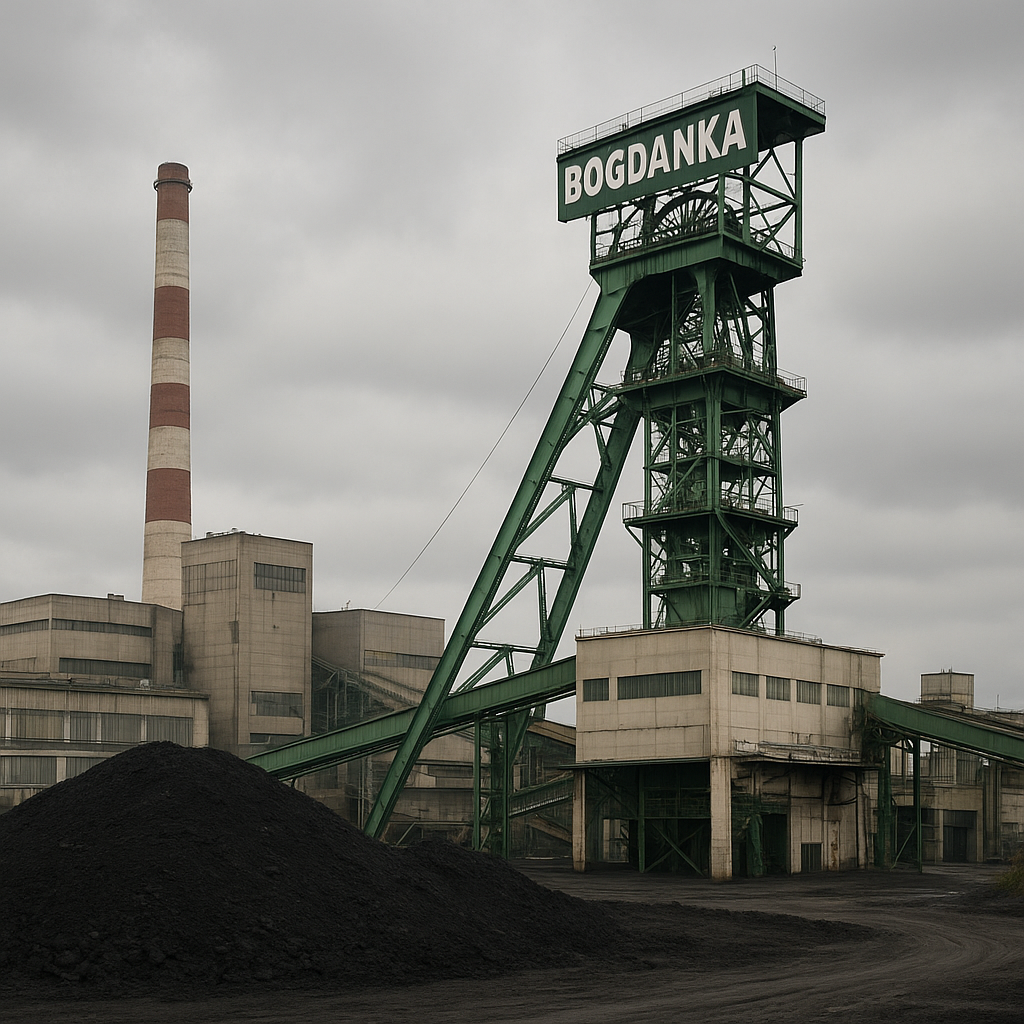
The Bogdanka site in eastern Poland is one of the country’s most important and distinctive coal operations. Located outside the traditional Upper Silesian mining region, this underground complex has shaped the economic life of the Lublin area while symbolizing both the strengths and contradictions of Poland’s long dependence on coal. The following article examines where the mine is situated, what it produces, how it operates, and why it matters — economically, socially and environmentally — as well as some of the most interesting features that set it apart.
Where Bogdanka is located and the geology behind it
Bogdanka is situated in the eastern part of Poland, in the Lublin region — specifically close to the village of Bogdanka and the town of Łęczna in the Lublin Voivodeship. This location places the mine within the so‑called Lublin Coal Basin, a distinct geological area separate from the much larger Upper Silesian Basin to the west. The Lublin Basin contains seams of hard coal that formed under particular geological conditions, offering coal with calorific and chemical characteristics suitable primarily for power generation and some industrial uses.
The deposit in this basin is mined by underground methods. The seams vary in thickness and depth; geological complexity determines where and how extraction is carried out. Compared with the older and often deeper workings of Upper Silesia, the Lublin deposits have sometimes allowed for more modern, mechanized techniques and relatively lower production costs per tonne at the best-performing operations.
What is mined and the mine’s products
The principal product is hard coal destined mostly for the domestic power and industrial markets. Bogdanka’s coal is primarily used as thermal coal for electricity generation and heat production. The mine focuses on producing coal grades that meet the needs of local power plants and heat producers, emphasizing a consistent calorific value and low levels of problematic impurities.
Key operational characteristics include:
- Underground extraction by mechanized longwall systems — modern equipment is used to cut, load and transport the coal to surface points.
- On-site infrastructure for material handling, sorting and dispatch to customers by rail and road.
- Quality control and sampling to ensure deliveries meet contractual specifications for calorific value and ash content.
The mine’s product mix reflects market demand: while most output is thermal coal for power generation, some deliveries supply industrial boilers and other consumers that require a specific coal quality. Over time, Bogdanka has adjusted its production profile to shifting demand patterns in the Polish and regional energy markets.
How the mine operates: technology, safety and logistics
Bogdanka is notable for its adoption of modern mechanized methods. The core extraction technique is the longwall system — a continuous mining approach that slices large panels of coal with shearers or plows, supported by hydraulic shields and followed by conveyor systems that transport the coal to the surface. Mechanization helps increase productivity, lower unit costs and improve safety compared with more labor‑intensive methods.
Safety and operational efficiency are central to the mine’s reputation. Over the years, the company operating the site has invested in:
- modern roof support and monitoring systems to reduce risks associated with rockfall and subsidence;
- advanced ventilation and methane monitoring to control gas hazards common to underground coal workings;
- training programs and emergency response teams to maintain preparedness for underground incidents;
- automated and semi‑automated material handling systems to reduce manual interventions and streamline logistics.
Logistics are an essential part of the operation. The mine is connected to rail and road networks that allow bulk shipments to power plants and industrial customers. Efficient dispatching and coal preparation ensure deliveries meet end‑user requirements, and the company often coordinates closely with large regional energy producers.
Economic significance: jobs, revenue and regional development
Bogdanka plays a major role in the economy of eastern Poland. Its status as one of the few large hard‑coal operations outside Upper Silesia gives it outsized importance for employment, municipal budgets and local suppliers. Some of the economic effects include:
- Employment: The mine is a large local employer, directly providing thousands of jobs in extraction, maintenance, administration and logistics. Indirectly, it supports additional jobs in contractors, suppliers, transport and local services.
- Fiscal contributions: Payroll taxes, corporate taxes and royalties help support municipal and regional budgets. These funds are often used for public investments in infrastructure, education and health services in communities around the mine.
- Supply chain effects: Local companies supply equipment, maintenance services, and materials, while regional transport operators benefit from inbound and outbound freight.
Beyond these immediate impacts, the mine has historically attracted investment into the Lublin region: improved roads and rail links, better utilities and social facilities have followed the presence of a stable, large industrial employer. The operation also has a visible role in corporate social responsibility initiatives, sponsoring cultural, sporting and educational programs that deepen its integration into the community.
Ownership, markets and corporate profile
The company that manages the operation has been an important corporate actor within Poland’s energy and mining sectors. It has engaged with capital markets and strategic partners to finance investments and modernization. One critical development in recent years was the integration of Bogdanka into a larger national energy group, which aligned the mine’s supply relationships with prominent power producers.
Market-wise, the mine’s customers are predominantly domestic power plants and industrial heat producers. This focus on local markets has insulated the operation from some international coal price volatility, but it also links the mine’s fortunes to the trajectory of Polish energy policy and the pace of coal‑to‑gas or coal‑to‑renewable transitions.
Environmental footprint and the challenge of transition
No modern coal operation is free from environmental concerns, and Bogdanka is no exception. Key environmental issues include greenhouse gas emissions associated with coal combustion, local air quality impacts where coal is burned, and site‑specific effects from mining activity such as land subsidence and water table changes.
To manage its environmental footprint, the company has implemented measures in several areas:
- water management systems to treat mine drainage and protect local watercourses;
- land reclamation and post‑mining land use planning aimed at returning disturbed areas to agriculture, forestry or recreational use;
- continuous monitoring of subsidence and targeted mitigation where mining affects built infrastructure;
- efforts to reduce greenhouse gas intensity through improved operational efficiency and lower unintentional methane emissions from mine workings.
However, the broader question of sustainability touches on national energy choices. As Poland and the EU push toward decarbonization, coal mines face long‑term demand reduction. For Bogdanka, the future depends on several, sometimes competing, factors: remaining reserves, market demand for thermal coal, regulatory frameworks, and the willingness of owners and policymakers to invest in economic diversification for the region.
Social aspects and community relations
The social contract between the mine and surrounding communities is multifaceted. For many families in the Lublin area, the mine is a multigenerational employer, providing stable incomes and benefits. The company has historically invested in social programs, ranging from local sports sponsorships to educational scholarships and infrastructure projects.
At the same time, social attention has turned increasingly to transition planning: how to sustain communities when coal demand declines. Discussions include retraining programs, support for small and medium enterprises, and attracting new investors to replace lost employment as mining activity scales down. The mine and regional authorities have engaged in planning and consultations aimed at smoothing this shift.
Interesting facts, innovations and lesser‑known aspects
Bogdanka stands out for a number of distinctive or surprising features that are worth highlighting:
- It is one of Poland’s most prominent coal operations located outside the traditional Silesian coalfields, giving it a unique strategic place in national mining geography.
- The mine has built a reputation for productive, modernized operations — using advanced extraction equipment and process control to keep unit costs competitive within the nation.
- Corporate engagement with capital markets and eventual inclusion in a larger energy group reflect a broader trend of consolidation and vertical integration in Poland’s energy sector.
- Local investments in rescue, training and occupational health have resulted in high standards for emergency preparedness and worker training compared with some older operations.
- Community projects funded by the company have included local cultural events, sports centers and scholarships, helping tie the company’s identity to regional pride.
Technological experimentation has not been absent. Managers have tested automation in material handling, digital systems for mine planning and monitoring, and better techniques for methane drainage and utilization where feasible. The mine’s focus on operational excellence made it an example for other operations seeking cost reductions and higher safety standards.
Future perspectives: risks and opportunities
The medium‑ and long‑term outlook for any coal mine in Europe is shaped by energy policy, climate goals and market dynamics. For Bogdanka, several pathways are possible:
- Continued operation at scale for years to come if domestic demand for thermal coal remains adequate and prices support profitable extraction.
- Gradual reduction in coal output accompanied by retraining and economic diversification in the region, with repurposing of infrastructure and redevelopment of former mining land.
- Strategic shifts toward alternative uses of the site and assets: some former coal sites can host industrial parks, renewable energy installations (for example solar farms on reclaimed land), or facilities for carbon management technologies.
Each path requires careful planning and cooperation among company management, regional governments, employees and national authorities. The choices made will determine whether the mine’s legacy is primarily economic continuity, a managed transition to new industries, or prolonged socioeconomic stress in the communities that depend on it.
Conclusion — continuing relevance without a final summary
Bogdanka is more than a source of coal; it is a regional economic anchor, an example of modern underground mining in Poland, and a focal point for the difficult decisions facing fossil‑fuel regions. Its geological setting in the Lublin Basin, its operational choices, and its social footprint make it a case study in how a single industrial enterprise can shape a locality. The coming years will test the flexibility of the mine and the resilience of local communities as Europe moves toward sustainability and decarbonization — and as the industry navigates the tension between immediate economic needs and long‑term environmental commitments.

