
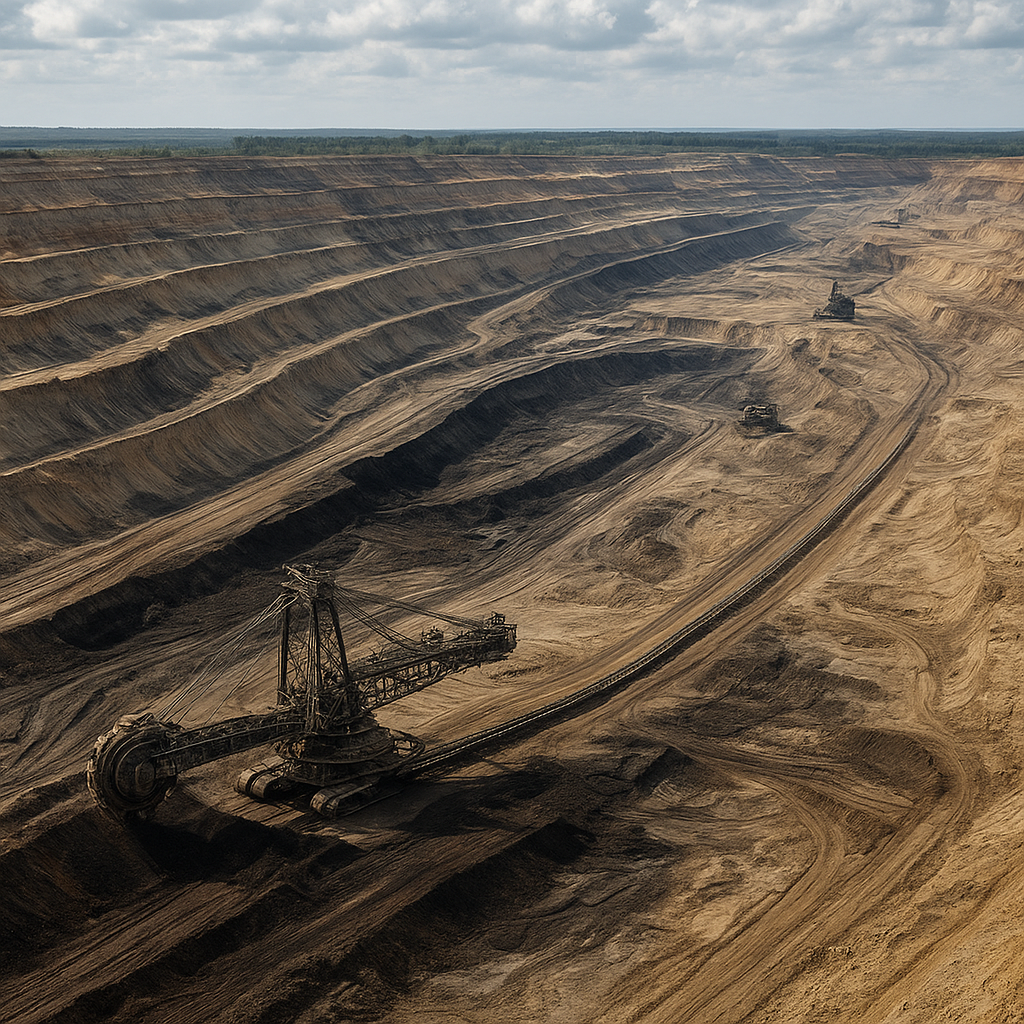
The Hambach Mine is one of Europe’s most prominent examples of large-scale surface mining and the controversies that can surround modern energy production. Located in the heart of the Rhineland coalfields, it has been a focal point for discussions about industrial heritage, local economies, ecological conservation, and the global drive to reduce carbon emissions. This article explores where the mine is, what it produces, why it has mattered economically, and several intriguing aspects of its operation and history. Throughout the text, key concepts and terms are highlighted to help guide readers through the technical, social, and environmental dimensions of this significant site.
Location and geological setting
The Hambach mining complex sits in the western German state of North Rhine-Westphalia, inside the broader Rhenish lignite mining region. This area is one of the largest and most productive lignite-bearing basins in Europe, stretching across a landscape between the cities of Cologne, Aachen and Düsseldorf. The mine is named after the small former village Hambach, and its operations have shaped the surrounding municipalities and countryside for decades.
Geologically, the deposit is composed of young, Tertiary-age sediments that contain thick seams of low-ranked brown coal, commonly called lignite. These seams are relatively near the surface, which makes them accessible to large-scale excavation using surface mining techniques rather than underground shafts. The geology that produced these seams—ancient peat swamps buried and compacted over millions of years—has resulted in a fuel that is abundant in the region but has a lower calorific value and higher moisture content than hard coal.
Why this location matters
The distribution of lignite in the Rhenish basin is crucial to understanding the Hambach operation. Because lignite has high moisture and lower energy density, it is economically viable only when burned close to where it is mined—this is why Rhenish power stations are clustered near the extraction sites. The proximity to major population centers and industrial consumers in western Germany has made the location strategically important for providing affordable baseload electricity for decades.
Mining operations and production
The Hambach Mine operates as a classic example of large-scale open-pit extraction. Massive machines remove the overburden, expose the coal seams, and extract the lignite in continuous operations. Excavated coal is typically transported by long conveyor belts directly to adjacent power plants or to processing and storage facilities nearby. The mine’s footprint has evolved over time, expanding and contracting depending on demand, regulatory decisions, and planned reclamation projects.
Key operational features:
- Use of enormous mechanical systems, including giant bucket-wheel excavators, conveyor networks, and heavy haulage fleets.
- Continuous removal and stockpiling of overburden materials for later landscape rehabilitation.
- Direct supply chains to lignite-fired power plants that provide grid stability and dispatchable generation.
These systems allow large annual volumes of lignite to be delivered to power stations with relatively low unit cost compared with imported fuels. For many years, that cost advantage supported the competitiveness of coal-fired generation in local and national markets. At the same time, the scale of Hambach’s operations—both in terms of machinery and the physical area disturbed—makes it a high-profile example of industrial land use.
Technology and scale
Some pieces of mining equipment used at Hambach rank among the largest land vehicles ever built. The engineering required for excavation and material handling is impressive: continuous, mechanized processes move millions of cubic meters of overburden and tens of millions of tonnes of coal over a mining lifetime. The mine’s conveyor systems run for kilometers, connecting the excavation face to power plants and processing areas. These technological systems are emblematic of 20th- and 21st-century industrial engineering applied to mineral extraction.
Economic significance
At its height, the Hambach Mine was a major economic engine for the region. The production of lignite underpinned local employment—from direct jobs in mining and power generation to indirect roles in transportation, equipment maintenance, and regional services. The mine supported local tax bases and municipal budgets and contributed to Germany’s domestic electricity supply, ensuring a measure of energy security and independence from imported fossil fuels.
From a broader macroeconomic perspective, lignite-fired generation has provided stable, base-load electricity that facilitated industrial activity and helped keep consumer costs relatively stable. That role has been valuable for energy-intensive industries, and the presence of lignite reserves has shaped regional development strategies for generations. Companies like RWE, which operate the mine and associated power plants, have been central employers and investors in the region, tying corporate fortunes to the fate of the mine.
Costs and benefits
Economic benefits, however, have been counterbalanced by social and environmental costs. Although the mine created jobs and contributed to the region’s prosperity, it also required land clearance, relocation of settlements, and long-term changes to local land use. The price of cheap, local fuel has been reflected in environmental externalities—particularly greenhouse gas emissions and landscape transformation—that the public and policymakers have had to weigh against short-term economic gains.
Environmental and social controversies
No discussion of Hambach would be complete without addressing the contentious debates that have surrounded its expansion and operation. The Hambach area includes patches of mixed forest and agricultural land, and the expansion of mining activity has at times threatened both habitats and communities. The most prominent flashpoint has been the struggle over the Hambach Forest, where environmental activists, local residents, and industry have clashed over the fate of a long-standing woodland that became a symbol of opposition to coal-driven climate policy.
Protests and occupations in the forest attracted national and international media attention, highlighting the tensions between climate activism and industrial interests. These demonstrations have included tree-sits, camps, legal challenges, and mass demonstrations. For environmental campaigners, Hambach embodied the urgency of transitioning away from carbon-intensive fuels; for proponents of continued operation, the mine represented jobs, regional identity, and contractual obligations tied to energy infrastructure.
Environmental impacts
The environmental impacts of lignite extraction are significant and multifaceted:
- Carbon emissions: Lignite is one of the most carbon-intensive fossil fuels per unit of energy produced, making operations like Hambach a major source of greenhouse gases.
- Landscape alteration: Large tracts of land are excavated, creating deep pits and vast spoil heaps that dramatically change local topography.
- Water and soil: Mining affects groundwater tables and can require extensive water management. Soil removal and storage complicate later attempts at re-vegetation and restoration.
- Biodiversity loss: Natural habitats—forests, meadows, and wetlands—can be fragmented or destroyed during expansion.
These impacts have led to legal challenges, municipal negotiations, and national-level debates over compensation, reclamation, and the pace of any energy transition. The concept of a managed or planned closure, followed by ecological restoration, has been central to reconciling the mine’s legacy with future land use.
Policy context and the energy transition
The fate of Hambach is intertwined with Germany’s broader policy choices about energy and climate. As the country has committed to decarbonization targets, the role of coal, particularly lignite, has come under review. Policymakers must balance energy reliability, industrial competitiveness, social impacts, and climate obligations. The discussion around Hambach has therefore been about more than a single mine—it has become a touchstone in the national debate over how quickly and equitably to phase out coal.
At the same time, operators and governments have explored pathways to manage the social consequences of closure. This includes financial compensation for affected communities, retraining programs for displaced workers, and investment in alternative industries or infrastructure that can provide new employment opportunities in former mining areas. These measures reflect a recognition that the transition away from coal will have concentrated regional impacts and will require targeted policies to be socially sustainable.
Rehabilitation and future land use
Once mining ceases in an area like Hambach, comprehensive rehabilitation plans are required. Typical approaches include backfilling pits, reshaping topography, replacing topsoil, and implementing long-term afforestation or aquatic ecosystem creation. Reclaimed former mining sites can be converted to recreational areas, nature reserves, or new industrial zones. The success of rehabilitation depends on funding, technical expertise, and long-term stewardship commitments from both operators and public authorities.
Interesting and lesser-known aspects
Beyond the headlines, the Hambach Mine contains several fascinating technical, cultural, and historical details worth noting.
- Industrial scale and machinery: The sheer size of the mine and its equipment has made Hambach a showcase for mining engineering. Giant bucket-wheel excavators and kilometer-long conveyor belts have made continuous, high-volume production possible, turning landscapes into highly mechanized industrial systems.
- Local cultural memory: The mine has shaped local identity—memories of village relocations, the sound of mining equipment, and the rhythms of plant shifts are woven into regional culture.
- Scientific interest: Geologists and environmental scientists study reclaimed areas to learn how ecosystems recover, how soils can be reconstructed, and which plant communities best re-establish on post-mining landforms.
- Art and protest: The protests at Hambach inspired numerous works of art, photography projects, and documentary films that explore the clash between industrial growth and ecological preservation.
- Energy systems engineering: Hambach is an example of how fuel supply chains and power generation are integrated—providing a living laboratory for studying grid stability, dispatchable generation, and how intermittent renewables can be balanced with conventional assets.
Visitors and interpretation
While active operations limit casual access, the region has educational initiatives and interpretive materials that explain the mining process, its social history, and the plans for post-mining landscapes. Museums and regional visitor centers often combine technical exhibits with oral histories from mine workers and residents, creating a multifaceted narrative about industrial transformation.
Concluding observations
Hambach Mine exemplifies the tensions of modern industrial societies: abundant local resources enabling economic development on one hand, and the environmental and social costs of their exploitation on the other. The site’s technical sophistication—reflected in enormous excavators, complex material-handling systems, and continuous large-volume output—contrasts with the fragility of nearby ecosystems and communities. As energy systems evolve, Hambach will remain a case study in how societies negotiate transitions from legacy energy systems to more sustainable alternatives.
Whatever the future holds for the Hambach area, its story will continue to inform debates about land use, the social contract between industry and community, and how best to reconcile the demands of energy supply with the imperatives of climate action and environmental stewardship. The mine’s legacy—industrial, human, and ecological—will be a subject of study, memory, and policy for many years to come.

