
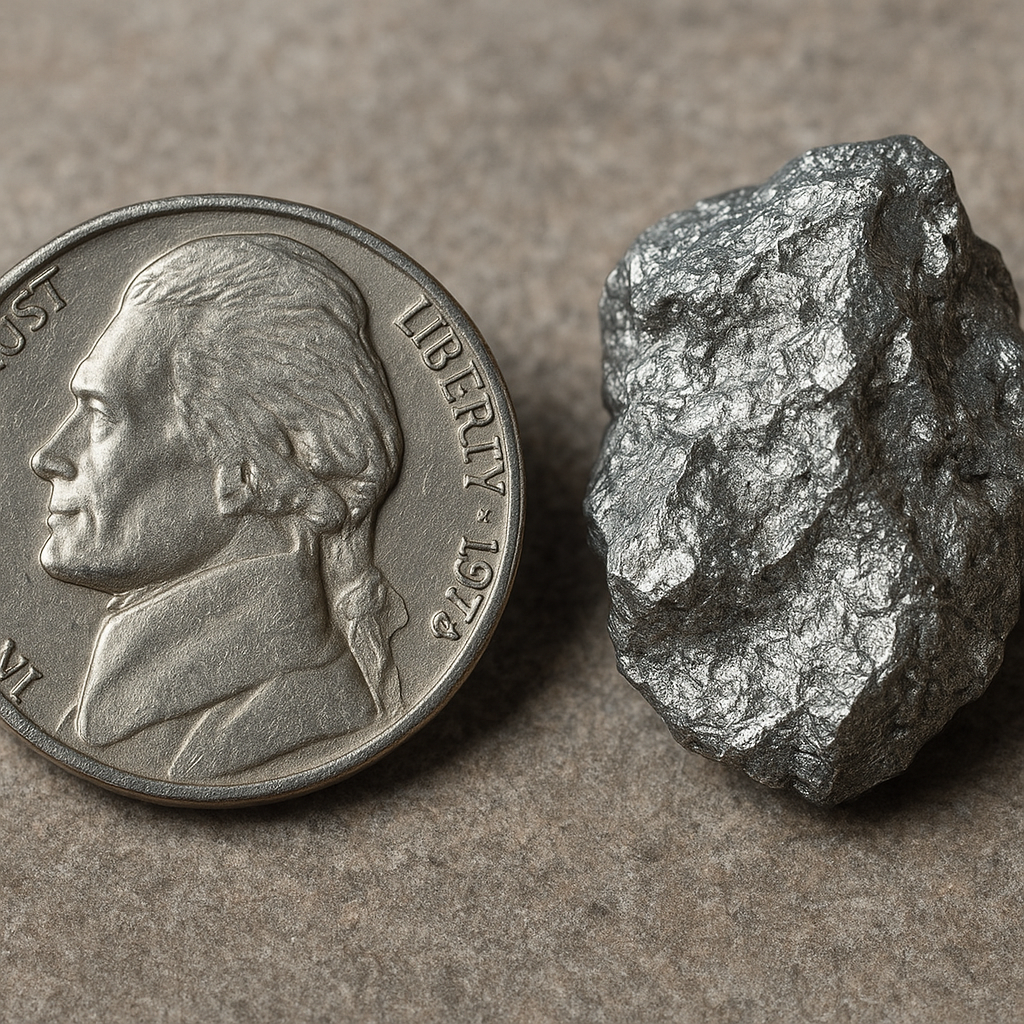
Nickel is an often-overlooked but indispensable transition metal that quietly shapes modern industry, technology and daily life. From the gleaming facades of skyscrapers to the batteries powering electric vehicles, this silvery-white element performs roles that range from structural reinforcement to chemical catalysis. In the following sections we will explore where nickel appears in nature, how it is extracted and processed, the many ways it is used, and several intriguing scientific, environmental and economic aspects surrounding it.
Where Nickel Occurs: Geology, Minerals and Global Production
The element Nickel (symbol Ni, atomic number 28) occurs in the Earth’s crust primarily in two broad types of deposits: magmatic sulfide ores and laterite ores. Magmatic sulfide deposits—formed from mafic and ultramafic magmas—are typically richer in nickel and easier to process; common minerals include pentlandite ((Fe,Ni)9S8), millerite (NiS) and vaesite (NiS2). Laterite deposits form in tropical climates through intense weathering of ultramafic rocks, producing nickel-bearing clay minerals such as garnierite and limonite. These laterites can be vast but contain nickel at lower grades.
Major producing regions
- Indonesia and the Philippines are notable for extensive laterite resources and have become dominant suppliers, particularly after policy changes encouraging domestic processing.
- Russia, Canada and Australia have significant sulfide deposits; the Sudbury Basin (Canada) and Norilsk-Talnakh (Russia) are historic centers of nickel mining.
- New Caledonia is another important laterite producer with substantial reserves and a long history of nickel extraction.
Global production has fluctuated with demand from the stainless steel and battery industries. The way nickel is mined and refined varies with ore type: sulfide ores are often concentrated and smelted, while laterites may be processed via pyrometallurgical routes (ferronickel and smelting) or hydrometallurgical methods such as high-pressure acid leach (HPAL) to produce mixed hydroxide precipitates or nickel matte.
Physical and Chemical Properties Relevant to Use
Nickel is a silvery, lustrous metal with a density around 8.9 g/cm3, a melting point of approximately 1455 °C, and a boiling point near 2913 °C. Its electronic configuration ([Ar] 3d8 4s2) gives rise to several stable oxidation states in compounds, most commonly +2 and +3, and occasionally +1 and +4 in specialized compounds.
Two properties of nickel are particularly valuable: its mechanical strength and its chemical resistance. Nickel improves toughness and ductility when alloyed with iron and chromium; it also forms passive oxide layers that enhance resistance to corrosion. Additionally, nickel exhibits ferromagnetic behavior at room temperature up to a Curie point of about 627 K, which has implications for magnetic materials and certain electronic applications.
Isotopes and special forms
- Natural nickel consists of several stable isotopes—Ni-58, Ni-60, Ni-61, Ni-62 and Ni-64—with Ni-58 being the most abundant.
- Radioisotopes like Ni-63 have niche applications in electron capture detectors and low-power betavoltaic devices because of their predictable beta emission.
Applications: From Stainless Steel to Catalysts
The uses of nickel are broad, and a few sectors dominate consumption. Historically and today, the most substantial consumer of nickel is the stainless steel industry. Adding nickel to iron-chromium alloys significantly improves formability, toughness and resistance to corrosion and oxidation, which is why stainless steel often contains 8–20% nickel depending on grade.
Major application areas
- Stainless steel and other corrosion-resistant alloys: the single largest use, responsible for a majority of nickel demand.
- batteries: nickel is essential in several rechargeable battery chemistries, notably nickel-cadmium (NiCd), nickel-metal hydride (NiMH), and nickel-containing lithium-ion cathodes such as NMC (nickel-manganese-cobalt) and NCA (nickel-cobalt-aluminum).
- Superalloys for aerospace and power generation: these high-performance alloys (e.g., Inconel) rely on nickel’s high-temperature strength and corrosion resistance for jet engines and gas turbines.
- Electroplating and surface finishes: nickel plating provides wear resistance, corrosion protection, and an attractive finish for decorative and functional uses.
- Catalysis: nickel-based catalysts are used in hydrogenation reactions, reforming and methanation processes.
- Magnetic materials: nickel is a component in permalloy and other magnetic alloys used in transformers, sensors and recording heads due to its favorable magnetism and permeability.
- Coins and consumer goods: many coins, including the “nickel” in the United States, are copper-nickel alloys (typically 75% copper, 25% nickel) for durability and appearance.
In many contexts the role of nickel is to impart a balance of properties—strength, ductility, corrosion resistance and stability at elevated temperatures—that few single metals can match.
Alloys and Superalloys: Engineering with Nickel
When alloyed, nickel significantly changes the behavior of other metals. In stainless steels, nickel stabilizes the austenitic phase of iron, making the alloy non-magnetic and improving toughness at low temperatures; 300-series stainless steels (e.g., 304, 316) rely on nickel for these characteristics. In superalloys—complex mixtures containing nickel, chromium, cobalt, molybdenum and other elements—nickel acts as a matrix that holds strengthening precipitates and oxides in place at very high temperatures, enabling turbine blades and engine components to operate in extreme environments.
A well-known family of nickel-based superalloys includes the Inconel series. Components made from Inconel maintain mechanical integrity and resist oxidation and corrosion at temperatures where many other alloys would fail, which is crucial in aerospace and chemical processing industries.
Nickel in Batteries and the Energy Transition
Nickel has assumed a pivotal role in the global energy transition because high-nickel cathodes increase the energy density of lithium-ion batteries. NMC and NCA cathodes that incorporate higher proportions of nickel allow for longer driving ranges in electric vehicles and higher energy storage per unit mass—factors driving strong demand for battery-grade nickel. This has triggered investment in refining capacity and new processing routes to produce battery-grade nickel sulfate and mixed hydroxide precipitate (MHP).
There are technological and environmental trade-offs: high-nickel chemistries can be more reactive and require careful cell design and electrolyte formulation, and producing battery-grade nickel from laterites can be energy- and reagent-intensive. However, the push to electrify transport and store renewable energy means nickel demand is projected to remain robust.
Environmental, Health and Economic Considerations
Mining and refining nickel has tangible environmental footprints. Laterite mining often involves clearing tropical forests and can create large volumes of low-grade tailings. Smelting sulfide ores produces sulfur dioxide that must be controlled to prevent acid rain, while hydrometallurgical techniques consume significant water and chemicals. Improving the sustainability of nickel production involves better waste management, decarbonization of processing, and increased recycling.
On the health side, nickel metal is relatively stable, but some nickel compounds are hazardous. Occupational exposure to nickel dust and fumes has been associated with respiratory problems and an increased risk of certain cancers—particularly for workers exposed to soluble nickel compounds or nickel refining dusts. Moreover, nickel is one of the most common contact allergens: many people develop allergic contact dermatitis from prolonged skin contact with nickel-containing objects such as jewelry, coins or watchbands. Awareness and control measures in workplaces, along with product standards for consumer items, have reduced risks in many contexts.
Economics and geopolitics
- Nickel prices are volatile, influenced by stainless steel demand, battery industry growth and supply disruptions.
- Resource nationalism and export controls (notably in Southeast Asia) have reshaped supply chains, encouraging onshore processing and investment in refining capacity in consuming countries.
- Recycling of nickel-containing scrap—from stainless steel, batteries and electronics—is economically attractive and reduces pressure on primary mining, but the efficiency and scale of recycling systems vary by region.
Interesting Scientific and Historical Notes
Nickel has a colorful human history. The metal was named after a German mineralogist’s term for a mischievous sprite—“Kupfernickel”—because miners mistook its ores for copper minerals but found them difficult to extract. Nickel also appears in meteorites; iron-nickel alloys are common in many extraterrestrial bodies, providing clues to planetary formation and core composition.
From a scientific standpoint, nickel sits near the center of the first row of transition metals and shows rich coordination chemistry. Nickel complexes are studied for catalysis, model systems in bioinorganic chemistry (the nickel center in some hydrogenase enzymes), and novel magnetic and electronic materials. The element’s ability to adopt multiple oxidation states and coordinate geometries makes it a flexible actor in both inorganic synthesis and materials design.
Challenges and Future Directions
Looking forward, several trends will shape the nickel landscape:
- Decarbonizing nickel production by electrifying smelting and refining operations and deploying renewable energy at mine sites.
- Scaling up environmentally sound processing of laterite ores—improving HPAL technologies and reducing reagent footprints.
- Enhancing battery recycling technologies to recover nickel efficiently from spent lithium-ion cells and reduce reliance on primary mining.
- Developing low-nickel or nickel-free alternatives where allergies or supply issues demand substitution, balanced against performance trade-offs in high-temperature and battery applications.
- Strengthening responsible sourcing frameworks to address social and ecological impacts in producing regions such as Indonesia and the Philippines.
Nickel’s path from deep geological formations to everyday uses and critical technologies highlights the complex interplay of geology, chemistry, engineering and policy. Its properties—mechanical resilience, chemical durability and electrochemical versatility—ensure nickel will remain central to many industries. At the same time, evolving environmental standards, growing demand from energy storage and changing geopolitical dynamics are driving innovation in how nickel is mined, processed and reused.