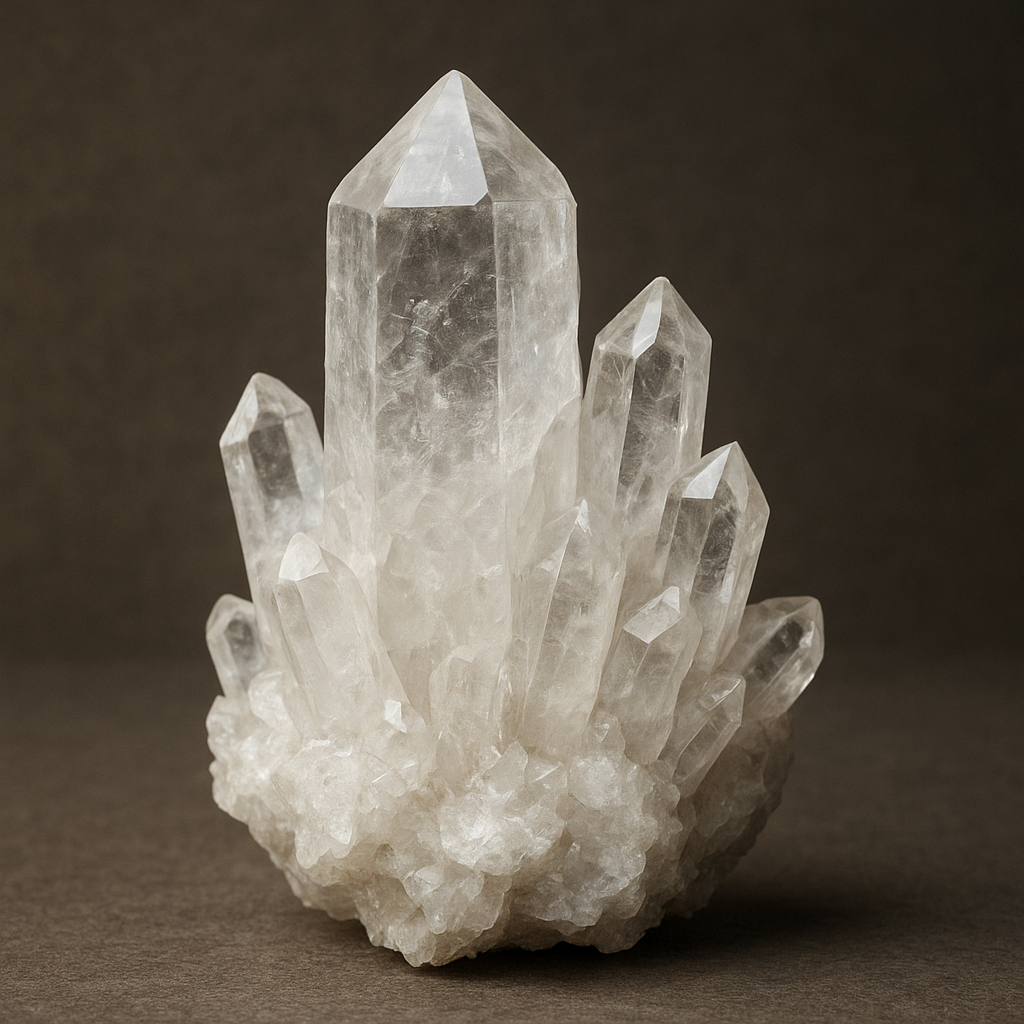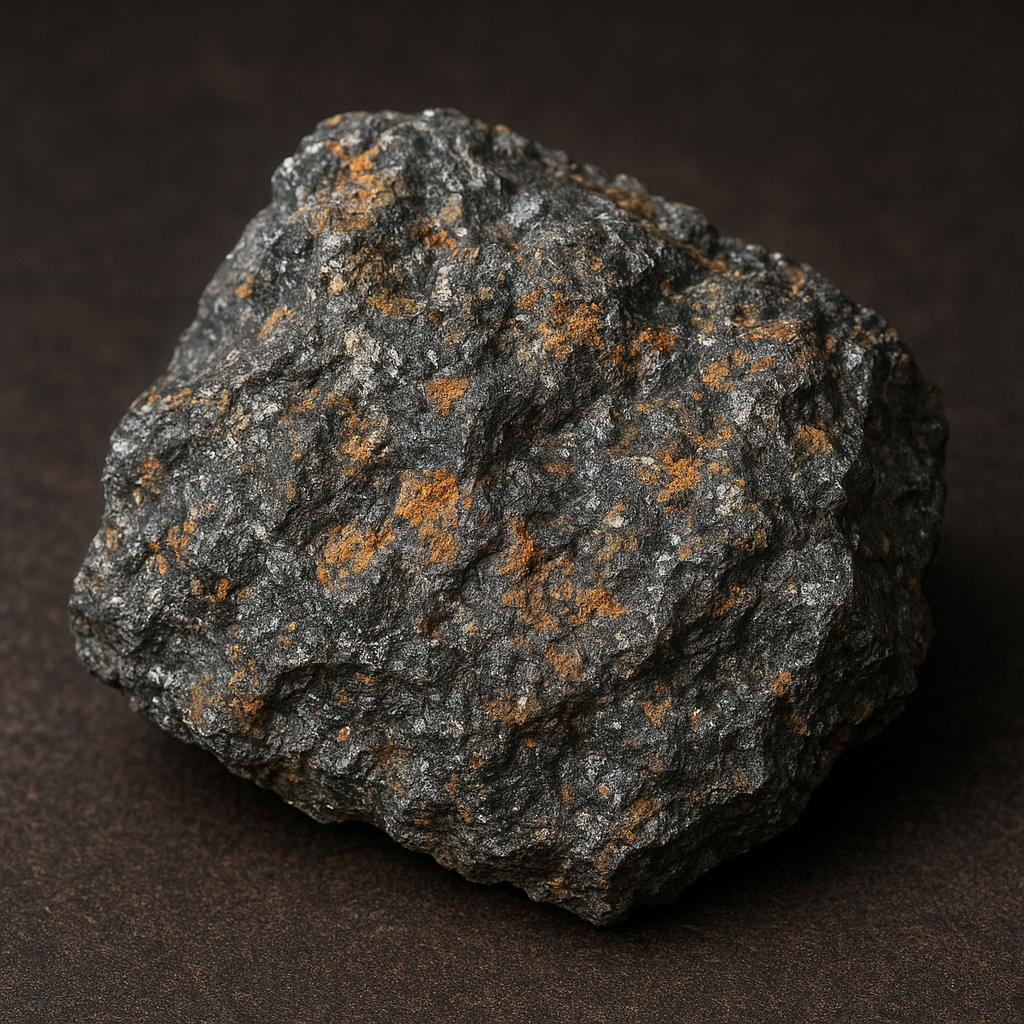
Thorite is a mineral that captures attention not only for its striking association with heavy radioactive elements but also for the geological stories it tells. Often overlooked in favor of more famous ores and gemstones, thorite stands at the intersection of mineralogy, geochemistry, and energy-related research. This article explores the mineral’s physical nature, where it is found, its practical and scientific uses, and some of the intriguing phenomena connected to its radioactivity and chemistry.
Mineralogy and Physical Characteristics
Thorite is a silicate mineral whose ideal chemical composition is dominated by thorium, usually expressed as ThSiO4, although natural specimens commonly contain significant substitutions by uranium and other rare elements. It crystallizes in the tetragonal system and is isomorphous with the mineral zircon, meaning it shares a similar crystal framework despite the very different atomic weights involved.
Appearance and structure
The mineral typically appears in shades of brown, black, red-brown, or yellow and ranges from translucent to opaque. Fresh crystals may display a vitreous to subadamantine luster, but prolonged internal radiation often damages the crystal lattice, rendering specimens dull and amorphous in appearance. This radiation-induced disruption is known as metamictization, a process that profoundly affects thorite’s optical and structural properties and is central to much of the mineral’s scientific interest.
Physical properties and radiation effects
- Because of the heavy elements it contains, thorite has a relatively high apparent density compared with many silicates.
- Its mechanical and optical characteristics vary depending on the degree of metamictization: pristine crystals are harder and more translucent, while metamict specimens are softer and more prone to alteration.
- The ongoing alpha decay of thorium and uranium within thorite produces damage tracks and helium accumulation in the mineral, which can lead to changes in color, structural breakdown, and release of daughter isotopes such as radium and radon gas to the surrounding environment.
Geological Occurrence and Global Distribution
Thorite forms in a variety of geological settings, reflecting the mobility of thorium and uranium under certain conditions and their preference for high-silica environments. It is most commonly encountered in felsic igneous rocks and related secondary deposits.
Typical host rocks and formation environments
- Granite pegmatites and late-stage felsic intrusions, where incompatible elements concentrate during the final stages of magmatic differentiation.
- Hydrothermal veins and greisens, in which hot fluids mobilize and deposit thorium- and uranium-bearing phases alongside other accessory minerals.
- Alluvial and placer deposits derived from the weathering of thorium-rich source rocks; although monazite and other rare earth-bearing minerals often dominate placer concentrates, thorite can be present especially in areas with high primary thorium concentrations.
- In some cases, association with carbonatites and alkaline igneous complexes results in enrichment of thorium alongside rare earth elements.
Notable localities and type occurrence
The mineral was first described from coastal localities near Arendal in southern Norway; these classic occurrences helped define thorite’s identity in the early mineralogical literature. Today, thorite has been reported from many parts of the world, including Scandinavia, parts of continental Europe, North America (notably in certain granitic terranes and uranium-bearing districts), Madagascar, India, and Greenland. In many regions, thorite specimens are collected by mineral enthusiasts and studied by researchers investigating the distribution of radioactive elements in the crust.
Applications and Uses
Thorite itself is primarily of interest as a source mineral and as a scientific specimen rather than as a widely exploited industrial commodity. Its significance stems from the presence of thorium and uranium, elements with economic, historical, and research importance.
Source of thorium and uranium
As a natural repository of thorium, thorite contributes to the inventory of thorium-bearing ores. In many deposits, thorite exists alongside other thorium-bearing minerals such as monazite or thorianite; the relative abundance of these minerals determines the economic importance of any given deposit. Thorium derived from mineral ores has been investigated and used historically in various applications, including as an additive in certain high-temperature ceramics and alloys, and in gas mantles before safer alternatives were developed.
Research, geochronology and material science
- Because thorite incorporates both thorium and uranium into its structure, it has been used in U–Th–Pb geochronological studies. The decay chains of these elements allow scientists to determine crystallization ages and thermal histories of host rocks, though the complexities introduced by metamictization and element mobility often demand careful analytical approaches.
- Specimens of thorite are valuable to mineralogists studying the effects of long-term alpha radiation on crystal lattices. Processes such as recrystallization upon heating, metamict damage, and helium retention are subjects of active study that have broader implications for how radioactive minerals behave over geologic time.
- In materials science and nuclear research, thorium-bearing minerals provide natural laboratories for assessing radiation damage, corrosion, and the behavior of actinides in silicate matrices.
Nuclear energy context
While thorite itself is not used directly as a fuel, the thorium it contains has attracted interest for its potential role in certain nuclear fuel cycles. Natural thorium is fertile rather than fissile: it can be converted into fissile isotopes in a reactor environment. This has prompted research into thorium-based fuels and reactor concepts such as molten-salt-reactors, where thorium’s characteristics—relative abundance compared to uranium in some regions and certain nuclear properties—are considered advantages. Discussions of thorium-based energy systems stress technological, regulatory, and economic challenges rather than treating thorite as a direct, processed fuel.
Environmental, Health and Safety Considerations
Because thorite commonly contains significant quantities of radioactive elements, it raises important environmental and health issues in both natural settings and in the context of prospecting or collecting specimens.
Radiation hazards and safety precautions
- Radioactivity: Thorite emits alpha, beta, and gamma radiation through the decay of thorium and uranium and their daughters. Handling specimens requires awareness of radiation levels; routine precautions include minimizing exposure time, maximizing distance, and using shielding where appropriate.
- Radon: A key hazard associated with thorium- and uranium-bearing minerals is the production of radon gas, a radioactive noble gas that can accumulate in poorly ventilated spaces. Radon exposure is an inhalation risk linked to certain health outcomes, so thorite-bearing materials stored indoors should be managed to avoid buildup.
- Dust and ingestion risks: Crushing or grinding thorite to create dust should be avoided because inhalation or ingestion of radioactive particulates increases health risks. Collectors and researchers follow established radiological safety protocols when sampling or analyzing such minerals.
Environmental impacts of mining and processing
Mining thorium- and uranium-bearing ores can produce radioactive tailings and concentrated wastes. Responsible mine planning, waste management, and remediation strategies are essential to limit long-term releases of mobile radionuclides into water and ecosystems. Environmental regulations in many countries reflect the need to prevent radon migration, control tailings, and monitor ecological effects.
Interesting Phenomena and Scientific Questions
Thorite is not merely an economic curiosity; it presents a number of fascinating scientific puzzles and opportunities for study.
Metamictization and annealing
The transformation from an ordered crystal into an amorphous, metamict state through continuous alpha decay provides a natural record of radiation damage. Scientists study this process to understand defect accumulation, the kinetics of amorphization, and the potential for thermal annealing—recovery of crystalline order—when metamict minerals are heated by geological events. These behaviors inform broader topics such as the long-term stability of nuclear waste forms and the evolution of mineral properties over geologic time.
Trace elements and actinide chemistry
Thorite’s ability to host actinides and other trace elements makes it a subject for geochemical research. Substitution mechanisms, partitioning behavior during magmatic differentiation, and mobility during fluid-rock interaction are all areas where thorite provides natural examples. Understanding how thorium and uranium partition into silicate lattices is relevant to petrology, ore genesis, and the safe immobilization of radioactive elements.
Aesthetic and collector interest
Well-formed thorite crystals, particularly those that remain crystalline rather than metamict, are sought by mineral collectors. Such specimens can be prized for their unusual color, their association with other rare minerals, and the story they tell about heavy-element concentrations in specialized geological environments.
Final Remarks
Thorite occupies a distinctive niche in mineralogy: it is at once a carrier of economically and scientifically significant elements and a natural laboratory for the study of radiation effects. Its occurrences span diverse geological environments, and its presence raises important questions about resource use, environmental stewardship, and the long-term behavior of radioactive matter in Earth’s crust. Collectors, researchers, and those interested in the history and future of nuclear materials will find thorite to be a mineral of enduring interest.