Taaffeite is one of the rarest gem minerals on Earth, prized by collectors and gemologists for its scarcity, subtle colors, and intriguing history. Often confused with more familiar gems, it presents unique challenges for identification and is associated with stories of serendipity and scientific curiosity. This article explores the origins, geology, properties, uses, and cultural value of taaffeite, along with practical notes for collectors and connections to broader gemological topics.
History and Discovery
The story of taaffeite begins with a stroke of observation. In 1945 Count Edward Charles Richard Taaffe purchased a parcel of cut stones that he believed to be spinel. Upon close inspection he noticed unusual optical properties and sent one piece for analysis to gem testing laboratories. The stone turned out to be a previously unknown mineral, and it was named taaffeite in his honor. This discovery is notable because the type specimen was a cut and polished gem rather than a crystal sample straight from the field, a rare sequence in mineral discovery.
Following its recognition, taaffeite gradually attracted attention in the gem trade and scientific literature. Throughout the latter half of the twentieth century additional occurrences were identified, expanding knowledge of its geological contexts and physical properties. Because it is so seldom found in gem-quality sizes, taaffeite has remained a niche but fascinating subject for mineralogists, gemologists, and collectors worldwide.
Geology and Global Occurrence
Taaffeite is a complex beryllium-magnesium-aluminum oxide that forms under particular geological conditions. It is most commonly recovered from alluvial deposits—sediments transported by water from their original host rocks—rather than directly from bedrock in situ. This makes locating primary sources challenging and contributes to its rarity on the open market.
Main localities
- Sri Lanka — Historically one of the most important sources of gem-quality taaffeite. Alluvial gem gravels on the island have yielded the majority of the classic specimens known to collectors.
- Myanmar (Burma) — Known for producing some fine examples, often alongside other gem minerals found in alluvial or weathered metamorphic terrains.
- Tanzania (particularly the Umba Valley and surrounding areas) — Another recognized source; the East African gem fields yield diverse and sometimes rare species including taaffeite.
- Additional scattered finds have occurred in small quantities from other regions with the right metamorphic or weathering environments, occasionally including parts of China and southern Africa.
The geological settings that host taaffeite are typically metamorphic terrains where beryllium-bearing fluids and magmatic or metamorphic activity produced an unusual chemical environment. Crystal growth may be inhibited in host rocks, so gem-quality taaffeite is most often liberated into sediment and concentrated in alluvial placers where miners recover it alongside corundum (sapphire and ruby), spinel, garnet, and other heavy minerals.
Physical and Optical Properties
Taaffeite’s combination of physical and optical characteristics is what makes it both visually appealing and scientifically interesting. Below are the key attributes collectors and gemologists look for:
- Crystal system: Trigonal (often presenting tabular or pseudohexagonal habit in crystal form, though gem samples are commonly from alluvial, rounded fragments).
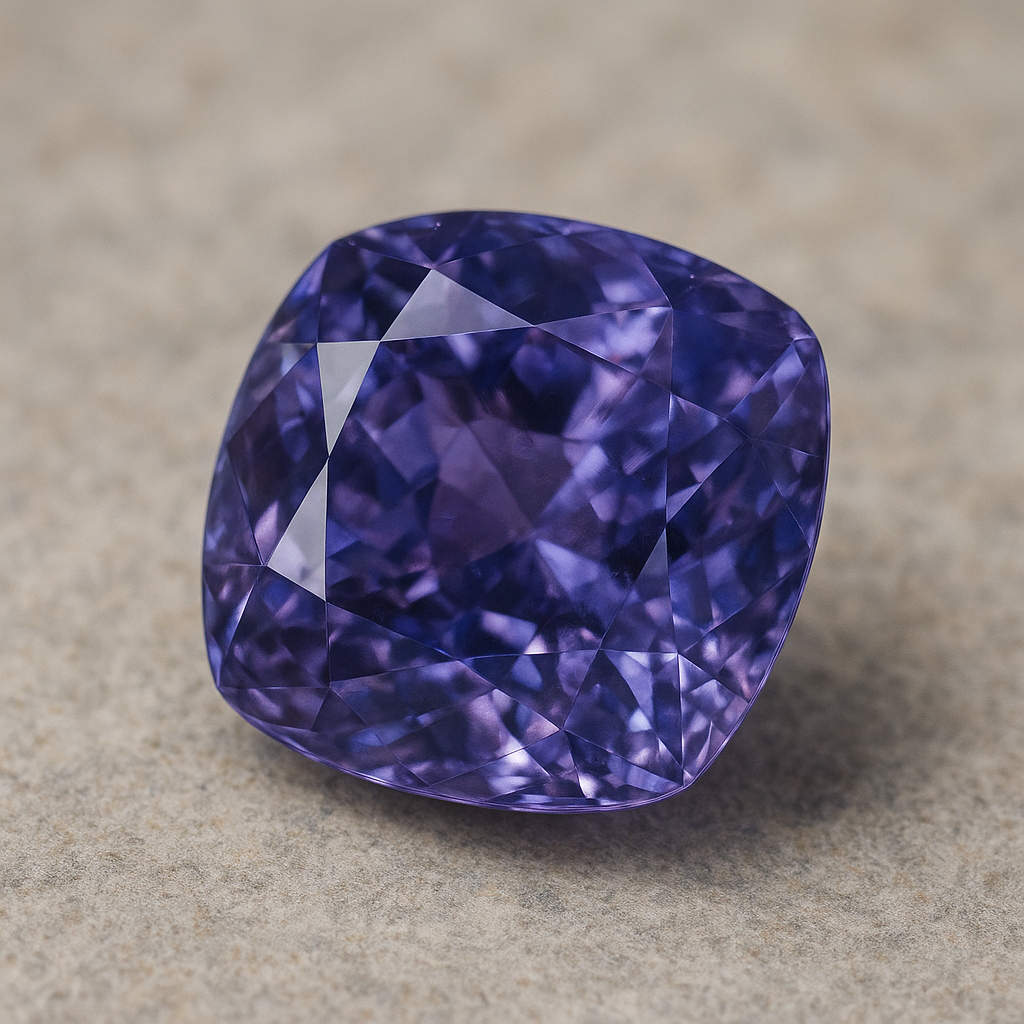
- Color: Ranges from colorless through pale pink, violet, lavender, and occasionally green or reddish tones. Color intensity can be subtle, and many gems show attractive pastel hues.
- Pleochroism: Taaffeite often displays noticeable pleochroism—different colors when viewed from different crystal directions—a key diagnostic feature that helps distinguish it from similar-looking stones.
- Refractive behavior: It is singly refractive to weakly birefringent in some specimens; gemological instruments such as refractometers and polarizing microscopes are used for accurate assessment. Its refractive indices are generally higher than spinel’s, which aids separation.
- Hardness: Relatively hard for a gemstone—commonly cited around 8 to 8.5 on the Mohs scale—making it durable enough for many types of jewelry when set carefully.
- Specific gravity: Intermediate to fairly high, which is consistent with many oxide minerals that contain heavy cations like magnesium and aluminum.
- Transparency: Ranges from transparent to translucent; top-quality faceted gems are prized for their clarity and brilliance.
Because taaffeite often resembles spinel or light sapphire to the unaided eye, gemologists rely on a suite of tests—refractive index, specific gravity, pleochroism checks, and spectroscopic analysis—to positively identify it. Advanced techniques such as Raman spectroscopy and X-ray diffraction provide definitive identification when needed.
Identification Challenges and Gemological Tests
Taaffeite’s rarity combined with its visual similarity to other gemstones makes misidentification a persistent issue. For jewelers and collectors, distinguishing taaffeite from spinel and corundum is crucial, and several practical tests are commonly used:
- Refractive index (RI): Using a refractometer, one can measure RI values; taaffeite typically registers higher than spinel, though overlapping ranges exist in some cases.
- Pleochroism examination: Under polarized light or using a dichroscope, taaffeite often shows pleochroism (e.g., violet and colorless or pink and purple tones), a trait not present in spinel.
- Spectroscopy: Visible and infrared spectroscopy can reveal absorption lines or bands characteristic of taaffeite and its trace elements, helping to differentiate it from look-alikes.
- Specific gravity: Density measurements can help separate taaffeite from lighter or heavier minerals of similar appearance.
- Advanced lab techniques: Raman spectroscopy and X-ray diffraction are conclusive; these methods probe the internal lattice and vibrational modes unique to taaffeite’s crystal chemistry.
For the average buyer, reliable identification usually requires sending the stone to a reputable gemological laboratory. Certificates by established institutions add confidence and value to taaffeite gemstones on the market.
Uses and Applications
Taaffeite’s primary role is as a collector’s gemstone. Its rarity and aesthetic qualities make it highly desirable for those who specialize in unusual or scarce stones. Uses include:
- Fine jewelry: While uncommon, faceted taaffeite is sometimes set into rings, pendants, and earrings. Because gem-quality stones are small and rare, settings are often bespoke or part of high-value pieces.
- Collector specimens: Many taaffeite stones are retained as loose gems or mounted in display pieces, prized more for rarity and historical significance than for widespread commercial wear.
- Educational and research specimens: Mineral collections at universities and museums often include taaffeite to illustrate rare mineral chemistry and gemological identification challenges.
- Investment: For some investors, especially those focusing on unusual gemstones, taaffeite can serve as a speculative asset due to its scarcity and the small number of top-quality pieces available.
Because taaffeite occurs infrequently in sizes large enough for dramatic jewelry, its presence in mainstream commercial jewelry is limited. Nevertheless, when used, it imparts exclusivity and a compelling backstory that many buyers find appealing.
Market, Valuation, and Cutting
The market for taaffeite is highly specialized. Several factors influence its value:
- Color: Richer, purer colors (vivid violet, pink, or rare green tones) command higher prices.
- Clarity and cut: Clean, well-cut stones that maximize brilliance and color are particularly prized. Because many rough pieces are small, skillful cutting is necessary to achieve the best optical performance.
- Carat weight: Larger gem-quality taaffeites are extremely rare, and prices rise steeply with size.
- Provenance and certification: Stones with clear origin data and authoritative laboratory reports fetch premiums in auctions and private sales.
Professional cutters apply conventional faceting designs, but often tailor the cut to the stone’s pleochroic axes to optimize color and light return. Because of the rarity of facetable rough, cutters balance yield and optical quality carefully, sometimes sacrificing carat weight to enhance color face-up and overall appearance.
Care, Durability, and Setting Recommendations
With a hardness comparable to corundum in many specimens, taaffeite is generally suitable for everyday jewelry such as rings and pendants. However, its rarity and occasional cleavage or internal features suggest conservative care:
- Have settings checked regularly and avoid subjecting taaffeite jewelry to rough wear or harsh knocks.
- Use mild soap and warm water with a soft brush for cleaning. Avoid ultrasonic cleaners or steam cleaning unless a gem lab has explicitly confirmed the stone’s stability.
- Store taaffeite pieces separately from other jewelry to prevent abrasion or potential damage to surface facets.
When in doubt about cleaning or repair, consult a professional jeweler experienced with rare gemstones and a reputable gemological laboratory.
Notable Specimens and Anecdotes
A few taaffeite gems have entered the lore of gem collectors because of their size, color, or the circumstances of discovery. Given the scarcity of multi-carat stones, such specimens often make headlines at auction houses and exhibitions. Stories often emphasize the element of discovery—stones turning up in mixed parcels of spinel or other gems, or small finds in historic European collections re-examined and reclassified as taaffeite decades after acquisition.
Count Taaffe’s own role in the mineral’s naming remains a romantic footnote: a private individual with a keen eye who contributed directly to mineralogy simply by recognizing that something familiar was subtly different. The tale underscores how meticulous observation and curiosity can yield scientific discovery even in familiar marketplaces.
Related Topics and Broader Context
Taaffeite links to several broader themes in geology and gemology:
- Gem identification and technology: The stone highlights the importance of modern analytical tools (spectroscopy, Raman, XRD) to correctly classify rare species.
- Alluvial gem mining: Much of taaffeite’s history is bound to placer mining; studying its distribution informs our understanding of sediment transport and secondary concentration of gems.
- Mineral chemistry: As a beryllium-bearing oxide, taaffeite is part of a small family of unusual beryllium minerals that require specialized geochemical conditions, linking to studies of pegmatites, metamorphism, and fluid-rock interaction.
- Ethics and provenance: Like other high-value gems, questions of mine origin, ethical sourcing, and proper documentation matter strongly in the taaffeite trade.
Collecting Taaffeite: Practical Advice
For collectors who wish to pursue taaffeite, patience and education are vital. Practical steps include:
- Building relationships with reputable dealers who specialize in rare gems and provide full disclosure and certification.
- Learning to use—or partnering with experts who use—diagnostic tools such as the refractometer, dichroscope, and spectroscope.
- Prioritizing certificates from respected gemological laboratories to ensure authenticity and add market liquidity.
- Focusing on a collecting strategy: color, size, historical provenance, or display-quality pieces each imply different budgetary and sourcing approaches.
Because taaffeite is so scarce, collectors often accept smaller sizes in exchange for exceptional color or clarity. Patience and a long-term perspective are often rewarded when a rare fine specimen surfaces for sale.
Scientific and Educational Value
Beyond its market and aesthetic appeal, taaffeite has scientific value. Research into its formation conditions helps mineralogists understand the rare geochemical environments that concentrate beryllium with magnesium and aluminum. Educational collections and museum displays use taaffeite to illustrate mineral diversity and the methods by which new species are recognized and described. The mineral’s discovery story also serves as a teaching point on the role of careful observation in science.
Studies combining fieldwork in alluvial deposits with laboratory analysis continue to refine knowledge about taaffeite’s paragenesis (the sequence and conditions of mineral formation), trace element chemistry, and the metamorphic or hydrothermal processes that may lead to its formation.
Conservation and Future Prospects
Because taaffeite is rare and mining impacts can be significant in fragile environments, conservation-minded sourcing is important. Ethical supply chains, transparency about origin, and responsible mining practices help protect both local communities and the ecosystems around gem-bearing regions.
Future discoveries are possible. Improved exploration techniques, renewed interest in classic gem-producing regions, and re-examination of historical collections may all yield additional specimens. However, the fundamental rarity of the geochemical conditions that create taaffeite suggests it will remain an exceptionally uncommon gemstone—continuing to fascinate those who encounter it.