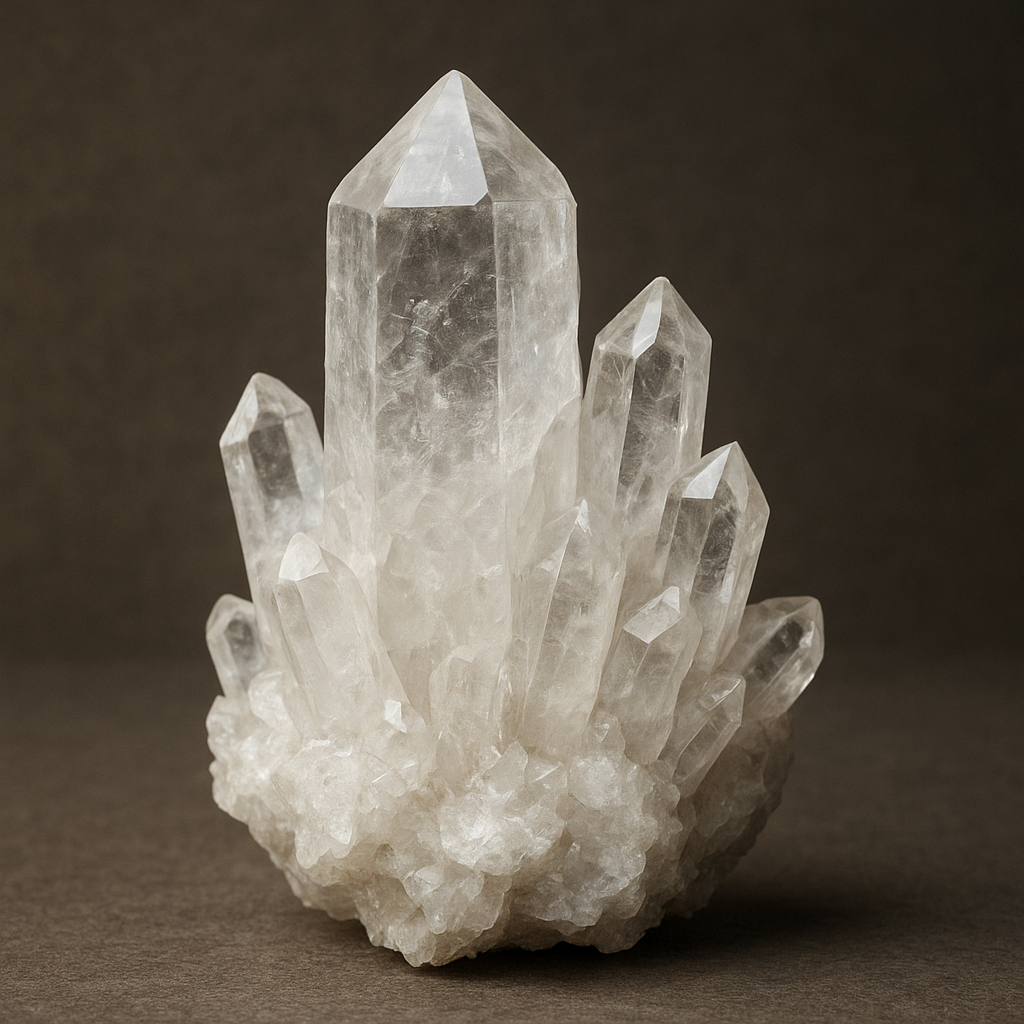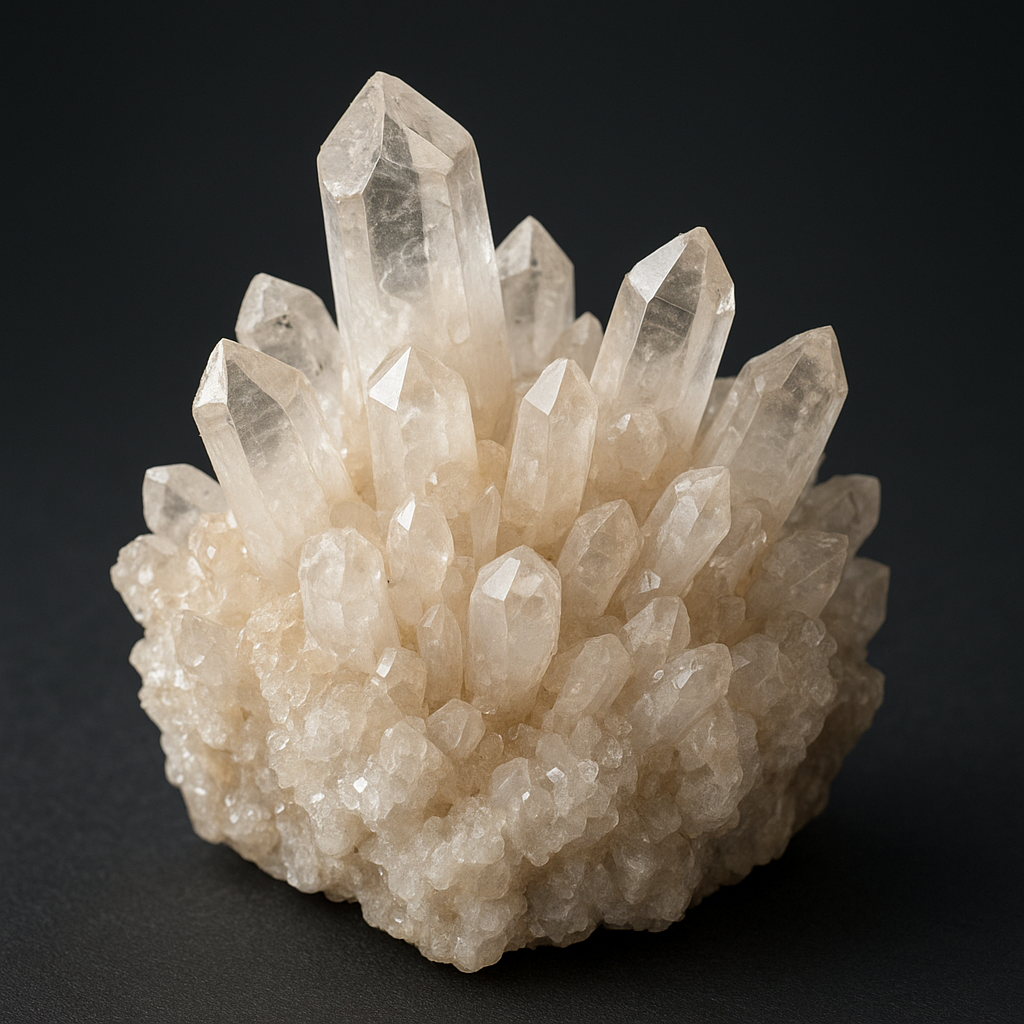
Sugary Quartz is a descriptive name used by mineral enthusiasts, lapidaries and gemologists to describe varieties of quartz that display a fine, granular surface texture reminiscent of granulated sugar. This article explores how that texture forms, where such specimens are typically found, how they are distinguished from other quartz varieties, and the many ways collectors and artisans make use of these attractive materials. Along the way we touch on geological processes, practical lapidary techniques, market considerations and a few lesser-known facts that make Sugary Quartz an engaging subject for both scientists and hobbyists.
Formation and Geological Occurrence
The characteristic “sugary” look of certain quartz specimens arises from the aggregate of extremely small, often interlocking quartz crystals or microcrystalline quartz grains. These tiny crystals reflect light in a particular way that gives the surface a sparkling, granular appearance similar to sugar crystals. Two main contexts produce this texture: the growth of fine crystalline quartz in open cavities and the replacement or recrystallization of pre-existing minerals.
Hydrothermal veins and vugs
Many sugary-textured quartz occurrences are associated with hydrothermal activity. As silica-rich fluids migrate through fractures and cavities (vugs) in host rock, they deposit silica as temperatures and pressures change. When deposition happens relatively rapidly or under conditions that favor many small nucleation sites rather than a few large crystals, quartz precipitates as a dense cluster of minute crystals. The result can be a drusy or sugary surface lining the cavity. These surfaces often occur in basaltic amygdales, open pockets within volcanic rock, and in veins cutting metamorphic or igneous host rocks.
Replacement and recrystallization
Sugary textures also form when silica replaces another mineral, such as calcite or organic material, on a very fine scale. During diagenesis or low-grade metamorphism, silica can pervasively replace carbonate minerals grain by grain, producing a granular quartz fabric. This microcrystalline replacement may preserve textures of the precursor while turning the material into a tough, granular quartz mass.
Geologically, locations known for abundant drusy and microcrystalline quartz – which can include sugary varieties – range worldwide. Classic localities include geode-rich volcanic fields (for example parts of Brazil and Uruguay), hydrothermal veins in many mining districts, and silicified sedimentary exposures. Because the texture depends more on the conditions of formation than on strict locality, sugary quartz can appear in many disparate geological settings.
Physical Characteristics and Identification
Identifying sugary quartz involves looking at texture, luster, and crystal size, and sometimes using tools like hand lenses or microscopes. While both macrocrystalline quartz and microcrystalline forms belong to the same chemical family (silicon dioxide), the grain size and aggregation control the visual and physical behavior.
- Texture: The defining trait is the fine, granular surface. Where drusy quartz forms, individual crystal faces can often be seen under magnification, while sugary quartz may appear as an even frosting of tiny equant grains.
- Luster: Surfaces exhibit a subtle sparkle; the effect is often less mirror-like than a single large crystal and more scintillating due to countless tiny reflective facets.
- Hardness: As quartz, it ranks around 7 on the Mohs scale, making it more resistant than calcite and many other common minerals. This hardness is a key clue when distinguishing sugary quartz from softer, sugar-like minerals.
- Transparency: Sugary quartz ranges from translucent to nearly opaque depending on impurities and crystal fabric.
Microscopic examination will often reveal that grains are submillimeter or even smaller in size. X-ray diffraction and Raman spectroscopy confirm quartz as the mineralogical phase where needed, and these techniques also help differentiate microcrystalline quartz (e.g., chalcedony) from cryptocrystalline silica phases.
Varieties and Related Textures
Several related terms and textures are commonly discussed alongside Sugary Quartz:
- Drusy: A lining of tiny crystals on a cavity wall; drusy surfaces are often what people mean when they describe sugary quartz.
- Chalcedony: A microcrystalline variety of silica. While chalcedony can be smooth and waxy, it can also present microgranular surfaces that appear sugary under magnification.
- Agate and jasper: Banding and patterns in these varieties result from rhythmic silica deposition; sometimes the outer surfaces or fractures reveal sugary quartz zones.
Understanding these distinctions helps collectors and artisans choose the right material for a given use and avoid confusion with unrelated sugary-textured minerals such as certain varieties of calcite or weathered feldspar surfaces that may superficially resemble sugar but lack quartz’s hardness and chemical behavior.
Uses and Applications
Sugary quartz finds a variety of uses across multiple fields. Its attractive surface and durability lend themselves to decorative and functional roles.
Jewelry and ornamentation
Lapidaries prize sugary-textured quartz for cabochons, beads and inlay work. When cut and set properly, pieces with a naturally sparkling surface become eye-catching centerpieces in pendants and rings. The texture is sometimes preserved intentionally (e.g., as a drusy centerpiece), or the stone is polished to highlight color and translucency while keeping some of the granular character.
- Drusy pendants: Small clusters of sugary quartz can be stabilized and mounted to retain their natural sparkle.
- Beads and cabochons: Thicker slices or nodules with sugary surfaces can be shaped and polished to reveal internal patterns while maintaining surface interest.
Decorative stone and lapidary arts
Large nodules and panels are used as decorative objects, bookends, tabletops, and ornamental carvings. Sugary textures are visually engaging in home décor because they diffuse light at many small points, creating a gentle shimmer without the high reflection of polished facets.
Collecting and display
For collectors, sugary quartz specimens are desirable for display: fine drusy linings in geodes, sugary botryoidal surfaces, or microcrystalline replacements with preserved textures are all sought after. High-quality specimens often command premiums at mineral shows and specialized auctions.
Industrial and scientific uses
While sugary quartz itself is seldom an industrial feedstock distinct from other quartz forms, silica from quartz is fundamental to glassmaking, ceramics, and electronics. Study of sugary textures helps geologists interpret depositional environments, fluid chemistry, and diagenetic histories in academic and applied research.
Working with Sugary Quartz: Lapidary Considerations
Sugary quartz can be both rewarding and challenging to work. Its microcrystalline nature means that it is generally tough, but preserving the delicate texture requires specific approaches.
- Cutting: Use diamond tools and moderate feeds to avoid fracturing the granular surface. When the sugary surface is the desired aesthetic, consider trimming around it rather than grinding it down.
- Polishing: Polishing to a high gloss can remove the sugary character; for many pieces a satin finish or selective polishing is preferred. Lapidaries sometimes use lower-grit polishing compounds to retain microtexture.
- Stabilization: Porous sugary zones may benefit from stabilization with resins to prevent flaking, especially if the piece will be handled or set in jewelry.
- Setting: Protective settings that guard the textured surface from abrasion help maintain the specimen’s appearance over time.
Market, Imitations and Treatment
As with many attractive minerals, markets for sugary quartz vary from casual souvenirs to high-end specimens. Several factors influence value: unusually fine crystal size, vibrant color or rare associations (e.g., sugary quartz coated with amethyst or citrine), and provenance.
- Enhancements: Heat treatment and dyeing are occasionally applied to quartz varieties; surface treatments can alter color to enhance appeal. Buyers should ask about treatments because they affect both value and care requirements.
- Imitations: Glass and synthetic materials can imitate sugary textures, but tests of hardness and simple magnification usually reveal differences. A glass imitation will scratch more easily and lack the precise microcrystalline structure seen under a hand lens.
- Ethical sourcing: Provenance matters for higher-end pieces. Specimens from protected areas or those associated with unsafe mining practices may carry ethical concerns; responsible dealers provide clear sourcing information.
Care and Preservation
Maintaining sugary quartz involves standard care for quartz-based materials with a few additional precautions to preserve texture and luster:
- Avoid harsh abrasives that will remove the sugary surface.
- Clean gently with mild soap and water and a soft brush; allow to air dry thoroughly.
- Keep away from acids (which can etch some surface contaminants) and from environments with rapid thermal shocks that might cause fracturing in brittle, porous specimens.
- When displayed, avoid direct prolonged sunlight if dyes or treatments are suspected, as colors may fade.
Interesting Notes and Cultural Connections
Beyond geology and gemcraft, sugary quartz intersects with cultural traditions and curiosities.
- Metaphysical appeal: Many crystal enthusiasts attribute calming, clarifying or energizing properties to quartz in its various forms. Sugary quartz, with its delicate sparkle, is often favored for decorative altars or jewelry intended to be both beautiful and spiritually symbolic. While these uses are cultural and personal rather than scientific, they account for part of the market demand.
- Aesthetic trends: Interior designers sometimes choose drusy or sugary-textured stones to introduce subtle luminescence into spaces—this aesthetic leverages the stone’s natural ability to scatter light softly.
- Educational value: For students of mineralogy, sugary quartz is an accessible example to demonstrate how crystal size and morphology influence optical properties and surface appearance.
- Collecting lore: Some legendary mineral finds feature spectacular drusy linings inside geodes that display multicolored contributions from trace elements, creating specimens prized by museums and private collectors alike.
Related Scientific Topics
Exploring sugary quartz opens doors into broader scientific discussions. A few adjacent topics of interest include:
- Silica polymorphism: Quartz is one of several silica polymorphs; studying textural variations helps illuminate stability fields and transformation pathways among forms like cristobalite and tridymite under geologic conditions.
- Fluid inclusion studies: Sugary and drusy quartz that formed from hydrothermal fluids may trap tiny fluid inclusions. Analyzing these inclusions reveals temperature, pressure and chemical composition during formation.
- Diagenetic processes: In sedimentary geology, the replacement of carbonates by silica affects reservoir quality and rock mechanics—a practical concern for hydrocarbon and groundwater studies.
Practical Advice for Collectors and Hobbyists
If you are interested in adding sugary quartz to a collection or working with it in jewelry or décor, consider the following practical tips:
- Buy from reputable dealers who disclose treatments and provenance.
- Use a 10x loupe to examine crystal size and to check for signs of dye or glue on the surface.
- If a specimen is porous and valued for its natural texture, consider professional stabilization before mounting.
- Attend mineral shows to compare different localities and acquaint yourself with the range of sugary quartz appearances.
Final Thoughts
Sugary quartz is a small but compelling niche within the broader world of silica minerals. Its appeal derives from the interplay of texture, light and color combined with geological stories of fluid movement, replacement and crystal growth. Whether appreciated scientifically, crafted into jewelry or simply admired on a shelf, sugary quartz offers numerous pathways for exploration, learning and aesthetic enjoyment.