
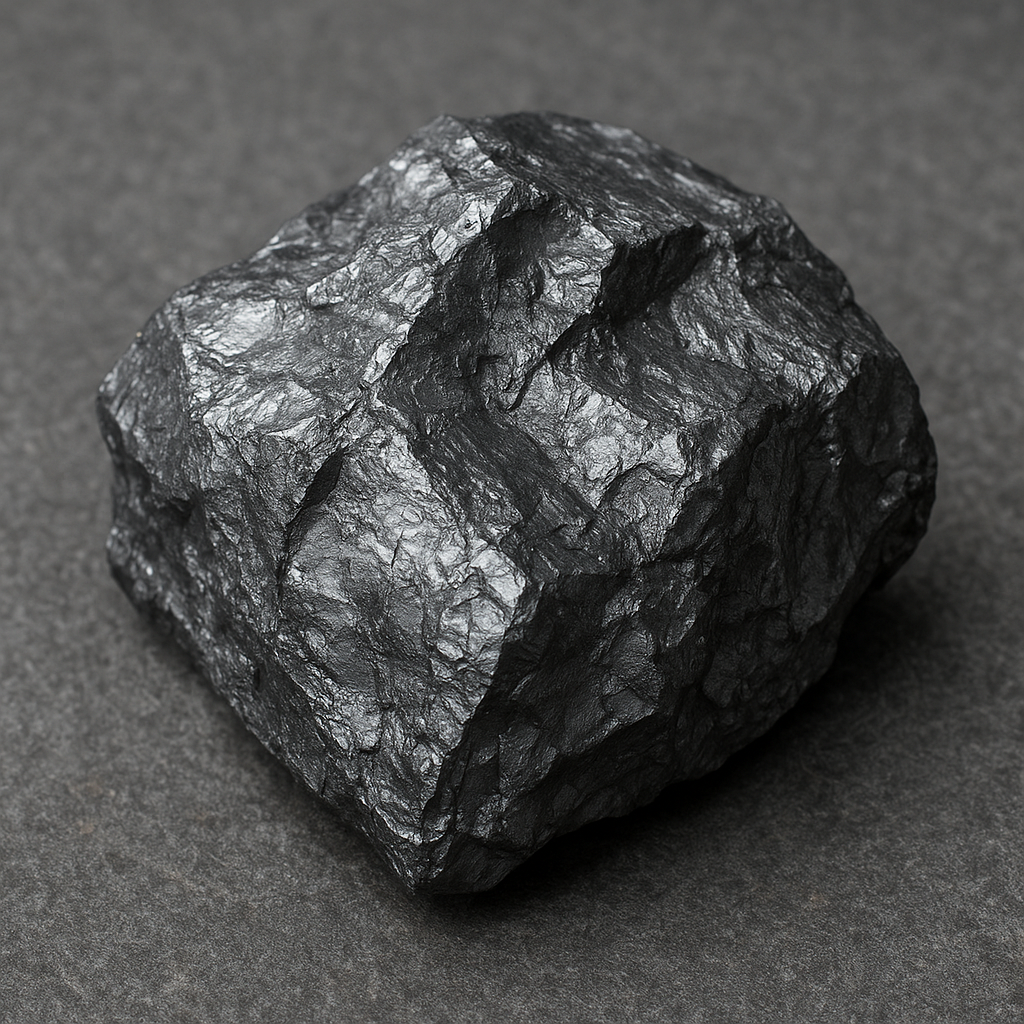
Ruthenium is a transition metal that quietly plays an outsized role in modern technology, chemistry, and industry. Often overshadowed by its more famous neighbors in the periodic table, this element contributes critical functions in areas as diverse as catalysis, electronics, and renewable energy. The following article examines the natural occurrence, physical and chemical properties, extraction methods, and varied applications of ruthenium, and highlights a few lesser-known and intriguing aspects of its science and uses.
Occurrence and Geology
Ruthenium is a member of the platinum group metals (PGMs), which also include platinum, palladium, osmium, iridium, and rhodium. It is relatively scarce in the Earth’s crust, typically found in ores that host other PGMs and in certain nickel and copper deposits. The most economically important sources of ruthenium are large sulfide deposits and placer deposits associated with mafic and ultramafic igneous rocks.
Major producers historically include Russia (especially the Norilsk–Talnakh region), South Africa (Bushveld Complex), and North America. In ore, ruthenium rarely occurs as a free metal; instead it exists chemically bound within alloys and mineral phases such as sperrylite, laurite, and alloys with other PGMs. Because it is commonly associated with other PGMs and with nickel and copper sulfides, the recovery of ruthenium is often a side stream of multi-metal mining and smelting operations.
Physical and Chemical Properties
Ruthenium is a hard, silvery-white metal with a high melting point and notable durability. It sits in group 8 of the periodic table and exhibits variable oxidation states, most commonly +2, +3, and +4, but also +6 and +8 in some coordination compounds. The metal is notable for its resistance to corrosion and chemical attack under many conditions, which is one reason it finds use in durable electrical contacts and wear-resistant coatings.
Chemically, ruthenium forms a rich variety of complexes and coordination compounds. Its ability to engage in electron transfer and form stable complexes with ligands such as bipyridine and phosphines makes it a versatile center for homogeneous catalysis and photochemical applications. Ruthenium complexes can mediate redox reactions, hydrogenation, oxidation, and transfer hydrogenation with high selectivity under tailored conditions.
Extraction, Refining, and Production
The recovery of ruthenium is integrated into the smelting and refining of PGMs. Typical extraction follows these steps:
- Concentration of nickel and copper sulfide ores by flotation.
- Smelting to produce a matte rich in Ni, Cu, and PGMs.
- Converting and refining steps that separate base metals from PGMs.
- Chemical separation of individual PGMs by solvent extraction, precipitation, and ion-exchange techniques.
The relatively low abundance of ruthenium and its frequent co-occurrence with other PGMs means supply is closely tied to the economics of PGM production. Secondary sources — recycling from industrial catalysts, electronics, and discarded jewelry — are increasingly important in meeting demand and improving sustainability.
Industrial and Technological Applications
Catalysis and Chemical Industry
Ruthenium-based catalysts are highly prized for their activity and versatility. Homogeneous ruthenium complexes catalyze a variety of organic transformations including:
- Olefin metathesis — Grubbs-type catalysts employ ruthenium to construct carbon–carbon double bonds efficiently, revolutionizing polymer synthesis and organic synthesis strategies.
- Hydrogenation and transfer hydrogenation — ruthenium catalysts can selectively reduce carbonyls and other unsaturated substrates.
- Oxidation reactions — ruthenium oxides and complexes catalyze selective oxidations of alcohols and hydrocarbons.
- Ammonia synthesis and nitrogen fixation research — ruthenium surfaces and complexes are explored for alternative pathways to break the N≡N bond under milder conditions.
These catalytic roles contribute to chemical manufacturing, fine chemicals, and pharmaceuticals. The fine-tunability of ruthenium catalysts via ligand modification allows chemists to optimize both activity and selectivity, which is essential in complex molecule synthesis.
Electronics and Memory Devices
The stable electrical properties and corrosion resistance of ruthenium make it useful in thin films and microelectronic components. Ruthenium and ruthenium oxide are used in:
- Resistive random-access memory (RRAM) and other nonvolatile memory architectures where ruthenium-based electrodes and oxides contribute to switching behavior and endurance.
- Wiring and contacts in integrated circuits — thin ruthenium layers can serve as diffusion barriers and contact metallization.
- Electrodes in capacitors, especially ruthenium oxide (RuO2) for high-capacitance thin-film electrodes.
In these contexts, the combination of metallic conductivity and chemical stability is vital for device longevity and performance as devices scale down in size.
Renewable Energy and Electrochemistry
Ruthenium oxides and complexes have significant roles in electrochemical energy technologies. Notable applications include:
- Electrocatalysts for oxygen evolution reaction (OER) in water splitting. RuO2 is among the most active OER catalysts, though cost and stability issues motivate research into mixed oxides and doped materials.
- Photosensitizers and catalysts in dye-sensitized solar cells (DSSCs). Ruthenium polypyridyl complexes have excellent light-absorption and charge-transfer properties, making them effective in early DSSC designs.
- Electrochemical sensors and biosensors, leveraging ruthenium’s redox chemistry to detect analytes such as hydrogen peroxide and glucose.
Work on reducing ruthenium loading while retaining performance includes designing atomically dispersed catalysts, alloys, and hybrid materials that pair ruthenium with abundant supports.
Materials Science: Alloys, Coatings, and Nanomaterials
Adding small amounts of ruthenium to alloys can enhance hardness, wear resistance, and high-temperature performance. Ruthenium is alloyed with platinum to improve mechanical strength for high-temperature turbine components and in jewelry to improve scratch resistance. In addition:
- Ruthenium coatings are used for electrical contacts and as protective, wear-resistant layers on mechanical components.
- Ruthenium-containing nanoparticles are extensively researched for catalysis. Nanoparticles of ruthenium display high surface areas and unique electronic properties that can enhance catalytic activity per unit mass of the metal.
- Composite materials in which ruthenium is dispersed on carbon or oxide supports aim to maximize atomic efficiency and reduce material cost while preserving or enhancing activity.
These materials advances are central to making ruthenium-bearing technologies economically viable and resource-efficient.
Chemistry of Ruthenium Compounds
Ruthenium forms a wide array of organometallic and coordination compounds. The chemistry is rich and often parallels that of iron and osmium but with distinctive reactivity patterns. Examples include:
- Ruthenocene, an organometallic sandwich compound analogous to ferrocene, that illustrates ruthenium’s ability to form stable π-bonded complexes.
- Polypyridyl complexes (e.g., Ru(bpy)3^2+) that exhibit strong luminescence and long-lived excited states, valuable in photochemistry and as probes for electron-transfer processes.
- Ruthenium oxides and oxyanions, which are important in heterogeneous catalysis and electrochemistry.
These compounds are used in mechanistic studies, as photosensitizers, and as building blocks for molecular devices and catalysts.
Isotopes and Nuclear Applications
Ruthenium has several stable isotopes and numerous radioactive isotopes that are produced as fission products in nuclear reactors. Certain isotopes such as 103Ru and 106Ru have been used in medicine and industry. For example, 106Ru is used in brachytherapy for eye tumors, delivering localized radiation treatment. The presence of ruthenium isotopes among nuclear fission products has also made it a subject of study in environmental monitoring and nuclear forensics.
The study of ruthenium isotopes contributes to understanding nuclear reactor chemistry and to safety monitoring following nuclear incidents, given that some ruthenium isotopes can be volatile under extreme conditions.
Environmental, Health, and Safety Considerations
Metallic ruthenium is generally considered to have low acute toxicity, but certain ruthenium compounds, especially soluble salts and some complexes, require careful handling. Occupational exposure limits are regulated in industrial settings. Environmental concerns are primarily tied to mining, refining, and the lifecycle of ruthenium-containing catalysts and devices.
Recycling and recovery of ruthenium from spent catalysts and electronic waste are important for minimizing environmental impact and reducing dependence on primary mining. Advances in hydrometallurgical and pyrometallurgical recycling processes help recover ruthenium with high efficiency.
Economic and Market Factors
The market for ruthenium is influenced by the broader dynamics of the platinum group metals. Because ruthenium production is a byproduct of nickel, copper, and PGM mining, supply is sensitive to production rates of those base metals and the economics of PGM refining. Demand drivers include:
- Catalyst industries (chemical manufacturing, automotive where applicable)
- Electronics and advanced device manufacturing
- Medical isotopes and specialty chemical sectors
Price volatility can be pronounced due to the metal’s relative scarcity and its concentration in a few geographic regions. This has spurred interest in substitution strategies, reduction of loading in devices, and more aggressive recycling programs.
Interesting and Emerging Topics
Several emerging areas of research and application make ruthenium particularly interesting today:
- Photocatalysis and artificial photosynthesis: ruthenium complexes continue to be important models for studying light-driven charge separation and for developing systems that convert sunlight into chemical fuels.
- Single-atom and sub-nanometer catalysts: atom-efficient catalysts that disperse ruthenium at the atomic scale aim to deliver PGM-like performance with minimal metal use.
- Biomedical imaging and therapy: research explores novel ruthenium complexes for photodynamic therapy, imaging agents, and targeted radiotherapy approaches.
- Quantum materials and spintronics: ruthenium-based oxides and layered compounds are being investigated for unconventional electronic and magnetic properties that could be relevant to next-generation electronic devices.
These directions illustrate how ruthenium bridges fundamental chemistry and practical technology development.
Practical Tips for Researchers and Engineers
For practitioners working with ruthenium, a few practical considerations apply:
- Material sourcing: verify the purity and form of ruthenium (metal, oxide, salts) through certificates of analysis, especially for catalysis and electronics work.
- Handling and storage: store ruthenium compounds in appropriate containers and limit exposure to moisture and air for oxidation-sensitive materials.
- Waste and recycling: design processes that enable recovery of ruthenium from spent catalysts and devices to improve sustainability and control costs.
- Safety: consult material safety data sheets (MSDS) for specific ruthenium compounds and ensure appropriate personal protective equipment and ventilation.
Attention to these operational details helps maximize performance while minimizing environmental and economic costs.
Concluding Notes on a Minor Metal with Major Impact
Ruthenium exemplifies how a relatively rare element can have a disproportionate influence on modern technology. From enabling powerful catalytic transformations and enhancing electronic devices to playing roles in renewable energy and medical applications, ruthenium’s combination of chemical flexibility and durability ensures its continued relevance. As research advances in materials science, catalysis, and sustainable metal use, ruthenium will likely remain a subject of innovation and practical importance.