The mineral known as strontianite has fascinated mineralogists, collectors and industrial chemists alike for more than two centuries. As a natural form of strontium carbonate, it occupies a niche both as a subject of scientific study and as a practical source of a metal whose compounds play important roles in modern technology, medicine and pyrotechnics. This article explores the mineral’s geology, its industrial and cultural applications, notable localities, and a number of related topics that highlight why strontianite remains an interesting and occasionally valuable mineral.
Occurrence and geological setting
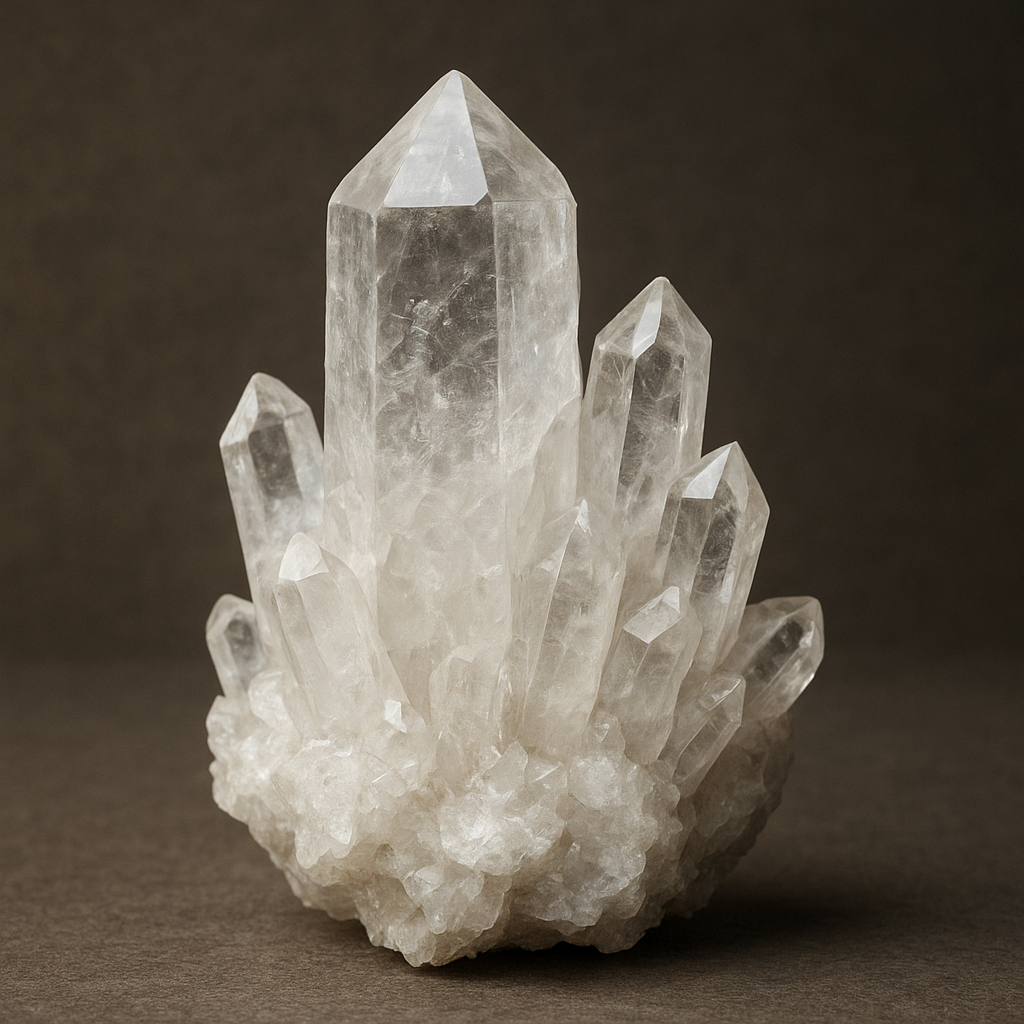
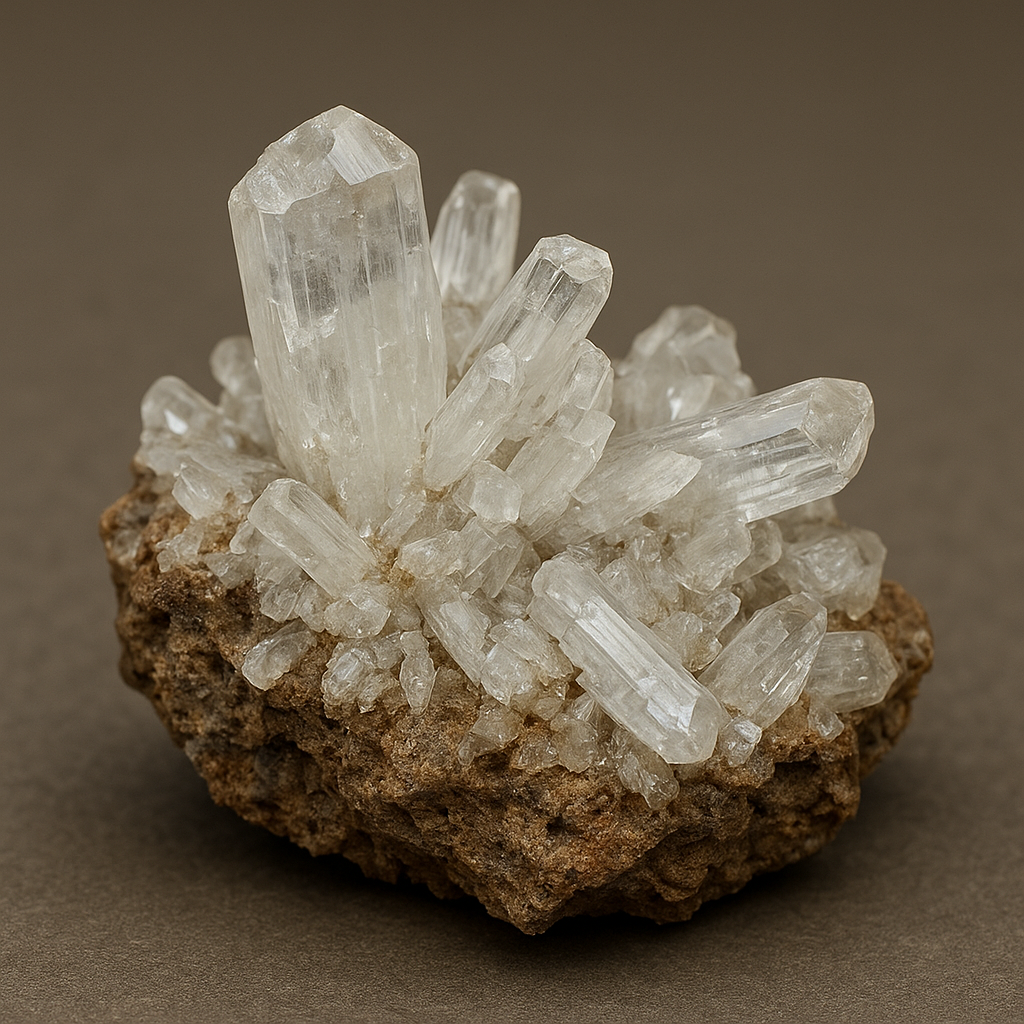
Strontianite (chemical formula SrCO3) forms in a variety of geological environments, typically where the chemical conditions favor precipitation of carbonate minerals enriched in strontium. It commonly appears as white, pale gray, yellowish or even greenish crystals, often with a distinctive subhedral to acicular habit. The mineral crystallizes in the orthorhombic system and frequently forms slender, elongated crystals that can be quite striking under magnification.
Primary environments where strontianite is found include:
- Low-temperature hydrothermal veins, where fluids have transported dissolved strontium and then precipitated carbonates as conditions changed.
- Replacement deposits in carbonate rocks, such as limestones and marbles, where strontium-bearing fluids replace calcium in the host rock and form discrete pockets of SrCO3.
- Evaporitic or sedimentary settings where strontium-enriched solutions concentrate and deposit carbonate minerals alongside or replacing more common species like calcite or aragonite.
- Cave environments, where dripwater chemistry can favor local precipitation of unusual carbonate phases.
Strontianite was first described from the locality that gave the mineral its name: Strontian, in the Scottish Highlands. There, the mineral was recognized in the late 18th century and later led to the discovery of the element strontium by chemists who isolated a new metallic element from mineral samples. Since that time, notable localities have been recorded worldwide, including vein deposits and carbonate-rich zones in parts of continental Europe, North Africa, and the Americas. Many specimens prized by collectors come from narrow vein systems or from pockets in altered carbonate-host rocks where well-formed crystals could grow.
Chemical and physical properties
The basic composition of strontianite is simple: one atom of strontium combined with one carbonate group. Yet this simplicity masks a suite of properties that influence both its formation and its uses. Strontium has a larger ionic radius than calcium, which affects crystal chemistry and explains why strontianite often forms where calcium-bearing carbonates are absent or where fluids are enriched in strontium.
Key physical traits
- Crystal system: orthorhombic; crystals are commonly elongated and sometimes fibrous or columnar.
- Hardness: relatively soft compared with many rock-forming minerals, typically around 3.5 to 4 on the Mohs scale.
- Specific gravity: higher than that of calcite because of the heavier strontium ion; typically around 3.7 to 3.9.
- Cleavage and fracture: exhibits cleavage in one direction and can break with a conchoidal to uneven fracture.
- Reaction to acids: like other carbonates, strontianite effervesces with dilute acids due to release of CO2, a diagnostic field test.
Strontianite can be visually and chemically similar to other carbonate minerals. For instance, celestine (SrSO4) sometimes occurs in close association with strontianite and may be partially pseudomorphosed by carbonate. Because strontium can substitute for calcium in many lattice structures, strontianite can form solid solutions or intergrowths with calcium carbonates under certain conditions, complicating straightforward identification without analytical methods such as X-ray diffraction (XRD) or electron microprobe analysis.
Industrial applications and economic significance
Although strontianite is a recognized ore of strontium, most commercial production of strontium today is derived from celestine (strontium sulfate), which is more abundant. Nonetheless, when strontianite is present in economic concentrations, it is a convenient feedstock for producing a wide range of strontium chemicals and, ultimately, metallic strontium. The following outlines the main uses:
Main industrial uses
- Production of strontium carbonate (SrCO3) and other strontium salts — used as precursors in multiple industries.
- Pyrotechnics — strontium compounds are prized for producing brilliant red colors in flares, fireworks and signal devices because of their efficient emission spectra.
- Glass manufacturing — strontium oxide or carbonate is added to specialty glass formulations (historically in cathode-ray tube glass) to improve certain optical properties and to reduce X-ray transmission.
- Ceramics and ferrites — strontium-containing compounds are used to manufacture ferrite magnets (strontium ferrite) and specialty ceramics with magnetic or dielectric properties.
- Metallurgy and refining — strontium has niche uses in aluminum alloys and in small-scale metallurgical applications.
- Laboratory and research uses — isotopes of strontium and strontium compounds are employed in geochemical tracing and experimental petrology.
Beyond direct industrial use, strontium plays an important role in scientific techniques. Natural variations in strontium isotope ratios (e.g., 87Sr/86Sr) are widely used in geology and archaeology to trace provenance of rocks, sediments and artifacts, because strontium isotopic signatures reflect the geology of the source region and are incorporated into biological tissues. While those isotopic studies usually rely on dissolved strontium rather than the mineral itself, deposits of strontianite and celestine can influence local isotope reservoirs and therefore matter to such investigations.
Mining, processing and economic considerations
When strontianite is mined as an ore, the processing route generally aims to separate the strontium-bearing carbonate from gangue minerals and then convert it into commercially useful chemicals. Typical steps can include:
- Crushing and beneficiating the ore to concentrate the SrCO3-bearing fraction.
- Calcination or reaction with other reagents to produce strontium oxide (SrO) or to convert carbonate into carbonate products of the desired purity.
- Chemical conversion to strontium chloride, nitrate, carbonate or oxide, depending on market needs.
Economically, the decision to mine strontianite depends on deposit size, concentration, ease of separation, proximity to processing facilities, and competition from celestine resources. Because celestine is more common and easier to extract in many settings, strontianite deposits are often exploited only where celestine is lacking or where strontianite occurs in particularly high-grade pockets.
Collector interest and aesthetic value
Collectors prize well-formed strontianite crystals for their elegant habits and sometimes unusual colors. Crystals may be transparent to translucent with vitreous luster, and specimens exhibiting sharp, elongated forms are especially sought after. When strontianite forms in combination with other minerals—such as fluorite, calcite, or sulfide minerals—specimens can reach high aesthetic and monetary value in the mineral market.
To the mineral collector, the presence of attractive strontianite crystals in a locality can elevate the scientific interest of a site. Under microscopic examination, the mineral may show growth zoning and inclusions that reveal information about fluid chemistry and temperature during formation, thus serving both aesthetic and educational roles.
Strontium in science, medicine and environment
While strontianite itself is a mineralogical curiosity, the element it contains — strontium — has broader implications. Stable and radioactive isotopes of strontium are important in diverse contexts:
- Isotope geochemistry: The ratio of 87Sr/86Sr provides a fingerprint of geological processes and can be used to track the origin of sediments, waters and biological materials. This approach has applications in paleoclimate studies, provenance research and forensic science.
- Medical applications: Certain strontium compounds have been investigated for treatment of osteoporosis (e.g., strontium ranelate), though medical use has been controversial and regulated. The biological behavior of strontium—its tendency to substitute for calcium in bones—makes it both potentially therapeutic and potentially hazardous depending on isotopic composition and dosage.
- Radioactive contamination: The anthropogenic isotope strontium-90 is a byproduct of nuclear fission and nuclear weapons tests. Because it behaves chemically like calcium, 90Sr can enter food chains and accumulate in bones, making it a serious environmental and health concern in contaminated regions. Strontianite as a mineral does not typically contain 90Sr, but the chemistry of strontium overall links the mineral to broader environmental discussions.
Interesting related topics and laboratory uses
Several related topics connect strontianite with broader themes in mineralogy and applied science:
Replacement and pseudomorphism
One fascinating process is the replacement of one mineral by another while retaining the original mineral’s external shape (pseudomorphism). Strontianite may replace calcite or be replaced by other strontium-bearing phases, providing snapshots of changing fluid chemistry. Such textures are useful to reconstruct the sequence of hydrothermal events in veins and carbonate-hosted deposits.
Solid solution and element substitution
Because strontium and calcium are chemically similar, they often substitute for one another in carbonate minerals. Strontianite can form series or intergrowths with calcium carbonates under certain environmental conditions. This substitution has implications for interpreting geochemical signatures in carbonates and in reconstructing the conditions under which they formed.
Role in paleoclimate and paleoenvironmental studies
Strontium incorporated into marine and freshwater carbonates records the isotopic composition of the water at the time of formation. Consequently, researchers examine strontium isotope trends in stratigraphic sequences to infer changes in continental weathering, seawater composition and tectonic inputs through geological time. Localized strontianite occurrences can influence such records at small scales.
Analytical techniques
Characterizing strontianite requires a suite of analytical tools: X-ray diffraction (XRD) to confirm crystal structure, scanning electron microscopy (SEM) for textural and morphological studies, and mass spectrometry (e.g., TIMS or MC-ICP-MS) for high-precision isotopic work. These methods allow scientists to extract formation temperatures, trace element budgets and isotopic histories from even modest samples.
Environmental and conservation aspects
Mining any mineral raises questions of environmental impact. For strontianite, potential issues include habitat disruption, water quality changes where carbonate dissolution or tailings are present, and the broader footprint of converting ore to refined chemicals. Responsible mining and processing practices aim to minimize release of fine particulates, manage acid drainage risks, and rehabilitate disturbed areas. In some regions, small but high-grade strontianite occurrences are mined by artisanal operations, which poses different regulatory and environmental challenges than large industrial mines.
From a conservation perspective, noteworthy mineral localities that produce exceptional strontianite specimens are sometimes protected to preserve their scientific and aesthetic value. Mineralogists and collectors often collaborate with landowners, museums and agencies to document finds, ensure proper scientific sampling and prevent illegal or destructive collecting.
Notable historical and cultural points
The discovery of strontianite played a key role in chemical history: the mineral from Strontian, Scotland, led chemists to isolate a previously unknown element, later named strontium. The story of discovery highlights the interplay of mineralogy and chemistry in the 18th and 19th centuries, when advances in analytical techniques and chemical isolation fundamentally changed our understanding of the elements.
Moreover, the colorful flames produced by strontium salts have left a cultural imprint through fireworks and maritime signaling. The vivid reds associated with strontium are familiar to millions, connecting a humble carbonate mineral to celebrations, safety equipment and visual culture worldwide.
Specimen care and identification tips
Collectors handling strontianite should be aware of its relative softness and susceptibility to scratching or cleavage. Specimens should be stored in cushioned boxes, away from prolonged exposure to acids or harsh chemicals. Identification in the field can be aided by simple tests: effervescence with dilute acid (indicating carbonate), higher specific gravity than calcite, and crystal habit. Definitive identification, however, often requires laboratory techniques such as XRD or chemical analysis.
When cataloging specimens, collectors and researchers generally record locality, associated minerals, crystal habit and any observable zoning or alteration. Such documentation increases the scientific value of samples and helps preserve the geological story they represent.
Closing notes on scientific potential and curiosity
Strontianite may not be the most abundant carbonate mineral, yet its connections to elemental discovery, its role as an ore of a technologically important element and its occurrence in intriguing geological settings make it worthy of sustained attention. Whether one approaches strontianite as a miner, a scientist, a collector or a curious observer, the mineral stands at the intersection of chemistry, geology and human use—an unassuming carbonate that opens many avenues for study and appreciation.